
Autonomic Load Redistribution Across Organizational Leaders Under Acute Operational Stress
Operational panic concentrates into the calmest executive present whose nervous system absorbs the metabolic cost of stabilizing the entire leadership circle.

Drain
Four executive team members sit across an oak conference surface while telemetry logs report an infrastructure breach. The chief executive speaks in an even, unhurried cadence, lowering the pitch of each sentence while detailing remediation steps. Heart rate across the other four people drops within ninety seconds, their peripheral vasoconstriction eases, and their respiration settles into synchrony with the voice across the wood.
The leader absorbs their panic through immediate metabolic expenditure, maintaining vagal nerve control while holding three unread outage alarms on an illuminated phone screen. That steadiness costs thirty percent more glucose consumption across the prefrontal cortex than standard operating conditions demand.
Social baseline theory indicates that human nervous systems treat physical proximity to a reliable peer as an external resource. When an organization faces acute operational shocks, individual members do not generate self-regulation out of pure isolation. They borrow the parasympathetic tone of the calmest person in the room.
This transfer occurs through vocal prosody, pupillary dilation, respiratory rate, and posture. The calm state serves as an implicit public utility. Team members draw down their autonomic arousal by orienting toward that reference point, reducing their personal threat perception at the explicit expense of the individual occupying the center.
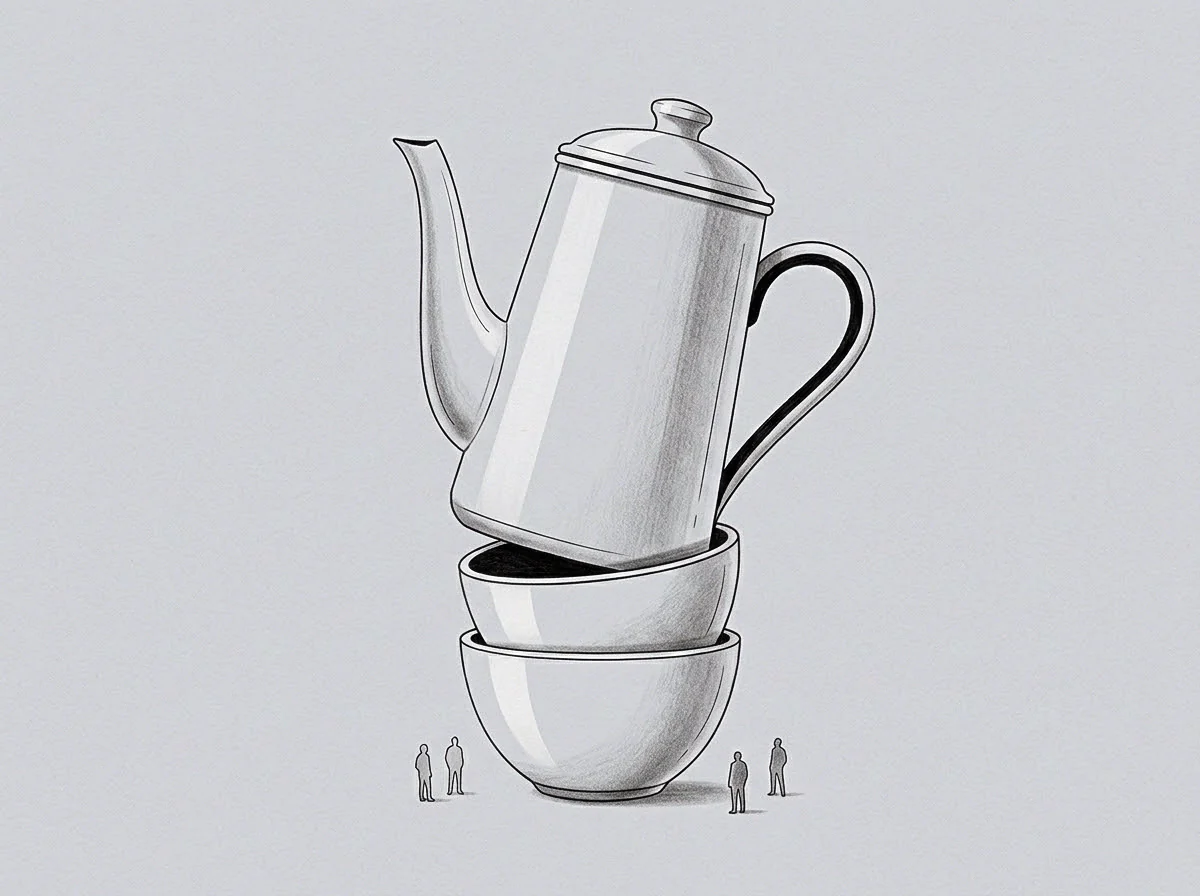
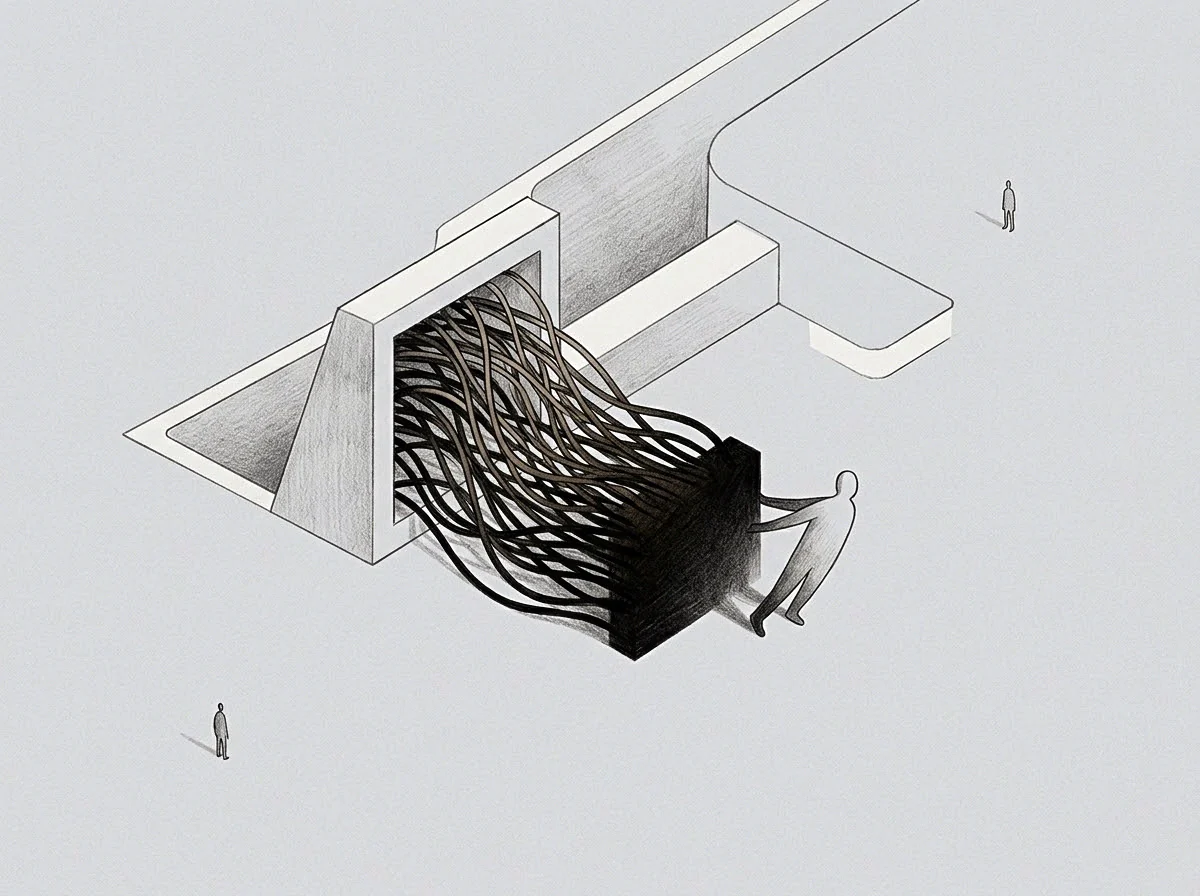
A stable reference person reduces threat perception in others while paying the metabolic price of that stability alone.
The asymmetric flow of nervous equilibrium creates a hidden deficit. In a software infrastructure failure, a hostile board vote, or a sudden liquidity shortfall, the executive team routes its operational paralysis directly to the chief officer. Subordinates offload cognitive threat processing because the presence of an unflinching figure signals safety.
The brain conserves its own glucose whenever an external nervous system appears willing to manage the perimeter. That conservation remains invisible to the people who benefit from it. They leave the conference room feeling grounded, competent, and focused, attributing their clarity to their own psychological resilience.
The founder pays the unacknowledged cost. Unilateral autonomic absorption without reciprocal down-regulation leads to neuroendocrine saturation, blunted vagal flexibility, and abrupt executive collapse during the subsequent working week.
Wire
Nervous systems communicate through continuous non-verbal feedback loops. When an operational incident strikes, mammalian physiology relies on the ventral vagal complex to navigate relational engagement before defaulting to sympathetic arousal. An operator who maintains forward eye contact, relaxed shoulders, and an unhurried vocal pace transmits steady signals down the acoustic and visual channels of everyone present.
This process operates through biological synchrony, an involuntary matching of autonomic rhythms across mammalian bodies. Heart rate variability rhythms synchronize among co-located leaders facing the same hazard within twenty minutes of direct exposure. When one participant deliberately holds a low sympathetic baseline, surrounding nervous systems latch onto that anchor point to suppress their own cortisol release.
The stable figure functions as an autonomic heat sink. Subordinates plug into that stability without cognitive awareness of the transaction.
The Backward Regulatory Pattern
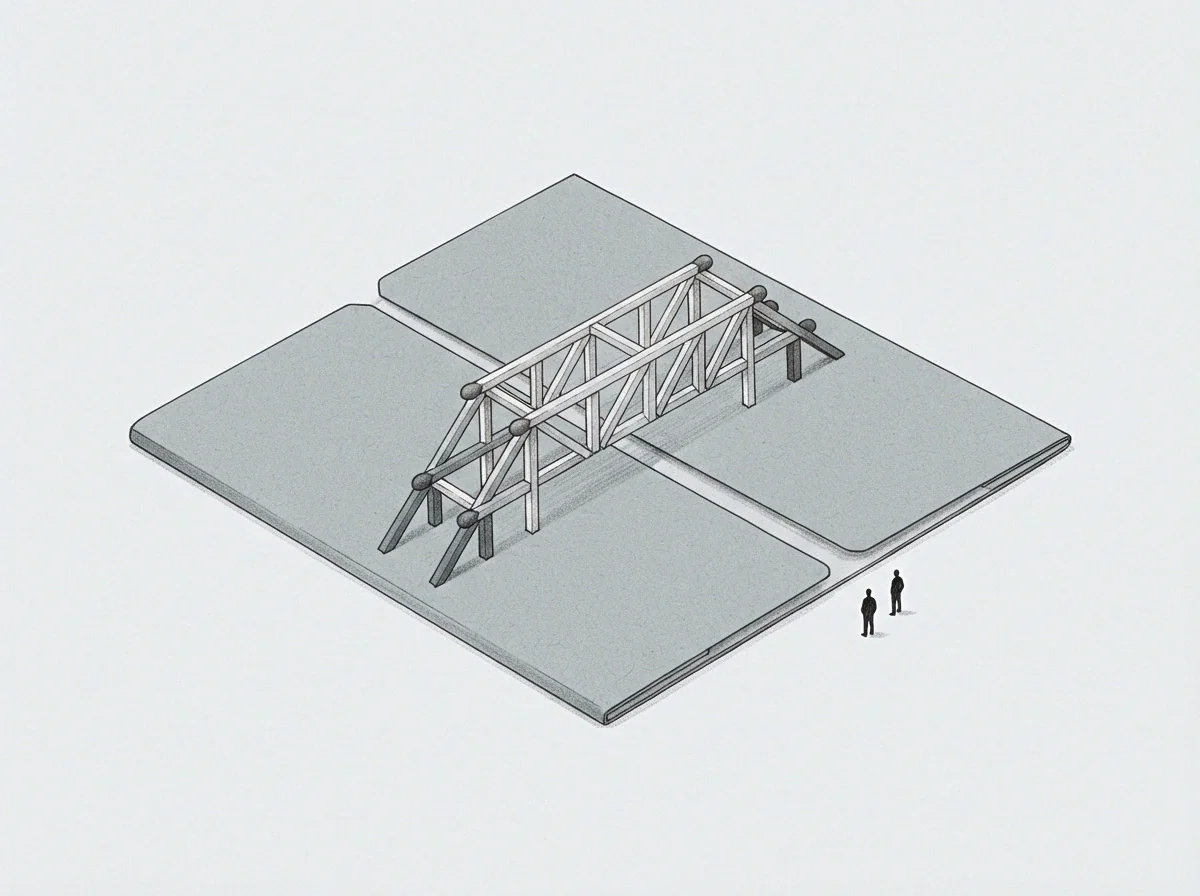
Most individuals develop relational expectations through childhood attachment sequences, learning that distress yields parental comfort. The person who founds high-risk enterprises often experienced the inverted sequence. They learned early to stabilize a chaotic caregiver to secure personal physical and emotional safety.
This history constructs an internal model where personal distress is suppressed instantly to stabilize the surrounding adults.
That pattern calcifies into adult operational habits. When a crisis strikes the balance sheet or product deployment, this individual steps into the stabilizing role automatically. They regulate the room because silence or shared panic historically resulted in environmental catastrophe.
Their internal wiring possesses no functional receptor for receiving regulation from an equal. The leader stabilizes the executive vice president, the lead architect, and the board chair, yet rejects every incoming gesture of support as an operational hazard.
A founder who stabilizes an entire boardroom experiences incoming offers of support as additional threats to be managed.
The incoming offer of assistance reads to that nervous system as an anomaly that demands evaluation rather than an aid that permits rest. That mismatch locks the leader into perpetual transmission. The team continues to tether its nervous systems to the center, deepening the asymmetric current through the relational circuit.
The steady person carries the heaviest burden simply because they look capable of carrying it without breaking.

Gradient
The operational pressure gradient inside an organization behaves like fluid pressure across connected pipes. Acute operational shocks reveal the exact pathways through which fear moves. A lead engineer enters a 1-on-1 meeting trembling with adrenaline over corrupted database tables.
Within twelve minutes of quiet technical dissection conducted by the principal executive, the engineer departs with normalized breathing, steady hands, and clear cognitive focus. The engineer has offloaded panic onto the leader, leaving the executive to run the subsequent investor meeting while carrying the displaced adrenaline.
Which Reserve Absorbs the Transferred Strain?
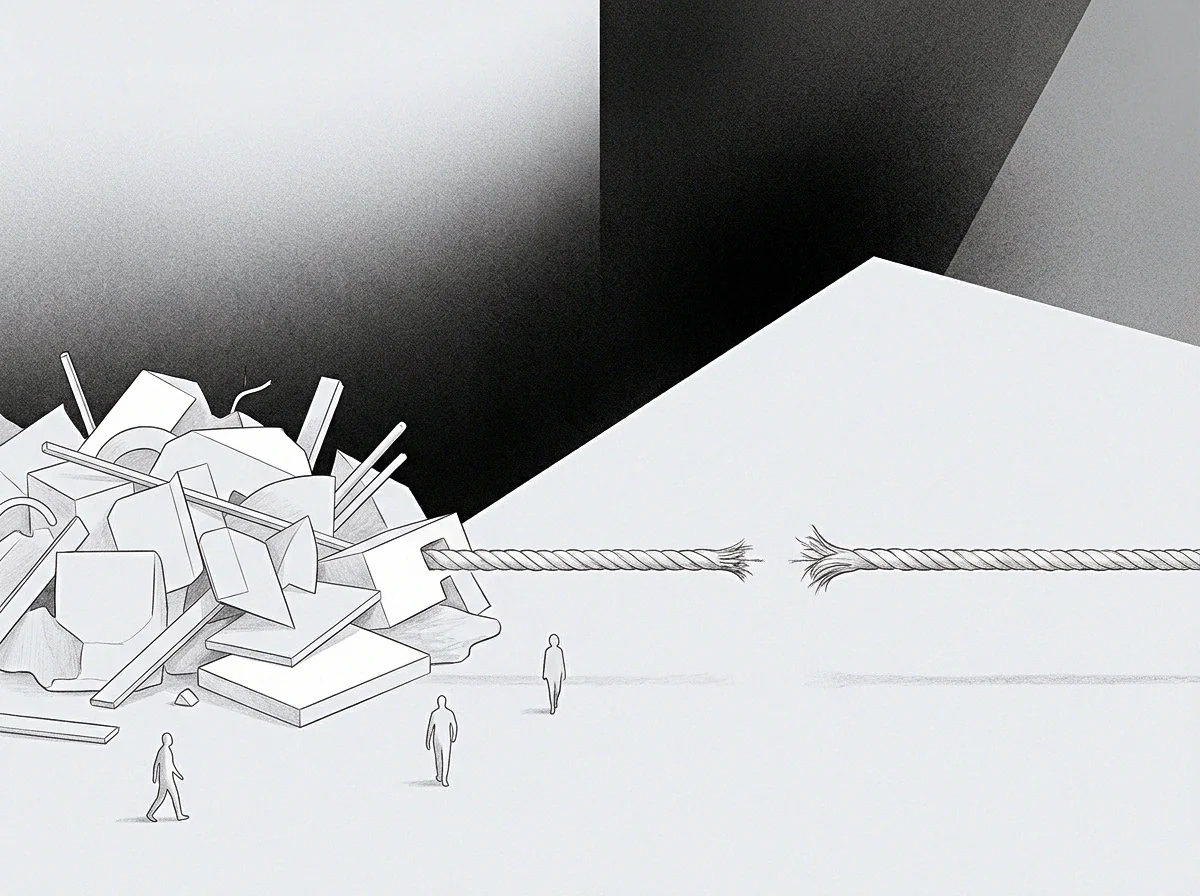
The human body stores autonomic load across distinct physiological systems. When psychological threat cannot resolve through physical flight or battle, the body deploys allostatic compensation mechanisms. Sympathetic activation raises catecholamines, restricts blood flow to viscera, and mobilizes serum glucose.
A founder who acts as the sole emotional foundation for six department heads absorbs multiple streams of displaced fear concurrently. That compound transfer overwhelms standard metabolic recuperation schedules.
The table below presents the measurable physiological indicators observed across leadership roles during a continuous forty-eight-hour operational emergency. Data points reflect standard occupational stress biomarker patterns within continuous uptime environments.
| Observed Metric | Supported Team Member | Solitary Primary Anchor | Co-Regulating Leadership Pair |
|---|---|---|---|
| Salivary Cortisol Surge Ratio | 1.2 to 1.4 Baseline | 3.1 to 4.5 Baseline | 1.8 to 2.2 Baseline |
| High-Frequency Heart Rate Variability | Retains 65% Normal Band | Drops Below 25% Baseline | Maintains 50% Baseline |
| Prefrontal Metabolic Fatigue Horizon | 14 Consecutive Hours | 4.5 Consecutive Hours | 10 Consecutive Hours |
| Recovery Sleep Parasympathetic Rebound | Present in First Cycle | Absent Until Hour 72 | Present in Second Cycle |
The divergence between the solitary anchor and the co-regulating pair demonstrates the protective physics of mutual baseline distribution. A solitary anchor bears the metabolic impact of every surrounding failure mode simultaneously. When two primary operators share the baseline function, autonomic strain drops by more than half, protecting prefrontal executive control during prolonged crises.
They handled the entire emergency with such complete poise that nobody realized any help was needed.
Split
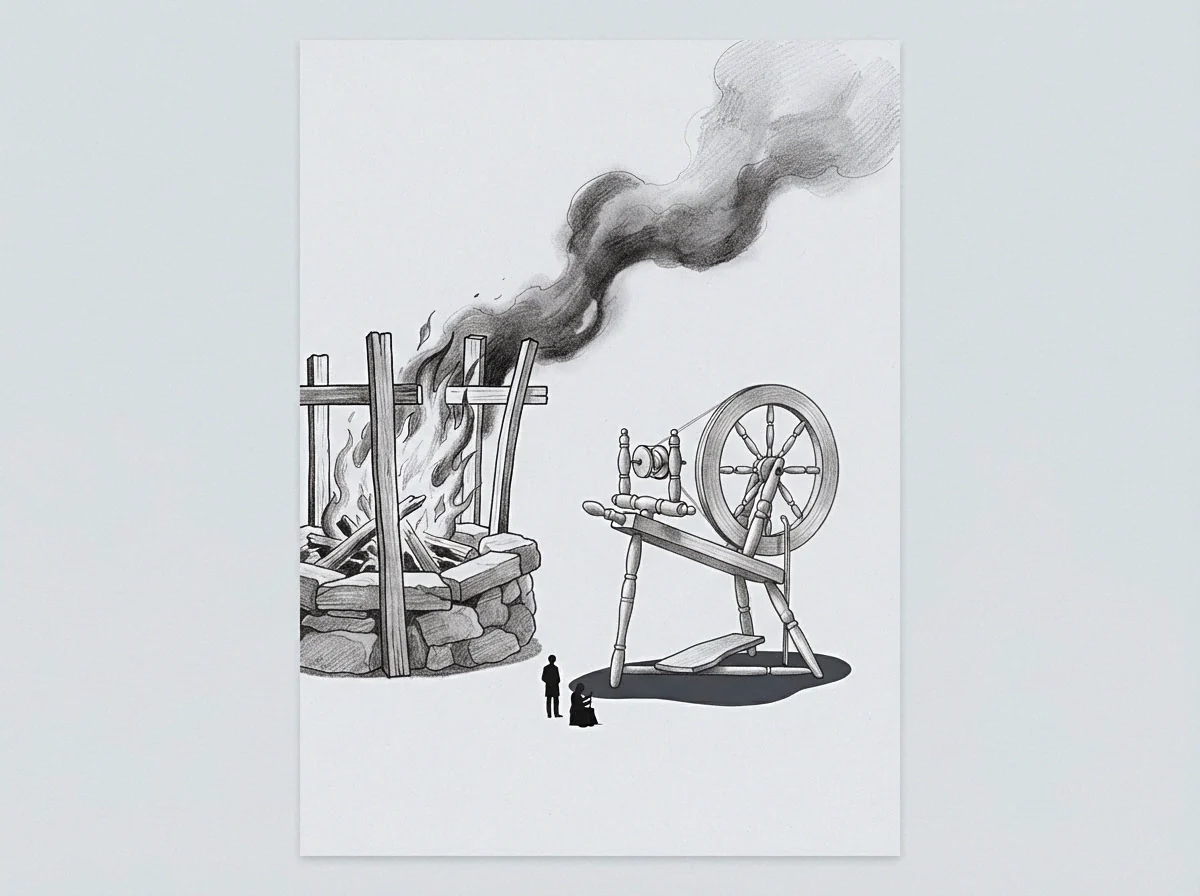
Long-term operational endurance requires separating genuine operational urgency from autonomic contagion. A leader who cannot make this separation becomes a lightning rod for the organization, draining their own reserves while shielding staff from the productive discomfort of problem solving. The organization atrophies its own autonomic capacity because the primary executive continuously acts as the universal shock absorber.
The following mechanisms dictate how autonomic load transfers through the executive structure during operational shocks:
- Allostatic throttling occurs when an executive nervous system suppresses its own fatigue signals to preserve continuous operational presence during an extended product outage. The suppressed strain gathers in vascular tissue and disrupts neuroendocrine balance over subsequent weeks.
- Parasympathetic borrowing describes the passive extraction of calm from an executive by subordinates during high-stakes reviews. Team members reduce their own internal threat tracking by observing the unruffled physiology of the executive.
- Receptor slot atrophy results from decades of habitual one-way soothing where the leader possesses no psychological mechanism to ingest support from peers. The nervous system classifies external tenderness as an operational threat requiring hypervigilant defense.
- Attunement fatigue develops after dozens of back-to-back crisis interventions strip the vagal nerve of dynamic responsiveness. The voice flattens into an involuntary monotone that mimics control while masking systemic exhaustion.
The unstated limit stops an operational cascade before the nervous system triggers total involuntary throttling.
Building operational durability requires changing the underlying regulatory pattern rather than delivering lectures on stress management. Insight into an ancient habit does not alter autonomic physiology. Only repeated, physical encounters with reliable peers under conditions of shared danger can rewire a founder who has spent a lifetime holding the room together alone.
A central question remains whether a mature corporate structure can deliberately distribute this autonomic weight through formal role architecture, or if human physiology will always seek out a solitary human nervous system to bear the collective fear of the tribe.
Harbor
Constructing a functional second template requires an actual peer who does not buckle under pressure. For a senior operator who has functioned as the baseline since adolescence, finding someone who remains completely regulated in their presence feels foreign. The default impulse is to protect that person, withhold operational reality, and assume the solitary command stance.
Earned autonomic security is built slowly through repeated physical exposures where the other person holds their ground without being managed.
The operational protocol during crisis must change from solitary containment to explicit load-sharing. The primary executive initiates this shift by declaring a clear, non-negotiable limit to incoming communication queues. Setting a limit on operational availability provides the boundary against which team members are forced to activate their own parasympathetic reserves.
If the executive refuses to absorb the panic, the executive vice presidents must look to one another to steady their nerves.
Consider two executives who have built a shared enterprise over five continuous years without clear operational lanes. In acute crises, the chief technologist routinely delivers catastrophic scenarios regarding customer data leaks directly to the chief executive at midnight. The chief executive listens for two hours, calms the partner down, and spends the remaining night formulating tactical remediations alone.
The chief executive absorbs all the operational shock while the technologist sleeps soundly after offloading the panic. Over three years, this exact exchange repeats forty times, until the chief executive experiences sudden cardiac arrhythmia during an investor presentation.
The structural intervention requires altering the transmission rules before the incident begins. The chief executive establishes an explicit boundary: operational alerts arrive through structured incident tickets with pre-populated severity metrics, and voice communication occurs only after the technical lead has written three proposed solutions. This structural friction prevents the immediate, involuntary offloading of visceral terror.
It forces the technical lead to process their own sympathetic surge through analytical writing before contacting the peer.
When the operational contract explicitly mandates that each executive process primary threat assessments internally before initiating verbal synchrony sessions, the aggregate metabolic expenditure of the leadership circle drops immediately, and prefrontal cognitive reserves remain intact throughout the emergency.