
Load Transfer Mechanics Across Unstated Operating Limits in Scaling Co-Founder Execution Interfaces Under Expansion
Unstated operating limits transfer expanding organizational strain onto whichever executive partner maintains the lowest tolerance for operational disorder.

Drift
Four browser windows sit open beside an unread thread timed at two in the morning, while customer onboarding queues spill past midnight into unassigned operational space. The technical partner reviews pull requests on a secondary screen, unaware that fifty enterprise tickets accumulated across the weekend. No document records who owns escalations when client counts double inside six weeks.
The early team absorbs this spill through longer nights and an assumption that everyone will just handle it. Operations during expansion end up running on unspoken tolerance rather than written parameters.
In early commercial periods, informal co-founder coordination works because personal capacity exceeds systemic volume. Co-founders absorb lateral spill through constant physical presence, unstructured conversation, and mutual goodwill. Rapid client acquisition degrades that baseline balance.
As volume rises and incoming interruptions fragment attention, unassigned responsibilities fall to whichever partner has the lower threshold for operational disorder.
A regulatory baseline shifts toward the partner who absorbs friction without demanding explicit operational boundaries.
Stress physiology shows that prolonged autonomic arousal alters relational perception. When allostatic load stays elevated across continuous operational cycles, the nervous system recalibrates its setpoint toward threat detection. A partner absorbing silent operational spill stops viewing incoming messages as simple technical queries.
Each late ping registers as an uncompensated transfer of strain.
This dynamic accelerates because unstated limits have no physical presence. An unstated boundary exists purely as personal fatigue, invisible to a co-founder focused on product velocity or investor roadshows. The interface holds until personal capacity abruptly gives way.
The partner holding the product roadmap assumes operational fires resolve through standard employee initiative.
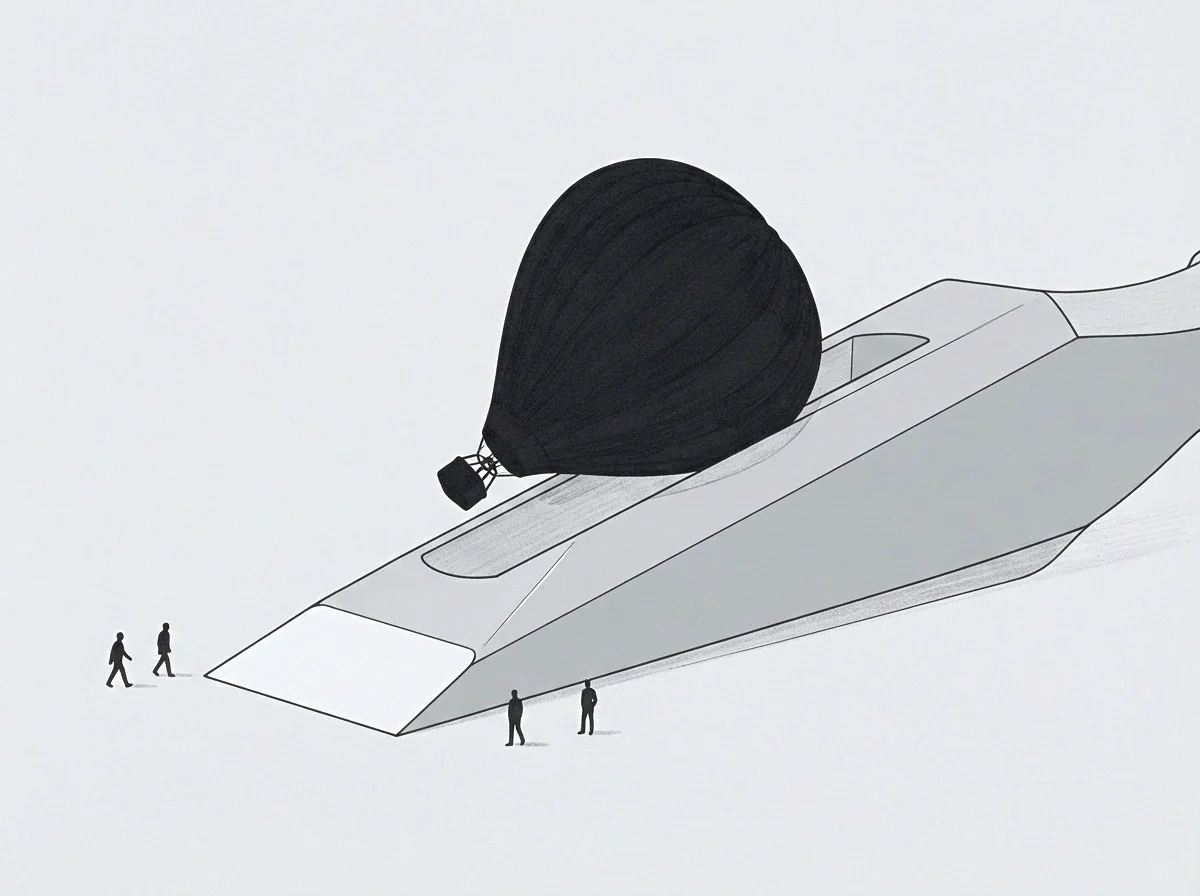
Spill
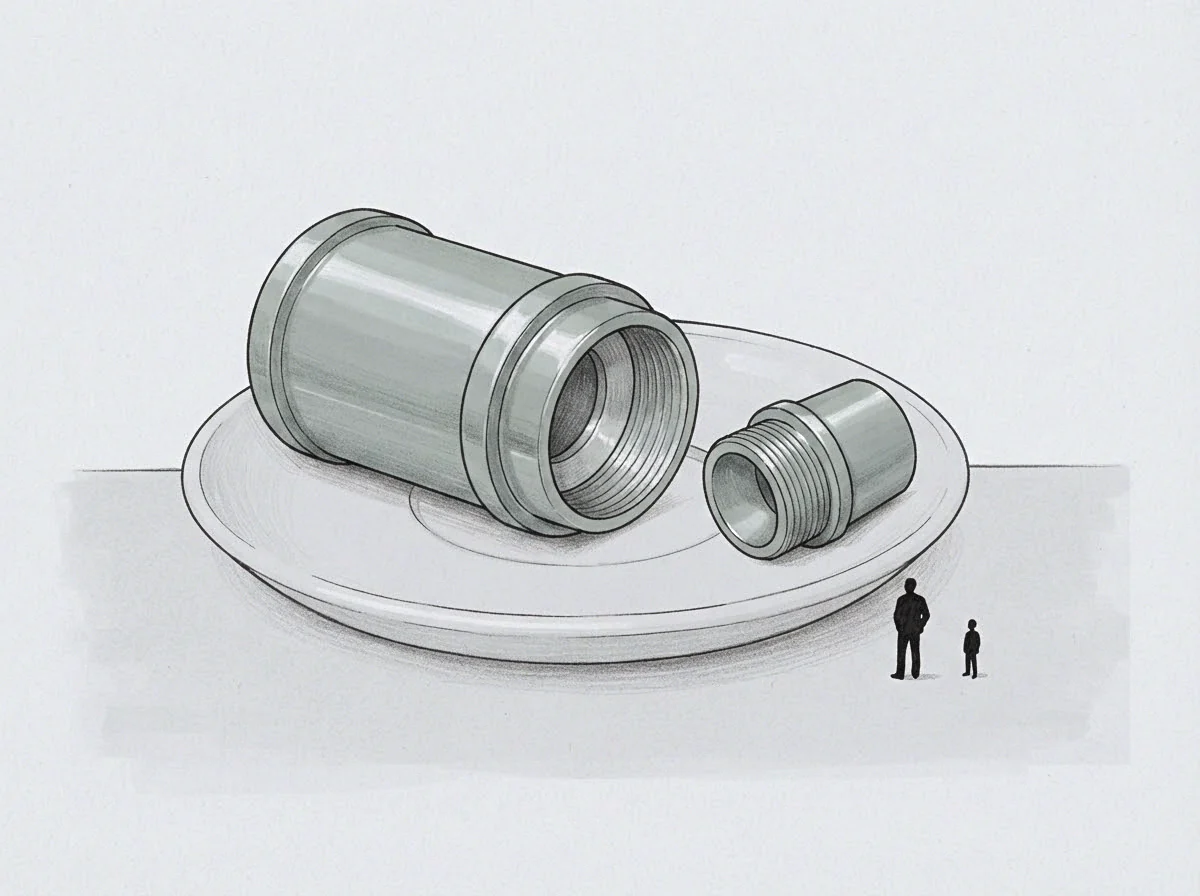
Mechanical Vectors Across Executive Interfaces
Workload transmission across co-founder boundaries follows predictable structural vectors. When commercial commitments outpace operational staffing, systemic load seeks the path of least administrative resistance, running directly through executive interfaces that lack explicit ownership clauses.
Organizational behavior research shows that unassigned responsibilities generate ambiguous operational boundaries. Under ambiguity, tasks migrate toward individuals with broad systemic context rather than discrete functional descriptions. Co-founders hold maximal contextual authority, making them primary absorbers of organizational strain.
- Functional leakage occurs when customer onboarding deficiencies require executive intervention, drawing technical leadership away from architectural deliverables and into routine operational remediation.
- Priority displacement forces strategic hiring initiatives behind immediate operational firefighting, creating compounding delays across organizational departments.
- Informal coordination friction consumes executive attention through circular scheduling dialogues, unminuted alignment calls, and fragmented tactical messages across dispersed platforms.
Each vector extracts capacity from long-term capital allocation and core execution. The partner absorbing spill experiences cognitive fragmentation, while the partner generating or bypassing it perceives steady execution velocity.
Unassigned organizational debt migrates toward whichever executive interface maintains the least procedural friction.

The Divergence of Operational Realities
Expansion deepens cognitive separation. One executive lives in forward-facing commercial discussions, securing commitments that the internal execution interface must deliver. The internal partner lives in delivery bottlenecks, engineering trade-offs, and hiring deficits.
Their interpretations of company health diverge completely.
The forward-facing executive reads continued product delivery as evidence of adequate capacity. Meanwhile, internal delivery continues solely because the operational partner subsidizes organizational deficits through continuous personal effort. The interface functions as a one-way shock absorber.
A technical leader might review pull requests at dawn, handle urgent billing issues at noon, and interview candidates at dusk. The commercial co-founder perceives high team velocity, unaware that operational headroom reached zero three weeks prior. That perceptual gap widens until explicit boundaries interrupt transmission.
Unchecked operational leakage degrades institutional memory, compromises code quality, and exhausts senior executive reserves before Series B transitions occur.

Floor
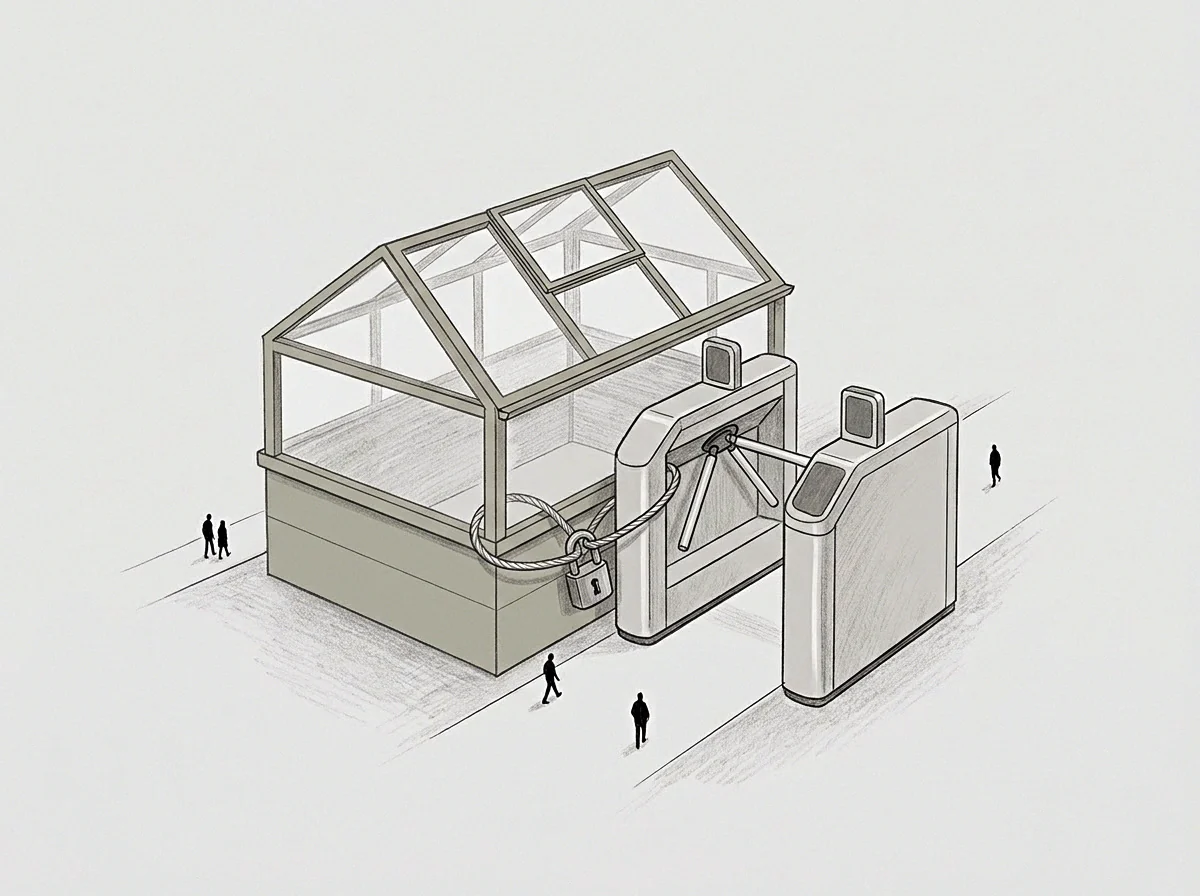
Structural Asymmetries in Enterprise Expansion
A durable execution interface requires structural baselines rather than psychological endurance. Companies scaling beyond initial market traction discover that personal goodwill provides an unstable foundation for high-volume execution interfaces. The interface demands structural floors below which operational compromises cannot drop.
Consider two execution configurations operating during an identical rapid expansion phase of fifty enterprise accounts within ninety calendar days. One operates on unstated assumptions, while the second deploys structurally bounded execution interfaces.
| Interface Dimension | Unstated Operating Interface | Structurally Bounded Interface |
|---|---|---|
| Escalation Authority | Ad hoc operational absorption by whichever co-founder views the channel first | Documented operational criteria triggering formal handoffs to specific tiers |
| Response Thresholds | Continuous personal availability via unscheduled direct messages and evening pings | Defined response windows governed by explicit commercial severity levels |
| Lateral Load Distribution | Operational spill handled through uncompensated executive overtime | Spill redirected to budgeted contractors or deferred feature schedules |
| Interface Signaling | Emotional withdrawal, terse operational replies, and acute tactical exhaustion | Explicit capacity notifications grounded in transparent system resource caps |
The comparative data highlights how structural bounds preserve executive function. In the bounded interface, capacity limits manifest as measurable resource constraints rather than relational grievances. When enterprise onboarding exceeds predetermined limits, the system triggers explicit commercial mechanisms: implementation dates push back, supplementary contracting budgets unlock, or secondary feature development pauses.

Can Execution Capacity Scale Without Structural Ceilings?
Executive performance literature confirms that unstructured cognitive multitasking degrades strategic decision quality. Human attention operates under fixed physiological parameters. When executive interfaces lack systemic floors, attention scatters across trivial escalations, degrading executive capacity for complex judgment.
Engineers recognize this dynamic in distributed software design. A system lacking rate limiters crashes under traffic spikes. Human execution interfaces operate under identical principles: a co-founder interface lacking explicit volume governors transfers acute stress directly into physiological reserves.
A hard floor preserves the company’s central intellectual assets by turning personal boundaries into institutional policies. Operational load moves away from human relationships and onto formal administrative architecture.
Capacity limits stated as objective structural parameters invite analytical problem-solving rather than personal defensiveness.
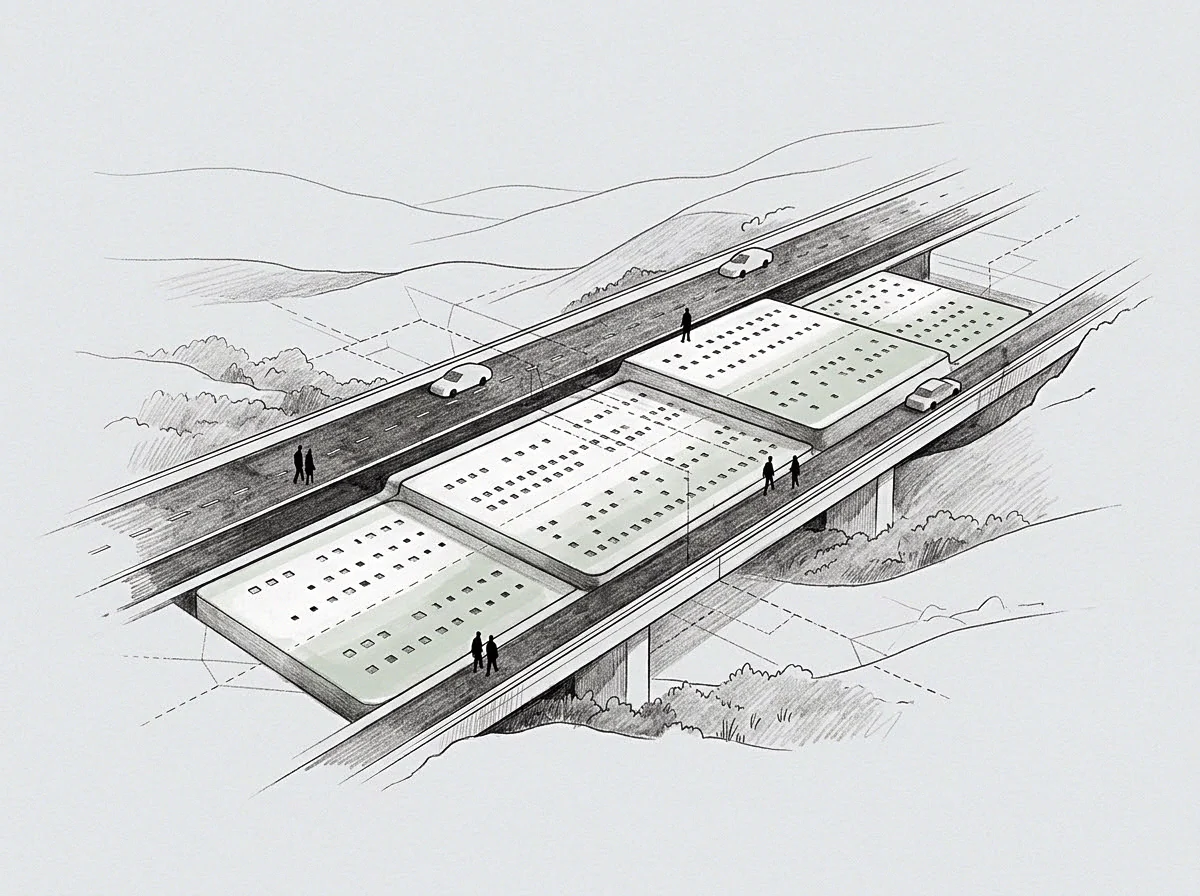
Silence
Late-stage breakdown in executive interfaces rarely begins with public confrontation. It starts when spontaneous communication stops. The partner absorbing unstated load stops sharing exploratory thoughts, drops casual tactical updates, and limits communication to terse operational confirmations.
Attachment research applied to adult professional partnerships highlights how chronic regulatory failure generates withdrawal. When an individual repeatedly signals distress through informal cues without achieving systemic adjustments, their internal working model shifts toward self-reliance. Silence becomes a protective perimeter.
Silence functions as a defensive perimeter when repeated interpersonal feedback fails to alter operational allocation.
The commercial co-founder reads this silence as executive competence, stability, or emotional disengagement, assuming that because complaints have stopped, equilibrium has returned. In reality, the operational partner has concluded that negotiation yields zero structural relief, choosing energy preservation over futile coordination.
In high-stress industrial environments, similar patterns precede structural failures. Submariners and aviation crews show sharp communication drops when cognitive saturation hits extreme ceilings. Relational silence is an acute warning metric, not peaceful alignment.
Will continuing silence allow adequate strategic coordination during the upcoming commercial audit?

Line
Establishing operational lines demands formal demarcation of functional territory, concrete resource allocation, and explicit handoff criteria. Execution interfaces stabilize when co-founders treat personal capacity as an unalterable operational constraint, replacing relational resentment with operational clarity.
Drawing an execution line requires defining which operational events trigger executive escalation and which stay within mid-level administrative bands. High-growth enterprises achieve operational resilience through documented protocols rather than unstated relational sacrifices.
A founder establishes durable boundaries by stating operational terms with flat, non-negotiable precision. When unassigned customer issues surface, the designated partner routes them to pre-approved support contractors or pauses incoming onboarding schedules until hiring catches up with demand. The line holds because it sits outside interpersonal dispute, operating as a basic condition of commercial viability.
When an explicit operational line binds executive capacity, incoming commercial surges meet documented rate limiters that preserve executive health and organizational focus.