
Autonomic Regulation Demands Under Rapid Structural Expansion
Rapid organizational scaling overloads executive autonomic reserves by substituting peer co-regulation with solitary, asymmetric metabolic maintenance.
Ceiling
Four direct reports send updates within twenty minutes on a Tuesday evening while an investor asks for an urgent revision to the financial model. The person holding the phone feels their throat tighten, their peripheral vision narrow, and their shoulders lock against the chair. This physical constriction is not simple labor fatigue; it is an acute autonomic threshold event.
In rapid organizational scaling, incoming signals multiply faster than internal buffers can absorb them. The operator’s nervous system ends up functioning as the terminal shock absorber for the enterprise, catching every unassigned operational variance as it travels upward. When throughput triples across six months, the demand for autonomic regulation outpaces biological recovery.
The founder stays in chronic sympathetic activation, punctuated by abrupt drops into immobilisation.
The brain operates under strict bioenergetic allocation rules, budgeting metabolic assets against social and physical surroundings. When a person regulates in isolation, threat-detection circuitry treats the environment as resource-scarce and hazardous. Social baseline theory indicates that the human brain defaults to assuming proximity to reliable conspecifics.
Under that baseline, managing environmental threats carries a lower neural expense because the load is distributed across multiple nervous systems. Rapid organizational expansion upends this architecture. The founder sits at the structural peak of an expanding enterprise, surrounded by dozens of people who depend on them for direction, reassurance, and strategic orientation.
Headcount rises while functional reciprocity falls away. The environment is dense with social demands, yet largely stripped of baseline relational support.
The nervous system budgets threat monitoring at maximum expense when proximity yields obligation rather than shared physical relief.
Self-regulation under heavy operational load carries an exceptionally high metabolic expense. The prefrontal cortex burns circulating glucose to suppress amygdala-driven vigilance while coordinating strategic decisions. When dozens of new personnel join an organization, their unresolved operational anxieties flow directly toward the top.
Each new hire acts as an uncalibrated autonomic variable seeking stability. The founder provides borrowed regulation to these teams, absorbing their uncertainty and projecting composure in executive reviews. Employees walk away from those interactions physiologically settled, their heart rate variability restored by proximity to an apparently composed leader.
The founder remains in the room, carrying the unmitigated metabolic expenditure of that stabilization, funding the calm of thirty people out of an individual, non-renewable physiological budget.
Left unchecked, this continuous metabolic expenditure forces sharp biological adaptations. Chronically elevated catecholamines and cortisol disrupt slow-wave sleep, impair glucose tolerance, and raise basal heart rate. As regulatory headroom shrinks, the nervous system stops distinguishing structural threats from routine administrative delays.
Simple calendar invites begin to feel like invasive demands on remaining regulatory capacity. This deterioration plays out even while revenues grow, product cycles hit their marks, and board meetings conclude with unanimous approval. Biological solvency degrades along its own timeline, separate from financial performance.

Anchor
Shared Load and Solitary Expense
The neurobiology of co-regulation relies on direct physical cues: respiratory cadence, vocal tone, prosody, and the micro-movements of facial muscles. When two people share an operational setting with genuine mutual trust, their autonomic nervous systems continuously exchange safety signals. High-frequency heart rate variability measurements show that social proximity to a competent peer lowers dorsal anterior cingulate cortex activation during acute threats.
Working beside an accountable equal reduces the perceived difficulty of a task, flattening a steep climb into a manageable grade. That dampening effect disappears as soon as the relational field turns asymmetric. In an expanding enterprise, a founder is rarely seated near anyone capable of absorbing systemic shocks on their behalf.
Structural expansion replaces horizontal peer relationships with vertical hierarchies of dependency. Subordinates bring problems charged with biological stress; investors bring capital coupled to performance demands. A founder often carries an internal working model that equates safety with personal vigilance, a pattern established early in development when anticipating instability was the only reliable way to prevent disruption.
Leaders with this background build corporate structures that reflect their internal regulatory habits. They position themselves as the sole functional anchor of the firm, creating a setup where every high-stakes decision terminates on their desk. The architecture of the firm ends up mirroring the architecture of their nervous system.
An uncalibrated template treats every offer of shared assistance as an administrative risk.
A functional comparison between baseline operational states clarifies the metabolic divergence that occurs during rapid growth periods.
| Variable | Distributed Peer Co-Regulation | Asymmetric Structural Dependency |
|---|---|---|
| Prefrontal Metabolic Cost | Moderate; cognitive load distributed across trusted agents | Severe; solitary executive synthesis under vigilance |
| Vagal Regulation Tone | Preserved high-frequency band oscillations | Suppressed; prolonged vagal withdrawal |
| Allostatic Load Accrual | Intermittent; cleared during relational rest periods | Continuous; compound accumulation without biological reset |
| Threat Signal Processing | Attenuated by reciprocal nonverbal reassurance | Amplified by the necessity of outward composure |
| Relational Topology | Horizontal nodes sharing bidirectional stabilization | Central hub absorbing periphery perturbations |
Attachment security within an executive seat dictates how a person carries structural weight. An individual with an autonomous internal working model seeks capable partners, delegates autonomic authority, and builds genuine shock absorbers into the organization. Those who learned early to act as the steady emotional anchor for unstable caregivers do the opposite.
They interpret incoming operational demands as physical proof of their utility, routinely mistaking high distress tolerance for operational health. Lacking the internal habit of receiving support, they treat authentic offers of assistance from operating partners as noise or threats to competence. They remain isolated not for lack of staff, but because their nervous system cannot let another person carry real weight.
The structural consequences of this dynamic run deep: operational bottlenecks form across the executive tier, executive tenure shortens through exhaustion, and strategic agility disappears once the central regulator hits biological saturation.
Room
Physical Spaces of High-Throughput Management
The sensory environment of rapid growth compounds the metabolic cost of self-regulation. Open executive floors, constant chat alerts, back-to-back video calls, and rapid context-switching prevent the parasympathetic nervous system from starting restorative recovery cascades. The human eye requires regular focal breaks to alter vergence and discharge arousal, yet standard executive schedules keep sightlines locked at sixty centimeters for fourteen straight hours.
Physical boundaries dissolve precisely as relational demands multiply. Designed for cross-functional transparency, the open office functions instead as an acoustic and visual amplifier for collective anxiety. The founder sits in the middle of it, exposed to every shift in team mood, every murmur of friction, and every sudden escalation.
Without spatial insulation, minor administrative questions land as immediate somatic intrusions. When direct reports keep the founder in plain sight, they scan posture and expression for clues about company health. Sensing that scrutiny, the founder stiffens their posture, swallows sighs, and modulates vocal pitch to project control.
Maintaining this physical composure under heavy cognitive load burns substantial glycogen across the day, requiring continuous efferent braking from the ventromedial prefrontal cortex. The body is drafted into service as an indicator of institutional stability, cutting off natural somatic discharge like pacing, tremor, sighing, or stepping away.
The operational rhythm requires architectural insulation to protect autonomic integrity against relentless relational demands:
- Spatial Isolation Enclosures establish sensory boundaries that interrupt continuous visual surveillance from team members, permitting spontaneous somatic decompression.
- Asynchronous Processing Windows interrupt real-time operational pings for three-hour intervals, lowering the baseline vigilance of the sympathetic nervous system.
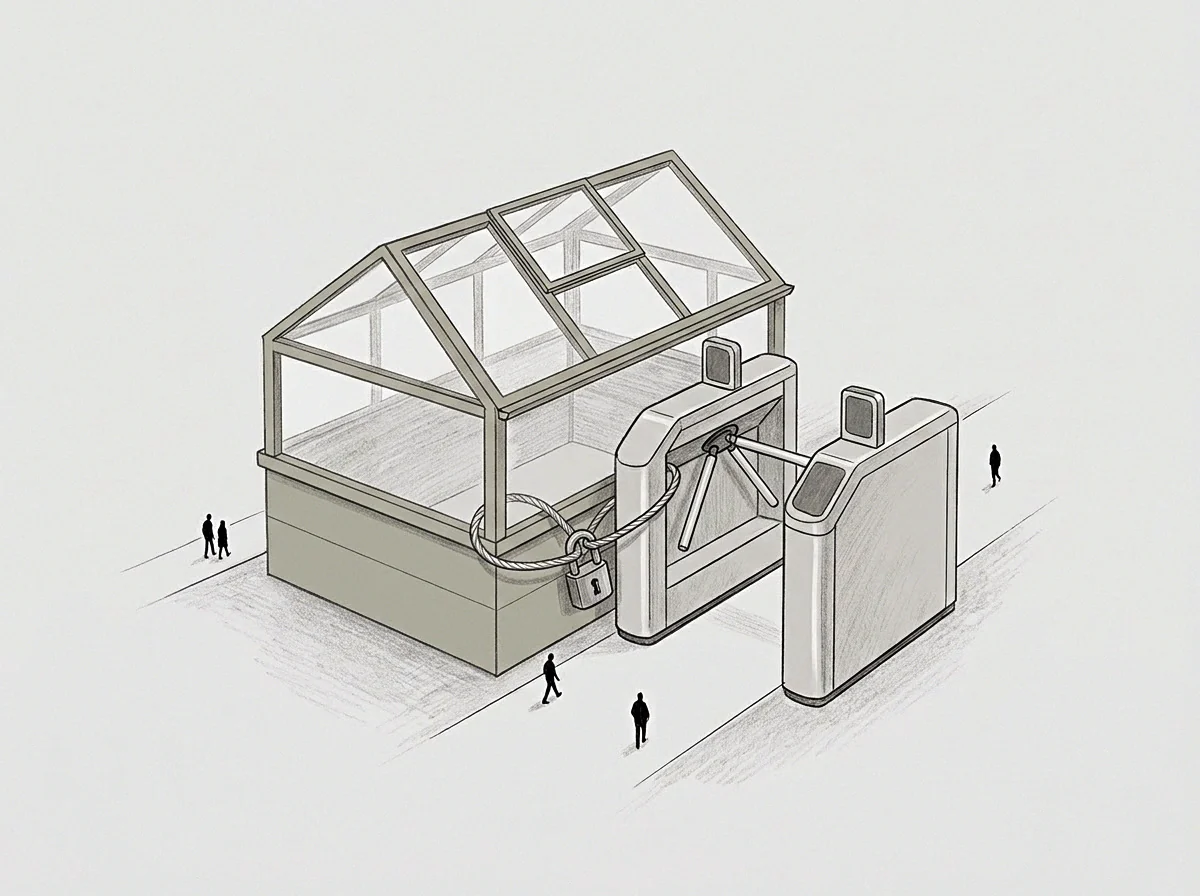
- Physical Threshold Crossings establish ritualized boundaries between public organizational spaces and private cognitive chambers, restoring high-frequency vagal tone.
Growth without physical boundaries turns executive presence into an exhaustible asset. The room itself needs the capacity to absorb operational momentum. When an executive works without acoustic dampening or physical seclusion, their nervous system stays on alert.
Early-stage companies routinely favor open accessibility over biological insulation, an architectural choice that steadily undermines executive function. Physical space remains an unmeasured driver of autonomic drain.
A room either shelters an individual’s regulatory reserves or drains their energetic capacity to cover for structural gaps in the organization.
Load

The Mechanism of Allostatic Failure
The term allostatic load describes the cumulative physiological wear resulting from sustained adaptation to chronic demands. During brief operational crises, allostatic responses do their job: blood pressure rises, glucose mobilizes, immune priorities shift, and attention narrows onto the immediate hazard. When rapid expansion turns acute crises into a daily standard, that adaptation becomes destructive.
Central nervous system receptor fields downregulate under constant glucocorticoid exposure. Sleep architecture breaks apart, showing a drop in delta-wave restorative sleep alongside frequent stage-two arousals. The nervous system loses its elasticity, unable to settle into parasympathetic rest or summon clean sympathetic drive.
During prolonged expansion, executives frequently misread their own physical signals. Someone in persistent autonomic depletion often mistakes hypovigilance for calm. The underlying state is functional freezing, a conservation reflex governed by the unmyelinated dorsal motor complex of the vagus nerve.
The executive sits through complex reviews feeling detached and flat, unable to muster genuine enthusiasm while their resting heart rate sits at eighty-eight beats per minute. They describe themselves as clear-headed, even as cognitive testing reveals sharp drops in cognitive flexibility, divergent problem solving, and nuanced emotional processing. The system has simply dialed down internal output to stave off total collapse.
Biological exhaustion disguises itself as strategic stoicism when dorsal vagal freezing takes command of executive function.
A typical scenario in a growth-stage company illustrates the pattern: a software firm expands from eighteen employees to ninety within nine months following an institutional capital event. The founder-chief executive officer continues to run weekly one-on-ones with all team leads while negotiating five partnership contracts directly. Across ninety days, their average resting heart rate climbs from sixty-two to seventy-eight beats per minute, while their heart rate variability root mean square of successive differences drops from fifty-four milliseconds to nineteen milliseconds.
They report feeling strangely patient, almost detached, during board meetings that once triggered sharp anxiety. The board and team welcome this change, reading it as executive maturity. That apparent composure is autonomic depletion.
Two months later, the founder suffers complete sleep disruption, accompanied by intractable depressive symptoms and an inability to work through basic financial models.
This trajectory shows how systems misjudge the outward signs of nervous breakdown. Companies routinely reward the suppression of affect because composed leaders make administrative management simpler. The hidden cost in biological capacity accumulates quietly in the physical body of the leader.
When operational capacity breaks, the organization treats it as an unforeseen personal crisis or sudden health emergency. The progression was predictable, recorded across months in the steady decline of measurable autonomic reserves.
This raises the core operational question: how an expanding enterprise detects physiological insolvency before organizational performance collapses.

Pacing
Managing autonomic load calls for structural boundary controls rather than personal wellness habits. Executive health advice tends to fixate on individual routines: morning breathwork, cold plunges, dietary tweaks, and meditation apps. These measures act as modest metabolic palliatives on top of broken operational systems.
An executive cannot breathe their way past an organizational structure that demands forty high-stakes interactions a day. Protection has to come from operational pacing, structural gating, and hard limits on how demands reach the leader’s biology.
The first structural measure is placing strict concurrency limits on executive attention. Cognitive neuroscience shows that every active operational thread keeps a loop open in working memory, pulling subcortical attention just to monitor its status. When an executive carries twenty open initiatives, the autonomic nervous system budgets energy as though all twenty were immediate emergencies.
Concurrency gating establishes an institutional ceiling: the executive sponsors no more than three core initiatives at one time. New efforts stay queued until an active project finishes or transfers cleanly to operational ownership. The organization has to create holding mechanisms for strategic momentum instead of offloading ambiguity onto the founder’s calendar.
The second structural intervention is appointing an operational surrogate whose explicit job is to absorb autonomic shocks from the operating environment. This seat usually takes the title of executive vice president, chief operating officer, or chief of staff. The person in this role requires an autonomous internal working model, high cognitive bandwidth, and the physiological capacity to project stability without drawing regulation from the chief executive.
They act as a biological buffer, blunting the force of incoming shocks before those disruptions reach the founder. The firm funds the position to protect the autonomic reserves of its chief strategic architect, alongside handling execution duties.
The third intervention requires building deliberate relational asymmetry into the founder’s private life. A founder cannot recover biologically if personal relationships duplicate the extractive demands of the company. They need settings where they never carry the regulator role.
This describes earned security, established through consistent, grounded contact with a stable peer who asks for no strategic direction, offers non-evaluative physical presence, and remains steady when the founder shows exhaustion. In that dynamic, the founder’s nervous system drops defensive bracing, allowing ventral vagal activation to drive physical recovery. This state cannot be reasoned into existence; it requires hundreds of hours of unburdened contact.
When a firm limits concurrency, deploys a competent surrogate, and protects private relational foundations, the founder’s physiological baseline stabilizes. The enterprise shifts from depending on the exhausting self-regulation of an isolated person to operating on a durable, metabolically viable structure. Whether a company can scale without leadership failure depends on the strength of these institutional shock absorbers.
Sustained commercial performance rests on the discipline of human autonomic capacity management.
An enterprise that ignores these structural shock absorbers consumes the physical capacity of its leadership, trading finite neural reserves for short-term commercial speed until the underlying biology gives way.