
Long Term Capital Allocation Degradation Caused By Executive Autonomic Dysregulation Under Ungated Demands
Executive autonomic dysregulation under ungated demands truncates planning horizons and systematically skews capital allocation toward short-term loss avoidance.

Press
Past midnight, four messaging streams remain open on a screen while a founder weighs a twenty-million-dollar commitment to a secondary production line. Operational alerts about supply chain delays arrive every two minutes beside board inquiries on quarterly gross margins. The executive reviews the term sheet for the fifth time, struggling to work out the internal rate of return across a five-year window.
The immediate impulse is simply to sign off on the contract to end the exchange and clear the monitor.
This pattern stems directly from autonomic physiology. Unbuffered operational demands hold the sympathetic nervous system in sustained activation. Without schedules or intake filters, the nervous system treats the constant inflow of signals as an ongoing threat.
Cardiac vagal tone drops, heart rate variability narrows, and systemic norepinephrine and cortisol stay elevated through every waking hour.

Physiological Constraints on Strategic Processing
Complex cognitive work depends on stable autonomic regulation. Projections of multi-year cash flow, probability weighting, and abstract modeling all require strong functional connectivity between the dorsolateral prefrontal cortex and the ventral striatum. Chronic autonomic disruption breaks down this circuitry, as elevated catecholamine levels physically alter synaptic transmission across the prefrontal network and route processing toward the amygdala and basal ganglia.
In sustained sympathetic arousal, cognition shifts to immediate pattern matching and threat avoidance. Projecting outcomes across distant horizons requires neural headroom that an aroused autonomic system cannot sustain. In this state, capital allocation choices systematically favour immediate liquidity over assets that compound over years.
Persistent sympathetic arousal forces executive neural processing to prioritize immediate loop closure over long-term valuation.
Without gates on incoming communication, an executive carries cognitive load across the entire day. Each open operational thread draws on central nervous system metabolic reserves. Biologically, an unread note about a minor shipping delay triggers the same autonomic response as an existential solvency threat.
Long before conscious exhaustion sets in, strategic depth has already eroded.
Treating this state as an attitude problem compounds the damage. Boards and teams often counter slower decision-making by pressing for faster replies or layering on administrative staff who inadvertently generate more notifications. The resulting volume pushes autonomic tone further off balance, while basic asset allocation decisions drift without oversight.
Decay
When executive dysregulation goes unaddressed across quarters, capital misallocations accumulate along clear physiological pathways. As allostatic load builds, the prefrontal networks tasked with evaluating asymmetric risk run short of metabolic resources. Capital choices then begin to reflect autonomic depletion instead of economic assessment.
The decline in allocation quality appears across several distinct shifts in risk tolerance and time horizon:
- Horizon Truncation narrows investment horizons from multi-year compounding cycles down to immediate quarters under continuous physiological pressure.
- Asymmetric Loss Aversion exaggerates perceived downside, prompting the early cancellation of high-yield research programs.
- Loop-Closure Liquidation commits capital to weak acquisitions or quick asset sales simply to remove pending administrative matters from the agenda.
- Decision Inertia locks capital inside underperforming legacy units because the initial friction of reallocating assets demands more cognitive energy than remains available.
Discount rates shift internally without conscious intent. With vagal tone suppressed, future returns are discounted sharply. A dollar expected five years out carries little subjective weight to an organism managing immediate systemic overload.
Capital is drawn away from long-term growth projects and routed toward low-risk, low-return operational tasks that offer immediate, if negligible, certainty.
Unbounded operational inputs convert long-term capital strategy into short-term hazard mitigation.
Divestment presents another clear failure mode. Deciding to shut down an underperforming division requires sustained focus and emotional regulation. In an overloaded state, an executive sidesteps the high activation energy needed to force structural change.
Underperforming units continue to draw capital simply because preserving existing operations costs fewer metabolic resources in the moment than executing a clean exit.
Tying capital commitment reviews to structured recovery intervals helps stabilize portfolio returns across full market cycles.

Tally
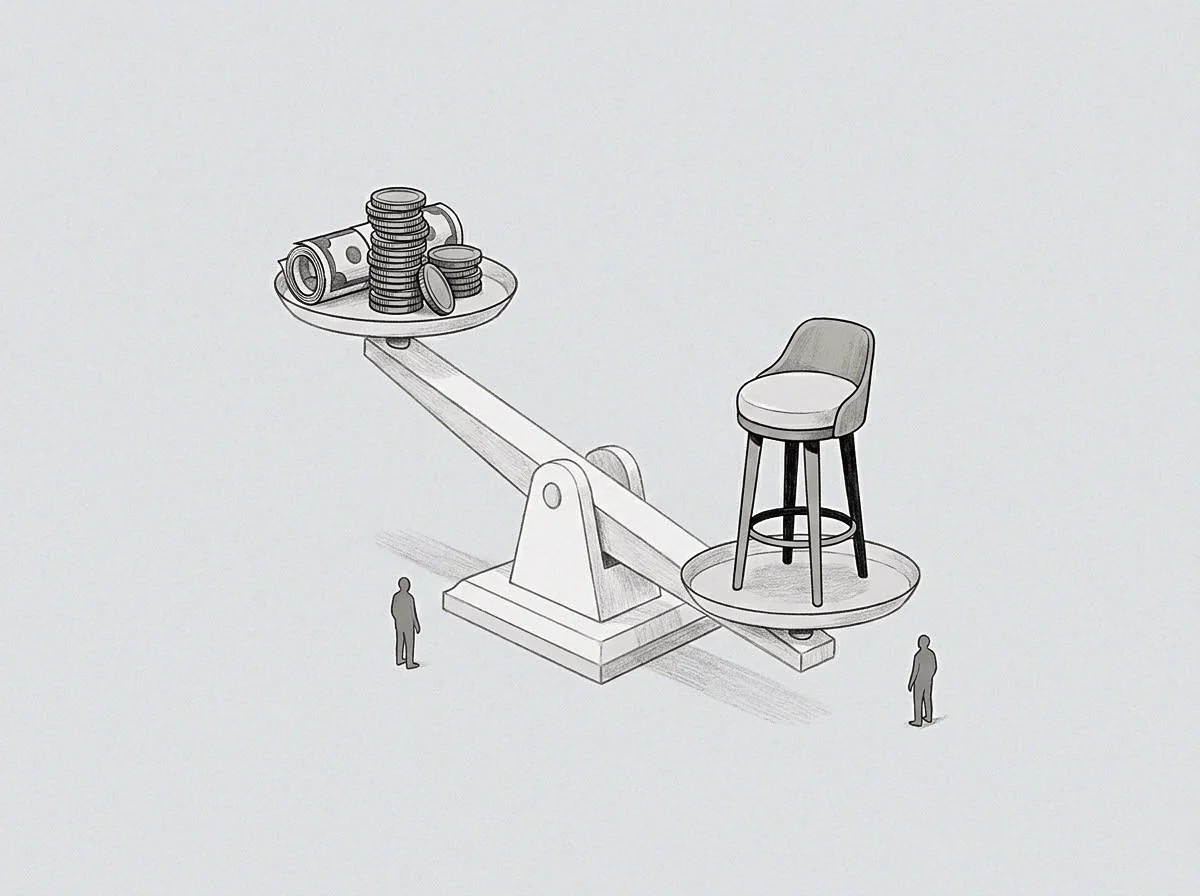
Comparing baseline capital efficiency against deployment under autonomic fatigue reveals the operational cost of physiological strain. Capital decisions made under chronic sympathetic arousal depart measurably from standard financial models, lowering enterprise valuation, balance sheet liquidity, and retention.

When Does Continuous Demand Alter Risk Assessment Parameters?
The break occurs once operational message volume outpaces prefrontal processing limits, prompting the autonomic nervous system to throttle long-range analytical functions. Risk calculations change in direct response to that physiological shift.
| Decision Parameter | Baseline Autonomic State | Dysregulated Autonomic State |
|---|---|---|
| Evaluation Horizon | 3 to 7 Years | 3 to 90 Days |
| Discount Rate Applied | Standard Weighted Average Cost | Hyperbolic Elevated Rate |
| Failure Recognition | Proactive Asset Reallocation | Reactive Defensiveness or Inertia |
| Reallocation Speed | Deliberate, Stage-Gated | Impulsive or Prolonged Stagnation |
| Optionality Value | High Valuation of Flexibility | Low Valuation, Preference for Certainty |
The table illustrates how capital deployment parameters alter under sustained strain. In an uncompromised state, an executive weighs uncertain upside against immediate downside risk. Under persistent autonomic overload, uncertainty is processed directly as threat.
The result is defensive capital hoarding during market expansions followed by expensive, reactive commitments when minor operational problems flare up.
A dysregulated executive system transforms strategic optionality into an intolerable attention cost.
The organization absorbs this drag over multiple budget cycles. Directors notice a drop in strategic clarity, usually blaming market shifts or competitive headwinds. The real driver sits inside the executive office, where a constant stream of notifications sustains an unbroken state of hyperarousal.
During strategic reviews, the founder withdraws or reacts sharply whenever long-range planning documents require revisions.
Clamp
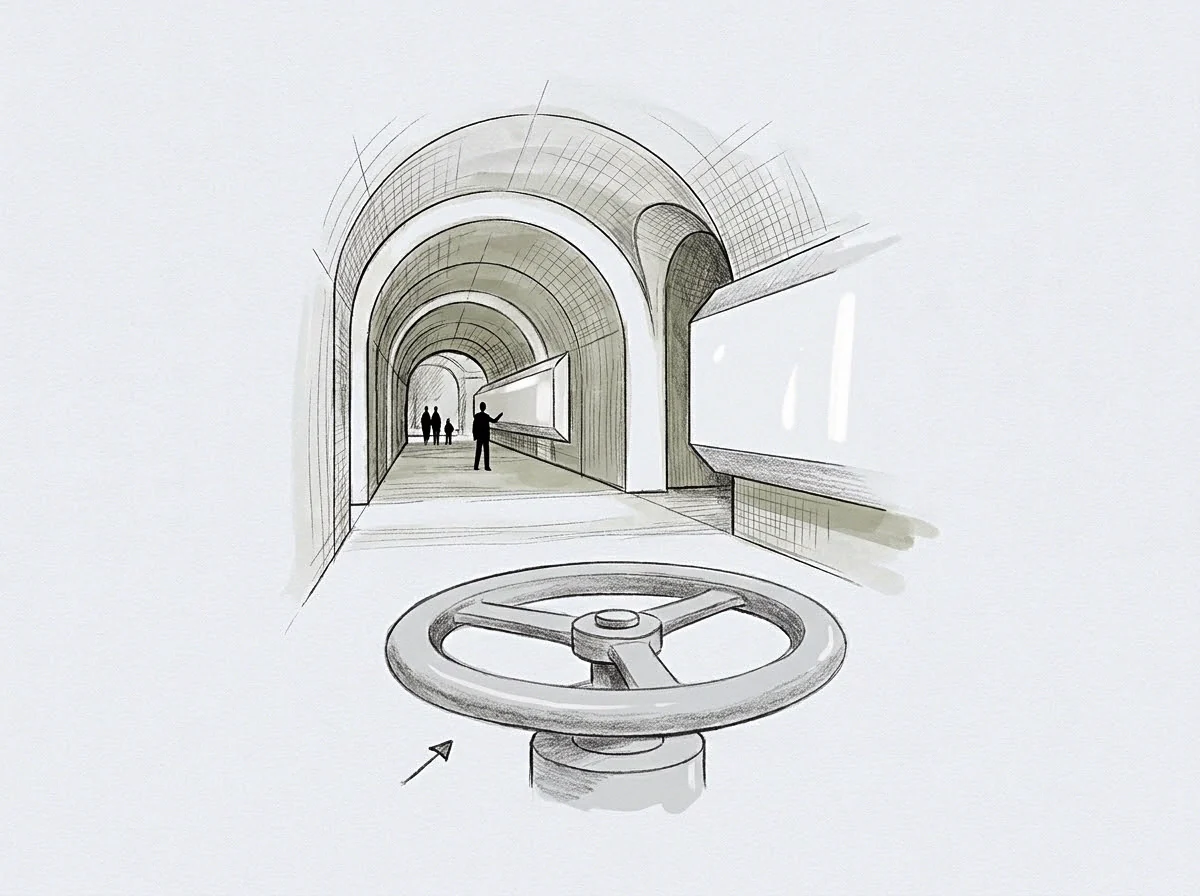
Protecting long-term capital allocation requires filtering inputs at the boundary rather than leaning on executive discipline. Willpower depletes quickly under sustained sympathetic drive. Restoring baseline autonomic tone and protecting prefrontal function requires physical and operational barriers around executive access.
Restoring disciplined capital allocation calls for clear controls on incoming operational demands:
- Establish strict air-gaps by separating executive accounts from real-time messaging feeds.
- Limit capital allocation reviews to morning blocks kept clear of daily operational metrics.
- Route non-emergency escalations through daily asynchronous briefings prepared by chief staff officers.
- Require a forty-eight-hour pause between the initial review of an investment proposal and final capital authorization.
When intake channels stay open, triage replaces strategy. Filtering operational inputs forces lower-tier resolution, reclaiming executive capacity for complex work. Cutting down constant task-switching lowers baseline sympathetic tone and lets cardiac vagal regulation recover.
As balance returns, the prefrontal cortex regains its capacity to evaluate multi-year probabilities accurately.
Structural gates around executive communication restore the prefrontal capacity required for long-term valuation.
Calendar and message queues stay saturated unless structural barriers restrict incoming volume. Executives frequently resist these boundaries, equating constant availability with effective leadership. In practice, unrestricted access consumes the exact cognitive capacity that makes executive oversight valuable.
Gating availability is a basic risk-control measure for enterprise capital.
Communication channels restricted by scope, date, and terms demand far less attention capacity than a single unresolved operational problem.

Yield
Re-establishing autonomic equilibrium quickly improves allocation accuracy. As parasympathetic tone normalizes, internal discount rates follow suit. The executive regains the mental space to work through balance-sheet trade-offs, model non-linear risks, and hold illiquid positions through transient market noise.
Capacity drops quickly whenever operational demands overrun structural barriers. Governance structures ought to treat executive workload density as a direct balance-sheet risk factor. Tracking unresolved operational loops alongside recovery windows provides an indirect gauge of strategic quality, ensuring capital allocation tracks long-term value creation rather than immediate crisis management.
How long can a business maintain its compounding rate before uncontrolled operational noise erodes autonomic balance and distorts capital allocation across the portfolio?