
Building A Second Regulatory Template When Facing Acute Enterprise Shocks
A founder facing enterprise shocks must build a second regulatory template through repeated co-regulation with a non-stakeholder to avoid metabolic collapse.
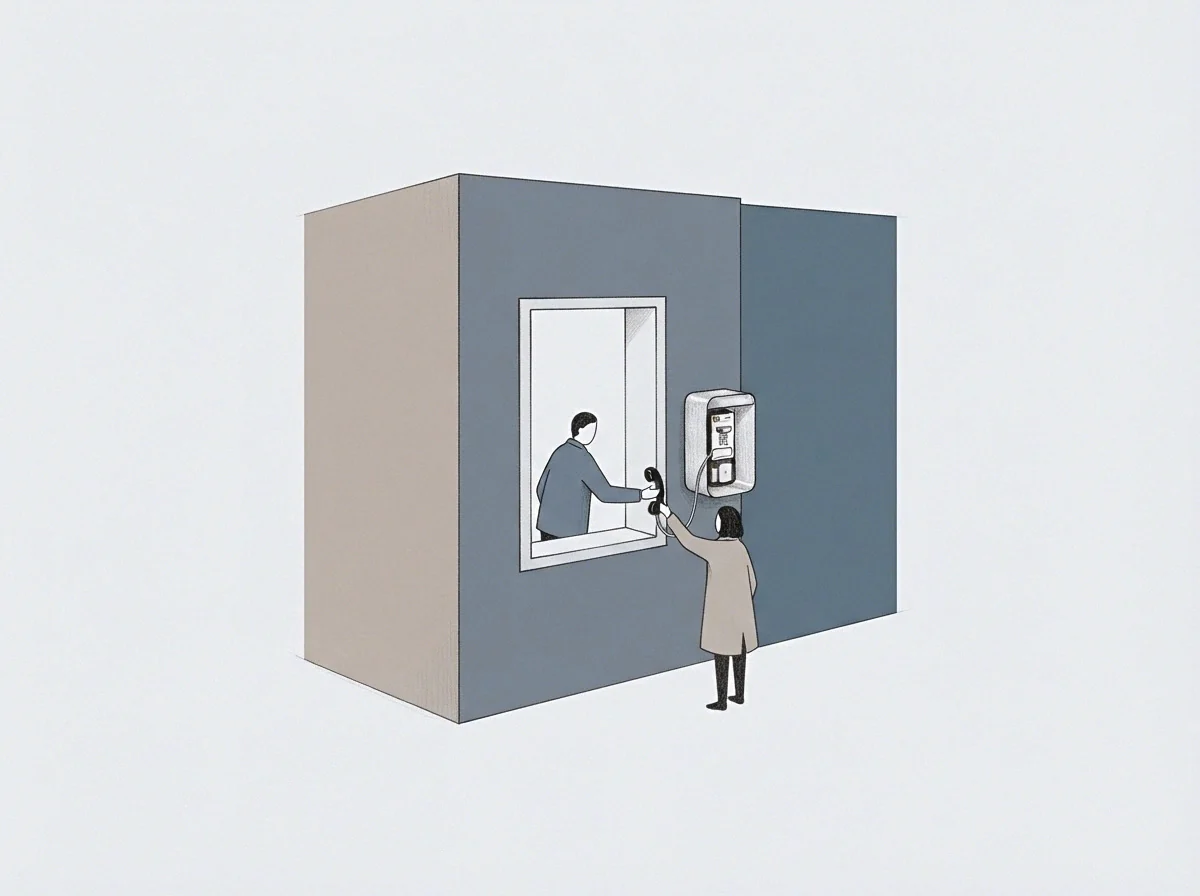
Weight
Three unread messages from department heads sit above a revised term sheet while cash runway drops below ninety days. Each sender asks for reassurance without stating the question plainly. The founder reads through them, keeps breathing slow, replies with operational instructions, and registers the sudden constriction in the chest as ordinary fatigue.
That physical constriction is the metabolic invoice for unassisted regulation. Under social baseline theory, the human nervous system treats the presence of predictable, reliable others as the baseline condition for conservation of effort. When threat appears in proximity to a competent peer, the hypothalamus downregulates autonomic arousal, blood pressure stabilizes faster, and the prefrontal cortex burns fewer glucose reserves to hold attention steady.
Operating as the solitary source of steadiness across an organization in distress reverses this biological subsidy. The person in the center finances the calm of the executive team, the board, and the staff out of an unreplenished personal metabolic account.
Enterprise shocks break the primary regulatory template precisely because that template was formed to make the individual indispensable to the stability of others. An internal working model constructed early in life often links relational security to self-sufficiency. In this backwards template, the individual acts as the regulator for everyone in the room while maintaining zero expectation of receiving regulation.
When a sudden shock strikes an enterprise, capital flight, a vendor collapse, or immediate litigation, every stakeholder reflexively routes panic toward that central figure. The central figure absorbs the incoming volatility, strips out the terror, and returns structured priorities. That sequence preserves operational execution across the firm.
It also accelerates personal exhaustion, because the nervous system carries an enterprise-scale load on a single-circuit architecture.
A regulatory template formed on unilateral steadiness interprets every offer of aid as a secondary operational risk.
Self-regulation under acute enterprise strain demands massive prefrontal energy. The brain budgets threat responses through continuous calculation of relational resources. When those resources are perceived as zero or negative, meaning others are seen as consumers of calm rather than suppliers, the dorsal anterior cingulate cortex and amygdala operate without social buffering.
Threat levels remain elevated for weeks. Sleep fragmentation follows, immune signaling alters, and working memory contracts. The founder attempts to solve this systemic exhaustion through cognitive reframing, physical exercise, or tighter scheduling.
These adjustments fail to shift the underlying drain because they operate within the primary template. Insight into the template changes nothing about baseline energy allocation. The nervous system updates its predictive budget only when physical reality proves another stable nervous system can hold load without buckling.
The consequence of maintaining a single backwards template through a protracted enterprise collapse is total operational numbness, leaving the company leader technically functional during working hours and incapacitated the moment the office empties.
Drain
Borrowed regulation operates silently across an organization. Subordinates and investors do not say they feel calmer after speaking with the founder; they simply report renewed confidence in the plan. The calm they experience is borrowed directly from the founder’s metabolic expenditure.
In laboratory measurements of threat load, holding the hand of a trusted partner cuts threat-related neural activation by half, whereas holding the hand of a stranger yields smaller reductions, and facing threat alone demands maximum prefrontal suppression. In an enterprise shock, the directional flow runs entirely in reverse. The leadership team borrows down their own allostatic load by anchoring to the founder’s physiological stillness.
The founder acts as the shock absorber for ten or twenty nervous systems simultaneously. This dynamic conceals enterprise fragility behind one person’s capacity to absorb strain.

Predictable Relational Transfers Under Enterprise Threat
Relational contracts inside a venture turn brittle the moment cash reserves contract. The leadership team experiences panic, which manifests as endless alignment requests, nitpicking over operational minutiae, and sudden drops in personal initiative. Each of these behaviors is a covert bid for regulation.
The founder mistakes these bids for operational friction and attempts to resolve them with longer memos and additional meetings. That mistake multiplies the caloric burn. The table below delineates how regulation moves across the two templates during acute disruption.
| Dimension | Primary Backward Template | Second Built Template |
|---|---|---|
| Threat Appraisal | Threat absorbed alone; solitary prefrontal suppression | Threat shared across trusted peers; baseline social buffering active |
| Receptor Availability | No receptor slot; offers of support provoke suspicion | Active receptor slot; physiological down-regulation allowed |
| Stakeholder Panic | Absorbed and converted into calm for others at founder expense | Boundaried operational triage; panic reflected back to source |
| Cognitive Capacity | Tunneling attention; selective working memory erosion | Preserved strategic bandwidth; open cognitive loops resolved |
| Metabolic Surcharge | Continuous hyperarousal; chronic elevated basal cortisol | Pulsed mobilization followed by complete parasympathetic recovery |
The table demonstrates why sheer willpower fails to prevent collapse during extended corporate crises. A founder running the primary template remains blind to the asymmetrical extraction until prefrontal capacity breaks down entirely. The executive team leaves the board meeting refreshed, having deposited their unmanaged panic into the person at the head of the table.
That person stays behind in the empty room, stares at the whiteboard, and cannot summon the cognitive clarity to review a balance sheet. The cost was paid in glucose, autonomic control, and physiological headroom. None of that cost appears on the company balance sheet, yet it dictates whether the firm survives the shock.
When a proven operator projects unshakeable stillness under threat, the organization responds by transferring its unresolved panic to that exact seat.
A founder cannot simply state that others should regulate themselves. When panic sweeps through an executive team, the social field naturally clusters around the most stable reference point. If that reference point maintains an open channel of total unilateral containment, the organization will exhaust that point without malice.
The team members believe they are collaborating. They believe they are working hard on the problem. In reality, they are offloading the unbearable emotional cost of enterprise insolvency onto a single nervous system.
The founder permits this extraction because the primary template equates personal value with unconditional containment capacity.
The partner across the table would say that staying perfectly calm while the company bleeds capital looks less like leadership and more like someone holding their breath underwater.
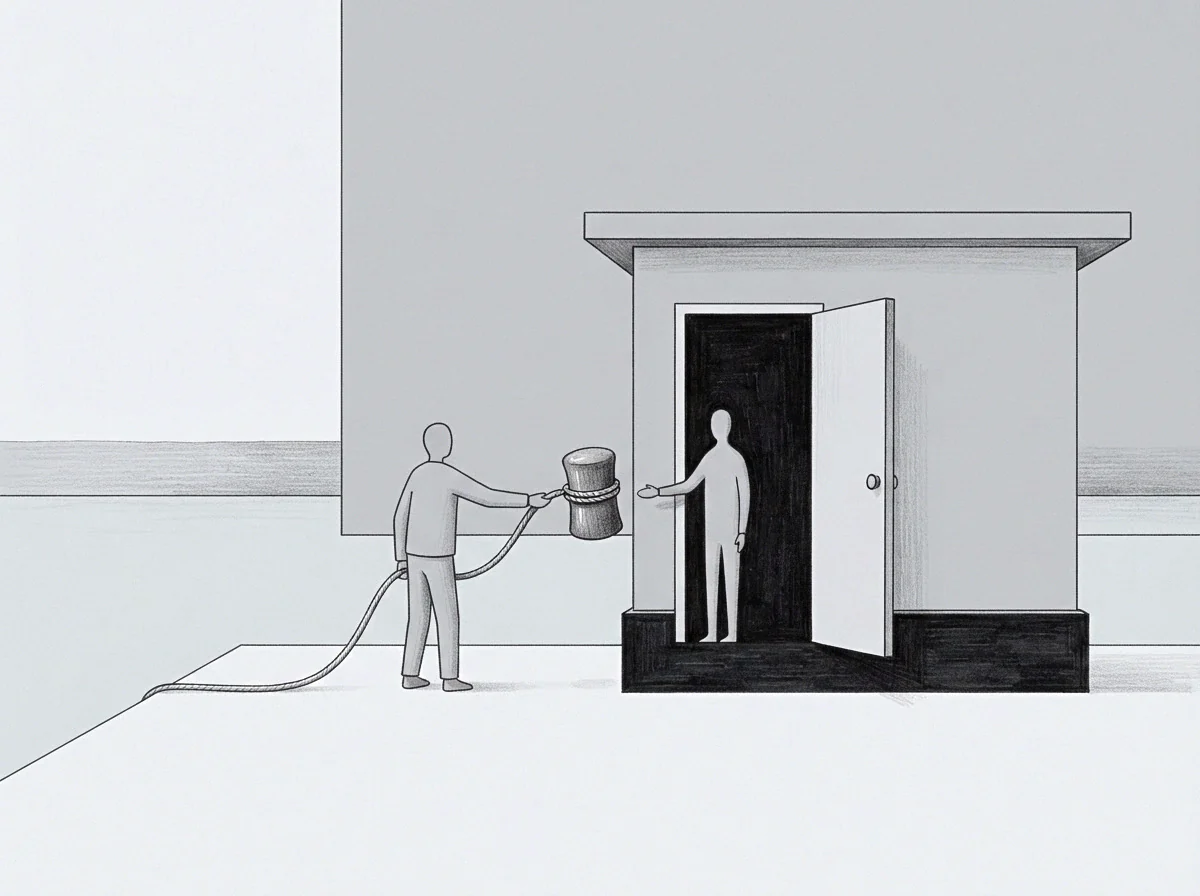
Scaffold
Building a second regulatory template requires understanding why the first template resists modification. The primary template is an internal working model forged through thousands of childhood or early-career interactions where safety required self-sufficiency. In attachment science, this adaptation emerges when caregivers or early authority figures are volatile, absent, or overwhelmed.
The developing individual learns that presenting distress creates danger or abandonment, while absorbing the distress of others creates stability. The individual internalizes a working model of the self as a solitary shock absorber. Over decades, this model hardens into an identity.
The founder becomes someone who thrives under conditions that cause others to resign. The enterprise rewards this trait lavishly during expansion phases, reinforcing the illusion of invulnerability.
The structural defect in this model is the missing receptor slot. When a founder has no neural or behavioral architecture for taking in borrowed calm, support from others registers as friction. If an advisor, spouse, or investor offers genuine steadiness, the founder running a primary template feels irritation.
The offer feels like an obligation to perform gratitude, an intrusion into tactical focus, or a covert attempt to assess weakness. The nervous system fails to register the incoming signal as an offer of resource sharing. The founder declines the offer, doubles down on autonomous work, and reports feeling profoundly alone in the storm.
This isolation is self-generated through the automatic rejection of relational buffering.
Earned security is the clinical term for retrofitting relational safety into an adult nervous system that developed without it. This process never occurs through analytical insight. Reading clinical literature or understanding attachment styles does not build an alternate regulatory pathway.
An adult nervous system updates its predictive baseline exclusively through repeated physical exposure to a non-collapsing other. The founder must experience a relationship where exposure of strain does not trigger abandonment, counter-panic, or relational exploitation. That second person must maintain their own regulatory stability while witnessing the founder’s physiological distress.
Under those exact parameters, the brain registers that co-regulation is metabolically cheaper than solitary suppression.
- The Threshold Witness sits across from the founder during operational distress without absorbing the anxiety or offering superficial optimism, remaining an unshakeable physiological anchor.
- The Containment Sequence allows the founder to verbally release enterprise threat assessments without monitoring the listener for signs of impending emotional collapse.
- The Receptor Recognition occurs when the founder registers a decrease in heart rate and respiratory rate simply through shared physical proximity, confirming biological offloading.
- The Alternate Path Formation establishes a secondary working model that activates automatically during corporate emergencies, bypassing the reflexive urge toward solitary containment.
Establishing these four operational steps takes months of deliberate, measured interaction. If an enterprise shock hits before this secondary pathway is established, the founder defaults instantly to the backwards primary template. The brain preserves survival pathways that have fifty thousand hours of operational rehearsal over an intellectual concept read in an executive coaching manual.
A second template must be built in peacetime, tested in minor skirmishes, and systematically reinforced so that it can hold enterprise-scale weight when the company faces immediate disaster.
The single clause that changes this dynamic is an explicit contract with an outside counterpart who has zero financial or emotional equity in the enterprise, establishing that their presence exists solely to provide an immovable regulatory ground.

Graft
The construction of a second regulatory template resembles a surgical graft: an alternate nervous system circuit grafted alongside the primary one. The founder does not dismantle the backward template. That original capacity for unilateral containment remains a potent operational capability during emergencies.
The failure occurs when that template is the sole available option. The secondary template provides an alternative route, allowing the operator to shift from solitary suppression to active co-regulation at will. This transition demands deliberate, repeated behavioral reps under controlled exposure to enterprise stress.
Can An Operator Install This Alternate Template Alone?
Solitary installation of a relational template is biologically impossible. The nervous system does not update threat appraisal algorithms through internal dialogue; it updates them through sensory feedback from another autonomic system. The social baseline model relies on environmental inputs signaling the availability of shared metabolic effort.
If no actual person occupies that relational space, the brain defaults to solitary conservation accounting. An operator attempting to build a second template through solo meditation, cognitive behavioral journaling, or stoic discipline merely reinforces the primary template. Those practices strengthen the capacity to endure isolation, deepening the exact dynamic that causes enterprise-shock collapse.
The practice begins with identifying a regulatory counterpart who meets strict operational criteria. This counterpart cannot be an enterprise employee, an equity-holding partner, or a dependent family member. Each of those individuals has skin in the enterprise game; their nervous systems naturally flare when the enterprise shakes, making them consumers of calm rather than suppliers.
The ideal counterpart is an experienced peer, a retired founder, or a specialized clinician who has walked through enterprise destruction without losing autonomic stability. The relationship must be structured with explicit operational boundaries.
- The Sovereign Buffer preserves autonomous regulatory capacity by establishing a non-reactive relationship insulated from organizational fallout and cap-table implications.
- The Unvarnished Ledger provides a space where operational vulnerabilities and financial terror are articulated without rhetorical framing or protective self-censorship.
- The Physical Cadence mandates synchronous, real-time engagement, voice or physical presence, because asynchronous text messaging fails to transmit the parasympathetic cues required for neural downregulation.
- The Boundary Anchor ensures the counterpart never steps into executive problem-solving, preventing the interaction from degenerating into another working tactical session.
Consider two leaders facing an identical sudden loss of forty percent of annual recurring revenue. The first operator operates on the primary template alone, conceals the severity of the threat from their spouse, maintains an unyielding facade of certainty before the management team, and works twenty hours a day to engineer a turnaround. Within three weeks, cognitive tunneling sets in.
Strategic decisions become erratic, driven by chronic sympathetic activation, leading to a disastrous emergency bridge loan with toxic covenants. The second operator also presents operational clarity to the firm, but steps into a sixty-minute synchronous session twice a week with a calibrated counterpart. In that room, the second operator articulates total uncertainty, releases autonomic suppression, and lets their nervous system borrow the counterpart’s stability.
Returning to the enterprise, this leader retains full prefrontal bandwidth, spots a subtle cost-saving restructuring route, and secures a standard line of credit without punitive terms.
Trusting this secondary pathway requires enduring the visceral terror that comes from opening the receptor slot under enterprise load, a discomfort that feels indistinguishable from fatal exposure until the physiological drop in arousal actually occurs.
Span
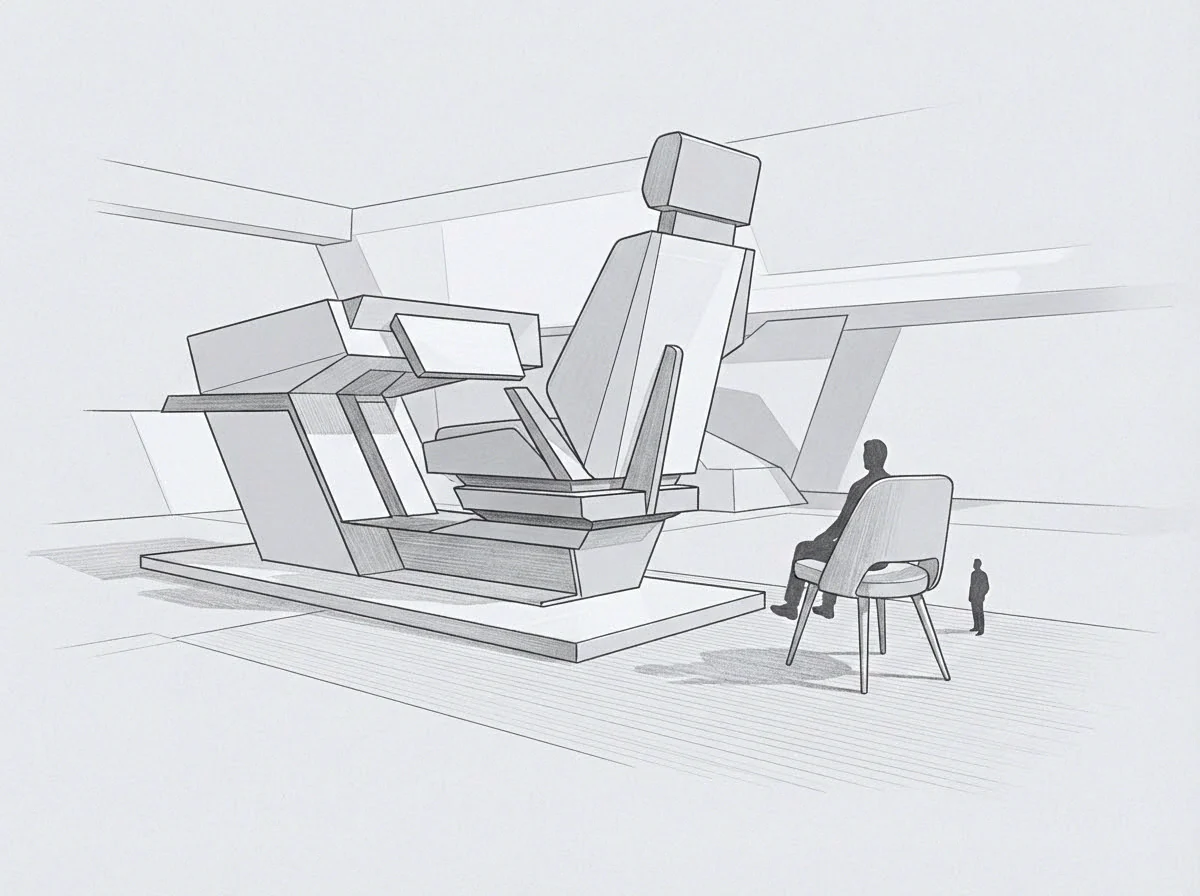
When an acute shock strikes an organization, the span of leadership survival depends on which template directs autonomic response. Operating across two templates changes how authority is held in the building. The leader no longer absorbs stakeholder panic unconditionally.
Instead, the leader deploys tactical boundaries, allowing local managers to feel the natural operational weight of their departments. This deliberate friction prevents the enterprise from treating the executive suite as a dumping ground for unprocessed anxiety. When a vice president enters the office with breathless alarm, the two-template leader listens calmly, outlines constraints, and leaves the emotional burden of solving the departmental problem squarely on the vice president’s shoulders.
Enterprise shocks inevitably create open loops: pending lawsuits, unresolved debt maturities, product outages that run over forty-eight hours. The backward template handles open loops by keeping the nervous system continuously mobilized until the operational fact resolves. This strategy works when an emergency lasts twelve hours; it destroys a human being when the crisis spans eighteen months.
The second regulatory template allows the operator to close internal autonomic loops while enterprise operational loops remain wide open. The leader offloads metabolic load through external co-regulation, permitting the heart to slow and sleep to return even while the enterprise faces an existential audit. Strategic endurance requires divorcing internal physiological recovery from external corporate resolution.
A company can survive an unresolved external shock for years, provided the leader stops using personal physiology to disguise organizational insolvency.
In high-pressure industrial operations, such as deep-sea commercial diving or nuclear reactor monitoring, protocols strictly prohibit a single operator from bearing continuous safety-critical loads without designated watch rotations. The human body is treated as a mechanical component with measurable failure thresholds under pressure. Modern enterprise management routinely violates this baseline reality, celebrating founders who boast of uninterrupted work during corporate crises.
The financial market rewards this performance right up to the moment the founder suffers a sudden stroke, a severe depressive crash, or an executive breakdown that bankrupts the firm. Constructing a secondary regulatory template is an act of engineering redundancy for an enterprise’s most critical operational node.
As the enterprise navigates through its acute crisis, the founder maintains a deliberate double posture. Outwardly, the leader provides steady, boundaried operational clarity to the board, executive team, and staff, demanding rigor and accountability without absorbing their emotional panic. Inwardly, the leader routes personal existential threat into the secondary template, anchoring to a reliable counterpart, offloading allostatic load, and preserving cognitive bandwidth.
This architecture ensures the enterprise shock is met with sustained, clear-eyed strategic decision-making rather than the frantic, deteriorating moves of an exhausted solitary mind.
Whether this dual architecture can endure when the acute shock morphs into a permanent structural contraction of the enterprise market remains completely unproven.