
Building Distributed Accountability Architecture Across Functional Management Teams
Distributed accountability replaces centralized conflict absorption with explicit bilateral operating pacts that functional managers enforce without executive rescue.
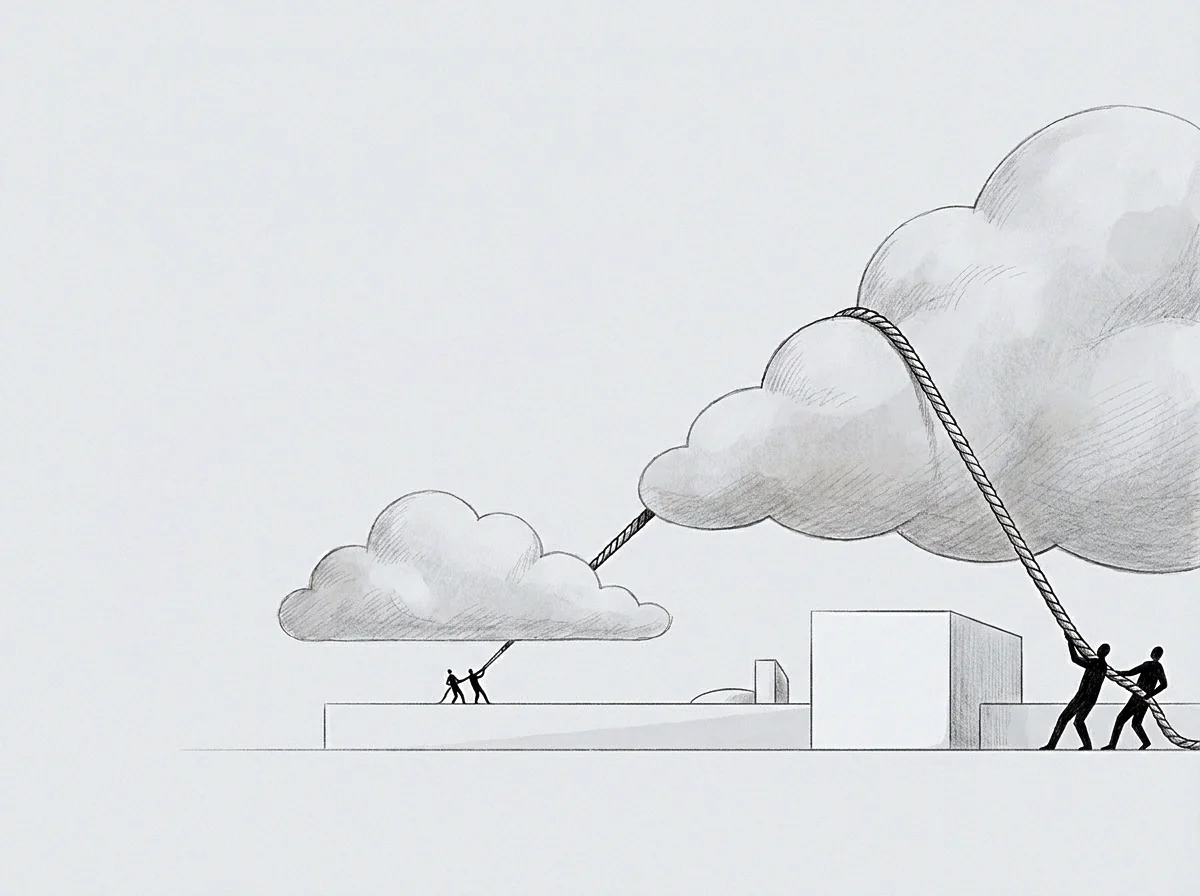
Weight
Four browser windows sit open past midnight on a Tuesday while two division leads argue over who owns customer onboarding latency. Engineering attributes latency to infrastructure capacity; product assigns onboarding to account provisioning workflows. A founder absorbs both threads, sends an explanatory reconciliation note at one in the morning, and wakes up to three fresh escalation pings from marketing.
The operational center functions as an unbudgeted sponge for lateral friction.
Social baseline theory establishes that the human brain treats proximity to predictable, cooperative partners as its baseline metabolic state. With dependable coordination in place, neural load drops because vigilance, risk management, and corrective action divide across participants. Operating in isolation or inside an erratic environment forces an individual to budget threats as an unshared personal load.
In management teams without clear structural interfaces, lateral managers avoid negotiating directly because cross-departmental disputes carry immediate friction. They route that friction upward to an accessible central figure whose habit of intervening serves as free metabolic capacity.
A regulator proven under stress continuously attracts unbudgeted operational load from adjacent teams.
The resulting dynamic functions as an unmeasured transfer. Functional managers appear calm and steady precisely because their peer frictions are absorbed by the executive. This borrowed calm registers across the organization as alignment, while masking structural ambiguity beneath central vigilance.
The central operator absorbs lateral silence at the cost of cognitive capacity, operational attention, and rising allostatic strain.
Without distributed lateral enforcement, operational ownership converges on whichever individual has the lowest tolerance for unresolved ambiguity. The founder becomes an accidental bottleneck through metabolic habit rather than an appetite for control.

Hinge
Moving from centralized load-bearing to distributed accountability depends on defining explicit bilateral interfaces between functional heads. Functional managers routinely treat lateral accountability as a threat when vague mandates turn peer negotiation into interpersonal friction.

Structural Interfaces Between Peer Functional Leads
Lateral collaboration requires explicit operational boundaries. Without written working agreements, a customer success lead handling churn mitigation with a product development lead defaults to persuasion or central arbitration. A concrete bilateral interface sets out input requirements, throughput commitments, and dispute protocols that exclude escalation until lateral procedures have been worked through.
Borrowed regulation occurs whenever a functional head relies on executive presence to stabilize an otherwise unstable peer relationship. An executive sitting in a weekly operations check-in supplies synthetic authority that temporarily calms turf disputes. Once the executive leaves the room, the disagreement resumes over the same points.
Operational capacity develops only when managers establish their own working procedures and manage the friction directly.
Structural contracts between peer managers remove the metabolic necessity of central intervention.
In an operational design built on formal service level compacts, sales cannot submit custom contracts without finance verification, and engineering cannot alter an API contract without security sign-off. Verifiable mutual boundaries lower relational anxiety across teams. Managers negotiate directly over operational constraints instead of competing for executive intervention.
Skipping bilateral agreements ensures that the organization falls back into central dependency whenever external pressure rises.

Pact
Distributed accountability translates the psychological contract into institutional terms. In organizational systems, that contract is the unwritten set of mutual obligations and expectations held by team members. When managers lack formal operational compacts, unspoken assumptions fill the gap, generating resentment and gridlock.
A distributed architecture turns unstated expectations into written operational pacts across four components:
- Resource Allocation Authority grants functional heads autonomy over headcount, project priorities, and local software budgets within defined boundaries.
- Delivery Verification Standards articulate quantifiable criteria that confirm task completion across lateral boundaries without executive review.
- Direct Conflict Protocol mandates a forty-eight-hour bilateral discovery sequence between managers before an issue can be escalated upward.
- Reciprocal Failure Penalties distribute corrective costs across both departments when a shared operational interface breaks down.
In an enterprise business where marketing and sales pursue conflicting targets, marketing tracks volume while sales seeks qualified conversion. Without a compact, both department heads present competing figures at the weekly operational meeting, requiring the chief executive to decide what counts as a lead. Under a documented pact, both teams work from a shared qualification standard.
If conversion rates drop below an agreed threshold, the arrangement mandates joint pipeline triage before executive leadership is briefed.
A rule of thumb indicates that any interface requiring executive arbitration more than once a month suffers from an undefined lateral pact.
Operational stability comes from converting relational ambiguity into structural agreements that managers enforce directly.

Beam
Establishing durable lateral accountability requires distinguishing centralized dependency from distributed ownership. The comparison below outlines how operational friction, dispute resolution, and functional interfaces function across each model.
| Evaluation Dimension | Centralized Absorptive Model | Distributed Interface Architecture |
|---|---|---|
| Primary Regulation Source | Central executive absorbs operational friction | Functional managers negotiate directly through documented pacts |
| Allostatic Load Distribution | Concentrated heavily in a single central operator | Distributed evenly across peer management team leads |
| Escalation Dynamic | Frequent early upward routing of bilateral conflicts | Enforced multi-stage lateral dispute discovery sequence |
| Relational Stability | Borrowed calm dependent on executive presence | Earned institutional security grounded in explicit boundaries |
| Systemic Bottlenecks | High executive cognitive fragmentation and slow throughput | Predictable operational interfaces and rapid local adjustments |
The distinction between these two models is mechanical rather than ideological. A centralized approach spends considerable energy maintaining interpersonal calm at the edges by burning executive capacity at the center. A distributed model settles routine disputes where they arise, keeping the core free to respond to external changes.
Earned security develops as functional leads work through local disagreements, negotiate compromises, and deliver projects without executive intervention. Each lateral settlement establishes a working expectation of reliability. Over twelve to eighteen months, managers stop seeking central reassurance because their own operating agreements consistently resolve disputes.
Without distributed interfaces, an organization routinely mistakes executive absorption for functional collaboration.
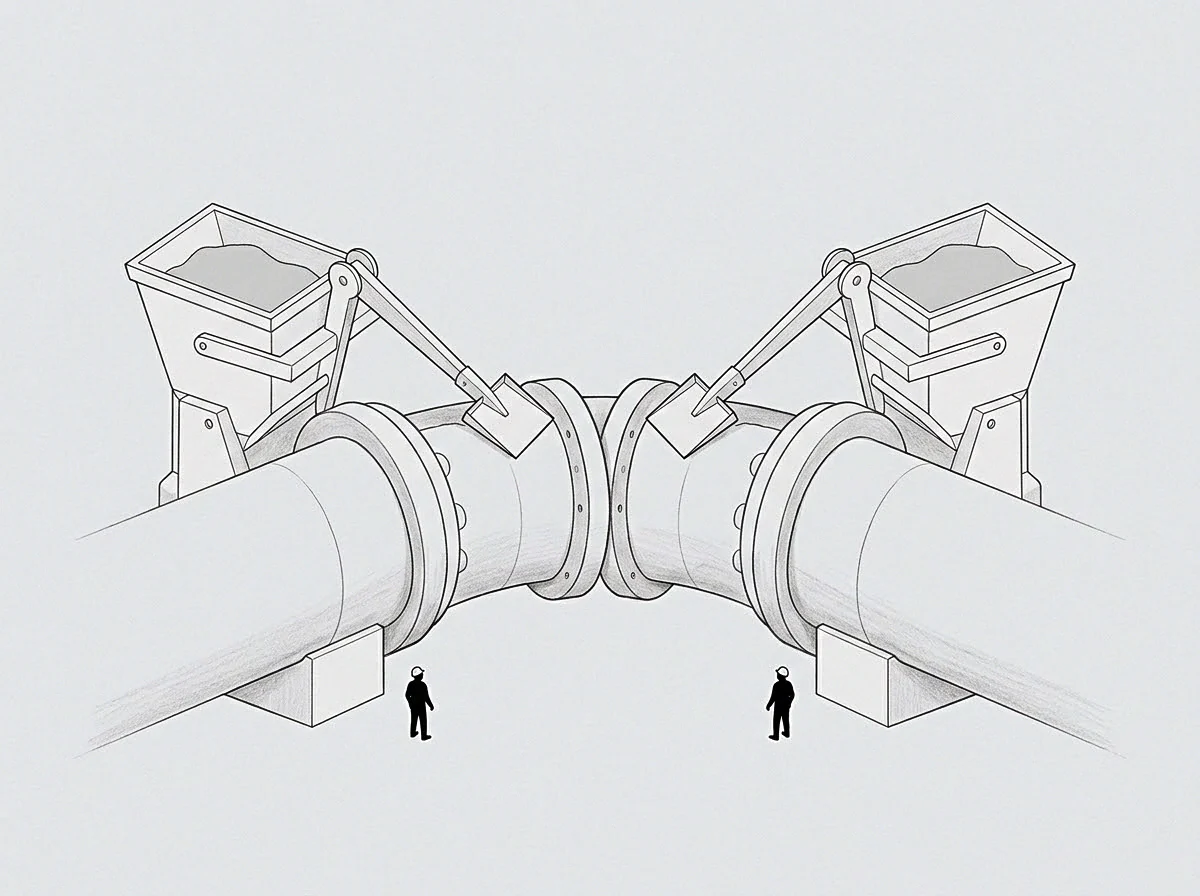
Clamp
Moving management teams away from absorptive dependency requires clear operational constraints. An unstated boundary invites testing, while an administrative policy without mechanical enforcement collapses under the first real crisis.

Are Functional Managers Capable of Direct Operational Self-Governance?
Functional managers handle operational governance only after leadership closes informal escalation paths. If an executive keeps answering late-night messages, reviewing unformatted complaints, or entertaining backchannel critiques, the team stays dependent. Accountability holds only when access limits remain firm under operational stress.
The transition follows three operational steps to reorganize communication channels and decision rights:
- Establish the boundary by returning unread any cross-functional dispute that arrives without a completed bilateral discovery memo.
- Shift diagnostic evaluation by requiring peer managers to present joint solutions rather than individual complaints during executive reviews.
- Tie reviews to lateral resolution speed rather than department output alone.
This transition generates predictable friction. When the center stops absorbing lateral disputes, managers experience immediate operational anxiety while adjusting to the absence of central intervention. Central leadership must resist stepping in to restore artificial stability.
If a manager cannot secure agreement from a peer, adding an executive to the room only masks the missing interface.
The operational boundary remains straightforward: cross-functional alignment is a requirement of managerial tenure, not an executive advisory service.