
Downregulated Oxytocin Receptor Cascades During Post Isolation Social Reentry
Prolonged isolation suppresses oxytocin receptor cascades, converting social proximity from a metabolic resource into an aversive threat upon reentry.
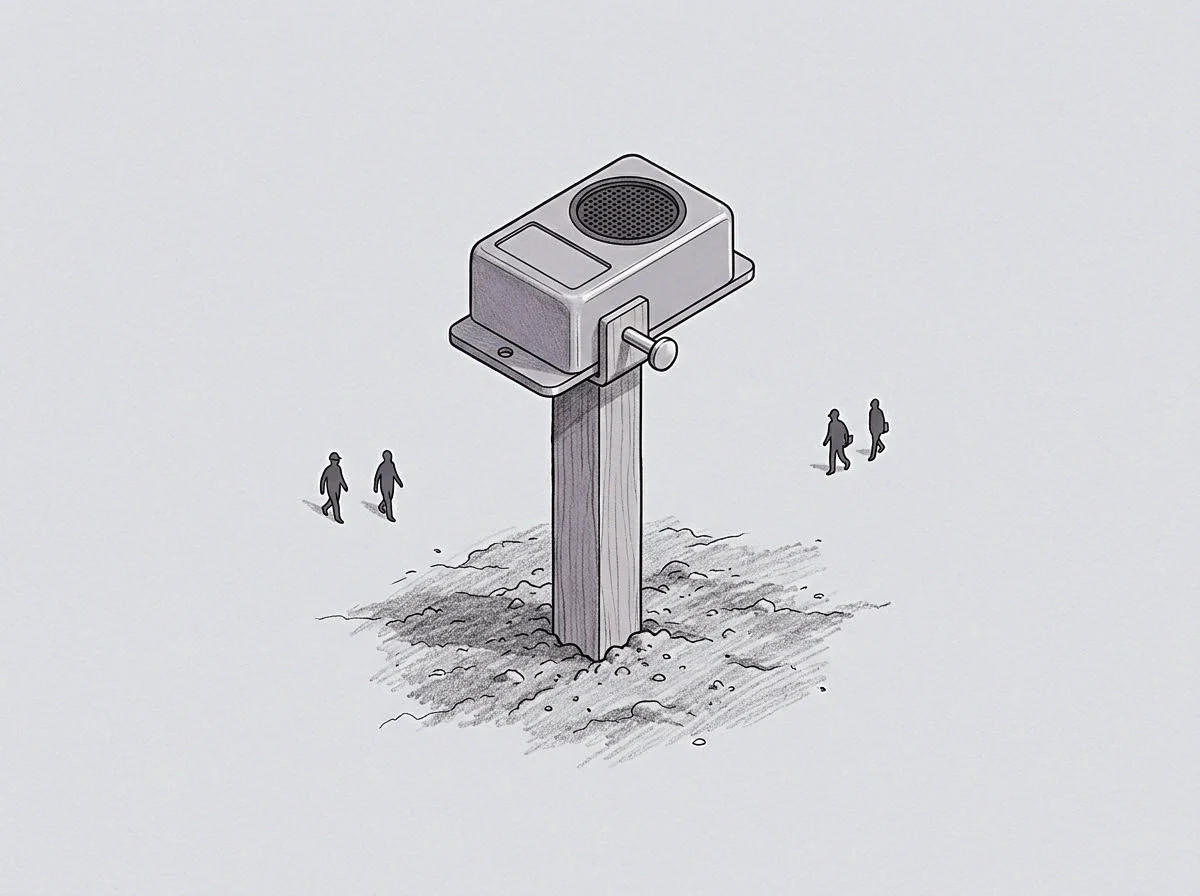
Isolation
An operator reenters a shared office after four months of solitary build time, sits down at a perimeter table, and discovers that the ordinary physical presence of five colleagues registers as low-grade physical distress. The air in the room feels thick. Voices across the floor create an involuntary startle reflex rather than a familiar sense of ease.
Solitude carried minimal short-term friction, but prolonged absence of daily human contact reorganized the nervous system around absolute self-containment, dismantling the metabolic machinery that previously converted human proximity into biological rest.
Social baseline theory documents that human neural architecture treats social proximity as the default resource environment. Close access to familiar, predictable peers distributes the energetic load of vigilance, environmental surveillance, and autonomic regulation across multiple nervous systems. When a founder retreats into absolute seclusion to draft architecture, close a financing round, or resolve an operational crisis, that distributed budget disappears.
The solitary brain compensates by assuming total sovereign responsibility for metabolic survival. Threat detection thresholds drop. Basal sympathetic tone climbs.
Cortisol excretion shifts its diurnal curve to sustain long hours of unassisted focus.
A room full of known colleagues feels hostile when solitary survival has reset the perimeter.
Extended duration away from social interaction forces an intracellular shift in neuroendocrine pathways. Oxytocin, a peptide synthesized within the paraventricular and supraoptic nuclei of the hypothalamus, acts as a signaling molecule for maternal bonding, social affiliation, and group cohesion. Under continuous solitary conditions, endogenous oxytocin production declines due to the absence of affiliate tactile, auditory, and visual cues.
The oxytocin receptor, a class-A rhodopsin-like G-protein coupled receptor expressed throughout the central amygdala, nucleus accumbens, and anterior cingulate cortex, responds dynamically to this sustained deficit in ligand availability.

Basal Adaptations During Protracted Confinement
Receptor density fluctuates according to circulating ligand volume and cellular energy demands. Sustained ligand deprivation initially prompts a compensatory upregulation in certain neural subfields, followed by epigenetic silencing and endocytic internalization when the solitary state stretches across seasons. The solitary nervous system adapts to survive on minimal social input by prioritizing autonomous survival circuits over affiliation networks.
The brain budgets threat and regulation as if no reliable other exists. Self-regulation alone becomes the expensive operational standard. The operator becomes exceptionally effective at working in an empty room, unaware that the physiological cost in energy and attention arrives when public work resumes.
Forcing an abrupt transition into dense collaboration after prolonged withdrawal produces immediate autonomic dysregulation, severe sensory fatigue, and acute relational withdrawal.
Density
The molecular dynamics of the oxytocin receptor govern how affiliative input translates into autonomic safety. When oxytocin binds to its receptor, the complex couples to G-protein alpha-q subunits. This coupling triggers phospholipase C activation, generating inositol trisphosphate and diacylglycerol, which subsequently mobilizes intracellular calcium and activates protein kinase C. Within the central amygdala, this signaling sequence excites inhibitory GABAergic interneurons, muting output to the periaqueductal gray and the hypothalamus.
The physical presence of a familiar person directly shuts down panic physiology through this intracellular pathway.
In the downregulated state, this dampening mechanism fails. The ligand-receptor interface lacks sufficient active surface receptors to trigger the requisite calcium influx. Oxytocin molecules released during a handshake, a direct gaze, or a quiet conversation fail to engage downscaled receptor sites.
Receptor downregulation prevents incoming affiliative neuropeptides from activating central inhibitory interneurons.
Unbound oxytocin degrades rapidly via circulating peptidases without engaging downstream inhibitory cascades. The brain receives social signals through visual and auditory pathways, yet the cellular brake on amygdalar excitation remains inactive. Proximity registers as intrusion.
The physical body reads closeness as noise. The operator perceives the presence of a co-founder or an early employee as an ambiguous metabolic hazard requiring active defense.

Transcriptional and Post-Translational Blockades
Chronic isolation alters the genetic architecture of the social brain through chromatin remodeling and receptor desensitization. The physical reality of reentry involves several distinct molecular stages:
- Epigenetic DNA Methylation increases at cytosine-guanine islands within the oxytocin receptor promoter sequence, suppressing transcription of functional binding sites during extended periods of solitary labor.
- Agonist-Induced Internalization captures existing surface receptors via beta-arrestin recruitment when the first massive surge of post-confinement social stimulation floods unprimed synaptic clefts.
- G-Protein Decoupling disrupts phosphorylation cascades within the nucleus accumbens, rendering remaining surface structures unresponsive to endogenous peptide release.
- Receptor Cross-Talk shifts intracellular cascades toward vasopressin V1a signaling pathways, driving defensive territorial arousal rather than affiliative ease.
These biochemical modifications persist long after the social environment has returned to normal. The receptor population requires weeks of structured, low-intensity exposure to transcriptionally re-establish baseline density on neuronal membranes. When an operator resumes high-concurrency meetings while receptors remain internalized, the mismatch between environmental expectations and neurochemical reality creates acute operational instability.
The stated limit of two brief morning conversations protects receptor restoration by preventing ligand-induced arrestin desensitization.
Room
Physical environments dictate the volume of incoming social cues that a recovering nervous system must process. In a crowded open-plan facility, sensory input arrives from every direction simultaneously. Peripheral movement, ambient speech cadence, foot traffic, and sudden micro-expressions overload an individual whose oxytocin cascades remain blunted.
Because the soothing down-regulation from physical presence is absent, the operator must regulate the nervous system through pure cognitive inhibition. This prefrontal override requires massive glucose consumption and intense executive vigilance.
The person who was formerly the operational baseline for an entire company now experiences rapid autonomic exhaustion. When colleagues approach seeking input, validation, or borrowed calm, the operator finds nothing in reserve. Borrowed regulation functions as an energetic subsidy where the presence of a steady nervous system lowers the metabolic cost for everyone nearby.
An operator whose receptors have downscaled cannot absorb incoming load. The capacity to serve as a calming anchor collapses.
A stated term regarding shared hours establishes the boundary where biological capacity replaces social obligation.
Colleagues notice the shift immediately. The operator seems distant, rigid, and clipped in verbal delivery. Team members misinterpret this biological depletion as interpersonal disapproval or sudden executive detachment.
They react by increasing their communicative bids, sending more messages, scheduling urgent catch-up lunches, and hovering around the perimeter desk to restore the lost connection. Each well-intentioned bid adds further sensory load to an already saturated biological system.
Regulatory states vary across operational phases, shifting both physiological expenditure and baseline capacity.
| Phase Condition | Oxytocin Receptor Density | Autonomic Regulation Mode | Subjective Perception of Proximity | Metabolic Cost of Shared Space |
|---|---|---|---|---|
| Sustained Solitary Build | Downregulated via transcriptional suppression | Sole reliance on individual vigilance circuits | Irrelevant, absent, hypothetical | Low individual expenditure while alone |
| Unstructured Social Reentry | Acute internalization from ligand flooding | Prefrontal compensatory cognitive control | Aversive sensory intrusion and threat | Severe metabolic depletion |
| Paced Incremental Exposure | Progressive transcriptional recovery | Gradual re-engagement of G-protein pathways | Neutral, slowly shifting toward safety | Moderate, steadily declining expenditure |
| Stabilized Co-Regulation | Restored membrane receptor populations | Shared social baseline resource sharing | Physiological grounding and calm | Minimal expenditure through distributed load |
The breakdown of co-regulation within the room creates an acute relational divide that neither party understands on a neurochemical level.
Three months of solitary work can obscure the warmth that built an original partnership.

Friction
Reentry friction develops when personal capacity fails to meet external relational demands. The founder who spent half a year isolated in product development expects to re-engage with executive leadership smoothly. Instead, board meetings generate acute visceral tension.
The room drains attention, forcing the nervous system to retreat into primitive dorsal vagal preservation strategies that present externally as emotional flatness, cold posture, and hyper-concise speech.
A specific operational hazard appears when an operator attempts to compensate for neurochemical exhaustion by working harder. They schedule back-to-back collaborative sessions, pitch meetings, and full-team retrospectives to prove their commitment. This strategy backfires at the cellular level.
Flooding unprimed synapses with massive oxytocin surges accelerates receptor internalization via beta-arrestin binding, locking the receptors into endosomal compartments and prolonging the cellular refractory period.
Receptor Resensitization and Shared Capacity
Re-establishing stable social baseline dynamics requires honoring biological recovery rates rather than willpower. When receptor density is low, every interpersonal encounter acts as an unbuffered stressor. Cortisol stays elevated.
Heart rate variability remains compressed. The operator cannot access the cognitive flexibility required for creative compromise or delicate personnel decisions. Misjudgments multiply.
The founder snaps at minor operational delays or withdraws abruptly from vital negotiations, creating confusion across the executive suite.
Epistemic certainty surrounding human neuropeptide receptor recovery remains bounded by measurement constraints. Peripheral plasma oxytocin levels, while easily collected from blood draws, correlate inconsistently with central cerebrospinal fluid concentrations or site-specific receptor binding within deep brain nuclei. Most human data on oxytocin receptor dynamics rely on functional neuroimaging proxies, such as blood-oxygen-level-dependent signal reduction in the amygdala during social threat trials.
These findings rest on controlled laboratory paradigms using unfamiliar faces or standardized emotional cues, which do not fully replicate the complex, high-stakes relational load of an executive suite.
A careful operator proceeds under this scientific uncertainty by observing physical somatic markers rather than relying on abstract timelines. When muscle tension in the jaw tightens, breathing flattens into the upper chest, and a colleague’s voice causes an urge to flee, the neurochemical threshold has been breached. Tissue adapts slowly.
The nervous system requires structured retreat before acute aversion hardens into permanent relational alienation.
Whether complete restoration of baseline receptor sensitivity requires identical relational conditions to those present prior to isolation remains an open scientific question.
Interval
Restoring downregulation requires paced exposure protocols rather than full immersion. The nervous system treats sudden total immersion as a traumatic assault, whereas brief, highly predictable doses of social presence allow transcriptional machinery to replenish cell-surface receptor populations without triggering defensive endocytosis. An operator rebuilding regulatory capacity treats reentry as a deliberate physiological titration.
Physical distance serves as an operational lever during the initial weeks of return. Sitting in the same room with one trusted peer while working silently on independent tasks generates low-intensity affiliative signaling without conversational load. Parallel work allows the visual and auditory systems to register a non-threatening conspecific while keeping verbal processing demands at zero.
Basal autonomic arousal drops. Hypothalamic production of oxytocin resumes in modest, rhythmic pulses that gently coax receptor expression back toward baseline.
A reliable peer working in silent parallel lowers physiological defense without consuming verbal bandwidth.
Operational pacing protects both the individual and the enterprise from the downstream costs of burnout. Rather than defaulting to open availability, the operator institutes clear structural constraints on direct human interaction:
- Structured Parallel Work anchors the early reentry schedule by placing two collaborators at opposite ends of a shared table for two hours without speaking.
- Buffered Meeting Blocks cap direct conversational exchanges at twenty minutes, interspersed with forty minutes of solitary cognitive execution to prevent ligand flooding.
- Asynchronous Written Handover replaces complex verbal briefings during early weeks, reducing the real-time social processing load on unprimed amygdalar pathways.
- Physical Perimeter Boundaries secure a private workspace where sensory exposure remains entirely under individual control throughout the afternoons.
The delta over time separates transient distress from systemic neurochemical adaptation. Understanding the mechanism of receptor downregulation provides no immediate relief from the physical ache of shared space. Insight names the template, but repeated physical experience replaces it.
Through disciplined, paced micro-doses of physical presence, the brain gradually rebuilds the cellular receptors necessary to borrow calm from another human being.
Relational exposure expands only as fast as physical calm remains intact across the table.