
Borrowed Calm In Early Stage Executive Leadership
Executive leaders absorb organizational stress through social baseline co-regulation, providing borrowed calm to teams at measurable metabolic cost to themselves.

Presence
Four unread board memos sit on an open desk at midnight while three functional leads wait for approval on product changes. The financial runway gives the company six months of survival. Inside the office, team members track the chief executive’s face during the morning all-hands meeting.
When the leader displays unruffled composure, the engineering vice president lowers their shoulders, the head of sales resumes client calls, and the operations manager settles into routine tasks. The emotional equilibrium of the entire office anchors to that single calm demeanour.
Social baseline theory establishes that the human brain budgets metabolic energy under the assumption of relational proximity. Self-regulation alone is the metabolically expensive mode of human operation. When an individual operates in isolation, the brain perceives higher threat potential and allocates significant glucose and neural bandwidth to vigilance.
In contrast, the presence of a calm, predictable person signals safety, allowing surrounding nervous systems to downshift their own alarm networks. Secondary observers conserve internal energy by borrowing the primary regulator’s baseline.
In early-stage executive leadership, this dynamic forms the implicit substrate of organizational stability. Early ventures operate under continuous environmental threat, lacking established market fit, steady revenue, or operational redundancy. Team members naturally experience elevated alarm responses.
Rather than generating individual self-regulation through cognitive reframing, employees proximity-seek toward the founder or chief executive. The leader’s calm operates as a shared public utility. The team regulates their personal threat levels against the leader’s visible physiological state.
The chief executive sits steady through the revenue drop while the product team recovers their operational tempo.
This co-regulation economy transfers the metabolic cost of organizational stress directly onto the executive. While the team feels reassured and operational performance stabilizes, the leader absorbs the unresolved alarm signals of the entire group. Borrowed calm registers to the team as their own sudden clarity, hiding the transfer mechanism entirely.
The executive pays the physiological invoice in silence.
| Regulation Mode | Metabolic Cost to Executive | Team Operational Capacity | Systemic Risk Profile |
|---|---|---|---|
| Isolated Self-Regulation | High solitary baseline expenditure | Fragmented, elevated team alarm | High risk of decision paralysis |
| Unreciprocated Co-Regulation | Extreme allostatic load accumulation | High initial team productivity | Severe risk of executive exhaustion |
| Reciprocal Operational Baseline | Distributed metabolic load | Sustainable team self-reliance | Low long-term systemic vulnerability |
The operational balance appears functional from the outside. Revenue targets are pursued, product features ship, and team morale remains steady. Beneath the surface, the chief executive functions as an isolated baseline provider.
The team’s borrowed stability depends entirely on the continued availability of the executive’s nervous system.
The executive seems untroubled by the shortfall, so the project timeline can remain unchanged.

Seat
The physical office chair and the formal mandate combine to create an expectation of absolute stability. The occupant of the chief executive seat inherits the implicit duty of absorbing systemic shock. When market conditions shift or key hires depart, the person in that chair must process the threat without projecting alarm.
The seat isolates the leader while magnifying their physical state across every department.
Organizational distress flows naturally toward the point of greatest apparent capacity. Team members seek out the calmest room in the building when their own internal reserves drop. A founder who maintains unbroken composure becomes a reliable sink for surrounding operational anxiety.
Staff members leave one-on-one meetings feeling relieved, having unburdened their stress into the executive’s field of attention. The leader’s reserve drops with every conversation.
When social proximity is maintained during operational crises, individual metabolic expenditure drops for all secondary observers.
The ongoing absorption of external anxiety creates structural failure modes within early-stage teams.
- Unbounded operational availability creates a constant drain on executive reserve capacity, leading to silent exhaustion.
- Covert contract dynamics develop when team members rely on unstated emotional baseline support without explicit accountability.
- Structural load accumulation occurs as additional organizational problems are directed toward the calmest officer in the room.
- Atrophied team self-regulation emerges whenever staff rely indefinitely on external executive steadiness to resolve routine anxiety.
The seat enforces continuous performance of composure. Even brief displays of doubt or frustration by the executive can trigger widespread team instability. Consequently, the executive suppresses personal alarm signals, widening the gap between internal physiological stress and external presentation.
The cost remains unbilled.
Unmonitored absorption of team threat converts temporary operational fatigue into permanent structural burnout across the leadership team.
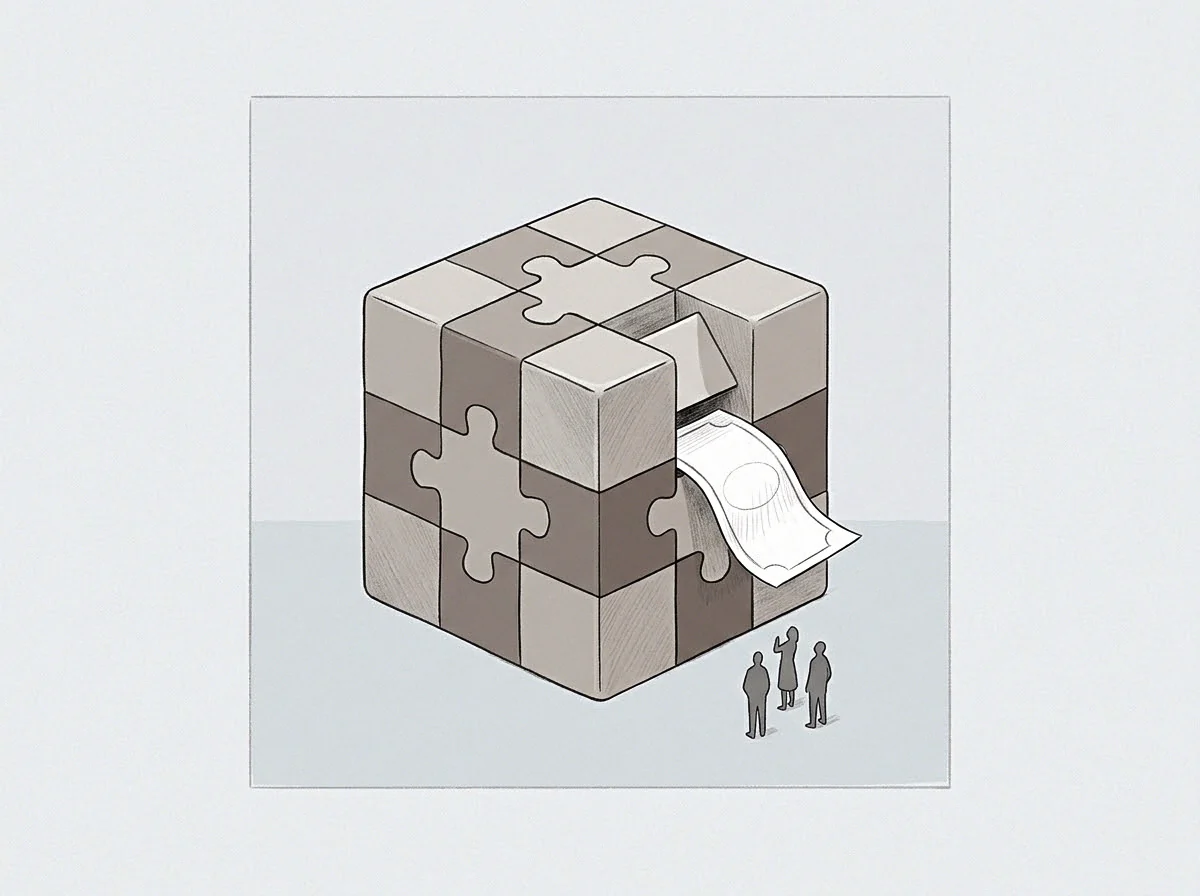
Mechanism
Neural pathways budget energy based on perceived environmental safety and relational proximity. When a mammalian brain senses potential danger, it mobilizes the sympathetic nervous system, accelerating heart rate, elevating cortisol, and narrowing cognitive focus. The physical proximity of a calm species member inhibits this sympathetic cascade.
Through subcortical threat assessment, the brain registers the steady vocal cadence, relaxed facial posture, and rhythmic breathing of the stable other. The signal carries weight.

What sustains the social baseline under threat?
The social baseline rests on an implicit neural calculation: shared risk reduces individual burden. In early-stage executive leadership, this calculation runs asymmetrical routines. The team incorporates the executive’s steady presence into their neural calculations of environmental risk.
The executive, however, rarely receives a corresponding calming signal from the team. The leader acts as the baseline provider without benefiting from external co-regulation.
Allostatic load represents the wear and tear on tissues and neural circuits resulting from chronic stress exposure. When an executive functions as a permanent regulator for others, their allostatic load rises rapidly. Cortisol receptors downregulate, sleep architecture fragments, and executive function weakens.
Cognitive capacity for long-term strategic synthesis diminishes while the immediate demand for operational calm remains constant.
A backward regulator template forces an executive to absorb team threat while rejecting external co-regulation from peers.
This dynamic stems from the executive’s internal working model. Many founders developed early developmental templates where self-preservation required regulating the emotional states of surrounding adults. They internalised a backward regulator template.
For these individuals, regulating themselves and regulating others are a single integrated operation. They possess a broad capacity to project calm, yet lack an internal receptor slot to receive regulation from external sources. The room grows quiet.
- Initial baseline reliance occurs when the executive absorbs all early-stage organizational volatility without displaying distress.
- Targeted load concentration develops as staff selectively direct high-threat signals toward the proven steady state.
- Receptor slot closure settles in as the leader normalizes solitary threat absorption while declining peer support.
- Earned security integration begins only when explicit operational limits force reciprocal threat sharing across the team.
The internal working model functions as an automated cognitive script. It tells the executive that safety exists only when they maintain complete emotional control over the room. Receiving support feels dangerous, as it requires exposing vulnerability to individuals who depend on the leader for baseline stability.
The contract stays covert.
It remains uncertain how many consecutive months an executive nervous system can function as an unreciprocated baseline before decision quality degrades.

Transfer
Threat signals move instantly from insecure team members toward the most stable officer in the organization. Anxious product directors send late-night text messages regarding minor feature delays. Concerned engineers seek unscheduled alignment meetings to reconfirm strategic direction.
Each interaction functions as a micro-transfer of operational load. The anxiety leaves the employee and enters the executive’s awareness.
A regulator proven under stress attracts progressively higher volumes of organizational distress. Team members quickly learn which leaders can absorb panic without reacting defensively. Consequently, the calmest executive receives an unproportional share of incoming problems.
The organization routes its highest-voltage threat signals directly to the person least likely to display distress.
Executives who conceal all personal strain attract higher volume of organizational panic than those who state operational limits early.
Without deliberate intake throttles, the leader’s bandwidth becomes entirely consumed by regulatory maintenance. The chief executive spends their entire working day stabilizing secondary personnel rather than prosecuting strategic objectives. Proximity reduces exertion.
Capacity governs response. The business starves of strategic input while remaining emotionally serene.
A stated limit protects executive capacity more effectively than unspoken endurance.
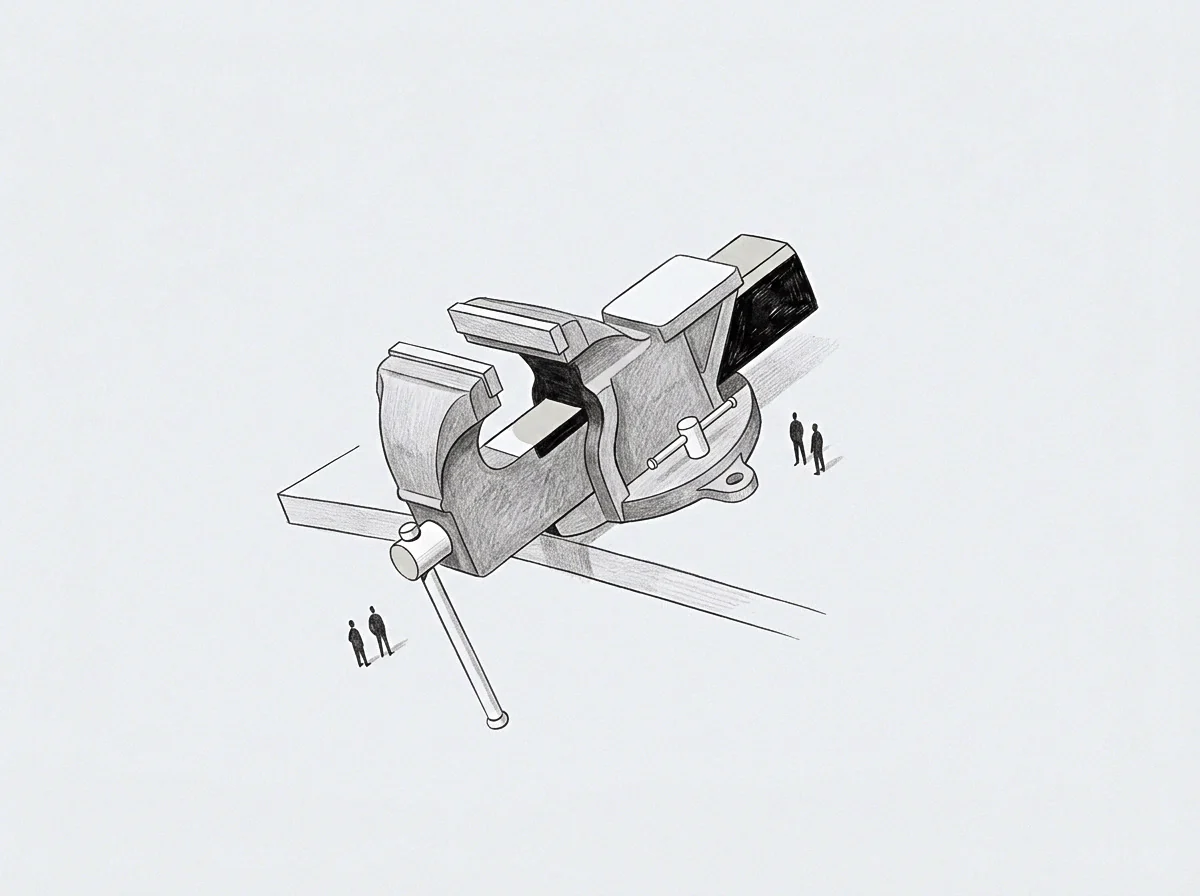
Update
Reconstructing a regulator template requires repeated physical experience of shared load rather than intellectual agreement. Merely understanding social baseline theory does not alter the underlying neural architecture. The executive must systematically experience situations where operational threat is shared across the leadership team without the chief executive absorbing the full metabolic impact alone.
Earned security develops through the construction of a second template. This process begins when the founder establishes explicit limits on operational availability and emotional absorption. Stating explicit intake parameters breaks the covert contract of unlimited co-regulation.
The executive requires team members to process routine operational anxiety through structured peer channels, peer review sessions, and established decision protocols.
The operator pays first. The template resists change. Experience updates the model.
When executive leaders build explicit structural buffers, they force surrounding personnel to cultivate internal self-regulatory mechanisms. The organization transitions from a centralized borrowed calm model to a distributed operational network capable of bearing systemic stress collectively.
The introduction of a stated intake limit changes the primary co-regulation load from an implicit personal burden into a shared operational responsibility.