
How Lateral Peer Buffering Lowers Executive Allostatic Load In Crisis
Lateral peer buffering blunts executive allostatic load during crisis by distributing neural threat appraisal across non-evaluative, structurally symmetric equals.
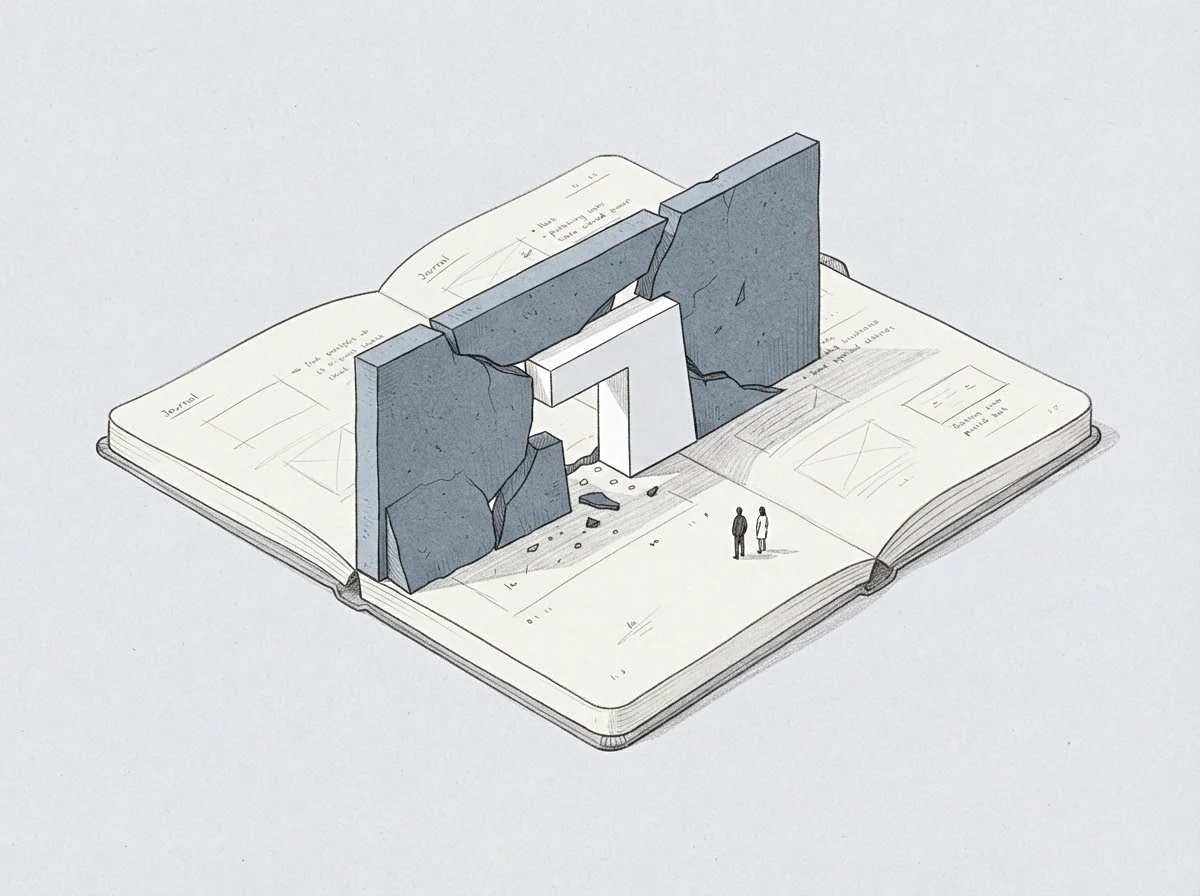
Desk
Midnight during an operational failure often leaves four communications channels open across a single screen. Department heads report supply bottlenecks and look for reassurance. Outside investors ask for revised cash flow projections by dawn, cloaking financial distress in the vocabulary of board oversight.
The executive on the line keeps their voice flat, hiding tachycardia and cognitive strain behind direct, level instructions. Subordinates take that calm as evidence of hidden reserve and route unresolved operational friction straight back up the chain.
Social baseline theory demonstrates that the human nervous system finds self-regulation in isolation metabolically expensive. As threats multiply, the brain balances the cost of response against remaining metabolic bandwidth. Without reliable partners sharing the direct exposure, the brain engages hypothalamic-pituitary-adrenal pathways to mobilize glucose, raise blood pressure, and sustain continuous vigilance.
Carried over weeks, this physiological mobilization creates heavy allostatic load, impairing prefrontal executive control through sustained glucocorticoid exposure.
Under chronic operational threat, unbuffered solo regulation depletes executive prefrontal reserves through continuous neuroendocrine mobilization.
Hierarchical reporting lines rule out biobehavioral co-regulation during a crisis. Subordinates scan leadership for signs of stability. Revealing physiological fatigue or tactical alarm to operating teams degrades performance and spreads panic through departments.
Communicating downward requires the leader to serve as a steady shock absorber, containing panic and presenting synthetic composure. The executive regulates on behalf of the team, spending personal metabolic energy to steady the collective group.
Managing upward toward capital allocators exacts the same physiological toll. Directors and creditors exercise fiduciary authority, measuring executive competence through signs of grip and predictability. Showing uncertainty or neuroendocrine depletion in board updates risks governance challenges, executive removal, or tightened credit terms.
The operator remains caught between staff who draw on their composure and overseers who penalize strain.
Solitary crisis management locks the executive into continuous hypercortisolemia, vascular strain, and accelerated cognitive fatigue.
Joint
Neural load sharing happens when two organisms encounter a threat together within an established baseline of mutual safety. Laboratory studies of hand-holding during electric shock show that physical touch or close proximity to a trusted counterpart reduces activation in the dorsal anterior cingulate cortex, insula, and hypothalamus. Threat response drops because the brain calculates carrying capacity collectively rather than alone.
Lateral peer buffering applies this biobehavioral dynamic to executive crisis management. A genuine peer sits on the same structural plane, outside the company’s governance hierarchy. That operator carries comparable operational weight, manages similar balance-sheet liabilities, and faces parallel exposure.
Alongside an authentic equal, the brain stops budgeting threat responses as an isolated unit. Mutual recognition of shared vulnerability quiets the alarm signaling of solitary exposure.

Biobehavioral Mechanics of Reciprocal Regulation
Direct contact with an uninvested peer who shares identical structural stakes alters autonomic regulation through distinct mechanisms:
- Vagal brake engagement steadies cardiac rhythms via social engagement pathways, lowering peripheral vascular resistance without conscious effort.
- Attentional offloading moves worst-case scenario modeling out of repetitive solitary loops and into structured operational breakdown.
- Neuroendocrine recalibration curbs salivary cortisol spikes when non-evaluative conversation signals immediate baseline safety to subcortical structures.
Immediate lateral proximity signals safety directly to subcortical threat circuits before conscious appraisal can intervene.
The regulatory partner functions as a biological stabilizer. During insolvency restructurings or sudden litigation, isolated leaders experience rapid cognitive narrowing, fixating entirely on immediate threats. A lateral peer introduces an independent analytical track.
Watching another operator stay settled while reviewing severe scenarios allows the primary executive to borrow that autonomic stability. This response does not stem from reassurance; it is physiological synchronization driven by vocal tone, posture, and steady eye contact.
Whether regular lateral regulation permanently resets the metabolic baseline of running an organization, or simply offers brief relief during active crises, remains an open operational question.
Table
Examining how different corporate relationships handle physiological strain clarifies why conventional professional networks fail to reduce executive stress. Most professional interactions increase autonomic arousal because they tie communication directly to performance evaluation.
| Relational Tier | Direction of Calming Transfer | Evaluative Hazard | Impact on Allostatic Load |
|---|---|---|---|
| Direct Reports | Executive to subordinate | Loss of operational authority and panic contagion | Heavy accumulation through continuous unilateral stabilization |
| Board and Capital Allocators | Synthetic performance to overseer | Governance intervention and removal from office | Extreme elevation through defensive vigilance and threat masking |
| Industry Acquaintances | Mutual competitive posturing | Reputational erosion and commercial leakages | Moderate elevation via continuous image preservation |
| Lateral Peer Counterparts | Bidirectional reciprocal buffering | Zero governance consequence or performance penalty | Immediate attenuation via distributed neural threat appraisal |
Downward interactions demand one-way stabilization, leaving the leader to bear the full cost of calming the team. Upward interactions require sustained composure under close evaluation. Only symmetric lateral relationships carry zero evaluative power over an executive’s operations.
Structural Prerequisites for Bilateral Buffering
Effective lateral buffering depends on clear boundaries established before emergencies occur. That symmetry breaks down whenever commercial ties enter the relationship. Shared equity, customer pipelines, or vendor relationships introduce conflicting interests, immediately reactivating social threat monitoring.
Peers need complete operational independence while sharing similar levels of day-to-day exposure. An executive guiding a plant through a cash freeze gains little biological grounding from an advisor who has never handled payroll through personal debt. The nervous system registers authenticity through direct recognition of shared operational reality, discarding input from observers insulated from real consequences.
Keeping governance oversight and commercial interests entirely separate protects reciprocal buffering capacity.
Clamp
Drawing on lateral peer support during acute disruption requires deliberate structure. Unfocused venting easily turns into mutual escalation, increasing autonomic strain through repeated reviews of worst-case outcomes.
Controlled decompression depends on strict operational containers. Two executives set up a direct channel used exclusively for operational disclosure and tactical stabilization. When severe disruption hits, the affected leader communicates the unvarnished facts without corporate messaging.

Execution of Tactical Lateral Exchanges
Systematic stabilization follows a structured three-stage sequence:
- Raw disclosure strips away executive composure, stating insolvency dates, staffing betrayals, or regulatory actions in blunt numeric detail.
- Autonomic grounding occurs as the listening counterpart receives the disclosure without shock, maintaining steady vocal pacing to signal structural survivability.
- Tactical sorting separates uncontrollable market turbulence from actionable immediate interventions, restoring prefrontal working memory capacity.
Solitary panic subsides the moment an equal acknowledges the full scale of disaster without pulling away.
Consider two technology founders facing sudden bank collapses that threaten their operating reserves. Operator A holds forty percent equity in an enterprise software company facing payroll failure in seventy-two hours. Rather than presenting filtered options to the board or airing alarm to company directors, Operator A calls Operator B, an enterprise founder who navigated similar asset freezes two years prior.
Operator A speaks in uneven bursts, detailing frozen accounts, potential employee litigation, and acute physical strain.
Operator B avoids motivational talk and corporate solutions. Operator B meets the tension with quiet focus, hearing out the worst projections without interrupting. Operator B asks direct operational questions regarding current cash reserves and payroll settlement windows.
Hearing a peer absorb the details without alarm allows Operator A’s ventral vagal pathways to steady. Heart rate variability normalizes, peripheral blood flow recovers, and Operator A finishes the twenty-minute call able to evaluate alternative transfer options without panic-induced tunnel vision.
The listening peer reviews the figures, assesses the legal exposures, and stays on the line until physical pacing steadies.
Graft
Leaders who come up through volatile environments often develop an inverted internal model. Early professional experiences teach them that asking for help invites exploitation or exposes weakness. They build hyper-autonomous working habits, treating isolated endurance as their main protection.
Over decades in business, that defensive stance hardens into an operational ceiling.
Such leaders struggle to register incoming support. When a peer offers genuine presence, the hyper-autonomous executive often reads the gesture as an anomaly, an unstated obligation, or a subtle play for leverage. They turn the offer aside, taking on further strain to demonstrate self-sufficiency.
The nervous system stays locked in solitary survival, turning operational pressure into physical wear.
Breaking this pattern requires building an alternate template through repeated experience. Intellectual familiarity with social baseline theory does not alter subcortical responses. Threat appraisal shifts only through repeated contact with peers who observe full vulnerability without withdrawing, judging, or seeking advantage.
That steady recalibration builds earned security, adding a capacity for reciprocal support onto an otherwise guarded baseline.
Over three or four severe crisis cycles, an executive using structured lateral buffering learns that asking for support does not bring institutional consequences. The nervous system registers the metabolic savings of shared threat processing. Prefrontal capacity clears, sleep holds up better during active emergencies, and decision quality improves once threat monitoring stops consuming ninety percent of working attention.
Navigating crises together turns isolated tactical shock absorption into lasting professional resilience.