
Executive System Throttling Mechanics Under High Allostatic Demand
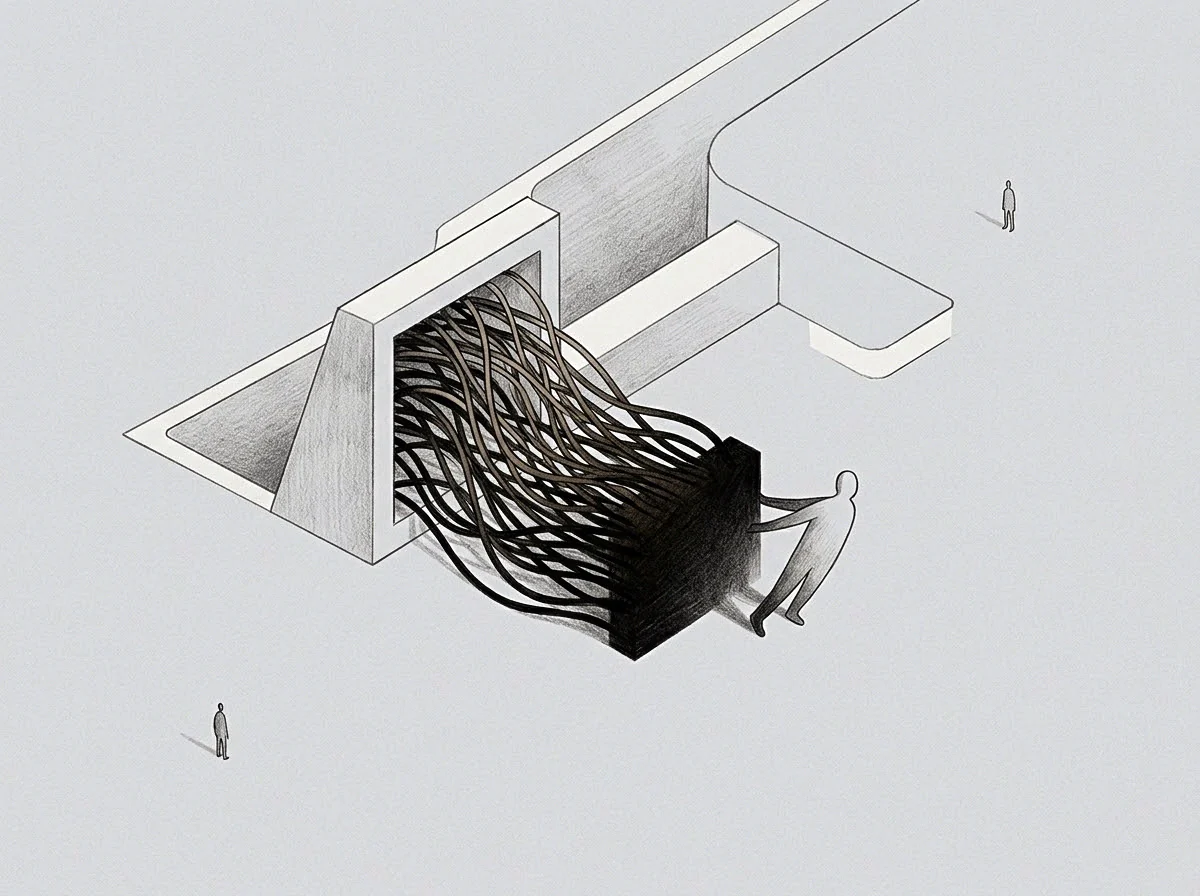
Executive system throttling selectively suppresses high-order cognitive processing to protect vital operational capacity under sustained physiological load.
Filter

System Preservation Across High Regulatory Demand
Operational throughput under chronic physiological strain relies on a selective reduction of cognitive bandwidth. When biological systems face sustained demand, the central nervous system defensively reduces executive processing. This response alters working memory, shortens planning horizons, and prioritizes immediate habit execution over complex problem-solving.
Clinical diagnostic tools frequently mischaracterize this state as depression, as standard psychiatric metrics measure interest loss, reduced motivation, and affective flattening, which mirror the behavioral outputs of defensive throttling despite diverging underlying mechanisms.
Depressive states feature generalized network dysfunction accompanied by persistent negative self-evaluation and systemic loss of reward responsiveness across all operational contexts. Throttling represents an active regulatory mechanism. The executive apparatus selectively disables high-cost, self-initiated cognitive operations while preserving baseline execution for structured, routine tasks.
High-level strategic synthesis drops off because prefrontal cortical structures require high concentrations of glucose and oxygen that the organism cannot sustain under unremitting physiological stress. Non-essential tasks are shed to protect core physiological baseline functions.
An operator experiencing executive system throttling continues to fulfill structured obligations, respond to immediate operational fires, and maintain external routine. The constraint appears specifically when an unscripted context demands creative synthesis, open-ended evaluation, or emotional self-regulation across multiple interpersonal domains. The individual feels capable of running established scripts but experiences acute cognitive paralysis when presented with unstructured decision spaces.
Recognizing this distinction determines the corrective strategy: applying traditional activation protocols designed for clinical depression increases incoming demand on an already throttled system, accelerating physiological exhaustion.
A calendar filled with external promises leaves zero unallocated processing capacity for unexpected operational friction.
The system sheds lower priority operations.
Mistaking selective executive throttling for psychiatric failure leads to improper interventions that increase task demands while leaving physiological wear unaddressed.

Count

Working Memory Allocation and Loop Density
Cognitive capacity operates under strict structural limits dictated by concurrent active loops. Executive working memory holds a restricted number of ungated streams before processing speed degrades, as each open operational line places a continuous background demand on prefrontal networks. A project with defined parameters, an explicit deadline, and established ownership consumes minimal ongoing executive capacity.
An open loop lacking clear scope, resolution criteria, or suspension boundaries forces continuous monitoring, reserving a working memory slot regardless of active progress.
High allostatic load decreases the maximum number of concurrent loops the executive system can process before performance degradation occurs. Under baseline physiological conditions, an operator manages four to six active streams while maintaining working headroom for unexpected inputs. Under sustained stress, elevated systemic baseline cortisol and sympathetic nervous system activation contract this processing ceiling, dropping effective capacity to two or three simultaneous streams.
When incoming operational demands exceed this contracted ceiling, the executive gating architecture begins shedding ungated tasks without conscious prioritization.
| Stream Configuration | Memory Reservation Level | Context Switching Overhead | Allostatic Load Impact |
|---|---|---|---|
| Ungated Operational Line | Continuous high reservation | Severe processing delay | Sustained cortisol elevation |
| Gated Temporal Line | Intermittent low reservation | Minimal localized delay | Transient baseline elevation |
| Parked Structural Line | Zero active reservation | Zero processing delay | Baseline biological level |
System state dictates performance independent of mood.
The distinction between project quantity and open loop density governs executive availability. Managing twenty projects structured into defined execution blocks consumes less executive allocation than holding four ambiguous, high-stakes relationships with undefined communication windows. Incoming notifications, ungated messaging channels, and open-ended status requests repeatedly trigger micro-context switches, each carrying a distinct metabolic cost that consumes glucose and reduces neural processing efficiency.
To preserve operational continuity, active tasks must be classified and assigned explicit boundaries:
- Ungated operational stream maintains active processing demand across all working hours, generating persistent cognitive friction and requiring immediate structural containment.
- Gated temporal stream limits cognitive overhead by restricting operational access to predetermined calendar intervals and explicitly defined delivery parameters.
- Parked structural line removes active memory reservations entirely through written operational handovers, formal suspensions, or explicit project deferrals.
The capacity floor limits active execution.
Ungated inputs force continuous context switching.
An open operational thread without explicit termination criteria occupies a permanent processing reservation within executive working memory.
Cognitive reservation persists until threads close.
Setting a hard maximum of three active ungated loops converts indeterminate availability into predictable delivery windows.

Clamp

Neuroendocrine Gating Under Chronic Stress
Sustained elevation of metabolic stress hormones alters prefrontal cortical architecture. Prolonged systemic exposure to glucocorticoids causes structural changes within prefrontal dendritic networks, reducing synaptic connectivity while strengthening subcortical structures like the basolateral amygdala. This neurobiological shift reorganizes executive prioritization: top-down cognitive control, flexible decision-making, and working memory gating recede, while stimulus-driven reactivity and habitual neural pathways take priority.
The organism transitions from reflective governance to reactive survival modes.
Physiological measurement of allostatic load tracks this structural transition through markers of autonomic nervous system balance, neuroendocrine output, and inflammatory markers. Heart rate variability drops, signaling a loss of vagal tone and parasympathetic recovery capacity. Concurrent baseline elevations in persistent serum inflammatory cytokines alter blood-brain barrier permeability, inducing localized neuroinflammation that impairs neural network synchronization.
The brain throttles executive functions to limit energy consumption within metabolically stressed neural tissue.
Subcortical routines assume operational control.
The physiological tax accumulates over time.
Sustained allostatic elevation suppresses prefrontal network synchronization while preservation of habitual subcortical routines continues uninterrupted.
The biological cost of maintaining executive focus rises non-linearly as allostatic load accumulates. In low-stress environments, self-regulation consumes modest metabolic resources. Under chronic allostatic overload, forcing prefrontal execution requires significant central nervous system effort, rapidly depleting systemic glucose stores and inducing cognitive fatigue.
When forced execution continues past physiological warnings, the nervous system triggers protective shutdowns, presenting as severe mental exhaustion, sensory hypersensitivity, and sudden loss of decision-making capacity.
The exact longitudinal threshold where adaptive neuroendocrine throttling shifts into irreversible structural receptor downregulation remains undetermined across diverse human populations.

Shift

Transitioning From Informal Elasticity to Contractual Bounds
Operational sustainability requires replacing implicit personal availability with rigid organizational parameters. The common response to executive throttling involves attempting to increase personal effort, utilizing willpower to bridge the gap between systemic demand and contracted processing capacity. Willpower represents a limited prefrontal resource that depletes rapidly under stress.
Effective containment requires structural interventions that reduce the cognitive cost of incoming inputs before they reach the executive gating mechanism.
Transitioning an organization from elastic availability to deterministic processing follows a structured sequence:
- Audit all incoming communication lines to identify ungated access points and persistent interruptions.
- Establish rigid asynchronous communication windows with explicitly defined expected response latencies.
- Define quantitative boundaries for active operational loops, enforcing a strict hold on new inputs when capacity reaches maximum limits.
- Delegate explicit decision rights to subordinate roles, removing executive sign-off requirements for routine operational choices.
Boundaries protect overall operational throughput.
Externalizing regulation through social baseline architecture reduces individual neural expenditure. Proximity to reliable operational partners who hold clear boundaries lowers the metabolic cost of executive control. When organizational structures provide predictable inputs, transparent escalation paths, and firm operational constraints, the individual prefrontal cortex offloads monitoring tasks to the structural environment.
Headroom recovers as external stability replaces continuous internal vigilance.
Thread reduction requires explicit temporal boundaries rather than informal promises of delayed execution.
System recovery requires structural containment.
The weekly status message arrives predictably on Friday afternoon regardless of operational turbulence.

Wear

Long Term Physiological Toll and Systems Recovery
Chronically elevated allostatic states leave persistent metabolic markers across neural networks. Prolonged operational execution at regulatory limits causes lasting alterations in neuroendocrine sensitivity. Glucocorticoid receptors downregulate, blunting normal diurnal cortisol rhythms and impairing physiological recovery cycles during rest states.
The organism maintains an elevated baseline of physiological tension even after external operational demands decrease, preventing rapid system restoration simply by removing operational stressors.
Restoring executive headroom requires prolonged, low-demand operational environments combined with deliberate physiological modulation. Structural recovery cannot occur within the operational environment that produced the chronic load, as contextual cues maintain heightened sympathetic tone. Rebuilding prefrontal network connectivity requires extended time horizons characterized by low context-switching overhead, absence of ungated operational lines, and consistent parasympathetic activation.
The timeline for neural recovery directly reflects the duration and intensity of the preceding allostatic accumulation.
Execution continues on schedule during transition.
Operational headroom returns only after structural ungated inputs drop below biological processing limits.