
How Stated Operational Terms Protect Executive Cognitive Headroom Under Pressure
Stated operational terms convert active evaluation into passive rule execution, preserving executive cognitive headroom by preventing continuous real-time load transfer.
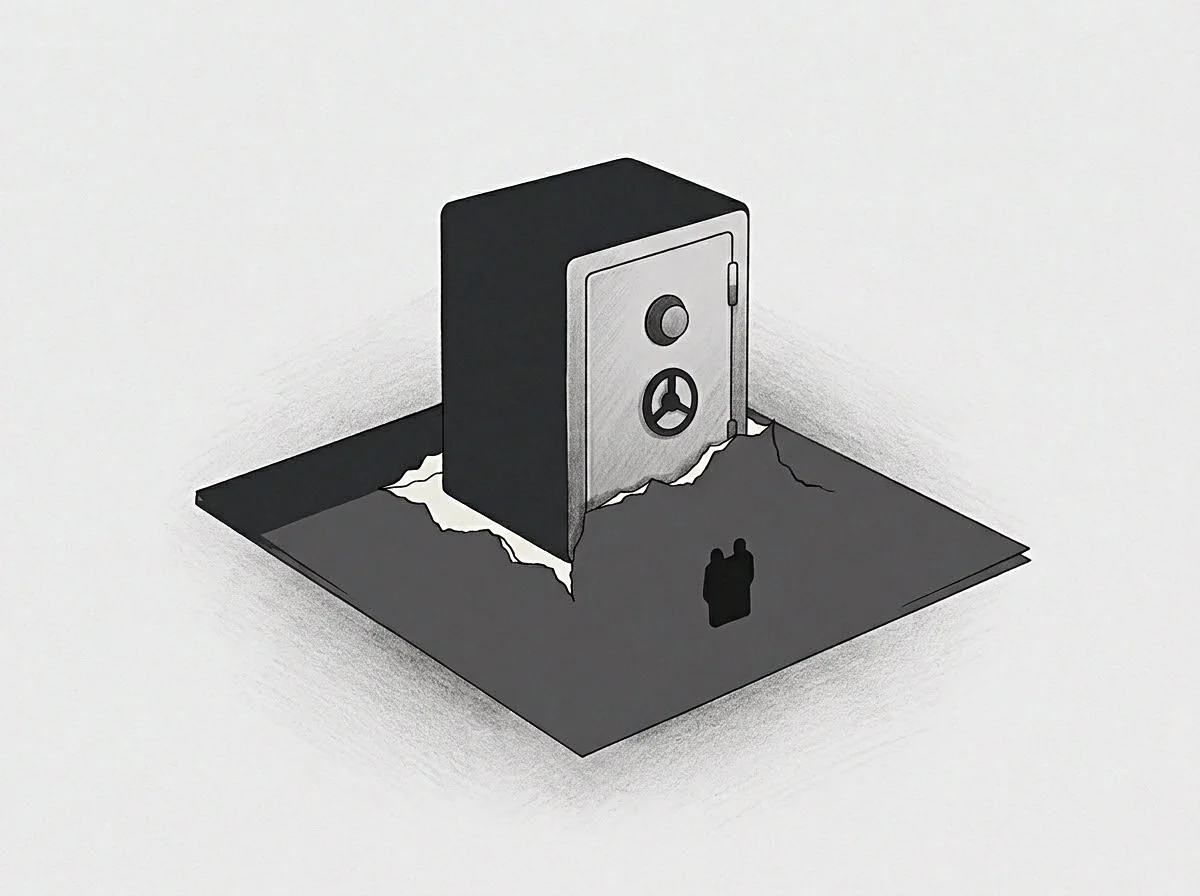
Drain
Four operational escalations land simultaneously on a late Tuesday evening while executive working memory is already operating at capacity setpoints. One message requests an immediate budget variance sign-off for an unplanned vendor adjustment. Another asks for arbitration between product and engineering leaders regarding a delayed milestone.
The third notification flags a key hire who threatens to rescind an offer unless equity vesting terms change before morning. The fourth message asks an open-ended question about strategic positioning for an upcoming board meeting. None of these incoming inputs carries a pre-stated threshold for intervention.
Without explicit operational terms established prior to the influx, the person in the seat conducts real-time cognitive evaluations for every incoming item. Each message requires active contextual reconstruction, priority assignment, and emotional state regulation. The total volume of decision-gated acts consumes the remaining working memory, leaving zero capacity for high-level synthesis or strategic reflection.

Real Time Evaluation Under Unbounded Operational Demand
Operational environments relying on continuous real-time judgment convert every incoming ping into an active decision event. When a team lacks clear rules for what constitutes an executive emergency, team members default to transferring operational uncertainty upward. The upward transfer of friction occurs because sending a message costs the sender less energy than resolving the uncertainty locally.
The executive setpoint becomes the default dumping ground for unclassified systemic load.
An unstated operational boundary forces the receiver to evaluate the sender’s urgency against their own depleted capacity every time a notification arrives.
When cognitive load reaches baseline ceiling limits, the human nervous system experiences elevated allostatic load. Research in occupational health and physiological stress reveals that sustained high-demand operational environments without explicit structural limits force the prefrontal cortex into continuous active suppression of ambient noise. This continuous active regulation depletes executive function, slowing down processing speed and increasing error rates in pattern recognition.
The executive setpoint held until the pressure stripped away lateral decision capacity.

The Working Memory Overhead of Ambiguous Priority
Ambiguity in operational expectations forces the brain to keep multiple unresolved feedback loops open simultaneously. An open operational loop sits in working memory, drawing continuous physiological resources even during periods of non-work. When an executive receives an ambiguous message without a stated timeline for resolution, the mind retains the item as an active threat to system stability.
Consider an operational arrangement where two leaders build a company for three years without explicit agreements regarding decision authority tiers. Assume the team scales to fifty personnel, with incoming operational requests rising from five per day to seventy per day. Without stated terms defining what requires executive clearance, the executive evaluates all seventy items manually.
The baseline capacity of human working memory accommodates roughly four distinct active chunks of information at one time. Processing seventy unclassified operational items creates an arithmetic impossibility, forcing the cognitive system to drop context and rely on reactive, short-term triage.
Unclear operational criteria force executive attention to function as an all-purpose shock absorber, guaranteeing systemic fatigue and delayed strategic execution across every adjacent department.

Desk
Physical boundaries inside an office separate distinct functional zones, yet cognitive boundaries require explicit written parameters to achieve identical isolation. Stated operational terms serve as structural walls within an organization. They replace active human judgment with passive protocol execution, shielding the person in the seat from continuous context switching.
A term stated once and documented clearly operates as a load-transferring object. When an incoming operational event encounters a stated term, the system routes the event according to pre-established criteria without requiring executive intervention. The rule takes the friction.

Structural Terms as Load Transfer Boundaries
Building an operational firewall requires establishing explicit criteria for access, escalation, and decision rights. These criteria must exist in written, cold-state declarations rather than real-time verbal assertions made under stress. A cold-state declaration carries authority because parties agree to the logic prior to emotional activation during operational friction.
Effective operational terms define clear parameters across four distinct operational dimensions:
- Response Latency Tiers clear timeframes assigned to distinct communication channels, establishing that non-urgent asynchronous queries receive attention only during designated daily processing windows.
- Financial Clearance Thresholds exact numerical boundaries below which functional leaders exercise full authority to reallocate budget without seeking executive approval or preliminary review.
- Escalation Trigger Conditions unambiguous physical or financial events that must occur before an operational issue transfers from middle management to executive attention.
- Decision Right Taxonomy explicit documentation detailing which leader holds ultimate sign-off authority for specific operational domains, eliminating joint ambiguity.
Explicit terms eliminate the necessity of active refusal. When an incoming request fails to meet the pre-stated criteria for executive intervention, the system rejects or reroutes the item automatically based on the term itself.

The Economics of Pre-Committed Protocols
Pre-committed operational protocols operate like programmed switches in control systems theory. Control theory demonstrates that systems relying on active feedback loops require continuous power to hold a baseline state under environmental variance. Feedforward systems, by contrast, utilize predetermined rules to respond to disturbances, requiring zero ongoing computational energy once configured.
An executive who states terms in advance constructs a feedforward control system for their cognitive capacity. The term acts as an automated filter, handling routine operational noise so that active working memory engages exclusively with novel, non-standard system threats.
The agreement specifies that financial commitments under fifty thousand dollars execute on functional director sign-off alone, shifting all variance tracking into monthly balance updates.
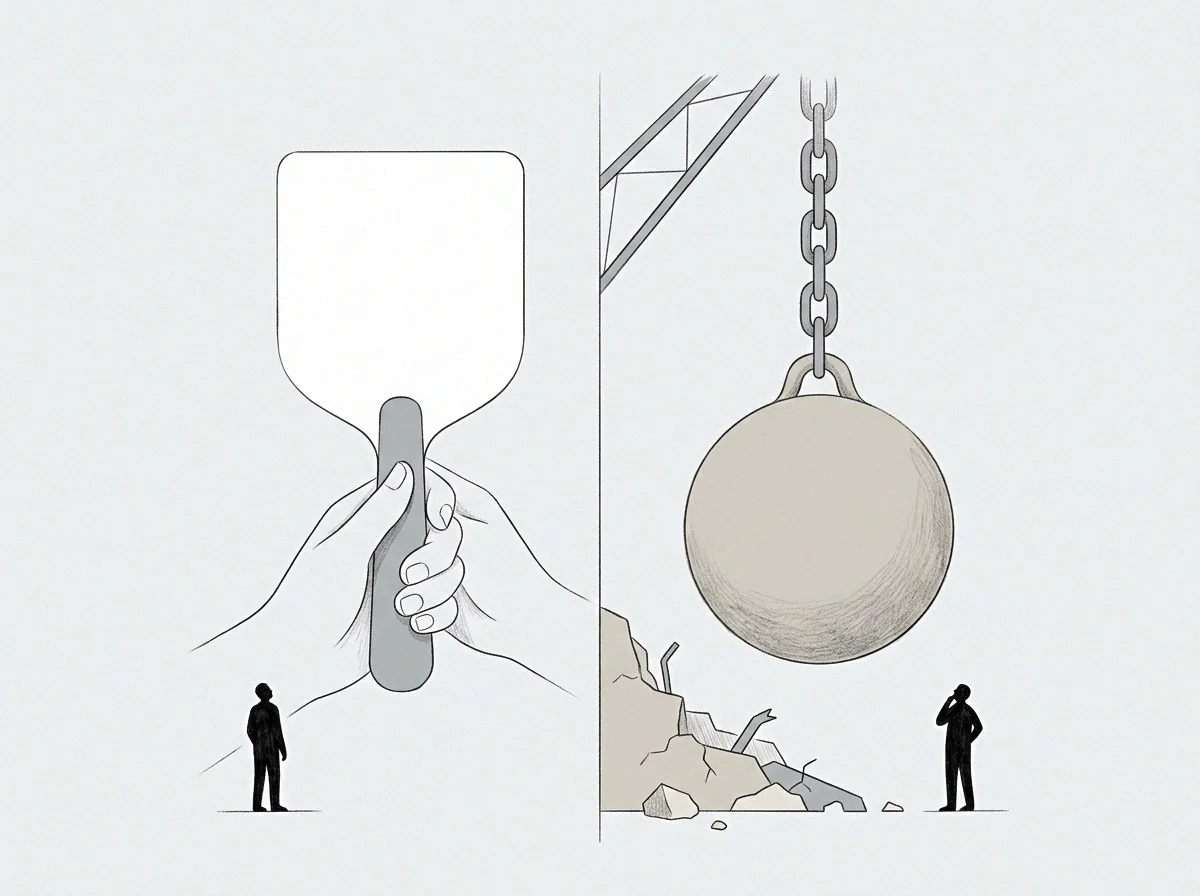
Filter
Evaluating incoming operational load requires clear distinction between active manual gating and term-based structural management. Active manual gating relies on personal resolve, executive mood, or real-time assessment to manage requests. Term-based structural management relies on pre-established rules that govern flow independently of executive presence.
Active gating fails during periods of intense pressure because emotional regulation and decision capacity draw from the same physiological fuel. When cognitive headroom drops, personal resolve weakens, leading to unpredictable operational access and inconsistent decision quality.

How Do Operational Terms Alter Load Transfer?
The transition from ad-hoc manual evaluation to term-based execution fundamentally alters organizational load dynamics. The table below illustrates how specific operational parameters shift when managed through explicit terms rather than continuous executive judgment.
| Operational Parameter | Ad-Hoc Real-Time Gating | Stated Term Protocol Execution |
|---|---|---|
| Cognitive Overhead Per Event | Active working memory evaluates context, urgency, and interpersonal friction manually. | Passive pattern recognition matches inputs against pre-established conditional thresholds. |
| Escalation Latency | Variable delays occur based on executive exhaustion and current queue depth. | Deterministic routing occurs instantly via standardized operational criteria. |
| Friction Under Fatigue | Friction escalates rapidly as emotional regulation capacity depletes under continuous interrupts. | Friction gets absorbed completely by written terms and standardized operational channels. |
| Open Loop Duration | Loops persist until active manual resolution occurs, accumulating cognitive strain. | Loops terminate immediately upon classification into standard processing latency tiers. |
The structural transformation outlined in the table removes executive mood from the operational path. When an organization runs on ad-hoc real-time gating, employees spend substantial energy reading executive state, trying to identify optimal moments to present requests. This behavior wastes organizational capacity on both sides of the exchange.
When stated terms replace mood-based access, the organization operates against predictable, published mechanisms rather than interpersonal speculation.

The Psychological Security of Explicit Constraints
Social baseline theory indicates that humans consume fewer physiological resources when working within environments with predictable social and operational structures. Proximity to reliable, structured systems lowers individual stress responses, allowing team members to distribute cognitive load across the organizational architecture.
When explicit terms govern work allocation, subordinates experience reduced anxiety regarding performance standards. They understand precisely what level of authority they possess and what exact conditions require upward escalation. This clarity eliminates the guesswork that drives speculative communications and unnecessary alignment meetings.
The operational team handles this variance locally because the written guidance grants full authority below the threshold.

Signal
Communication channels carry operational metadata beyond the explicit text of messages. The speed, frequency, and timing of communications convey structural signals about priority, authority, and systemic health. When operational terms remain unstated, channel noise dominates organizational focus.
Channels that ping continuously create an environment of artificial urgency. Every notification triggers a micro-stress response in the recipient, activating threat-detection neural networks regardless of the message’s actual substance. The channel stayed quiet once the terms established batch processing schedules.
Availability Derived Through Silence and Stated Cost
Availability within an organization is derived rather than announced. When an executive declares constant availability, team members interpret the statement as an invitation to offload unrefined operational tasks. High availability drives upward load transfer, depleting executive capacity while stunting lower-level leadership development.
When response intervals are explicitly anchored to severity thresholds, non-urgent communications produce no active cognitive evaluation until the designated window opens.
Stated terms convert availability into a structured resource with explicit costs. By defining specific channels for specific types of communication and establishing delayed response windows for non-urgent items, the executive establishes clear operational boundaries.
The progression toward channel stabilization follows a predictable sequence when explicit operational terms take effect:
- Publication of channel-specific response windows and escalation criteria across all operational divisions.
- Redirection of misrouted, non-urgent requests back to primary standardized documentation channels without immediate resolution.
- Establishment of batch-processing routines during designated daily time slots, preserving uninterrupted blocks for continuous deep focus.
- Adaptation of organizational communication patterns as team members learn to resolve operational items within local authority tiers.
The absence of immediate response on non-urgent channels communicates adherence to established operational terms rather than neglect or indifference.

Ping Arithmetic and Attention Preservation
Consider the cumulative impact of daily communication interruptions on cognitive processing speed. Research on task switching demonstrates that returning to deep focus following a single interruption requires up to twenty-three minutes. An executive receiving twenty uncoordinated pings throughout a workday spends the entire day in a state of cognitive recovery, never reaching peak focus capacity.
Batch processing operational requests reduces attention fragmentation dramatically. By consolidating non-urgent reviews into two designated daily slots, the executive isolates context switching to controlled windows, protecting hours of continuous headroom for complex problem solving.
How far can an organization scale its operational throughput before implicit availability standards inevitably destroy executive capacity?

Anchor
Sustained high-pressure operations test the physical limits of executive capacity. During periods of extended market volatility, organizational crisis, or rapid scaling, executive cognitive reserves face constant depletion. Preserving baseline headroom becomes essential for strategic survival.
Operational terms function as systemic anchors during prolonged crises. They maintain organizational structure when individual fatigue threatens to degrade decision quality, providing steady mechanical rails that guide action regardless of executive emotional state.

State Gated Execution and Cognitive Reserve
Certain organizational actions require high cognitive capacity and must remain state-gated. A state-gated act demands full prefrontal executive function, complex risk integration, and deliberate evaluation. Examples include strategic acquisitions, key executive hiring, and capital allocation changes.
No amount of effort can produce sound results for state-gated acts when executive reserves drop below critical floor setpoints.
A term stated before crisis arrives functions as a mechanical boundary, whereas a term asserted during active fatigue reads as an emotional refusal.
Decision-gated acts, by contrast, follow established procedural paths. They require execution of predefined steps rather than novel strategic synthesis. Stated operational terms convert potential state-gated burdens into routine decision-gated procedures, offloading cognitive burden from the executive to the operational system.
Holding explicit threshold conditions transfers the friction of prioritization from executive working memory back to the initiating channel.
Establishing terms prior to operational strain protects the executive from making critical strategic mistakes during moments of severe exhaustion.

Preserving Strategic Headroom Over Sustained Horizons
Long-term organizational health depends on maintaining a permanent reserve of executive cognitive headroom. An executive operating continuously at one hundred percent capacity possesses zero bandwidth to absorb unexpected market shocks or evaluate novel strategic opportunities. This lack of reserve capacity introduces fragility into the organizational structure.
Stated terms build cognitive buffer zones into daily operations. By bounding executive involvement within defined parameters, terms create reliable space for proactive synthesis, deep work, and high-level strategic alignment.
Operational boundaries established prior to crisis preserve capacity, while boundaries attempted during operational fatigue generate friction.