
Interpersonal Physiological Entrainment Under Acute Enterprise Hazard
Proximity to an unmoving leader allows panicking teams to borrow autonomic stability under enterprise threat, shifting metabolic survival costs onto one nervous system.
Contact
Three executives sit in an unventilated conference room at midnight while wire transfers fail across two continents. The legal counsel reads an injunction line by line from a printed binder. Across the oak surface, the chief executive sits upright, breathing steadily at six cycles per minute, shoulders dropped, voice even.
Within twelve minutes of the legal counsel opening that binder, the finance chief stops tapping a brass pen against the wood. Respiration rates align as the finance director exhales at the exact cadence set by the executive across the table. Skin conductance levels drop in the two listeners while the chief executive maintains that deliberate, steady rhythm.
The listeners register their own sudden reduction in muscle tension as personal discipline, attributing their calm to logic. The room relied on the metabolic composure of the single person anchoring the table.
Autonomic regulation during enterprise crises acts as a physical property transferred between individuals rather than an emotional choice. When an operating company faces sudden legal exposure or capital insolvency, the human central nervous system calculates the energy required to survive the catastrophe. Under standard conditions described by social baseline theory, the mammalian brain treats the physical proximity of a predictable, competent human companion as an environmental baseline.
That presence reduces the perceived energetic demand of defending against an existential threat. When an isolated human evaluates a catastrophic enterprise hazard, the brain allocates massive neural and cardiovascular reserves to sustain vigilance, suppressing vagal tone and elevating systemic inflammation. Physical contact changes that metabolic accounting.
Pupillary tracking, vocal timbre, and the micro-postures of an unmoving torso signal to the observer that defense costs are shared.
A stable companion in the room reduces the metabolic expenditure of threat appraisal before any strategy is spoken.
That biological transfer functions through physiological entrainment, an involuntary synchronization of autonomic output across co-present individuals. Respiration intervals match first, followed by cardiac vagal tone, measurable through respiratory sinus arrhythmia, the natural fluctuation in heart rate coordinated with the breath cycle. High vagal tone indicates active engagement of the parasympathetic brake, dampening the primitive fight-or-flight accelerations generated by the sympathetic chain.
In an acute enterprise emergency, team members who lack an internal stabilizing baseline involuntarily lock their vagal pacing to the individual displaying the lowest physiological oscillation. The borrowing party does not negotiate this biological connection; its autonomic system detects an external source of stability, docks against it, and lowers its threat signaling. The person serving as the biological anchor absorbs the environmental tension of the room, stabilizing three other cardiovascular loops through the singular stability of their own ribcage.
Dyadic electroencephalography and joint cardiovascular impedance measures demonstrate this effect during severe laboratory-induced evaluative threats. When pairs face acute losses together, the presence of a calm partner blunts sympathetic arousal in the more vulnerable participant, as measured by pre-ejection period and peripheral vasoconstriction in co-located healthy adults. That finding would alter if isolated individuals exhibited identical autonomic recovery latencies without access to somatic proximity cues.
The data confirms that proximity alters the biological cost of processing hazard. The person borrowing that steadiness experiences an artificial clarity, while the individual providing the anchor pays an energetic capacity premium to maintain an unwavering peripheral presentation.
Autonomic Indicators of Crisis Entrainment
The somatic signatures of shared emergency entrainment display distinct physical characteristics inside high-stress enterprise meetings.
- Respiratory Sinus Arrhythmia Convergence occurs when the inter-beat interval variability of secondary operators aligns with the inhalation rhythms of the primary executive.
- Sympathetic Attenuation Through Proximity reduces the peripheral skin conductance responses of panic-prone team members once a sovereign operator enters the room.
- Pupillary Deceleration Locking stabilizes ocular dilation rates across an operational team during catastrophic disclosures, mirroring the gaze stability of the anchor.
- Vocal Pitch Modulation Entrainment aligns the fundamental frequencies of adjacent speakers, lowering vocal frequency volatility under high-hazard cross-examination.
The room remained steady enough to continue working through the audit.
Spoke
Distribution of biological burden inside an executive team typically forms a centralized, wheel-like architecture. In this structural arrangement, the central operator functions as the hub, while each vice president or functional director represents an isolated line connecting directly to that central source of calm. During an existential shock, such as a frozen debt facility or an unannounced regulatory raid, these lines do not transfer regulatory support horizontally among themselves.
Each spoke draws directly from the hub. When the head of engineering faces autonomic collapse over server termination notices, that operator seeks out the founder’s physical presence. When the head of sales discovers major revenue cancellations, that executive walks straight to the founder’s office to observe their physical posture.
The spokes rely on the center to steady themselves.
Consider an enterprise operating with forty days of payroll remaining and an unexpected patent injunction served on a Friday afternoon. Three operating partners hold substantial equity but limited internal regulatory capacity, while the technical founder holds the structural authority. The operating partners enter the room with rapid breathing, elevated cortisol, and fragmented speech, demanding immediate tactical choices.
The founder gives no instructions at first, remaining motionless, breathing deeply, and sorting papers into three even stacks. Within twenty minutes, the operating partners lower their vocal pitch, open their clenched fingers, and begin examining the legal filings calmly. The founder offered zero strategic solutions in that initial half-hour, providing instead an autonomic floor.
The partners attached to the founder’s physiological state, stabilized their prefrontal cortex function through that attachment, and regained operational capacity.
A team attaches to a leader’s physiological steadiness long before it attaches to an operational plan.
This dynamic creates a persistent operational illusion. Because the partners feel composed after twenty minutes in the founder’s physical presence, the leadership group assumes the crisis is under intellectual control. The regulatory capacity cost has not vanished; that metabolic burden shifted onto the central nervous system of the single individual anchoring the hub.
The founder acts as an uncompensated biological buffer, consuming endogenous glucose, sustaining elevated vagal control, and suppressing internal fright to manufacture an environmental steady-state for the spokes. The spokes leave the room equipped to execute tactical tasks. The hub remains alone in the chair, carrying the residual sympathetic charge shed by three separate nervous systems.
| Dimension | Unilateral Regulatory Absorption | Distributed Bilateral Co-Regulation |
|---|---|---|
| Vagal Efficiency | Hub exhausts parasympathetic brake to steady peripheral actors | Shared cardiac entrainment dampens autonomic volatility across all seats |
| Cognitive Load Capacity | Anchor burns working memory suppressing overt somatic panic cues | Parallel processing preserved through mutual somatic reassurance |
| Secondary Threat Processing | Degrades rapidly once the hub reaches physiological saturation | Maintains high fidelity through reciprocal biological anchoring |
| Recovery Latency | Anchor requires prolonged physical isolation to clear allostatic toll | System returns to homeostasis immediately upon hazard mitigation |
The structural danger of the hub-and-spoke configuration lies in its fragility. The moment the central regulator leaves the room, the spokes lose their borrowed coherence. If the founder walks out to take a private call, the functional leads frequently resume arguing, their heart rates climbing within ninety seconds of the anchor’s absence.
The spokes never developed a shared internal working model of lateral co-regulation. They know only how to siphon steadiness from a central source. The founder pays for this architecture with severe physical exhaustion, unable to show fatigue because the entire enterprise treats that fatigue as immediate proof of corporate collapse.
The central anchor always absorbs the highest metabolic capacity surcharge in silence.
Toll
Sustaining physiological composure under catastrophic circumstances exacts a severe metabolic debt. The human body does not generate stillness during disaster without immense biochemical expense. To prevent hands from shaking and voices from cracking when enterprise ruin is imminent, the central nervous system floods the bloodstream with catecholamines while firing the dorsal vagal complex to arrest physical tremoring.
This contradictory state creates massive allostatic load, the cumulative wear and tear on tissues resulting from prolonged neuroendocrine responses to external demands. The heart beats against constricted peripheral arteries, arterial walls stiffen, and digestive motility halts. The founder pays for outward stillness with internal biological attrition.

Can A Single Nervous System Stabilize An Entire Room?
Decoupling an external presentation from immediate sympathetic terror forces the prefrontal cortex into continuous hyper-activation. In industrial environments, such as deep-sea commercial diving or naval submarine watches where acoustic anomalies signal structural hull breaches, technicians rely on mechanical gauges rather than another person’s pulse to confirm safety. In an enterprise hazard, mechanical gauges do not exist.
Employees read the founder’s eyes instead. If the founder blinks rapidly, the team infers catastrophe. The founder exerts voluntary cortical suppression over ancient evolutionary warning circuits, keeping muscles locked and breath forced into rhythmic elongation.
That suppression consumes immense cellular glucose, starving prefrontal regions responsible for scenario planning and subtle threat detection.
No evidence establishes that every founder possesses an identifiable, predictable threshold where somatic buffering shifts into irreversible physical disease. The exact calendar week or hour when autonomic compensation collapses into systemic breakdown varies across genetics and personal baseline history. Under this uncertainty, an experienced operator institutes strict operational circuit breakers, mandating physical separation from the operational team regardless of crisis intensity, rather than gambling on indefinite autonomic stamina.
Salivary cortisol research and electrodermal monitoring across corporate leadership teams facing insolvency show that prolonged unilateral buffering leads to secondary parasympathetic exhaustion. The data rests on longitudinal cortisol sampling and continuous heart-rate variability recordings in executive officers navigating prolonged bankruptcy restructuring. This finding would shift if executive officers displaying sustained vagal tone suppression maintained identical endocrine profiles to non-stressed control subjects over a six-month duration, which they do not.
Sustained suppression triggers severe immune dysfunction, sleep fragmentation, and sudden cognitive freezing during critical strategic negotiations.
The body cannot differentiate between an existential predatory attack and a frozen banking infrastructure.
When an executive maintains this biological shield for weeks without internal replenishment, the capacity to process new hazard degrades. The executive becomes numb to nuance, and complex communications from partners register as intrusive noise. The sovereign regulator continues to look calm on the exterior, but that exterior is no longer active regulation.
It has transformed into functional dissociation, a protective neural shutdown that preserves vital organs at the expense of executive reasoning. When this physiological depletion occurs, the enterprise collapses from the center outward because the biological anchor has exhausted its fuel.
Failing to budget this biological capacity expense results in the abrupt cognitive incapacitation of the executive precisely when operational solvency requires decisive analytical clarity.

Drift
Separation between an unanchored team and an exhausted sovereign regulator initiates immediate operational divergence. When the central figure burns through autonomic reserves, subtle dysregulations surface across the leadership layer. Decisions that once required a ten-minute conversation stretch into circular three-hour disputes.
Functional leads misinterpret simple operational delays as intentional hostility. Without the stabilizing presence of an active biological baseline, primitive limbic circuits inside each team member begin misreading neutral facial expressions as predatory threats. Communication channels become combative, memos grow defensive, and critical technical bugs go unmentioned because no one possesses the regulatory headroom to absorb negative news.
This dysregulation cascade follows a sequence across enterprise crises.
- Peripheral Signal Distortion forces stressed department heads to interpret administrative corrections as personal betrayals.
- Lateral Threat Amplification causes operational leaders to attack adjacent divisions to hoard diminishing corporate resources.
- Regulatory Withdrawal occurs when the exhausted executive retreats into isolation, cutting off the team’s primary source of borrowed calm.
- Operational Paralysis freezes vital software releases and treasury management because fear prevents decisive commitment.
The founder frequently misreads this organizational breakdown as a failure of character, loyalty, or technical competence, expressing frustration that senior operators with substantial equity cannot manage operational friction without unraveling. What failed was not the resume or the contractual incentive structure; it was the invisible biological subsidy that the founder had provided every morning without naming it. The moment that uncredited biological subsidy ceased, the executive team fell back onto its true baseline capacity, which was inadequate for the magnitude of the hazard.
Removing the primary biological anchor exposes the true unmitigated fragility of an organization under threat.
Silence carries an operational price. When the leader attempts to protect the team by withholding the extent of an enterprise hazard, executive physiology betrays the secret anyway. Human beings possess mirror neuron networks and sensory apparatus designed over millions of years to track the micro-tensions of a tribal leader.
The team senses the stress, notices frozen ocular micro-movements, and detects rigid vocal timbre. Because the leader’s words state that everything is secure while somatic presentation signals existential danger, the team enters severe cognitive dissonance. Nervous systems begin reacting to the unstated terror, magnifying autonomic panic across the enterprise.
How long can an organization sustain coordinated tactical execution once the gap between verbal assurances and executive physiology becomes insurmountable?
Repair
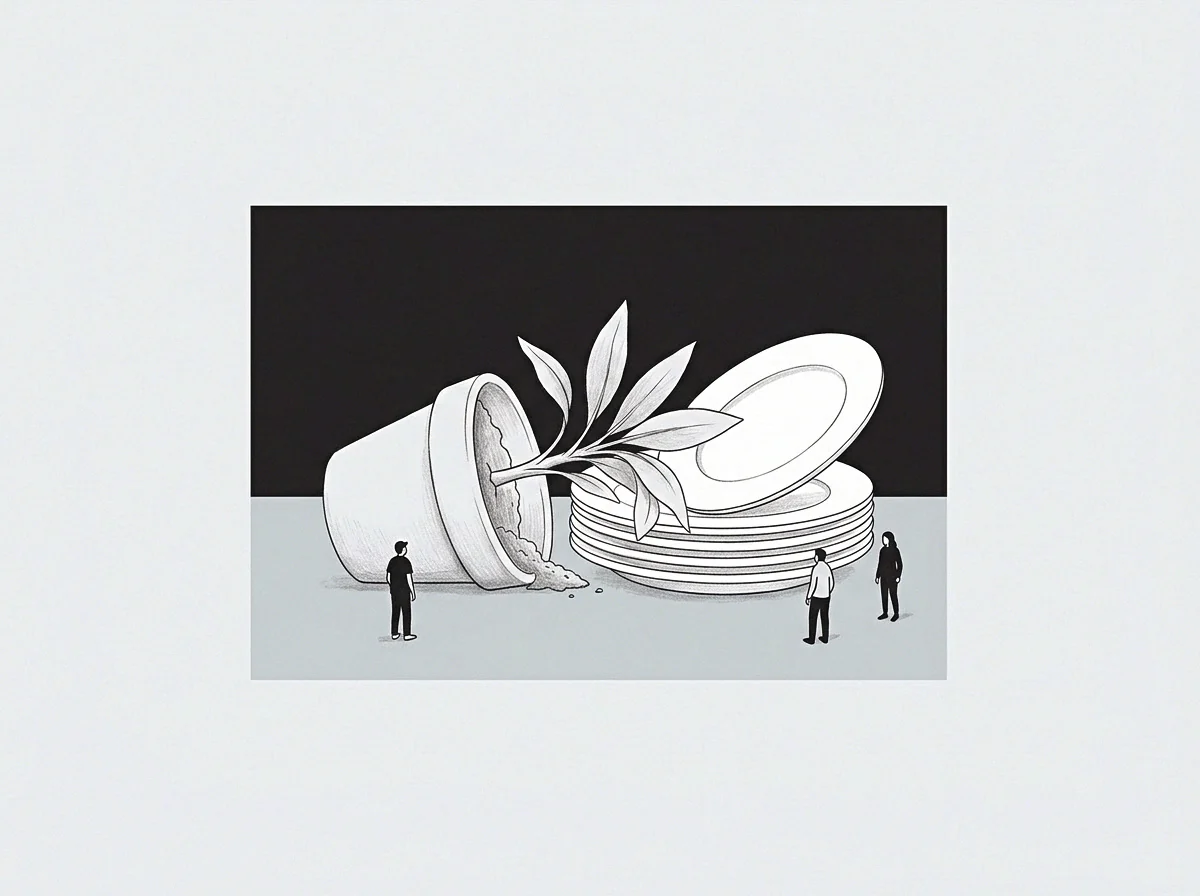
Transforming a fragile, hub-and-spoke biological configuration into a resilient operating structure requires explicit somatic renegotiation. The organization cannot survive repeated enterprise shocks if a single central nervous system acts as the sole shock absorber. The executive must establish clear, non-negotiable operational boundaries that terminate unilateral biological siphoning.
This does not mean announcing vulnerability or discussing emotional states in corporate settings; it means structuring operating cadences so that lateral co-regulation becomes an architectural mandate rather than an accidental luxury.
The sovereign regulator must locate an external source of stabilization outside the enterprise architecture. A person who ran the developmental cycle backwards, learning early in life to serve as the baseline for panicking adults, internalizes a model of themselves as the perpetual anchor. That individual has no functional receptor slot for receiving support.
When another person offers presence, the sovereign regulator registers the gesture as an operational liability or an anomaly to be inspected. That historical template must update through repeated, verified experiences where the regulator deliberately allows another stable nervous system to hold the line during a crisis. This update constitutes earned security, a biological recalibration formed through physical exposure rather than intellectual insight.
Within the firm, executive meetings require structural re-engineering during high-hazard epochs. Physical proximity should be deployed strategically rather than continuously. When an acute hazard arises, the sovereign leader establishes tactical direction in a concise, structured session, then physically leaves the room.
Leaving forces operational leads to look at one another rather than siphoning regulatory calm from the founder’s face. The leads must learn to steady their own breathing and build lateral regulatory capacity through shared technical struggle. The founder ceases to be an open biological utility.
A second regulatory template develops through the actual physical experience of resting against another stable person.
The founder institutes explicit operational constraints: no midnight conference table vigils, mandatory distributed decision rights, and absolute isolation during specific recovery windows. These structural mechanisms protect the leader’s vagal brake from depletion. When the leader protects their own biology, the company retains its ultimate strategic steering asset.
The enterprise ceases to be a machine that converts cardiovascular health into transient corporate composure.
The formal inclusion of mandatory forty-eight-hour communication blackouts during protracted regulatory investigations protects the executive’s vagal headroom, ensuring strategic steering capacity survives the crisis intact.