
Measuring The Somatic Recovery Threshold In Founders Navigating Prolonged Solitary Allostatic Containment
Solitary allostatic containment elevates metabolic expenditure by forcing continuous self-regulation without the biological cost reduction of shared presence.

Load
Four separate communication channels remain active at midnight while operational cash reserves contract. The body maintains a continuous sympathetic state while processing structural ambiguity without relief. Mammalian nervous systems construct threat budgets based on environmental safety signals and proximity to trusted conspecifics.
Under social baseline theory, solitary cognitive processing consumes substantial metabolic capacity. The brain treats isolation as an elevated threat, allocating additional glucose and cortisol to maintain hypervigilance.

Metabolic Costs of Unshared Risk
When a founder bears sole accountability for enterprise survival, autonomic arousal remains elevated past working hours. The brain budgets environmental demands under the assumption that regulation is shared across a social unit. Without a co-regulating presence, the central nervous system defaults to high-cost self-regulation.
Prolonged solitary containment depletes glycogen stores and suppresses parasympathetic tone, leading the body to treat every operational decision as an immediate survival event.
Social baseline theory establishes that solitary threat processing doubles the autonomic energy needed to maintain operational stability.

Downstream Effects of Autonomic Containment
Continuous self-regulation alters basal metabolic output. Vasoconstriction persists, cardiac output stays elevated, and inflammatory cascades activate over extended timeframes. Lacking the safety signals required to initiate cellular repair, the nervous system turns acute operational pressure into chronic somatic strain when isolation persists across quarters.
Failing to account for an absent co-regulatory presence converts acute tactical friction into chronic autonomic exhaustion.

Clock
Biological time registers stress through autonomic markers rather than standard calendar hours. Down-regulating sympathetic tone follows a physiological schedule requiring sustained periods of perceived safety. When working hours end, high baseline cortisol delays the transition into restorative sleep.

Measuring the Somatic Recovery Window
Objective tracking of the somatic recovery threshold relies on autonomic measures. Heart rate variability serves as the primary metric for autonomic flexibility, specifically the root mean square of successive differences in heart period, which measures parasympathetic vagal activity. Solitary allostatic containment depresses this value over successive weeks.
| Parameter | Solitary Containment State | Co-Regulated Baseline State |
|---|---|---|
| Vagal Brake Function | Suppressed baseline tone | Responsive vagal modulation |
| Recovery Window Duration | Extended beyond twelve hours | Restored within three hours |
| Sleep Architecture | Reduced deep slow-wave sleep | Normal delta wave progression |
Nocturnal heart rate variability provides the baseline metric for whether somatic recovery has initiated during rest intervals.

Temporal Dynamics of Vagal Suppression
The vagal brake modulates heart rate by inhibiting sinoatrial node firing. Prolonged solitary containment disengages this brake, maintaining tachycardia and an elevated resting pulse even during inactive periods. While deep sleep restores neural tissues, restoring vagal modulation demands extended periods free from operational threat signals.
Brief breaks fail to alter the somatic baseline when structural isolation continues.
Recovery occurs only when the nervous system detects absolute safety rather than brief operational silence.

Capacity
Executive performance relies on the neural bandwidth available for complex decision-making. Employees and investors frequently draw calm from the executive, projecting stability onto the leader while offloading their own anxiety. This dynamic creates a unidirectional regulation pipeline where the founder absorbs external panic without receiving regulatory feedback.

What Signals Indicate a Blunted Autonomic Threshold?
Recognizing autonomic exhaustion requires observing specific somatic markers before severe systemic breakdown occurs.
- Persistent Sympathetic Dominance maintains elevated resting heart rate and suppresses digestive activity through prolonged high-cortisol states.
- Blunted Affective Valence reduces emotional range as the central nervous system dampens non-essential sensory processing to conserve glycogen.
- Sleep Architecture Fragmentation manifests as frequent nocturnal awakenings during peak cortisol spikes around three in the morning.
- Attentional Narrowing forces cognitive processing into reactive, short-term threat loops while diminishing long-range strategic planning.
When an organization attaches to a founder’s calm, the somatic burden of regulation flows upward while recovery headroom drops.
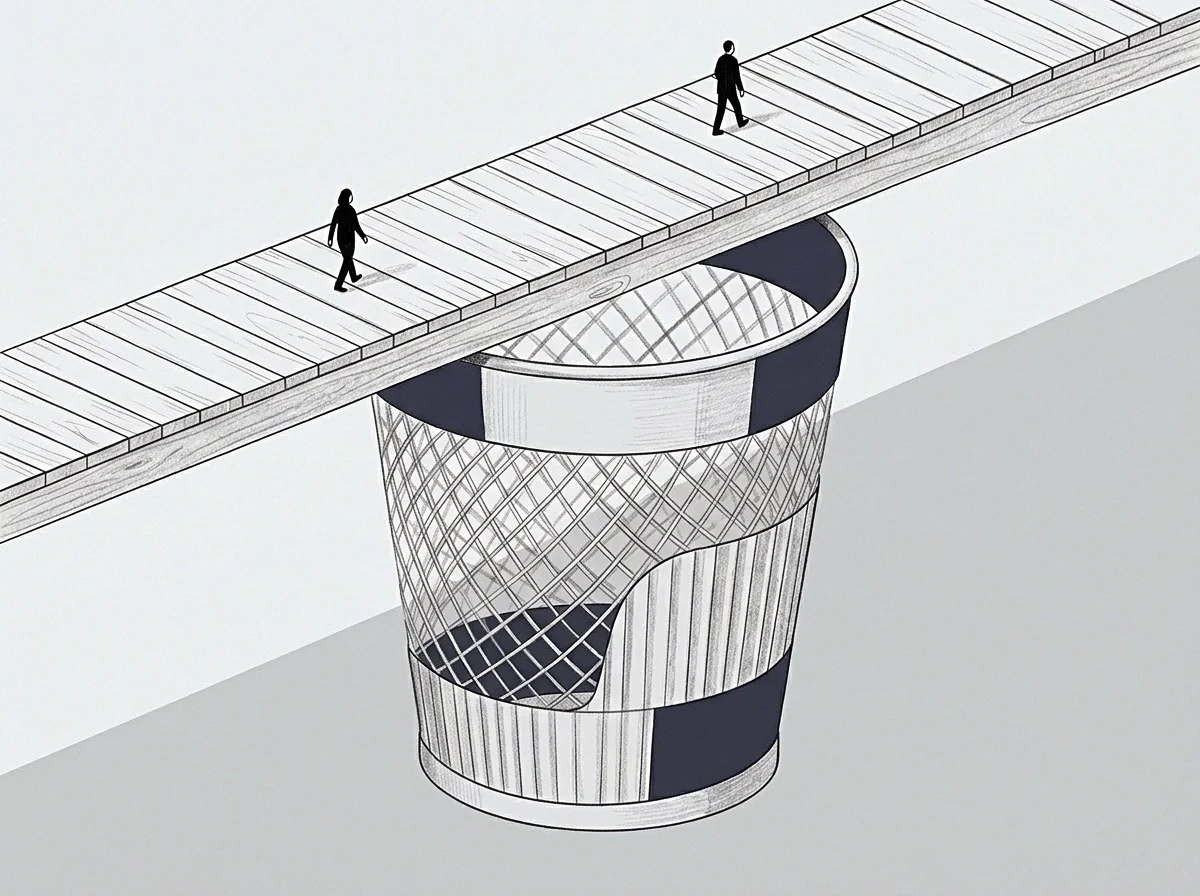
The Structural Drain of Borrowed Calm
The leader acts as an emotional anchor for the surrounding enterprise. When team members experience uncertainty, proximity to the leader stabilizes their autonomic state while depleting executive capacity. The founder absorbs this relational demand, expending neural energy to maintain a calm appearance.
Borrowed calm offers temporary stability for the team while quietly increasing the founder’s metabolic debt.
The leader remains steady so the overall situation stays under control.

Proximity
Mammalian biology relies on shared physical presence to lower threat assessment thresholds. When a reliable presence sits nearby, the nervous system reallocates energy from threat scanning toward metabolic restoration. Solitary founders lack this quiet biological support, bearing full energy costs for every operational disruption.

The Physiology of Shared Regulation
Co-regulation operates through non-verbal sensory cues, including vocal tone, facial expression, and calm respiratory patterns. These signals communicate environmental safety directly to the amygdala, bypassing conscious thought.
- Sensory identification of a calm, non-evaluative presence in the immediate environment.
- Down-regulation of sympathetic nervous system arousal via autonomic afferent pathways.
- Re-engagement of the ventral vagal complex to slow heart rate and lower arterial pressure.
- Restoration of executive prefrontal cortical function for complex problem solving.
The presence of a non-evaluative observer lowers physiological threat response without requiring conscious cognitive effort.

The Limits of Cognitive Reframing
Intellectual understanding of stress mechanics fails to reset autonomic tone. Rationalizing operational risk does not satisfy the mammalian requirement for relational safety; somatic recovery demands concrete physical experience of safety within interpersonal interactions.
A stated operational limit alters metabolic allocation by shifting threat detection from continuous vigilance to defined boundaries.

Reset
Rebuilding autonomic flexibility involves altering internal working models formed under extended isolation. Earned security develops through consistent relational experiences where regulatory support is reliably received. Founders transition from solitary containment by establishing structured channels for genuine co-regulation.

Developing Earned Security in Leadership
Earned security reflects an updated neural template. The central nervous system learns that seeking support does not compromise structural safety or operational control. Over time, repeated experiences of shared regulation rewire baseline threat responses and raise the somatic recovery threshold.

Structural Changes for Long-Term Somatic Recovery
Sustainable recovery requires embedding relational safety into executive routines. Solitary accountability must yield to peer co-regulation structures where leaders share operational weight. Re-establishing autonomic baseline flexibility protects decision quality and long-term vitality.
The remaining question centers on how scalable organizations can be structured without forcing a single central node to bear the entire relational regulation burden.