
Neural Cost Distribution During Extended Solitary Executive Decision Making
Solitary executive decision making elevates baseline metabolic expenditure because the brain processes isolated authority as a continuous environment of threat.

Roof
Analytical difficulty and physiological overhead are separate properties of executive function. A complex problem evaluated alongside a reliable peer draws on shared cognitive capacity, whereas a straightforward commitment made in complete isolation forces the nervous system to bear the entire regulatory weight alone. Social baseline theory establishes that the human brain treats physical and relational proximity to dependable counterparties as the default metabolic baseline.
When proximity is absent, the central nervous system reallocates energy toward threat prediction and autonomic maintenance. The solitary seat converts ordinary decision making into an environment of continuous physiological expenditure.
Extended solitary decision making alters how the brain budgets energy across prefrontal circuits. During group evaluation or co-located leadership, autonomic regulation occurs largely without conscious intervention, supported by subtle vocal tone, eye contact, and shared posture. When an individual operates without these co-regulatory signals for weeks or months, the brain registers the absence of social baseline support as elevated environmental risk.
The prefrontal cortex maintains higher baseline activation to supervise emotional control and vigilance, consuming circulating glucose at an accelerated rate.
Neural expenditure scales with perceived isolation.
Executives operating in extended isolation frequently misinterpret the resulting fatigue. The physical sensation of exhaustion is routinely categorized as an intellectual challenge or a personal failure of resilience, rather than a predictable metabolic outcome. The brain must spend extra physiological resources simply to keep the body calm enough to weigh probabilities when no secondary regulator is present in the room.
Isolated executive authority forces the central nervous system to maintain baseline vigilance without the metabolic offset of physical co-regulation.
Unshared responsibility forces the autonomic nervous system to substitute internal control mechanisms for missing relational anchors. Over prolonged cycles, this substitution drains glucose reserves that would otherwise support working memory, working hypothesis testing, and complex long-term planning. Operating continuously under unshared final authority creates a cumulative metabolic load that erodes executive capacity long before strategic errors become visible to external observers.

Metabolism
Continuous executive evaluation under solitary conditions demands sustained activity across the anterior cingulate cortex and ventromedial prefrontal networks. These regions manage task switching, impulse suppression, and the integration of risk against reward. Under standard conditions, social proximity suppresses activity in the neural circuits responsible for threat detection, particularly the amygdala.
Without co-regulatory input, the brain maintains continuous subcortical vigilance. Threat processing consumes continuous prefrontal glucose.
This persistent threat calibration alters sympathovagal balance. The sympathetic branch of the autonomic nervous system remains mildly elevated to keep the individual ready for unassisted contingency management. Simultaneously, vagal modulation decreases, reducing heart rate variability and impairing the body’s natural recovery processes during micro-rests.
The physiological cost of solitary decision authority manifests through measurable changes in autonomic tone.

Physiological Expenditure Vectors in Isolated Leadership
- Vagal Suppression reduces parasympathetic tone during solitary working periods, preventing complete physiological baseline recovery between critical evaluation sessions.
- Glucose Preemption redirects circulating blood sugar from high-order abstract reasoning to basal autonomic regulation and threat monitoring.
- Somatic Marker Signal Degradation blunts subtle visceral feedback cues, leading to delayed intuition and over-reliance on explicit quantitative calculation.
- Cortisol Plateauing flattens diurnal stress hormone cycles, maintaining elevated late-day baseline tension that interferes with deep sleep architecture.
Autonomic tone resets in proximity.
The metabolic divergence between solitary and co-regulated decision environments can be measured across multiple physiological parameters. When decision structures lack external co-regulation, every choice requires manual metabolic stabilization.
| Physiological Vector | Solitary Decision Environment | Co-Regulated Decision Environment |
|---|---|---|
| Prefrontal Energy Draw | Continuous baseline consumption for threat monitoring and self-soothing | Intermittent consumption localized strictly to task resolution |
| Sympathovagal Tone | Chronic sympathetic dominance with reduced vagal recovery capacity | Dynamic modulation returning rapidly to parasympathetic baseline |
| Working Memory Overhead | High expenditure dedicated to holding isolated consequence models | Low expenditure; consequence models are shared and distributed |
| Risk Horizon Evaluation | Systemic bias toward loss aversion due to depleted glycogen reserves | Balanced risk evaluation sustained across extended time horizons |
Understanding these physiological parameters clarifies why extended solitary environments produce specific patterns of executive degradation. When metabolic resources drain, executive function systematically restricts its focus to immediate hazard avoidance.
The internal working model of the operator dictates how this metabolic tax is processed. An individual whose historical template lacks a receptor slot for shared regulation will treat solitary load as the normal state of work. That person continuously pays the elevated metabolic price without seeking co-regulatory offsets, accelerating systemic exhaustion.
When the stated limit of metabolic capacity is reached without structural adjustments, executive performance degrades into predictable defensive patterns.
Drift
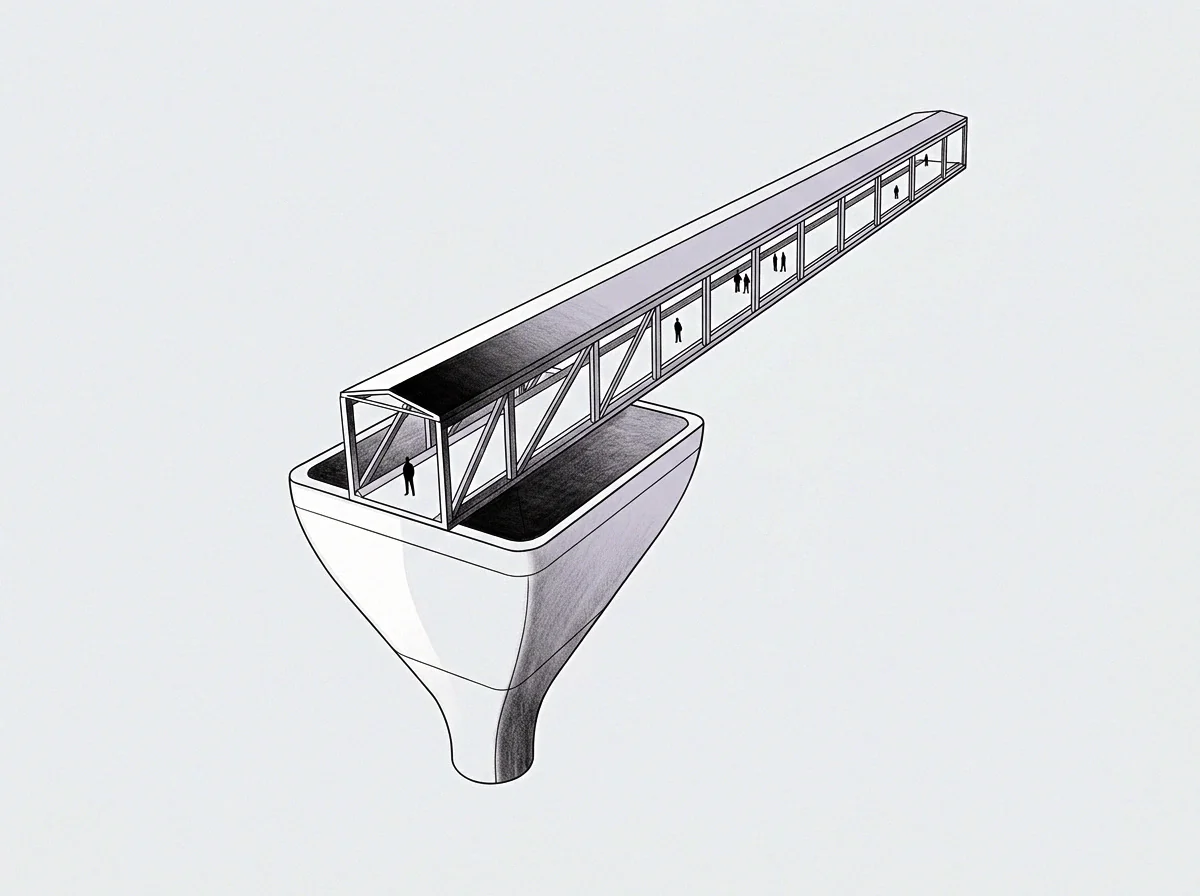
Sustained metabolic expenditure transforms executive judgment over time. In early phases of solitary operation, decision quality remains sharp while internal energy reserves are intact. As glucose depletion and autonomic fatigue compound over weeks of isolated authority, the brain adopts energy-conserving heuristics.
Cognitive headroom narrows under unshared weight.
Strategic evaluation shifts subtle priorities without conscious realization. Complex options carrying high long-term value but demanding immediate regulatory focus are routinely passed over in favor of options that minimize immediate cognitive friction. The executive interprets this shift as increased prudence or risk management.
In reality, the central nervous system is conserving dwindling metabolic resources.
Where Does Executive Satiation Shift Systemic Risk?
The transition from active strategic choice to energy-conserving heuristic marks the onset of executive drift. The individual begins to avoid open-ended strategic choices, seeking absolute binary answers or postponing capital deployment to avoid the neural expenditure of weighing asymmetric probabilities.
Glucose depletion precedes conscious executive fatigue.
Isolation amplifies this drift by removing external reality checks. In a shared leadership structure, a peer notes the onset of fatigue, blunted somatic markers, or defensive risk aversion before those states alter outcomes. In a solitary arrangement, the decision maker relies on the very prefrontal circuits that are currently fatigued to monitor their own decision performance.
Silence registers as ambient risk.
Prolonged solitary executive evaluation causes systemic risk aversion through neural energy depletion rather than altered strategic objectives.
The operator who continues to make high-stakes commitments under extended isolation gradually loses access to nuanced intuition. Decisions become either hyper-conservative to protect remaining neural capacity, or recklessly definitive simply to terminate the exhausting state of evaluation.
What specific sensory cues or structural feedback signals could reliably notify an isolated decision maker that their neural budget has crossed into conservative defensive bias before strategic damage occurs?

Board
Mitigating the physiological cost of solitary decision making requires structural changes to the environment rather than mental effort. Exerting additional willpower to overcome decision fatigue increases prefrontal expenditure, accelerating the depletion cycle. Primary regulation demands structural proximity.
Establishing externalized decision architectures lowers the baseline metabolic cost for the leader. Bringing a trusted counterparty into the evaluation room alters the threat processing profile of the brain even if that counterparty contributes no direct domain expertise. The simple presence of a reliable peer signals to the subcortical threat centers that environment monitoring can be shared.
Unshared authority converts stillness into load.
Organizing decision processes around externalized structures protects executive headroom through systematic environmental design.
- Restructure critical strategic reviews into short, co-located sessions alongside trusted peers to leverage physical co-regulation.
- Externalize memory structures and decision variables onto physical whiteboards or clear documentation to reduce prefrontal working memory retention.
- Institute mandatory pause intervals during multi-hour evaluation blocks to allow vagal tone to recover before final commitments are bound.
- Delegate final operational sign-offs on low-asymmetry decisions to operational leads, preserving prefrontal energy for primary strategic choices.
The partner or peer in this arrangement serves a physiological function rather than an advisory one. Their presence absorbs ambient vigilance costs, permitting the executive’s brain to allocate circulating glucose entirely to the evaluation of complex variables. Borrowed regulation functions as a direct metabolic subsidy.
The counterparties in an isolated executive’s network will observe that the leader appears entirely steady, while privately wondering why every shared discussion requires the counterparty to bear the emotional grounding for both of them.
Reserve
Long-term sustainability in executive seats depends on developing earned security regarding decision outcomes and relational support. Operators who have internalised a model of self-reliance treat every solitary decision as an isolated test of survival. Rebuilding this regulatory template requires repeated real-world experience of shared vulnerability and distributed authority that lands without operational failure.
Earned security develops as an executive discovers through lived execution that delegating decision authority or sharing uncertainty does not destabilize the organization. Each successful instance of distributed responsibility updates the brain’s internal working model. The prefrontal cortex gradually lowers its baseline threat prediction, reducing the background metabolic expenditure of the solitary seat.
Executive fatigue alters risk evaluation.
Energy reserves determine decision bandwidth.
Structural proximity to trusted counterparties lowers autonomic regulation costs long before cognitive consensus occurs.
Preserving long-term strategic clarity demands treating neural energy as a strict finite budget. Solitary decision making must be deployed as an intentional, time-bounded tool rather than an default operating posture. Designing working environments that prioritize co-regulatory support ensures that executive capacity remains stable across years of high-stakes operational leadership.
A decision architecture that relies on continuous solitary prefrontal regulation will exhaust its key operators long before its strategic vision is realized.