
Resolving Structural Executive Dependencies Formed Under Chronic Unilateral Founder Threat Buffering
Unilateral threat buffering establishes executive dependencies that resolve only when direct risk exposure replaces protective leader filtering.

Weight
A software enterprise faces a thirty percent contract volume reduction during a market contraction. Four executive directors meet in a glass conference hall on a Tuesday morning, presenting annual budget projections that assume constant capital supply. Eighteen months earlier, when market turbulence threatened cash reserves, the chief executive insulated the leadership team from treasury stress, absorbing board pressure privately while issuing clear quarterly directives.
Operational leads executed those directives with precise focus. Faced now with unbuffered board minutes and raw cash projections, the same directors stall on head count adjustments, returning operational decisions back to the chief officer.
The cost remains flat.
When an enterprise founder operates as a unilateral metabolic filter, external threat signals stop at the top seat. Senior leadership experiences an environment stripped of systemic volatility. This insulating arrangement permits rapid execution during early growth, yet it alters the cognitive allocation of the executive tier.
Executive team members calibrate their internal risk thresholds to a buffered baseline. They develop operational habits under the assumption that high-threat trade-offs will be resolved elsewhere. The ceiling holds.
Origin of Unilateral Filtering Systems
The human brain budgets metabolic expenditure based on proximity to reliable baseline regulation. When a central executive continuously absorbs external volatility, surrounding team members adjust their baseline threat calculations downward. The neural cost of processing market ambiguity, board friction, and capital exposure drops for department heads because the founder operates as a regulatory buffer.
This dynamic shifts the organizational load curve. The baseline operational cost drops for direct reports while accumulating inside a single seat.
Social baseline theory demonstrates that individuals conserve energy when risk processing is distributed across a trusted social group. In early corporate formation, however, risk processing rarely distributes evenly. Enterprise founders frequently centralize threat handling to maintain team momentum, creating an asymmetric baseline.
Department heads operate at high efficiency because their exposure to systemic risk is zero. This artificial environment conceals an underlying structural vulnerability. The operational capacity of the leadership team appears robust only because one person pays the full regulatory price.
Operational autonomy degrades when threat signal attenuation occurs exclusively inside one executive seat.
Prolonged exposure to unbuffered threat alters founder physiology while retarding executive development. As external market demands increase, the unilateral filter consumes an expanding share of executive bandwidth. The founder spends hours synthesizing board anxiety, managing lender covenants, and insulating product leads from volatile client feedback.
Meanwhile, direct reports build operational models that depend on continuous threat attenuation. When market conditions eventually demand rapid, autonomous trade-offs from department leads, those leads lack the baseline templates required to act under acute pressure. The debt accumulates.
Over months of continuous insulation, executive reporting structures transform into upward escalation channels. Strategic decisions that carry existential risk migrate exclusively to the central seat. Department heads restrict their scope to task completion within buffered parameters, deferring any decision that introduces unattenuated loss potential.
The enterprise becomes structurally dependent on the single seat doing the filtering. When that seat reaches metabolic capacity, operational progress across all departments halts simultaneously, leaving the enterprise exposed to the precise market risks the central filter was built to absorb.
Asymmetry
Take a venture-backed infrastructure firm with forty engineers and three department heads operating for two years under unilateral threat attenuation. Assume total operating budget sits at eight million dollars annually, and cash runway contracts from fourteen months to five months following delayed enterprise agreements. The founder presents raw financial runway projections to the executive team during an offsite planning session.
From the founder seat, sharing direct numbers represents an invitation to joint strategic ownership. From the department head seats, sudden raw exposure triggers operational paralysis. Sales stops advancing customized agreements to avoid delivery commitments, product development halts release schedules, and operations requests daily sign-offs for routine vendor invoices.
The buffer fails.
This operational freeze exposes the depth of structural dependency. The leadership team had operated on a borrowed regulator template, using the founder as a responsive other to process external friction. Deprived of the customary threat attenuation, executives lack an internal receptor slot for unbuffered risk.
They interpret raw market data not as operational variables to be solved, but as structural emergencies requiring top-tier intervention. The system reveals its structural flaw. Direct exposure without prior capacity building paralyzes decision pathways.

Executive Capacity Under Direct Exposure
Unfiltered financial runway models presented during strategic planning sessions reveal the functional divergence between insulated leaders and unbuffered founders. Insulated executives develop expertise within stable parameters. Their operational models assume clear signals, steady resources, and explicit boundaries.
When exposed to raw volatility, their cognitive focus shifts from execution to self-protection. Risk absorption requires operational muscles that form only through repeated, direct contact with real consequences. Without that exposure, executive agency collapses under acute stress.
Load moves downward.
The dynamic creates a recurring loop of upward risk transfer. As market ambiguity rises, department leads push decisions back to the founder, seeking validation before taking routine action. The founder reads this deferral as an executive talent deficit, reinforcing the impulse to maintain unilateral control.
The underlying issue is structural rather than individual. The team has been conditioned to operate within a low-threat envelope. Expecting autonomous high-risk decision-making from a buffered executive team is equivalent to demanding heavy mechanical output from uncoupled gears.

Structural Dependencies in Daily Operations
Unilateral threat attenuation introduces specific operational failure patterns across organizational workflows:
- Escalation Saturation Direct reports channel routine cross-departmental trade-offs to the top seat instead of resolving friction at the peer interface.
- Deferred Capital Allocation Department heads refuse to commit allocated funds without explicit confirmation from the primary officer.
- Ambiguity Deflection Project leads request granular directives whenever market conditions introduce unforeseen variables into standard execution plans.
- Proxy Validation Dependence Strategic proposals sit unexecuted until direct verbal affirmation is delivered during one-on-one executive reviews.
Silence absorbs the shock.
When these patterns persist, enterprise velocity decelerates to the processing speed of a single mind. The founder’s daily calendar fills with low-level operational sign-offs disguised as strategic reviews. Department heads disengage from enterprise-level outcomes, focusing strictly on local metrics that remain within their cushioned operational envelopes.
Peer-to-peer accountability vanishes because cross-functional trade-offs are routed upward for resolution. The organization functions as a hub-and-spoke distribution network where all structural weight rests on the central hub.
Decisions stop moving the moment raw threat reaches the table without a clear direction attached to it.

Room
Organizational design determines how volatility moves across leadership tiers. When an enterprise isolates threat signals inside one seat, the surrounding executive architecture remains static. Reconfiguring this architecture requires moving from unilateral buffering to distributed threat governance.
This transition demands a structured evaluation of how risk information flows across executive interfaces and how regulatory capacity is built within department heads.
Capacity drops over time.
Evaluation of Threat Processing Modes
Comparing organizational performance across different risk governance models illustrates the precise trade-offs involved in executive insulation:
| Governance Model | Regulatory Cost Source | Decision Velocity Under Stress | Founder Capacity Preservation | Executive Autonomy Level |
|---|---|---|---|---|
| Unilateral Founder Buffering | Primary Executive Seat | High initially, zero at saturation | Severely Depleted | Dependent on top-tier signals |
| Unbuffered Raw Exposure | Distributed individual seats | Low due to threat paralysis | Moderate, consumed by fires | Fragmented and reactive |
| Calibrated Shared Scaffolding | Peer-level interface structures | Sustained across market shifts | Preserved for strategic growth | Autonomous within stated terms |
The table demonstrates that neither continuous insulation nor sudden unbuffered exposure provides sustainable enterprise stability. Unilateral buffering sacrifices founder capacity to achieve short-term execution velocity. Raw exposure distributes threat without building executive regulatory capacity, resulting in paralysis.
Sustainable performance relies on calibrated shared scaffolding, where risk signals are introduced systematically alongside clear operational limits.
A stated limit on threat absorption forces peer-level regulatory structures to form across executive interfaces.

Social Baseline Modulation and Borrowed Regulation
Interpersonal regulatory dynamics govern corporate decision structures. In a functioning leadership tier, executives engage in mutual co-regulation, distributing psychological and operational strain across peer relationships. When a founder absorbs all external volatility unilaterally, this mutual system fails to develop.
The team relies on borrowed regulation, drawing on the founder’s perceived stability to manage their own operational anxiety. The founder’s state becomes the primary regulatory resource for the entire firm.
The structure breaks.
This reliance creates an unsustainable allostatic load on the central executive. Allostatic load reflects the cumulative physiological toll of continuous adaptation to chronic stress. As the founder’s regulatory reserves drain, their ability to project calm diminishes.
Minor market fluctuations trigger disproportionate internal responses, which immediately propagate to the executive team. Because the team lacks independent risk-processing mechanisms, founder fatigue translates directly into organizational instability. The single point of regulatory failure becomes a single point of operational collapse.
Every term carries weight.
Building resilient executive structures requires updating the team’s internal working model of organizational authority. Department leads must unlearn the assumption that the top seat will absorb all external friction. This shift cannot occur through verbal assurances or abstract delegation mandates.
It requires structural changes in how enterprise risk is measured, reported, and managed at every leadership level. Direct exposure to manageable increments of real-world volatility forms the basis for long-term executive resilience.
An explicit covenant defining maximum unilateral variance absorption shifts financial risk back to departmental balance sheets within two fiscal quarters.
Handover
Transitioning operational authority demands explicit boundary reallocation across all reporting channels. The founder must systematically retract the protective envelope, allowing department heads to experience direct contact with market volatility. This structural shift requires clear operational frameworks that define where founder buffering ends and executive accountability begins.
Rebuilding this interface is not an act of sudden abandonment; it is a deliberate engineering process designed to expand executive regulatory capacity.
The room stays quiet.
Can Shared Risk Restore Executive Headroom?
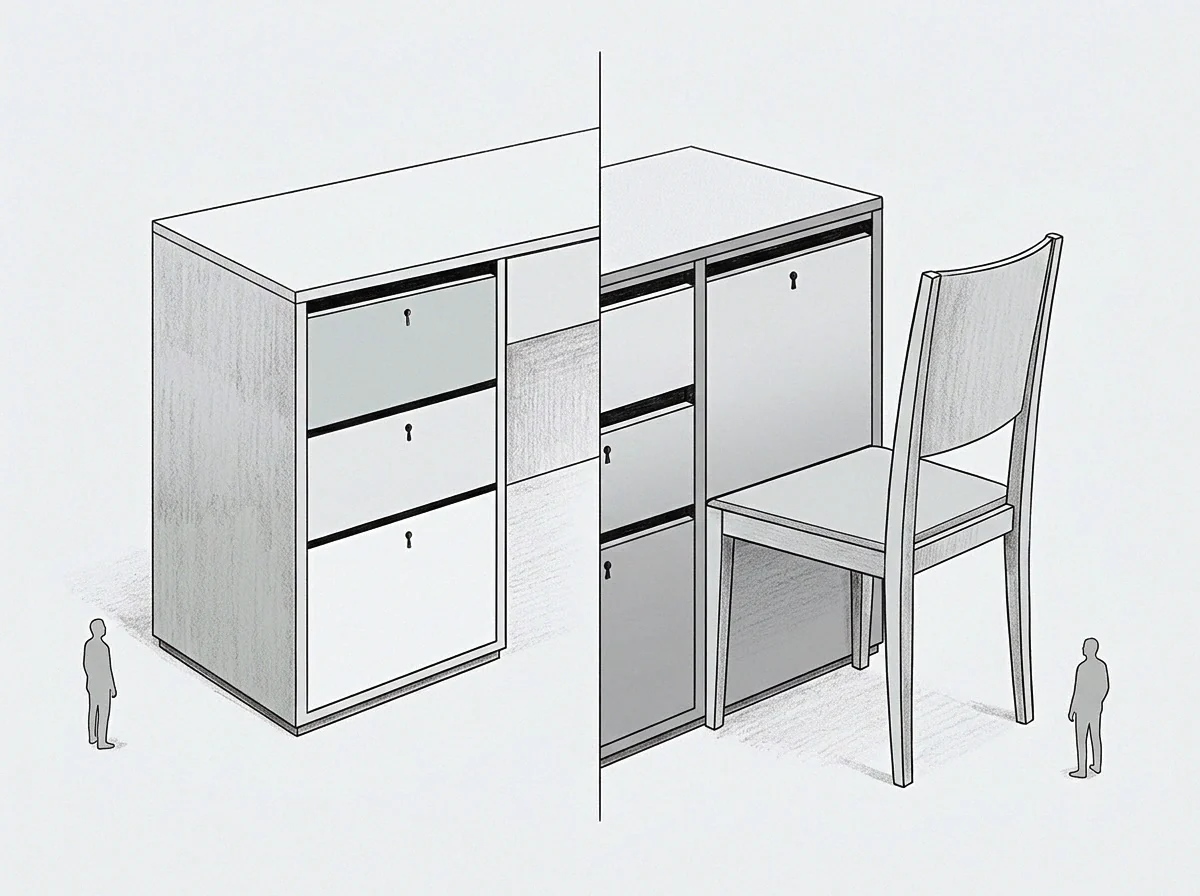
Distributing financial risk across operational departments alters executive baseline calculations. When department heads take direct responsibility for quarterly loss parameters and resource allocation trade-offs, their operational decision-making matures. They move from executing pre-filtered directives to evaluating complex risk variables.
This exposure builds earned security, a regulatory template developed through repeated experience under real operational strain. As executives demonstrate competence in managing unbuffered threat, the enterprise recovers structural flexibility.
Executive independence forms through repeated exposure to unbuffered consequences rather than theoretical delegation agreements.
No signal returns.
The transition process introduces temporary operational friction. As the central filter steps back, department leads initially experience heightened ambiguity and decision fatigue. They may struggle to resolve cross-functional disputes or delay critical capital investments.
The founder must resist the urge to re-intervene and absorb the immediate pressure. Re-stepping into the regulatory gap reinforces executive dependency and invalidates the new structural boundaries. Allowing the leadership team to navigate operational friction independently is essential for long-term capacity growth.
The person who spent years insulating others from shock often misinterprets early executive hesitation as competence failure.

Establishing Stated Limits and Operational Scaffolding
Replacing continuous protective insulation demands explicit governance rules that govern daily operations:
- Define explicit operational threat thresholds that transfer directly to department leads without intermediate filtering.
- Implement structured weekly strategic reviews where department heads present trade-offs under real financial constraints.
- Establish peer-to-peer resolution protocols that forbid upward escalation of cross-functional operational friction.
- Retain primary officer intervention strictly for existential enterprise solvency threats defined by contract.
The budget collapses.
Managing the flow of operational requests requires strict enforcement of a concurrency limit on top-level interventions. The primary officer must implement a system of deliberate throttling, limiting the number of active operational escalations accepted from department leads. When an executive presents a high-ambiguity challenge, the founder’s role shifts from providing solutions to enforcing boundary constraints.
The founder asks clarifying questions regarding departmental trade-offs, directing the executive back to peer-level resolution mechanisms. This practice reduces the frequency of continuous administrative pings while reinforcing executive ownership.
Risk remains constant.
Over time, this deliberate reduction in top-level availability forces department heads to develop independent risk-processing channels. They learn to consult peer executives, evaluate financial trade-offs, and execute contingency plans without relying on central sign-offs. The organization transitions from a centralized hub-and-spoke model to a distributed network of autonomous decision nodes.
Structural executive dependencies dissolve as operational competence replaces borrowed stability.
How long an executive team can maintain operational velocity while acquiring independent threat regulation capacity under active market turbulence remains uncertain.

Reserve
Long-term enterprise stability relies on distributed regulatory capacity across all leadership seats. When an executive team operates with shared risk exposure, the founder recovers cognitive bandwidth necessary for long-term strategic positioning. The primary officer transitions from acting as an operational shock absorber to serving as a governance architect.
This evolution preserves leadership capacity while strengthening organizational resilience against external shocks.
Pressure shifts across teams.
Rebuilding Executive Agency
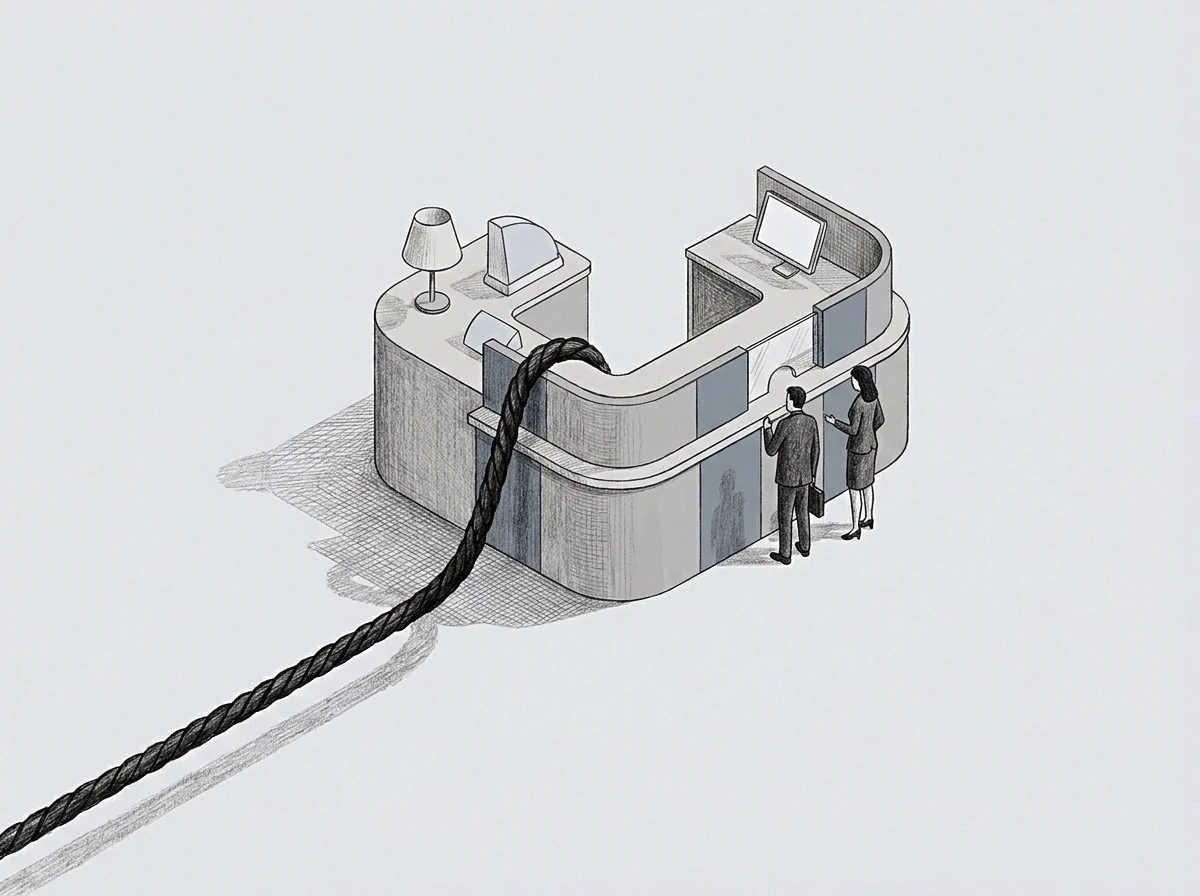
Restoring operational autonomy across department leads takes time and structured exposure. As executives manage unbuffered financial and market variables, their reliance on top-tier filtering decreases. They develop localized risk models tailored to their specific operational domains.
Just as a heavy oceanic vessel distributes wave impact across reinforced internal bulkheads rather than relying on a single hull plate, an enterprise distributes market volatility across resilient operational divisions. Direct exposure changes behavior.
This structural distribution changes the daily cadence of executive interactions. Direct reports stop submitting routine operational decisions for top-level review, reserving escalations for true enterprise-level threats. Peer-to-peer collaboration becomes the default mechanism for resolving cross-functional friction.
Department leads accept accountability for capital allocation, talent acquisition, and performance trade-offs within their stated terms. The executive tier functions as a self-regulating body capable of maintaining operational momentum during high volatility.
The long-term delta between a buffered executive team and a self-regulating leadership tier is visible in organizational response times to sudden market shifts. In a buffered system, an unexpected drop in revenue triggers an immediate operational bottleneck at the top seat while department leads wait for directives. In a distributed system, department leads analyze departmental impact, identify expense reductions, and present coordinated alignment plans to the chief officer within hours.
Executive agency manifests as rapid, distributed action under stress.
Preserving this distributed capacity requires continuous adherence to established operational boundaries. The central executive must refrain from reinstating unilateral threat filtering during future crises. Re-establishing protective buffers undermines earned executive security and reintroduces structural dependencies.
Enterprise strength expands when leadership teams continuously process raw operational reality together, converting systemic friction into collective organizational capability.
Organizational headroom expands only when direct exposure to operational reality replaces the protective buffer of a single seat.