
Social Baseline Economics In Early Executive Teams
Early executive teams unconsciously offload metabolic threat vigilance onto their steadiest peer, exhausting the unreciprocated partner unless structural limits intervene.

Shock
Four windows sit open on an operator screen at midnight while product telemetry flattens and payroll clears in forty-eight hours. The chief technology partner walks into the glass room, watches the monitor without reading the numbers, exhales, and visibly relaxes. That reduction in physical vigilance owes nothing to code revisions or financial instruments.
The mammalian nervous system treats close proximity to a familiar body as an external fuel reserve. In early executive groups, threat calculations run continuously across commercial, operational, and interpersonal channels. When acute business threats appear, individuals do not calculate risk in isolation.
They look at the person whose pulse rate remains low under fire, unconsciously offloading their own neuroendocrine vigilance onto that peer. The physiological relief is instantaneous for the borrower, who registers the borrowed state as personal composure.
Under sustained operational threat, human nervous systems treat a steady colleague as an ambient caloric reserve.
Co-regulation functions through physical signals: vocal frequency, ocular fixation, and respiratory rhythm. When an executive presents invariant stability during acute distress, colleagues converge on that baseline, dampening their hypothalamic-pituitary-adrenal axis responses without conscious negotiation. This transfer of regulatory labor remains unrecorded in corporate charters.
The operational baseline shifts; team members assume risk more aggressively because the perceived ambient support offsets the anticipated downside. The stability of one participant acts as a metabolic shock absorber for the entire room.
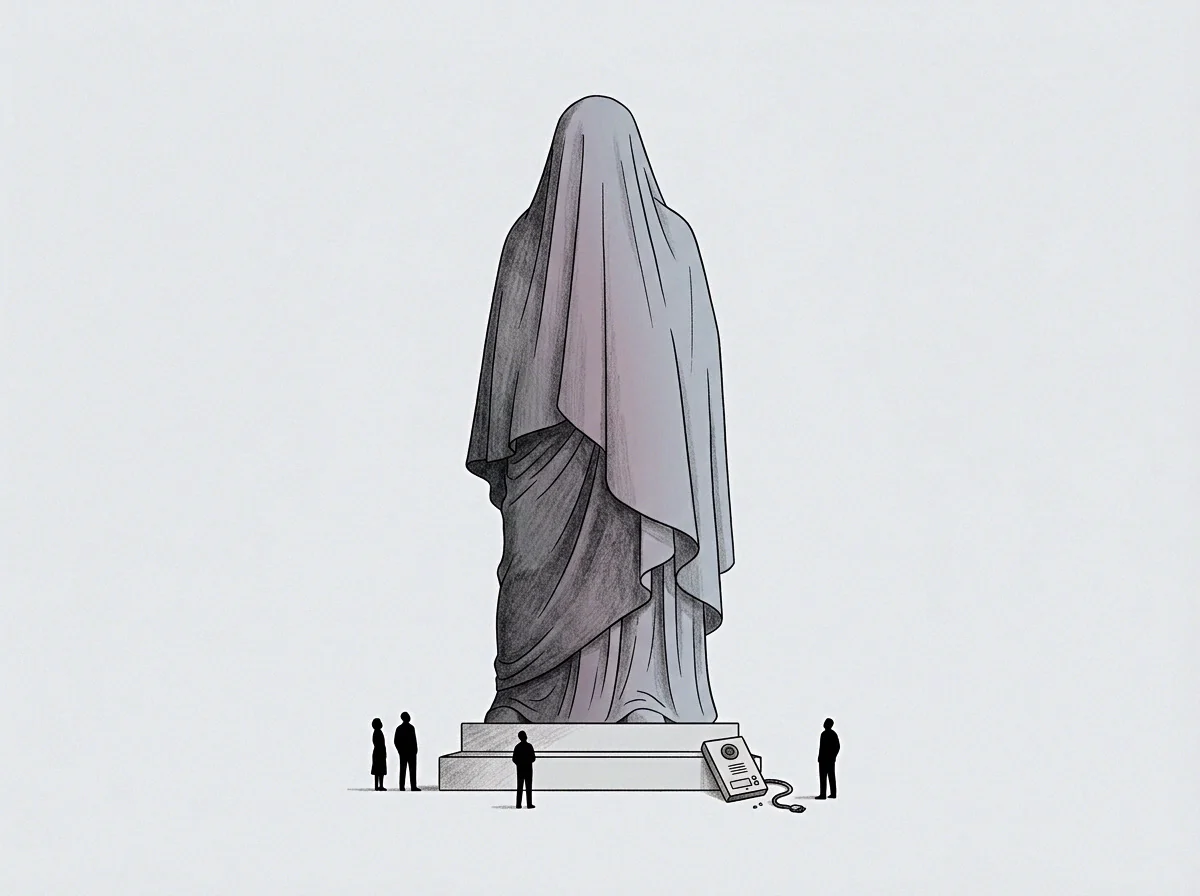
Metabolic Offloading in Executive Chambers
Primary measurements of mammalian vigilance confirm that an isolated organism allocates substantial glucose to environmental monitoring. Social baseline theory demonstrates that this metabolic cost decreases when capable co-specifics occupy the immediate perimeter. Inside small governing teams, shared vigilance distributes load only when every member maintains functional capacity.
When three executives offload environmental monitoring onto one partner, that single nervous system expends glucose to preserve collective focus. The beneficiary experiences quiet confidence; the source experiences silent depletion.
The executive who serves as the shared reserve rarely detects the asymmetry during working hours. Adrenaline masks the draw. The transfer operates beneath linguistic awareness, moving through posture, silence, and immediate task intake.
Colleagues leave the table feeling settled, convinced that the strategy solved the emergency.
The situation seemed manageable because the partner in the corner appeared entirely steady.
Floor
Human baseline physiology assumes the presence of reliable social partners, meaning solitary threat response represents an unnatural, energy-expensive state. In laboratory trials where participants encounter sudden thermal or acoustic stressors, holding the hand of a familiar partner decreases dorsolateral prefrontal cortex activity and reduces subjective distress. This attenuation happens because the brain budgets threat appraisal against available social resources.
An executive operating without dependable peers expends maximal private regulatory energy to accomplish routine decisions. The social floor represents the minimum relational predictability required to keep personal biological expenditure sustainable.
Unshared commercial risk forces individual physiology into an unnatural state of solitary biological defense.
Early governing teams frequently mistake this social floor for cultural agreement or personal friendship. Agreement lives in verbal commitment; the social floor lives in physiological reliance. If an executive doubts the responsiveness of peers during a capital shortfall, their baseline threat budget defaults to solitary operation.
Cortisol secretion remains elevated throughout the working day. Sleep architecture fragments. Over three fiscal quarters, this biological defense degrades executive function, narrow-banding attention toward immediate self-protection.

Solitary Operation Against Shared Baseline Function
The financial ledger ignores biological wear, yet executive teams function entirely on physiological capacity. When the social floor collapses through mistrust, silent competition, or unstated equity conflict, the metabolic cost of execution multiplies by an order of magnitude. The table below compares the physiological parameters of solitary regulation against shared regulation across identical executive crises.
| Operating Parameter | Solitary Regulatory Baseline | Shared Social Baseline |
|---|---|---|
| Glucose Utilization | Elevated prefrontal consumption during routine prioritization | Distributed metabolic load across executive group |
| Vigilance Architecture | Continuous perimeter scanning with sympathetic activation | Intermittent sector monitoring anchored by peer trust |
| Cognitive Bandwidth | Contracted focus fixed on individual exposure and liability | Expanded situational awareness across strategic variables |
| Post-Crisis Recovery | Multi-week allostatic depletion and sensory exhaustion | Rapid parasympathetic return upon crisis resolution |
When an executive group neglects the social floor, members retreat into self-insulation, producing defensive documentation, delayed decisions, and operational paralysis that destroy company value faster than market competitors.

Relay
Physical proximity remains the primary conduit for mammalian nervous system regulation during active business operations. Remote communication tools strip out the micro-expressions, breathing cadence, and postural shifts that signal safety to human neurology. When executive teams shift from co-located desks to screen interfaces during market downturns, the transmission of calm degrades instantly.
A Slack ping carries high linguistic ambiguity, forcing the recipient to generate private regulatory output to process administrative uncertainty. The biological economy of the group loses its direct transmission lines, leaving members to pay full individual prices for collective ambiguity.

Whose Capacity Absorbs the Unspoken Operating Strain?
The steady operator at the physical table draws incoming panic by virtue of immobility. Team members walk into the office with chaotic input, lay that input across the table, and leave their agitated arousal behind. The process resembles an electrical ground wire absorbing voltage spikes from an unstable power grid.
When the ground wire functions properly, appliances continue running without burning out their components. Yet physical ground wires connect to the planet; human operators possess finite biological tissue that accumulates structural stress over time.
- Unchecked threat accumulation occurs when secondary executives deposit operational ambiguity onto a central figure without supplying actionable information. The central figure processes both the business crisis and the interpersonal panic of their associates.
- Asymmetric vigilance allocation emerges where secondary officers track only departmental milestones while the primary partner tracks existential survival. This structural imbalance leaves the primary nervous system permanently unshielded.
- Depleted receptor capacity develops after months of non-reciprocal regulatory export, leaving the core executive unable to receive biological support when their own reserves drop to critical thresholds.
Field studies examining dyadic autonomic regulation reveal that when one party systematically suppresses distress to calm another, their own cardiac vagal tone drops precipitously. The borrower shows immediate heart rate variability recovery, while the lender incurs sustained vascular resistance. What early executive groups label executive presence often translates directly into high-output regulatory subsidy paid by one human body for the comfort of four others.
Does collective executive endurance represent actual organizational health, or simply the prolonged metabolic sacrifice of one uncomplaining participant?

Toll
A backward regulator template forms during early developmental adaptations where an individual learns to secure safety exclusively by regulating the adults around them. Such persons mature into exceptionally capable company builders. They remain calm during existential litigation, investor mutinies, and product crashes because their primary survival adaptation was managing catastrophic instability in primary caregivers.
In the executive suite, this operational asset transforms into a severe liability. The backward template possesses expansive capacity to stabilize distressed partners, yet lacks a receptor slot to receive regulatory support from anyone else.
A person formed to stabilize chaotic environments interprets an offer of rest as an operational hazard.
When a peer offers genuine support, the backward regulator experiences an internal threat signal. The nervous system registers the offer as unfamiliar and unsafe. The person accelerates their work pace, rejects executive coaching, and insists on carrying operational burdens alone.
Their internal working model holds that safety exists only when they stand as the solitary provider of stability. They cannot borrow calm from their executive team because their biology interprets borrowing as surrender of control.
The operational cost compounds over multiple years. While colleagues flourish under the calm umbrella provided by this leader, the leader’s internal tissue undergoes accelerated allostatic weathering. The quiet person pays.
Sleep fragmentation worsens into chronic insomnia; endocrine markers mirror persistent low-grade shock. The business scales revenue while the central human engine burns away its structural insulation.
A regulator who never shows strain eventually works in complete isolation.
Limit
Updating a backward regulatory template never occurs through intellectual insight. Reading psychological theory leaves the autonomic nervous system unchanged. The shift requires earned security, which forms through repeated, structured physical experiences where a boundary is declared, sustained, and verified as safe by the executive’s own sensory apparatus.
The first operational move involves the stated limit. A stated limit establishes a non-negotiable operational perimeter that forces the surrounding executive team to metabolize their own commercial anxiety rather than offloading it onto the central figure.
Earned security develops when an executive discovers that an uncarried partner learns to carry themselves.
Executive teams must witness the central regulator decline to absorb ambient panic. When an investor panics, the founder does not call an emergency midnight summit to calm the board. The founder states the next update window and closes the channel.
When the chief revenue officer threatens resignation during an anxious spiral, the chief executive does not spend three hours soothing the officer’s ego. The chief executive accepts the update, schedules a formal operational review for Tuesday morning, and walks out of the office. Speech changes nothing here; only structural absence forces biological adaptation.
The contract governing executive interaction shifts from covert emotional subsidy to explicit commercial exchange. By establishing finite availability, the central operator compels every team member to construct their own social baseline with departmental peers. The organization transitions from an anxious hub dependent on one biological battery into a distributed metabolic web.
The leader creates room for a second regulatory template: one where proximity to competent peers offers actual biological replenishment rather than an unpaid debt.
When an operating agreement formally caps after-hours escalation channels, it reallocates metabolic threat processing directly back to the individual carrying the executive title.