
Solo Hyper Vigilance And Social Baseline Regulation Costs
Solitary threat monitoring forces continuous autonomic elevation, whereas social baseline proximity distributes regulation costs across trusted counterparties.
Baseline
Four messages arrive in eleven minutes on a Tuesday evening when attention is already spent: a vendor dispute, an engineering delay, a request for quarterly allocation decisions, and an appeal for emotional reassurance about team morale. Each requires immediate cognitive resolution. The person at the desk sits motionless while heart rate spikes to one hundred and eight beats per minute.
Nothing in the room presents physical danger, yet the central nervous system treats the concurrent operational demands as an immediate threat to survival.
When an individual operates alone, the brain treats environmental monitoring as an expensive solo task. Under social baseline theory, mammalian neurology assumes familiar conspecifics are nearby to share risk, watch the periphery, and divide problem-solving demands. Solitude alters that energy accounting.
Without a trusted counterparty close at hand, the nervous system assigns a higher metabolic cost to each unresolved problem, keeping the organism in continuous vigilance.

Neural Default of Shared Threat Monitoring
Mammalian nervous systems treat the presence of a familiar peer as the baseline state for managing risk. Hypothalamic measurements show that facing an impending electrical shock while holding a partner’s hand attenuates the threat response far more than facing the shock alone. Physical proximity signals that vigilance is distributed, allowing energy to be conserved.
When an operator manages complex systems without that shared regulatory presence, the brain funds all threat monitoring from personal physiological reserves, maintaining an elevated baseline expenditure.
Social baseline theory establishes that the human brain defaults to distributed risk management whenever familiar conspecifics are proximate.
Hyper-vigilance during solitary work shows up as an inability to drop open operational loops. The brain keeps scanning for vulnerabilities during rest, treating any lapse in monitoring as immediate exposure. Constant glucose consumption in the prefrontal cortex, elevated baseline cortisol, and fragmented sleep are the price of that vigilance.
Over time, the operator exhausts reserves simply maintaining baseline stability, even as an outward appearance of calm leads others to place more demands on the schedule.
Seat
An operator in a central role absorbs operational instability while presenting steady composure. Direct reports, co-founders, and investors routinely bring dysregulated states to that desk in search of stability. In moments of uncertainty, proximity to a composed presence settles their nervous systems.
Through this process, known as borrowed regulation, others lower their energy expenditure by anchoring to the operator’s physiological state. Colleagues leave reassured, carrying lower stress, while the operator absorbs the cumulative physiological load of the interaction.
Attunement to a physical state rather than written guidance explains why leadership presence carries such weight in a crisis. Personnel do not simply assess strategic memos; they unconsciously read breathing patterns, vocal pitch, and physical posture to calibrate risk. When an operator projects unwavering composure, team members interpret that steadiness as surplus capacity, assuming limitless headroom exists to absorb further operational weight.
Operational Asymmetry of Borrowed Calm
Team members seek proximity to an even temperament to quiet their own arousal. This regulation operates without verbal acknowledgment. Because staff interpret their lowered anxiety as organic calm rather than borrowed stability, they rarely notice the metabolic expense imposed on the person providing it, who functions as a structural shock absorber for organizational panic.
- Systemic Over-Allocation occurs when an operator absorbs emotional turbulence from multiple direct reports without setting an operational threshold.
- Asymmetric Attunement develops when team members treat the leader as a permanent environmental fixture rather than a finite physiological resource.
- Receptor Atrophy manifests when the baseline provider loses the capacity to receive incoming co-regulation during crises.
A team borrowing calm from a composed leader reduces internal arousal while shifting the metabolic debt onto that leader.
Serving as the permanent baseline creates a compounding deficit. While the leader functions as an anchor for everyone else, no internal capacity remains to accept co-regulation in return. The operator continues absorbing turbulence until physiological reserves collapse under unshared operational weight.
Masking that internal load only accelerates the organization’s reliance on an unmaintained resource.
Template
Early development shapes how the nervous system evaluates risk in isolation. A child raised by volatile, unpredictable, or overwhelmed caregivers learns that safety depends on tracking adult emotional states. The regulatory dynamic inverts: rather than receiving calm from adults, the child creates safety by stabilizing them.
This pattern hardens into an internal working model where surviving feels contingent on being the sole stabilizing presence in the room.
Adults with this inverted template often gravitate toward executive roles where stability rests on their personal capacity. The dynamic functions on an unwritten rule: safety requires everyone else to be settled first, with personal needs deferred indefinitely. The operator grows adept at steadying others while remaining unable to receive support during exhaustion.
Analyzing the origin of the pattern does not change the autonomic response when operational chaos strikes.
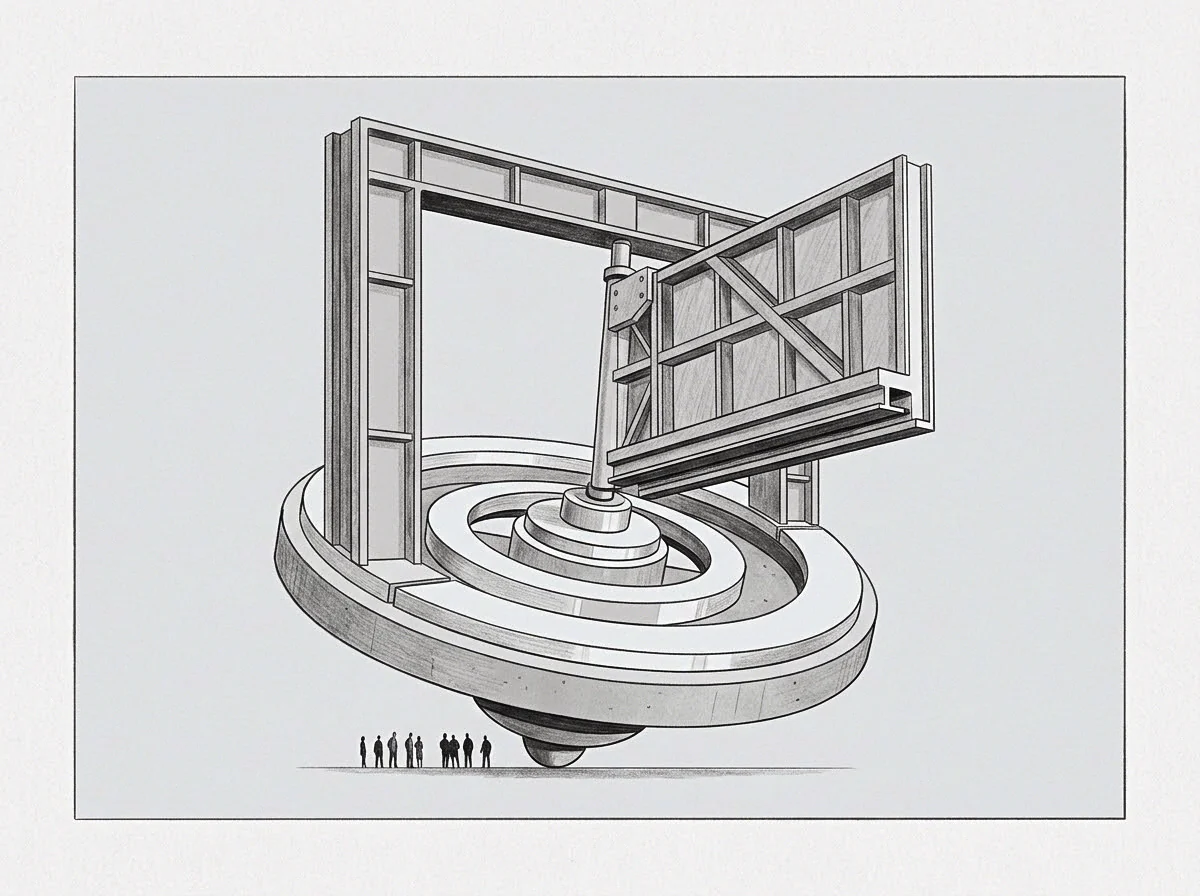
Formation of the Inverted Regulator
Children raised in volatile settings prioritize adult distress over their own requirements, forming an identity built around stabilizing the environment. In organizational life, that template causes an operator to perceive offers of support as logistical anomalies or extra management tasks. The person in the seat retains no functional receptor slot for co-regulation, processing every interaction as load to be carried.

Can an Internal Model Update Without Proximity?
Intellectual awareness of attachment patterns leaves physiological threat responses untouched. An operator can spend years examining personal history in isolation while the sympathetic nervous system continues spiking during solitary work. Autonomic responses recalibrate only through shared somatic experience with trusted counterparties, not through solitary study.
| Evaluation Metric | Solo Hyper-Vigilant State | Co-Regulated Baseline State |
|---|---|---|
| Baseline Glucose Consumption | Elevated continuous scanning in prefrontal cortex | Lowered default expenditure shared across network |
| Threat Response Latency | Immediate autonomic trigger on minor anomalies | Buffered assessment via social signal verification |
| Executive Memory Headroom | Severely constrained by active loop retention | Expanded via outsourced environmental monitoring |
| Recovery Cycle Duration | Extended nocturnal activation and delayed resting state | Rapid autonomic return to parasympathetic baseline |
An operator with intellectual insight into attachment patterns still retains an active autonomic threat response.
Lacking a receptor slot, an inverted regulator treats incoming support as a threat to operational stability. When a co-founder or advisor offers to share the load, the operator experiences anxiety, anticipating that delegating control invites failure. The cycle reinforces itself: hyper-vigilance continues while the operator walls off genuine co-regulation.
Sustaining this dynamic without external relief eventually causes chronic fatigue and sudden withdrawal.

Budget
Allostatic load accumulates rapidly when threat monitoring runs without rest. Allostatic load represents the physiological wear on tissue and neural networks resulting from chronic autonomic activation. An operator maintaining constant vigilance over long hours sustains elevated baseline cortisol, higher inflammation markers, and reduced heart rate variability.
The body stays primed for acute action, depleting reserves needed for executive decisions and physical recovery.
Continuous activation eventually hits a physiological threshold known as the concurrency limit. The nervous system can track only a finite number of high-stakes operational threats in working memory before processing slows. When demands exceed this capacity, the body initiates metabolic throttling, marked by emotional flattening, executive paralysis, sudden memory lapses, and difficulty parsing new operational context.
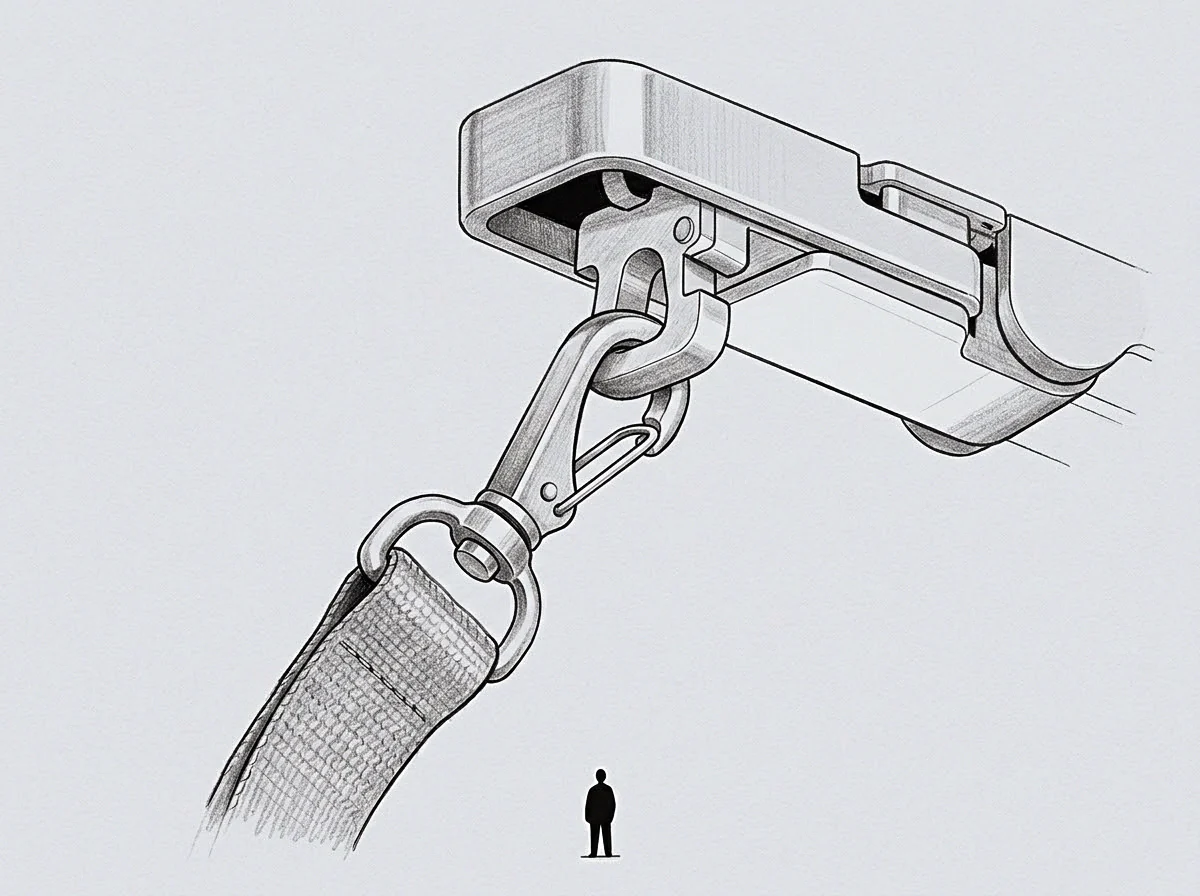
Metabolic Price of Unshared Vigilance
Sustained physiological arousal impairs executive judgment across sequential decisions. Neurons in the prefrontal cortex need steady glucose and oxygen for scenario modeling, risk assessment, and impulse control. Under unbroken vigilance, metabolic resources shift from prefrontal circuits toward threat-detection centers in the amygdala, compressing strategic evaluation into binary reactions.
- Primary threat detection consumes immediate working memory during initial operational surprises.
- Secondary loop retention prevents sympathetic nervous system de-escalation between acute events.
- Tertiary endocrine exhaustion degrades prefrontal executive control across multi-week decisions.
A solitary decision maker under constant threat monitoring exhausts prefrontal resources, defaulting to automated reactive pathways.
Once metabolic exhaustion sets in, the ability to anchor the organization disappears. The operator turns reactive, irritable, or detached, introducing unpredictable signals across the company. Team members who relied on borrowed stability sense the shift, generating organizational friction and anxiety.
When a single nervous system exceeds its concurrency limit, decision latency increases by an order of magnitude while threat sensitivity sharpens.

Anchor
Relational security develops through physical experiences of shared equilibrium rather than cognitive effort. Earned security describes the process of building a secondary regulatory model despite an insecure or inverted attachment history. This shift requires repeated, real-time interactions with a counterparty who stays predictable and present under high operational stress.
Through that contact, the nervous system updates its assumption of solitude and begins distributing regulatory load.
Developing a receptor slot requires deliberate practice sharing operational weight rather than carrying it alone. A co-founder, experienced board director, or peer operator can serve as an anchor, provided they maintain a stable baseline and decline the operator’s impulse to absorb every shock. When an external partner remains steady through an operational disruption, the nervous system begins revising its internal working model.
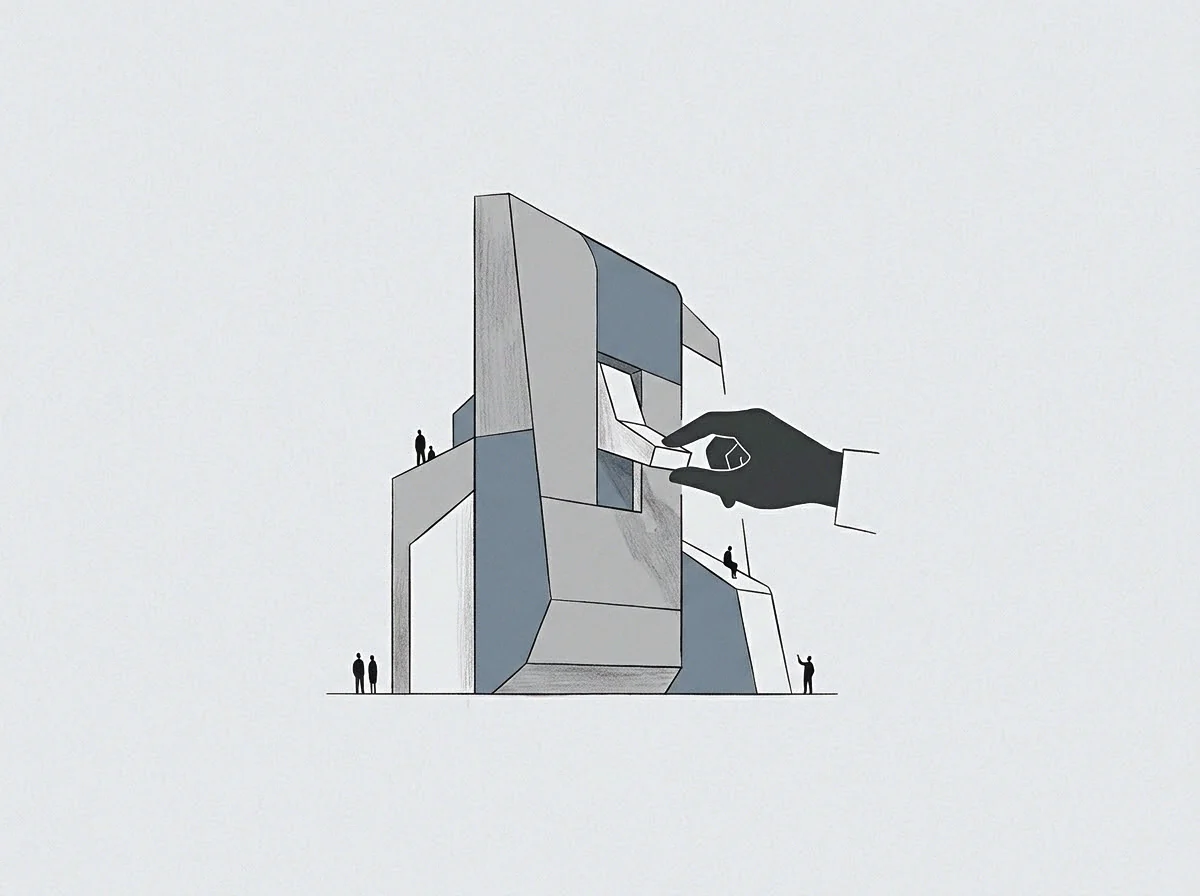
Mechanism of Earned Security
Working alongside a consistent counterparty lowers baseline metabolic spending during complex tasks. The shift reveals itself over time in calmer physiological responses to stress. Across twelve to eighteen months of sustained co-regulation, baseline cortisol normalizes, working memory expands, and minor operational anomalies no longer set off immediate autonomic alarms.
Moving from solitary vigilance to shared baseline regulation reshapes how the operator leads. They stop concealing physiological strain, establish concrete operational boundaries, and allow team members to handle their own developmental demands. With a non-reactive partner in place, the nervous system redirects glucose away from constant threat detection and back toward executive work.