
The Structural Limits Of Earned Security When Operating Systems Mandate Continuous Regulator Availability
Continuous regulator availability forces unreciprocated baseline extraction, overloading allostatic capacity and blocking the experiential update of earned security.
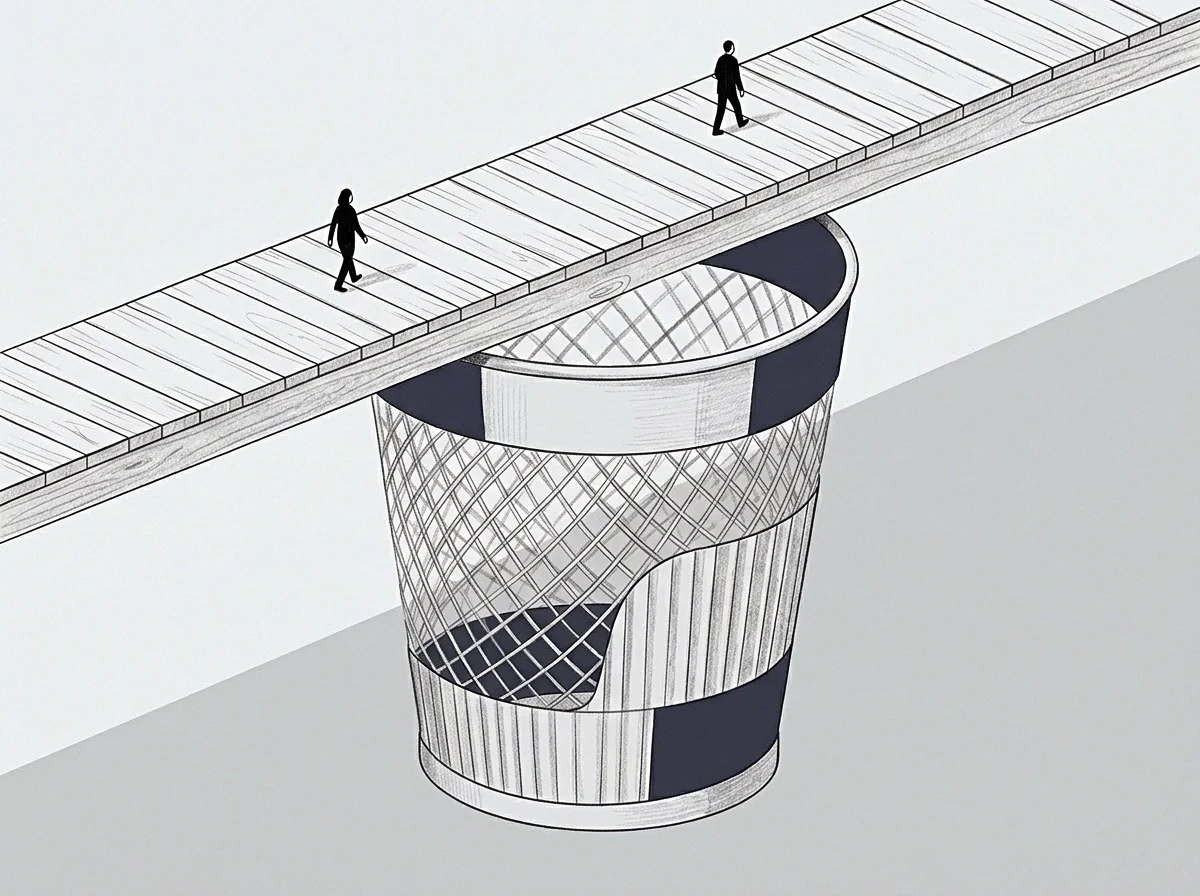
Weight
Four browser windows sit open on a screen at midnight while three direct messages arrive in the span of six minutes. The technical lead reports an unexpected database regression, the operations director flags an escalating dispute over equity distribution, and an outside partner requests an urgent call regarding a delayed deliverable. In every thread, the message is phrased as an inquiry, yet each carries the implicit demand for steady composure from the person reading it.
The founder types neutral responses, offers clear execution steps, and sets a calm tone for the morning. The physiological load of that posture stays invisible to the people who received the messages. The sender logs off feeling relieved.
The recipient stays awake tracking the residual physiological strain alone.
Social baseline theory establishes that the human nervous system treats proximity to predictable, cooperative conspecifics as its default ecological baseline. The brain allocates energetic resources with the assumption that baseline load will be shared across a relational group. Threat vigilance drops, neural metabolic expenditure decreases, and hypothalamic-pituitary-adrenal activity attenuates when reliable proximity is confirmed.
Physical isolation or continuous relational demand forces the nervous system into self-regulation, the metabolically expensive fallback mode. When an operational group forms, its members naturally orient around the individual who appears most composed under ambient stress. That individual becomes the environmental baseline for the team.
The group borrows the regulator’s nervous system to stabilize its own operating tempo, lowering its collective threat perception. The individual supplying that stability absorbs an unreciprocated biological expenditure.
A team borrows the regulator’s physiological calm to lower its threat vigilance while leaving the metabolic deficit of that baseline with the supplier.
The structural difficulty deepens when the central regulator operates from a template shaped by early self-reliance. In classical attachment taxonomy, an individual who experienced unreliable or intrusive early care frequently develops an internal working model wherein reliance on others registers as an immediate risk. Earned security defines the slow biological revision of that model, through which an adult gradually develops a reliable internal baseline through sustained encounters with dependable partners.
The process rests on repeated experiential confirmation that support exists outside the self. The founder seat introduces a structural trap that arrests this development. The corporate operating environment continuously demands that the founder serve as the primary regulator for employees, board members, and counterparties, while offering zero structural receptor sites for incoming regulation.
The operating system mandates continuous availability. The founder provides the regulation. The founder pays the metabolic invoice.
Clock
The Physiology of Continuous Availability
Continuous availability functions as an open metabolic loop. In an organizational setting where communication channels run without temporal friction, incoming interruptions arrive asynchronously across all daylight and evening hours. The nervous system cannot distinguish an incoming message about server latency from an immediate threat to physical safety if the sender transfers their unmodulated anxiety directly into the ping.
Every incoming ping activates an orienting reflex, followed by an appraisal of the sender’s emotional state. The regulator reads the panic in the text, composes an answer designed to extinguish the sender’s alarm, and waits for the next thread to fire. The body stays primed in a state of anticipatory mobilization.
The nervous system remains locked in sympathetic dominance without reaching the parasympathetic recovery phase necessary for cellular repair.
This dynamic accelerates because borrowed stability is invisible to the borrower. When an anxious operator brings a chaotic operational problem to an unshakeable founder, the operator experiences an immediate reduction in subjective distress during the encounter. The founder’s slow respiration, steady vocal cadence, and direct cognitive framing suppress the operator’s amygdala activation.
The operator leaves the conversation concluding that the operational problem is manageable. The operator does not perceive that their biological composure was borrowed from the person across the table. Because the borrowed composure feels like the operator’s own newfound calm, the transaction goes unacknowledged.
The interaction demonstrates to the operator that bringing raw panic to the founder is an efficient strategy for emotional regulation. The behavior repeats. The operational culture codifies this pattern as open communication.
The Concurrency Limit Under Team Load
No human nervous system possesses infinite bandwidth for relational modulation. The cognitive science of attention demonstrates that biological working memory handles a finite number of concurrent active files before operational integrity degrades. Relational regulation imposes an identical concurrency limit on the human brain.
Holding an internal representation of another person’s emotional state, anticipating their failure modes, and actively supplying the emotional stability they lack demands continuous prefrontal resource allocation. When a founder attempts to hold five direct reports, three investors, and two strategic partners in that regulatory envelope simultaneously, the cognitive headroom collapses. The capacity for internal somatic monitoring vanishes first.
The founder ceases to register their own hunger, physical exhaustion, or ambient anxiety because every cognitive channel is occupied by the external regulatory queue.
A regulator proven under ambient threat inevitably attracts more incoming load from an operational system that seeks the lowest energetic barrier to stability.
The accumulation of this unreciprocated expenditure produces a predictable physiological consequence known as allostatic load. Research in stress physiology confirms that sustained elevation of neuroendocrine mediators, specifically cortisol and catecholamines, inflicts cumulative wear on vascular tissue, suppresses immune signaling, and alters hippocampal synaptic density. In an operating environment that demands continuous presence, the regulator cannot throttle this expenditure without triggering operational panic.
The team interprets a delayed response from the central regulator as an indicator of catastrophic failure. The regulator observes the team’s fragility and redoubles their outward composure. The cycle locks into place.
The organization operates at high velocity while its biological core systematically exhausts its energetic reserves. What looks like operational resilience is biological insolvency.

Mesh
The Architecture of the Backward Template
The capacity to provide endless composure to others while rejecting incoming care originates in a specific developmental adaptation. In healthy psychological maturation, an infant internalizes a working model of a responsive other who offers comfort when biological equilibrium is disrupted. That reliable other becomes the mental template for safety.
When an early environment inverts this flow, compelling a child to stabilize a chaotic, anxious, or depressed caregiver to preserve domestic peace, the child internalizes a backward template. The child models themselves as the sole reliable provider of regulation and records others as fragile entities who buckle under pressure. In this psychological architecture, regulating oneself and regulating others become the same mechanical operation.
The internal architecture contains no functional receptor slot for receiving care. The person feels entirely secure only when functioning as the foundation for someone else’s stability.
This psychological structure fits the operational demands of early enterprise creation with remarkable precision. Founding a venture demands an individual who can tolerate radical ambiguity, absorb organizational shocks without public display, and project certainty to capital providers and early hires. The backward template converts what was once a childhood survival adaptation into an exceptional commercial asset.
The founder does not find the emotional demands of the seat surprising. The seat feels normal because it replicates the original developmental terms under which the founder first gained relational safety. The enterprise functions as an expanded, capitalized theatre where the founder demonstrates total competence while ensuring that nobody inside the perimeter gets close enough to see the exhaustion behind the screen.
The founder maintains control by paying for everyone else’s stability.
Which Conditions Permit Template Revision?
Revising an internal working model demands conditions that are structurally absent from an operating company. Adult attachment research demonstrates that moving from an insecure attachment orientation toward earned security requires consistent, long-term exposure to an attuned, non-demanding partner whose presence disconfirms the expectation of abandonment or exploitation. The brain must encounter repeated instances where exposing a vulnerability produces attunement rather than a demand for caretaking.
That experiential disconfirmation must occur across hundreds of discrete interactions over an extended duration. Knowing the mechanism intellectually changes nothing. The nervous system updates its defensive posture through raw somatic data gathered when an actual relational exchange concludes without injury.
The regulatory template updates through felt safety, never through strategic analysis.
The operational reality of a high-growth company systematically dismantles every condition required for this update. Inside an operating enterprise, relationships are governed by explicit equity splits, commercial milestones, and transactional delivery. The founder cannot step into an executive meeting, drop their regulatory posture, and seek emotional holding from a subordinate who holds stock options tied to the company’s survival.
The economic reality forbids it. A subordinate needs the founder to remain steady so that the subordinate’s stock maintains its perceived value. Even outside the company, the founder’s social sphere often consists of peers, advisors, and observers who celebrate the founder’s unyielding drive and iron self-reliance.
The founder receives social and financial validation for maintaining the exact backward template that prevents their biological maturation. The commercial apparatus rewards the pathology while billing the nervous system for the damage.
| Operational Dimension | Enterprise System Mandate | Earned Security Requirement |
|---|---|---|
| Relational Velocity | Rapid, transactional, high-frequency context switching | Slow, predictable, uninterrupted somatic co-presence |
| Vulnerability Exposure | Treated as commercial risk or leadership failure | Met with attunement and durable relational continuity |
| Regulatory Flow Direction | Unidirectional, from founder toward organizational layers | Bidirectional, balanced reciprocity of biological support |
| Incentive Distribution | Financial reward for unyielding outward composure | Relational trust earned through honest capacity limits |
| Availability Boundaries | Continuous access across synchronous digital channels | Protected temporal zones free from external claims |
The divergence outlined in the comparison reveals the structural barrier. An individual cannot build a second regulatory template while submerged in an operational system that continuously monetizes the deficits of the first. The backward template thrives inside an environment of high relational asymmetry.
If the founder attempts to test the relational waters by showing genuine uncertainty, the organization responds by wavering. Seeing the organization wobble, the founder reflexively snaps back into the role of the unshakeable anchor. The brief experiment in relational honesty fails, reinforcing the ancient developmental assumption that others cannot bear the truth.
The founder retreats behind their operational armor. The receptor slot remains closed, unexercised, and defensively sealed against incoming care.
Cost
The Mechanics of Regulatory Throttling
When an operating system demands continuous availability while biological reserves approach depletion, the nervous system deploys automated protective countermeasures. The primary biological intervention is throttling. In telecommunications engineering, throttling intentionally degrades network throughput to prevent complete server collapse when traffic spikes beyond capacity.
The human nervous system executes an identical maneuver. When prefrontal metabolic capacity is exhausted by uninterrupted emotional regulation, the autonomic system enforces an emotional flatlining. The founder does not stop working, nor do they openly panic.
They enter an affective detachment characterized by flat voice prosody, mechanical decision-making, and an acute loss of empathetic capacity. The body sacrifices relational resonance to preserve core executive function.
This state of biological throttling is routinely misclassified by clinicians and observers as clinical depression. The symptomatic presentation appears superficially similar: emotional blunting, social withdrawal, sleep disruption, and the absence of subjective joy. The underlying physiology diverges along distinct lines.
In traditional melancholic depression, the individual experiences profound feelings of worthlessness, cognitive rumination, and an absence of agency regardless of environmental demands. In regulatory throttling, the founder’s agency remains entirely intact for mechanical, analytical, and crisis-driven execution. The blunting is a defensive energetic clamp deployed by a brain trying to survive an unremitting baseline deficit.
The person does not feel worthless; the person feels completely spent from carrying the nervous systems of twelve other people through eighteen months of operational volatility.
A stated limit acts as the first barrier a load-transferring system encounters that is not the regulator’s physical tissue.
Throttling protects the body from sudden catastrophic failure, but it extracts a severe operational price. When a founder throttles, their capacity to read delicate relational cues inside the leadership team evaporates. Minor cultural friction, nascent political struggles, and subtle partner anxieties go unnoticed because the founder’s social perception channels are powered down.
The team senses the founder’s withdrawal and interprets the emotional silence as cold disapproval or hidden trouble. In response, the team’s baseline threat vigilance spikes. The team members begin firing more panicked inquiries into the digital channels, trying to provoke a reassuring emotional signal from their leader.
The very mechanism the founder used to conserve biological reserves triggers an avalanche of new regulatory demands from the organization. The system feeds on itself.
The Broken Contract of Phantom Proximity
The crisis reaches its peak in the collapse of what social neuroscience terms borrowed regulation. In a functional human collective, regulation flows through physical proximity, shared ritual, and reciprocal vocal attunement. In modern distributed or hyper-connected operating environments, physical proximity is replaced by phantom proximity.
Phantom proximity consists of the illusion of continuous access generated by instant messaging platforms, continuous video conferences, and shared digital dashboards. These tools convey the operational urgency of another human being’s state without delivering the biological benefits of true physical presence. The founder experiences all the demands of relational management without receiving any of the parasympathetic down-regulation that occurs when cooperative humans sit together in the same physical room.
Consider an operational sequence involving an enterprise founder and a key technical co-founder. The co-founder experiences acute panic over a core architectural refactoring and sends twenty frantic messages between eleven at night and two in the morning. The founder stays awake, absorbs the technical panic, crafts detailed technical counter-arguments, and systematically calms the co-founder down.
The co-founder goes to sleep at two-thirty, having borrowed the founder’s calm through text. The founder lies awake until dawn, heart rate elevated, vascular resistance high, prefrontal cortex depleted. The co-founder wakes up energized, fully confident in the company’s trajectory, and completely unaware that their morning clarity was purchased through the biological destruction of their partner’s night.
The transaction is completely legal, highly productive for the business, and biologically parasitic. The co-founder paid nothing. The founder paid in tissue.
- Allostatic saturation forces the autonomic nervous system into chronic sympathetic lock, disabling gastrointestinal motility and fragmenting slow-wave sleep.
- Affective blunting emerges as the brain drops high-cost empathetic subroutines to protect minimal executive processing, leaving interpersonal interactions transactional.
- Attentional fragmentation permanently damages the continuous focus required for deep strategic design, replacing long-range planning with continuous reactive triage.
- Relational alienation settles into partnerships as the unreciprocated expenditure transforms baseline goodwill into quiet, defensive cynicism.
The cost of operating under these conditions is ordinal, compounding in severity across the venture’s lifecycle. Financial capital cannot remediate this exhaustion because the deficit is not monetary. No compensation package or equity grant restores the autonomic flexibility lost to three continuous years of nocturnal panic management.
The founder becomes trapped inside their own success: the more stable they appear, the more regulatory demands the company routes to their desk, and the narrower their window becomes for ever discovering what it feels like to be held by a capable peer. The operating system extracts stability from its leader until the leader’s internal capacity is reduced to ashes, at which point the board expresses polite surprise that such a resilient person suddenly resigned.
Limit

From Insight to Somatic Experience
Escaping this structural cul-de-sac requires acknowledging the fundamental division between cognitive comprehension and physiological adaptation. A founder cannot think their way into earned security. An intellectual understanding of social baseline theory, developmental attachment patterns, and allostatic load provides zero biological relief.
Intellectual analysis operates entirely within the cortical layers of the brain, while the backward template resides in the subcortical, autonomic, and somatic circuitry that governs threat appraisal. You can lecture a founder on the necessity of balance for hours, and the moment a slack notification rings at dawn, their heart rate will jump to one hundred beats per minute before their conscious mind can articulate a thought. The backward template yields only to a succession of physical events that contradict its survival rules.
The transformation demands what attachment theory identifies as repeated experiences of disconfirmation. The founder must experience situations where they drop their regulatory posture, decline to stabilize an anxious counterparty, allow an operational thread to drift, and discover that the sky does not fall. This is terrifying work for an individual whose entire identity and financial survival are built on total operational containment.
The somatic experience of setting an unyielding limit feels, to an un-updated nervous system, like an active surrender to annihilation. When the founder deliberately leaves an urgent, non-critical inquiry unanswered for eighteen hours, the internal alarms fire at maximum volume. Surviving that somatic distress without rushing in to rescue the counterparty is the precise physical exercise that recalibrates the baseline.
The template updates when the crisis is tolerated rather than managed.
Establishing Structural Asymmetry
Because the operating environment of a venture is inherently predatory toward unstated limits, the founder cannot rely on willpower to manage their availability. The operational structure itself must be redesigned to enforce relational distance. The founder must implement mechanical firewalls that prevent direct access from anxious counterparties during protected temporal windows.
This requires dismantling the pervasive organizational myth of total executive transparency. True executive function demands intentional structural asymmetry: the organization must learn to absorb its own emotional turbulence at the edge, rather than routing every emotional voltage spike directly into the founder’s central processor. The team will resist this redesign with intense fury, interpreting the founder’s newfound unavailability as an existential threat to the company.
A workable restructuring begins with the clear separation between functional information and emotional panic. The founder states a plain condition to the executive team: operational blockers are escalated immediately through structured written summaries that include proposed solutions, while uncontained anxieties are resolved within peer layers before reaching the founder’s desk. When an anxious team member attempts to use a one-on-one session as an unregulated venting channel, the founder terminates the dynamic by refusing to play the role of somatic tranquilizer.
The founder remains still, declines to offer immediate soothing narratives, and returns the ownership of the emotional state to the speaker. This maneuver registers initially as interpersonal coldness. It is the only maneuver that forces the team to develop its own decentralized regulatory capacity.
A team forced to sit with its own operational anxiety eventually develops the regulatory competence it previously extracted from the founder.
The transition period under this new operational regime is volatile and perilous. When the central regulator abruptly stops absorbing the ambient anxiety of the enterprise, the overall system experiences an immediate surge in operational noise. Founders who attempt this transition frequently retreat at this stage, terrified that the company is disintegrating under their feet.
The instability is not proof of operational failure; it is the natural consequence of a system learning to breathe without an artificial life-support mechanism. The founder must possess the somatic fortitude to watch things wobble, drop, and occasionally break without stepping into the breach. If the founder steps in, the lesson is lost, the backward template is reinforced, and the enterprise resumes its slow consumption of its creator’s life.
Slot
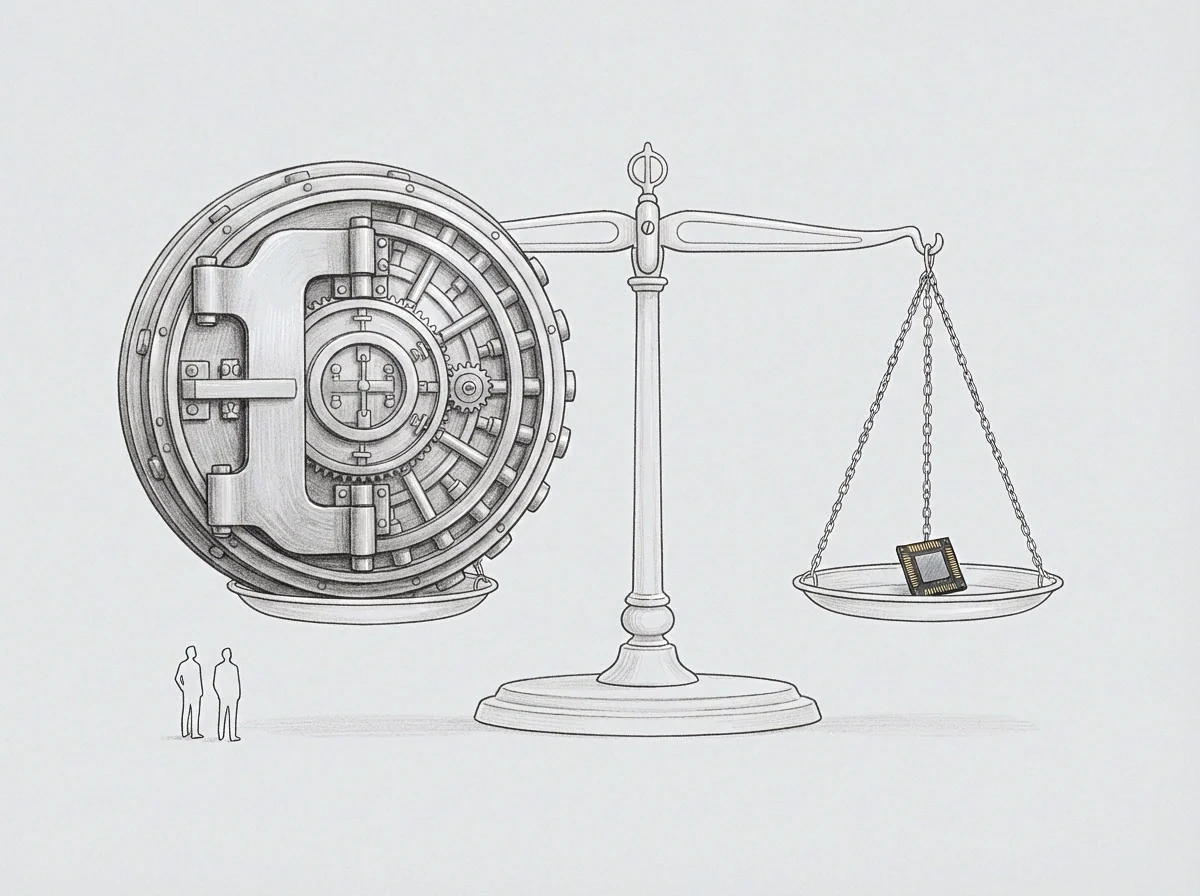
The Engineering of the Receptor
Building a functional receptor slot inside a psyche conditioned for total self-reliance is the central task of earned security. The backward template formed because the developmental environment offered no safe place to land. Constructing that place in mid-career demands seeking out relationships where the balance of power is entirely decoupled from the founder’s operational performance.
The founder cannot learn to receive regulation from someone they employ, someone they fund, or someone who profits directly from their commercial steadiness. Those relationships are structurally bound to the transactional reality of the enterprise. The update demands an external witness: a peer, a seasoned mentor, or a partner who possesses sufficient internal baseline composure to withstand the founder’s genuine vulnerability without requiring reassurance.
When this external witness offers presence, the founder’s initial reflex is profound somatic suspicion. The offer of care registers biologically as an anomaly or an impending trap. The founder looks for the hidden invoice, wondering what the witness wants in exchange for this stability.
Overcoming this defensive reflex requires the founder to stay in contact with the offer without fleeing into performance. The founder sits in the chair, admits to being completely lost regarding a strategic decision, and lets another human being hold that reality without rushing in to resolve the tension. The physical experience of being seen in a state of absolute exhaustion without being abandoned or exploited is the exact somatic nutrient that builds the receptor slot.
It is slow, agonizingly awkward, and fundamentally non-scalable work. It happens in rooms, across tables, through human eyes that ask for nothing.
The Delta Over Time
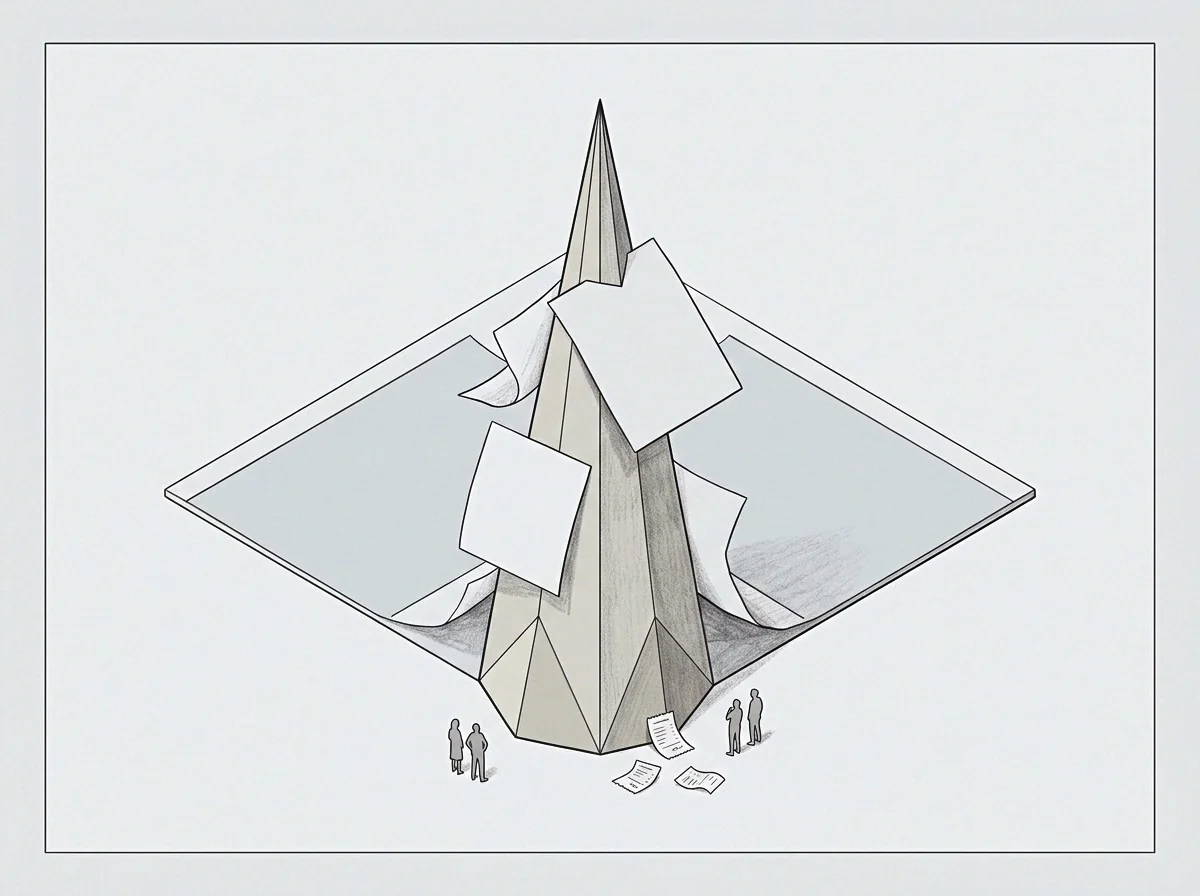
Telling the difference between an individual who needs you and an individual who chooses you is impossible at the boundary of a new relationship. An anxious, needy counterparty and a healthy, autonomous partner can present with identical enthusiasm and warmth in the opening weeks of an acquaintance. The distinction reveals itself solely through the delta over time.
A relationship based on borrowed regulation exhibits a flat or deteriorating regulatory trajectory: the counterparty consistently brings their emotional deficits to the founder, consumes the founder’s composure, and makes zero progress toward independent emotional stabilization. The dependency deepens as the operational stakes rise. The founder feels increasingly trapped, knowing that any withdrawal of support will trigger an organizational collapse.
An autonomous relationship aimed at mutual earned security behaves entirely differently across a twelve-month horizon. In this arrangement, moments of shared regulation lead directly to increased personal autonomy for both parties. The individual absorbs the support, uses it to restore their biological reserves, and returns to the relationship offering their own baseline in return.
The regulatory budget flows in both directions, varying according to the shifting shocks of their respective lives. The founder discovers what it means to enter a room, sit down, drop the heavy mask of absolute operational certainty, and borrow stability from someone who does not need them to be a hero. In that quiet exchange, the ancient metabolic deficit begins to heal, and the nervous system finally receives the biological baseline it was designed to enjoy from the start.
The enterprise will continue to ping, demanding answers to problems that feel urgent to the people who generated them. The screen will light up in the dark, offering its endless invitations to step back into the seat of the universal regulator. The difference lies in the founder’s internal response to the noise.
The founder sees the message, registers the unmodulated panic of the sender, and lets the machine sit untouched on the desk. The team will survive the night alone, and in surviving, will learn to locate their own ground. The founder turns away from the glow, closes their eyes, and lets their breath sink down into the quiet dark of an unborrowed sleep.