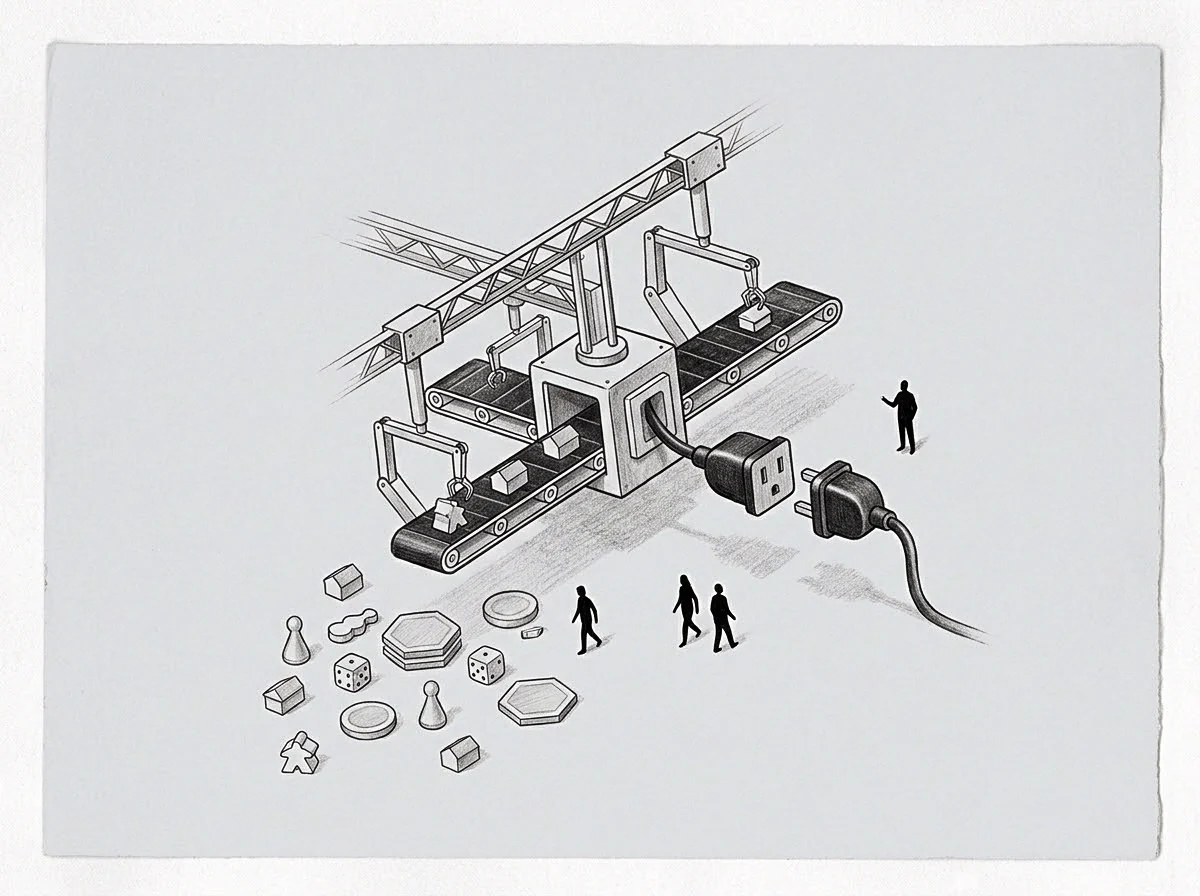
Meaning
Total finite daily allocation of bioenergetic and psychological resources must be distributed across emotional restraint, decision-making, physiological maintenance and operational focus. Within executive management, a regulatory budget defines the hard upper limit of self-control and deliberate attention available before behavioral and cognitive breakdown occurs. The allocation draws directly from blood glucose, neurochemical reserves and autonomic balance.
It governs how much friction, interpersonal conflict and strategic ambiguity an individual can absorb in a twenty-four-hour cycle. The framework stops applying when an individual enters unhedged panic, where reflective resource budgeting is completely overrun by survival instincts.
Resource Allocation
Every conscious act of focus, emotional suppression and strategic choice draws down a single unified pool of biological energy. If an executive exhausts their regulatory budget on morning operational fires and contentious administrative meetings, virtually no capacity remains for afternoon long-range strategic architecture or empathetic personnel management. The nervous system does not maintain separate, independent reserves for professional diplomacy and analytical reasoning.
All high-order functions pull from the same biological account. When the account is depleted, behavioral discipline collapses.
Depletion Rate
High-conflict environments, operational chaos and continuous multitasking accelerate the consumption of daily self-regulatory capacity. As the regulatory budget drains toward zero, the individual exhibits predictable behavioral degradation, including impulsivity, loss of perspective and extreme impatience with routine organizational friction. Pushing through this depleted state produces poor strategic decisions and damages critical interpersonal relationships.
Recognizing the current state of this biological balance sheet is critical to managing executive effectiveness. Unbudgeted emotional expenditure leaves the organization vulnerable to leadership errors.
Constrained Horizon
Structurally sequencing difficult tasks and aggressively eliminating low-value decisions preserves essential regulatory capacity for high-leverage organizational moments. High-stakes negotiations and core product architecture must be scheduled when the biological balance is at its peak. Once the daily limit is reached, operational activities should shift exclusively to low-stakes administrative execution or total rest.
A leader’s daily output is strictly bounded by this physiological baseline.