
Transitioning Leadership Teams From Borrowed Calm To Structural Autonomy
Structural autonomy replaces borrowed executive calm by establishing institutional escalation protocols that enforce independent threat processing.
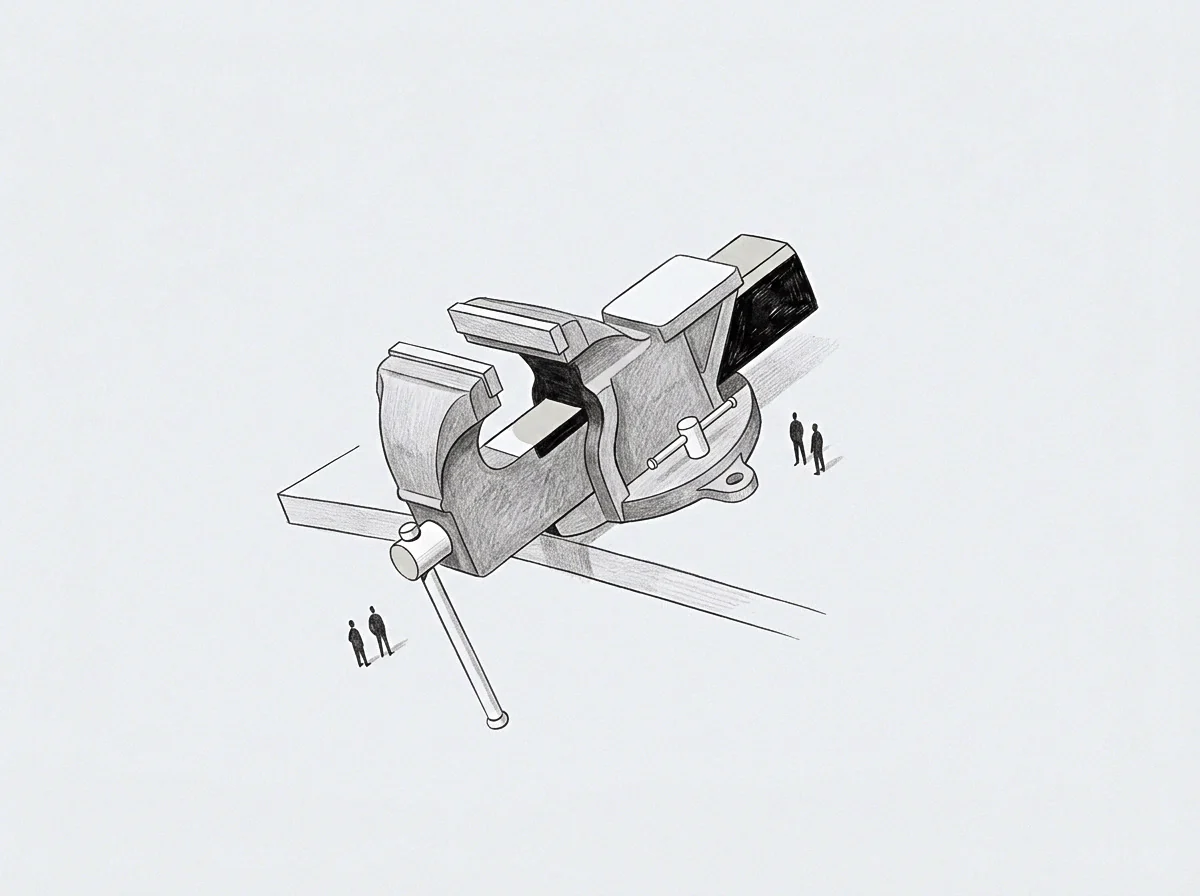
Siphon
Four messages arrive between ten at night and midnight, each requesting a decision on an operational item that secondary executives hold authority to execute. Four messages arrive before midnight. The chief executive replies to each within three minutes, clarifying a priority, approving a minor spend, or offering verbal reassurance about a client negotiation.
The baseline shifts silently. Secondary authority remains unexercised. The team members close their laptops with a diminished sense of strain, while the leader remains vigilant, processing threat signals for four distinct operating units simultaneously.
The leader absorbs the strain. What looks like operational alignment across the executive suite is frequently an unacknowledged transfer of regulatory expenditure. When team members experience commercial uncertainty, market volatility, or internal friction, the nervous system seeks a stabilizing baseline.
In high-growth or high-stakes organizations, the founder or chief executive functions as that baseline. Instead of managing internal anxiety through structural clarity or local decision-making, executives reach out to borrow the primary leader’s steady state. Borrowed calm registers internally as personal composure, concealing the reality that regulatory work has been externalized.
An executive who absorbs team dysregulation without redirecting the load becomes the single point of neural stabilization for the enterprise.

The Neural Economy of Executive Presence
Leadership teams operating under high environmental uncertainty regularly lean on the primary owner’s internal equilibrium. The metabolic price of holding risk, processing ambiguous data, and making irreversible calls is high. When a chief executive maintains an open digital channel and a reassuring vocal tone, team members lower their own threat response simply by initiating contact.
Proximity lowers neural energy consumption. The team member offloads the physiological burden of uncertainty onto the central leader, who willingly absorbs it under the impression that responsiveness builds culture.
The central regulator bears the deficit. Over extended quarters, this relational architecture creates a severe asymmetry in capacity. The primary leader experiences cumulative allostatic load, marked by chronic hyper-vigilance, disrupted sleep, and diminishing cognitive bandwidth for long-range strategic thought.
The executive team, conversely, fails to build the internal working models required to process severe market stress independently. Nobody names the metabolic expense. The arrangement persists because it delivers immediate short-term relief to the team while feeding the primary leader’s latent template of indispensable control.
When borrowed regulation becomes the operational standard, executive departure or exhaustion collapses the team’s capacity to process ordinary business ambiguity.

Wall
Social baseline theory establishes that human organisms conserve metabolic resources by offloading threat assessment onto trusted figures. In corporate hierarchies, this dynamic shifts from an informal interpersonal coping mechanism to an expensive operational bottleneck. When executive leadership relies on continuous physical or digital access to the primary founder, organizational velocity drops to the processing speed of a single brain.
Decentralized execution requires distributed threat processing. When an executive team borrows calm rather than developing structural autonomy, strategic initiatives stall whenever the primary leader steps away. The enterprise constructs an invisible dependency network where decisions sit unexecuted, waiting for the central regulator to validate the path.
Capacity runs out.

Measuring Allostatic Load Across Executive Seats
When enterprise ambiguity spikes, individual capacity divides between primary strategic execution and interpersonal stabilization. A chief executive who acts as the primary emotional sponge for four direct reports spends up to forty percent of daily energy managing relational distress and anxiety. This allocation leaves minimal bandwidth for capital deployment, structural innovation, or market expansion.
The table below compares the operational markers of an organization reliant on borrowed calm against one structured for autonomous regulation.
| Evaluation Dimension | Borrowed Calm Dynamic | Structural Autonomy Dynamic |
|---|---|---|
| Primary Regulation Source | Leader physiological presence and direct availability | Institutionalized escalation protocols and stated decision limits |
| Metabolic Cost to Leader | High ongoing allostatic expenditure during operational ambiguity | Bounded expenditure restricted to defined structural exceptions |
| Decision Velocity Under Threat | Delayed until central confirmation or verbal validation occurs | Immediate execution within pre-authorized operational parameters |
| Team Internalization Level | Low internal capacity with high dependency on external stabilization | High earned security with distributed operational threat processing |
Transitioning away from continuous availability requires diagnosing the precise channels through which borrowed regulation flows. The primary patterns manifest in predictable structural leakages across executive communication.
- The Asymmetric Ping Direct messages sent to a chief executive outside operational hours bypass secondary management structures.
- Attaching to Demeanor Operational teams evaluate commercial risk by reading a leader’s vocal cadence during briefings rather than auditing financial indicators.
- The Unclaimed Reserve Leaders maintain unspoken personal bandwidth to absorb cross-departmental friction, preventing underlying procedural boundaries from forming.

When Does Proximity Stop Regulating Executive Behavior?
Continuous physical or digital availability creates an informal dependency loop. The quiet is temporary. Each time a founder resolves an incoming micro-crisis, the secondary executive’s neural threat system resets without developing local tolerance for risk.
The team member learns that relief originates outside their own seat.
When structural boundaries replace personal proximity, metabolic expenditure for threat monitoring transfers from the individual leader to institutional design.
Unspoken bandwidth invites continuous escalations. If an executive team lacks explicit decision thresholds, individuals naturally seek central validation to hedge personal accountability. Over time, the primary regulator’s office becomes a clearinghouse for operational anxiety, masking underlying deficits in competency, governance, or role clarity.
The strategic directive felt clear during the Monday sync, but executing it without immediate confirmation created unmanageable operational friction.

Scaffold
Transitioning an enterprise away from central stabilization demands explicit boundary markers. Structural autonomy is not generated by telling executives to be more confident or resilient. It is constructed through operational engineering that limits access to borrowed calm, forcing local leadership seats to process uncertainty internally.
Institutional mechanics must replace personal availability. By establishing explicit friction points in the escalation path, a company redirects threat processing back to the role where the risk lives. Clear operational limits alter executive behavior.
When immediate reassurance is unavailable, secondary leaders engage their own strategic reserves, evaluate downside probabilities, and execute decisions independently.

Institutional Protocols as External Regulation
Operational rules serve as external substitutes for real-time co-regulation. When an organization implements strict escalation templates, it forces secondary leaders to organize their thoughts, quantify operational exposure, and propose concrete solutions prior to contacting executive leadership.
- Primary escalations require a written assessment detailing two proposed options before real-time verbal access is granted.
- Decision authority over budget allocations up to designated limits rests entirely within department seats without founder confirmation.
- Direct communications outside defined core hours remain unread until the subsequent operational shift begins.
Friction forces localized threat analysis. Implementing these structural interventions alters the relational template across the executive suite. The primary leader shifts from a continuous source of borrowed calm to an architect of institutional boundaries.
Institutional protocols replace personal presence.
Operational autonomy expands only when structural friction prevents easy recourse to borrowed calm.
Consider an enterprise operating with a vice president of sales who escalates every major contract negotiation to the founder due to fear of missing quarterly revenue targets. In a borrowed calm architecture, the founder joins the client call, absorbs the commercial tension, and closes the deal. The founder feels vital, and the vice president feels supported.
However, the vice president’s capacity to hold high-stakes commercial tension remains undeveloped. In a structural autonomy architecture, the founder refuses the call, citing established deal-size thresholds, while providing a written risk parameter within which the vice president must operate. The vice president holds the tension, executes the negotiation, and updates their internal working model of personal competence.
A mandatory forty-eight-hour latency on non-emergency escalations forces secondary leadership to complete local threat assessment before accessing primary executive attention.

Fulcrum
A leader accustomed to regulating an entire organization often operates on an internal working model forged during early company survival. In the initial phase of a venture, the founder’s personal energy, hyper-responsiveness, and absolute control are essential to survive market threats. The founder internalizes a template where safety equals personal oversight, and delegation feels like negligence.
This early survival template creates a deep structural vulnerability as the organization expands. The founder develops no internal receptor slot for receiving support, viewing stability as a one-way export to the team. Strength under stress attracts more load.
The organization senses the founder’s unlimited capacity to absorb friction and responds by offloading increasingly granular problems upward.

Receptor Capacity and Internalized Models
Absorbing organizational anxiety without allowing reciprocal support produces a structural imbalance. The founder becomes locked in the role of perpetual regulator, treating any effort by secondary executives to hold major risk independently as a potential threat to enterprise standards. The receptor slot remains vacant.
A leader who operates without a receptor slot for support converts every organizational vulnerability into personal regulatory expenditure.
Updating this internal template requires the founder to experience high operational ambiguity without stepping in to resolve it. Earned security within an enterprise occurs when a leader observes secondary teams navigating severe commercial stress, making mistakes, correcting course, and surviving without primary intervention. Structural autonomy requires explicit operational constraints.
The founder must build tolerance for the discomfort of watching others hold risk.
Stated limits function effectively only when secondary teams experience the operational outcome of their own decisions.
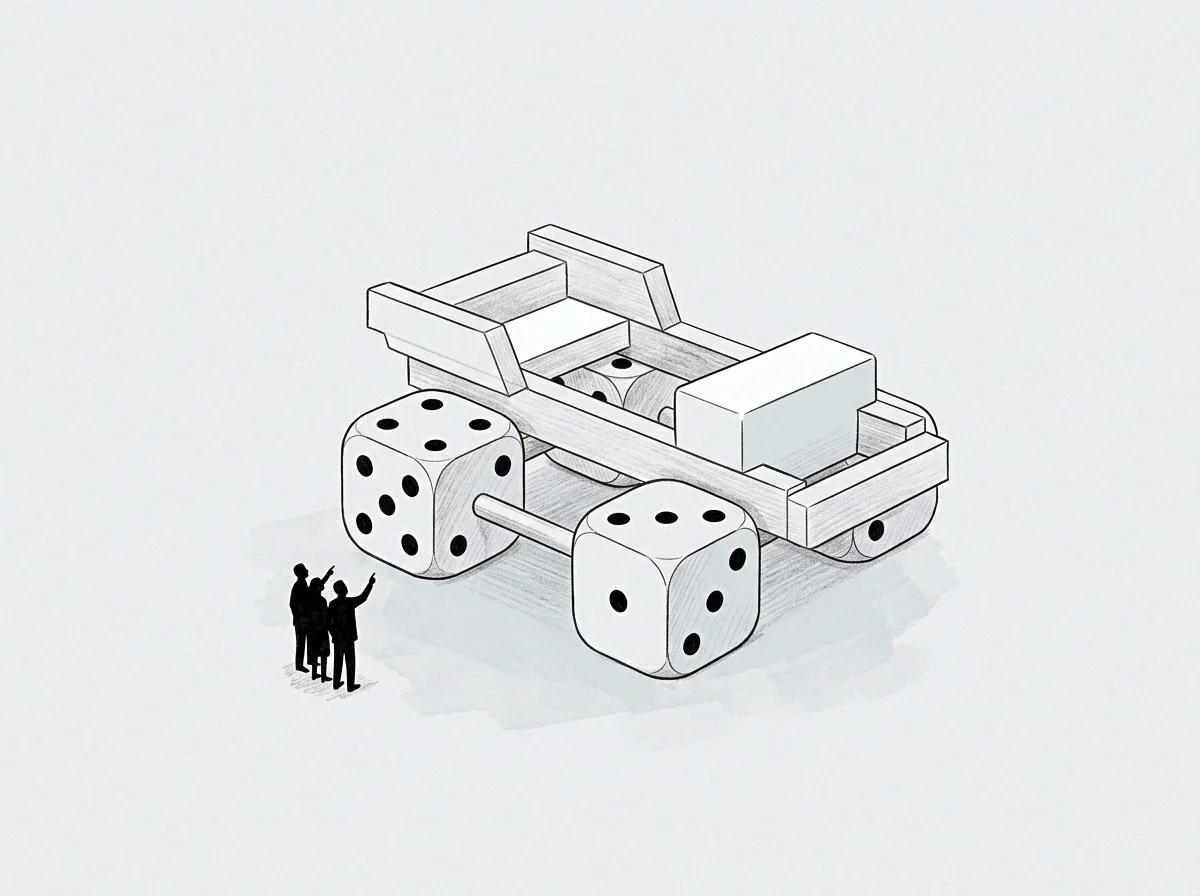
Scale
The transition from central borrowed calm to structural autonomy yields observable changes over a twelve-month operational cycle. In the initial phase, cutting off immediate access to primary regulation generates temporary discomfort across the executive suite. Secondary leaders report feeling unsupported, while the founder experiences anxiety regarding unmonitored operational details.
This discomfort marks the beginning of neural and operational recalibration. Decisions generate immediate localized feedback. As secondary executives realize that central reassurance will not arrive, they deepen their own technical evaluations, consult peer directors, and establish localized team norms for risk management.

The Delta Over Time in Institutional Behavior
Tracking leadership performance across quarters reveals how structural constraints reconfigure decision habits. Take an executive team operating across three distinct operational units over a one-year transition period. In quarter one, central leadership responds to forty direct operational escalations per week.
In quarter two, following the introduction of mandatory written escalation criteria and bounded decision limits, direct escalations drop to fifteen per week, accompanied by a temporary decrease in secondary decision speed as executives adjust to holding local accountability.
By quarter three, secondary decision velocity rebounds, exceeding baseline metrics, while weekly escalations stabilize at fewer than five genuine strategic exceptions. In quarter four, secondary executives report higher job satisfaction, reduced personal distress, and a stronger sense of ownership over unit outcomes. The founder’s weekly calendar frees up twenty-two hours previously spent on operational co-regulation, allowing capital re-allocation toward long-range strategic initiatives.
Earned security replaces structural dependency. The executive team no longer requires the physical presence or emotional steadiness of the founder to maintain high operational standards under market volatility. Institutional clarity, transparent risk boundaries, and robust reporting mechanisms provide an objective foundation for enterprise stability.
Repeated execution within strict structural boundaries permanently rewires how leadership teams process commercial ambiguity without leaning on primary executive presence.