
Equilibrium Decay Across Automated Governance Gates When Uncompensated Human Carrying Invisibly Absorbs Structural Failure
Automated governance gates maintain artificial equilibrium when invisible human interventions absorb upstream schema errors, hiding structural decay until human capacity reaches exhaustion.
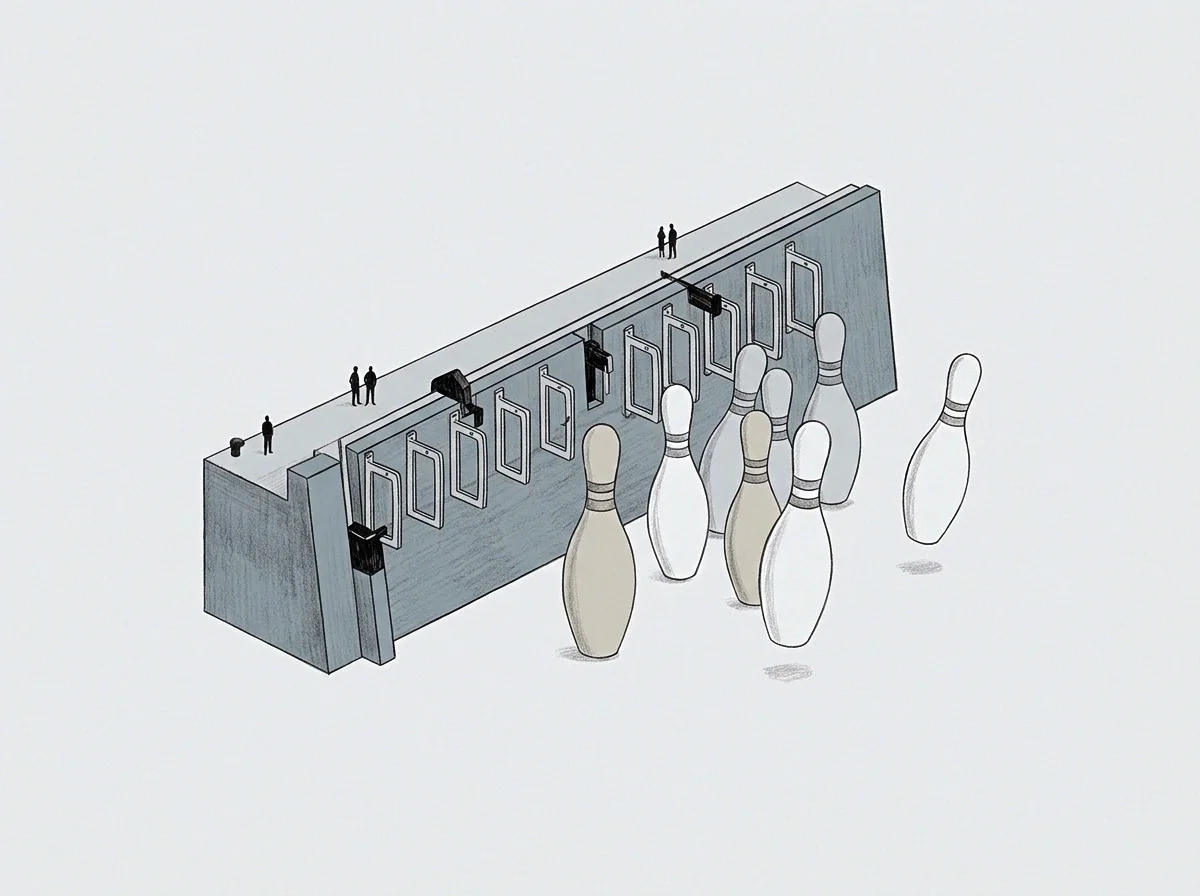
Sieve
An operator sits before four active terminals at midnight while compliance pipelines execute scheduled validation checks. Green status indicators flash across the monitoring panel at five-minute intervals. Every successful pass relies on an undocumented sequence of manual steps performed minutes earlier.
The operator extracts malformed records from the staging database, corrects inverted field values, and fills missing validation tags before the automated pipeline executes its sweep. Without this intervention, forty percent of automated policy gates fail, triggering automated severity escalation protocols and flagging operational risk to executive leadership.
Automated governance structures are designed to evaluate system state against strict policy definitions. They function on the assumption that input data reflects true operational activity. When upstream data feeds degrade or software integration logic fails, the policy gate acts as a structural filter meant to block non-compliant operations.
The software gate cannot distinguish between natively compliant data and non-compliant data that an operator manually repaired immediately before evaluation. The dashboard displays sustained equilibrium while underlying operations deteriorate.
This dynamic forms an uncompensated human buffer. The human operator absorbs the technical friction produced by flawed system architecture. In theoretical models of control systems, error signals prompt corrective action by driving feedback loops back into the primary software design.
When human effort absorbs the error signal before it reaches the control loop, the automated system receives a false confirmation of compliance. The automated architecture operates under the feedback of simulated health.
The operational cost of this manual buffer remains off the institutional ledger. Accounting models record software maintainability through reported ticket volumes, incident alerts, and downtime metrics. Because manual pre-cleansing prevents pipeline exceptions, automated reporting software registers zero defects for the process.
Institutional leadership reads the zero-defect log as proof of algorithmic efficiency. Human carrying converts structural defects into invisible operational expenditure.
A governance system that measures compliance without tracking manual payload corrections converts human strain into false status reports.
Manual payload corrections require continuous cognitive monitoring from the operator. Each manual patch forces the operator to translate non-standard system outputs into valid policy formats. Over extended operational cycles, this continuous translation creates cognitive friction.
The operator operates as an unacknowledged interpreter between broken infrastructure and rigid automated gates.
The pipeline metrics remain within parameters and no intervention appears on the incident board.

Load
Continuous manual intervention alters the physiological baseline of the operator in the execution seat. In occupational stress research, allostatic load describes the wear on biological systems subjected to repeated pressure. When an individual manually reconciles broken automated inputs under strict time constraints, the sympathetic nervous system stays active throughout the entire operational shift.
The operator remains in a perpetual state of readiness to prevent public system failures.
This prolonged activation depletes executive processing capacity. Cognitive bandwidth that could support long-term operational redesign gets consumed by immediate error absorption. The operator spends working hours managing short-term validation gates rather than fixing the structural root causes of schema drift.
The current shift takes priority over architectural repair.
System designers frequently misinterpret sustained high throughput as evidence of human resilience. High performance under structural instability indicates that an uncompensated human carrying mechanism is actively preventing collapse. The individual in the seat works harder to compensate for degrading technical infrastructure.
System output stays stable while human capacity burns down.
- Payload pre-cleansing involves the manual reformatting of invalid payload attributes prior to automated ingestion to prevent gate rejection.
- State synchronization override occurs when operators clear database deadlocks directly through SQL commands because automated lock recovery routines fail.
- Policy threshold lowering involves the temporary adjustment of local environment variables to force automated approval during unexpected data spikes.
Operational reliance on invisible human buffering creates systemic fragility. Human capacity is non-linear and bounded by biological limits. Unlike software infrastructure, which scales predictably or fails loudly through explicit error codes, human carrying capacity deteriorates silently until reaching an absolute threshold.
A system dependent on unrecorded human carrying operates with zero true margin.
Continuous manual pre-cleansing hides technical debt behind operator cognitive capacity.
The relationship between the operator and the automated gate forms a covert contract. The automated pipeline demands perfect compliance at every checkpoint. The operator delivers compliance by spending personal energy to scrub bad data.
The organization rewards the visible outcome of green status lights while ignoring the operational strain required to maintain them. The compensation structure covers standard monitoring duties, leaving the extra manual reconciliation uncompensated and unrecognized.
An automated gate that never triggers an alarm in a degrading pipeline is being carried by an unmeasured human buffer.

Friction

Where Does the Hidden Intervention Mask the Error?
Intervention occurs at the interface between primary input streams and automated policy evaluation routines. When data schemas drift due to uncoordinated API modifications, the automated evaluation engine encounters unexpected fields. Under standard design assumptions, the gate rejects the payload, generating an error code that alerts engineering teams to the API mismatch.
In practice, the operator intercedes before rejection occurs. The operator writes quick local scripts or manually edits JSON payloads in staging areas to pass the gate.
This manual intercession breaks the internal feedback loop of the software platform. Automated feedback loops rely on exception logging to prioritize engineering tasks. If an exception never logs, product managers assign zero development hours to fixing the integration.
The defect remains active in the software ecosystem, buried under daily operator intervention.
The dynamic creates an institutional discrepancy between perceived platform stability and real operational risk. Executive stakeholders evaluate system stability using high-level reporting panels that aggregate gate status summaries. These panels show high availability scores and near-zero failure rates.
The operator experiences a completely different operational reality, marked by endless data scrubbing and continuous manual interventions.
| Evaluation Dimension | Standard Automated Gate Execution | Uncompensated Human Buffer Carrying |
|---|---|---|
| Failure Detection Latency | Instantaneous exception generation at the gate. | Delayed until complete human operator exhaustion. |
| System Setpoint Accuracy | Reflects true technical compliance of payloads. | Reflects human capacity to scrub invalid inputs. |
| Governance Integrity | Auditable, log-anchored rule verification. | Unrecorded manual adjustments bypass policy audits. |
| Operational Expenditure | Calculated within compute infrastructure budget. | Absorbed silently through operator cognitive strain. |
The table illustrates how invisible human interventions degrade systemic governance integrity while presenting an outward appearance of automated reliability. When human operators scrub inputs to clear automated policy gates, they bypass the audit trail necessary for true compliance tracking. The automated gate records compliance, but the record reflects human intervention rather than underlying system health.
Institutional reliance on uncompensated carrying creates extreme fragility during operational transitions. If the primary operator leaves the seat, the undocumented manual pre-cleansing steps stop immediately. The incoming operator, following official documentation, allows automated gates to evaluate raw incoming payloads.
The pipeline immediately experiences systemic failure, locking downstream processes and creating an artificial crisis.
System dashboards report nominal health when operators silently fix payload errors before gate execution.
Leadership often diagnoses the sudden breakdown as a failure of the new operator rather than a structural failure of the software pipeline. The institutional narrative assumes the platform functioned correctly for months under the previous operator. The organization fails to recognize that the previous operator was manually carrying the broken architecture.
The system misattributes structural failure to individual competence.
Inserting an explicit audit hook for manual overrides shifts the error signal back to the architectural registry.
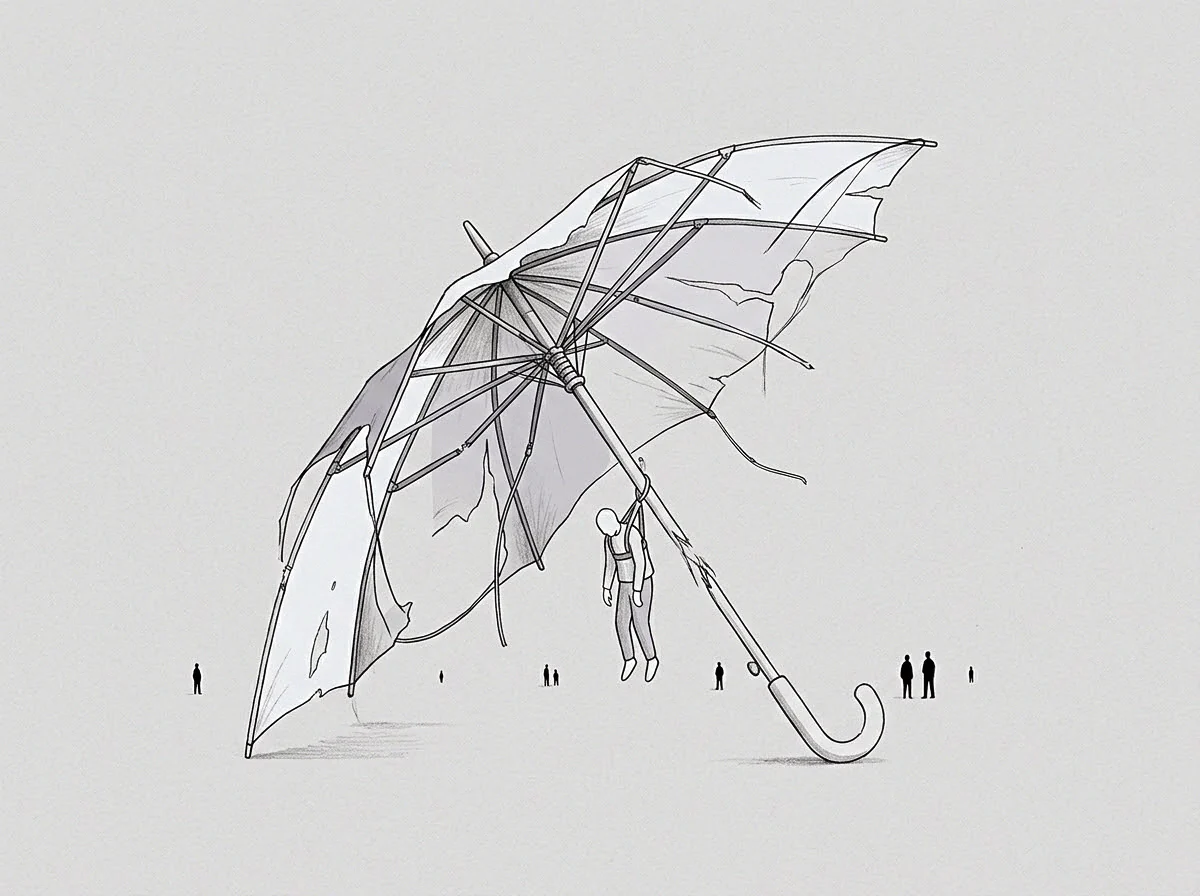
Drain
Prolonged operational carrying drives the operator toward an allostatic tipping point. In physiological terms, allostasis refers to the process of maintaining stability through physiological change. When the demand for manual intervention exceeds the operator’s recovery capacity, biological resources deplete.
Cognitive fatigue reduces processing speed, increases error rates during manual payload scrubbing, and reduces emotional regulation capacity.
The transition from sustainable operation to complete exhaustion follows a distinct biological progression. Initially, the operator compensates for high load by increasing mental focus and extending working hours. This high-arousal state allows the operator to maintain zero-defect metrics across automated gates.
As baseline recovery fails, executive function degrades. The operator can no longer maintain the extreme focus required to scrub malformed payloads without errors.
- Schema drift occurs at upstream input feeds without triggering automated alerts.
- Uncompensated manual adjustments absorb validation exceptions to maintain pipeline flow.
- System dashboards display continuous green status while operator cognitive reserve depletes.
- Operator cognitive capacity hits ceiling, ending manual payload scrubbing.
- Automated governance gates reject raw incoming payloads, causing immediate operational halt.
When cognitive capacity reaches baseline limits, the manual buffer collapses. The operator drops the uncompensated carrying work. Raw, unscrubbed payloads hit the automated governance gates for the first time in months.
The gates reject incoming data, trigger severity alerts, and freeze downstream operations. To outside observers, the software architecture appears to have suffered an unprecedented catastrophic failure.
The failure was not instantaneous. The decay accumulated over months of unrecorded manual intervention. The sudden pipeline collapse represents the point where human carrying capacity reached zero.
The automated system did not fail on the day of the outage; it failed months earlier when it began requiring daily manual intervention to pass policy checks.
System failure appears sudden only when the human carrying that absorbed structural decay stops abruptly.
Decision-makers frequently respond to gate lockouts by increasing enforcement policies or demanding higher operational vigilance. This response misinterprets state-gated limits as motivational defects. A state-gated act cannot be unlocked through increased effort once the physiological transfer function reaches its limit.
Expecting an exhausted operator to maintain broken infrastructure through sheer determination accelerates complete system breakdown.
Designing governance gates around invisible manual buffers converts minor software defects into sudden organizational halts.
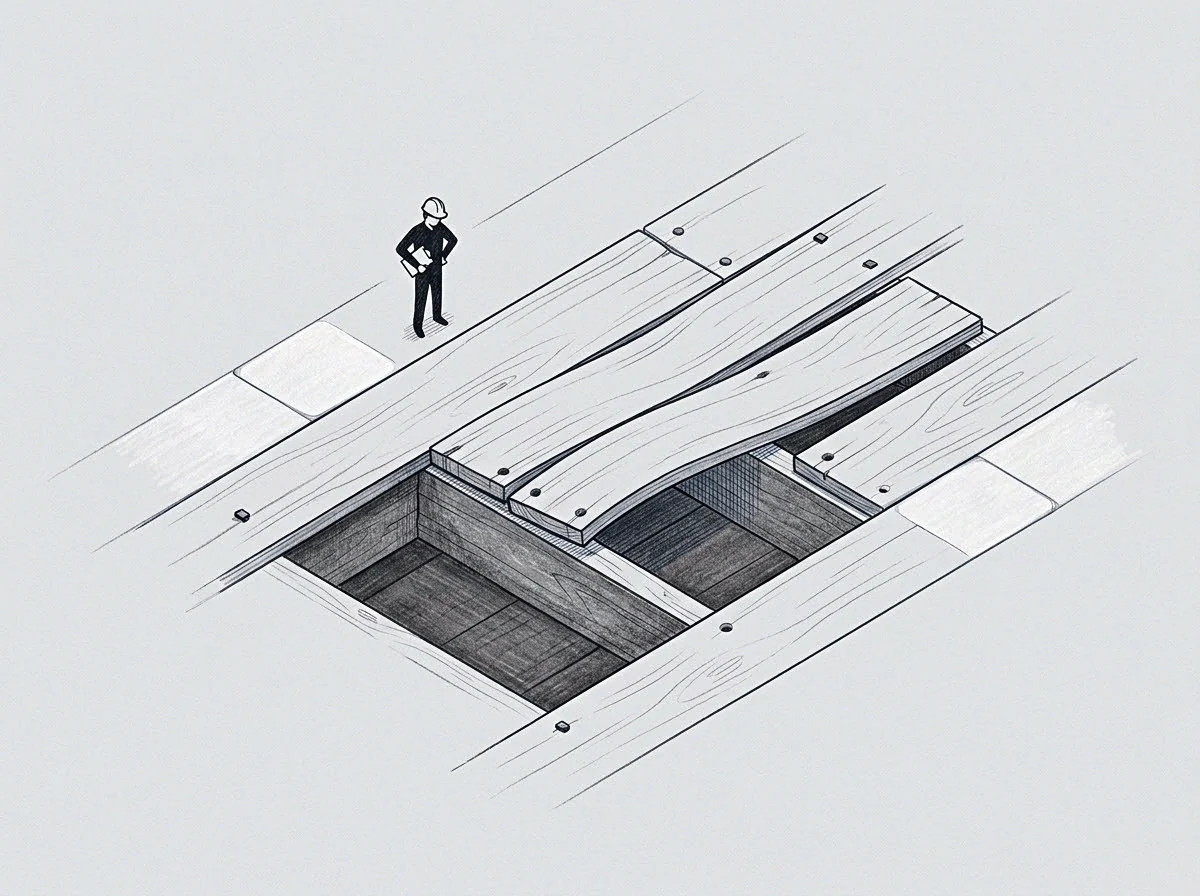
Balance
Restoring structural equilibrium requires converting invisible human buffers into explicit system boundaries. The first step involves establishing a stated limit on manual payload interventions. Operators must stop scrubbing malformed data off the record.
When an incoming data stream fails policy gate validation, the failure must execute its native exception handler, generating formal incident logs and halting processing queues.
Exposing structural errors forces the software platform to process real feedback signals. When automated policy gates fail visibly, engineering resources are directed toward fixing the root causes of data corruption. Upstream API schemas are updated, automated reconciliation scripts are integrated into official pipelines, and system setpoints realign with operational reality.
The technical debt previously paid through human cognitive wear gets transferred to the software engineering workflow.
Defining clear operational terms protects human cognitive headroom. An operator states explicit boundaries regarding payload corrections. Manual fixes must be submitted through tracked pull requests or logged as formal database overrides with linked ticketing references.
Unlogged interventions are halted completely. This change transforms undocumented carrying into visible system metrics.
Establishing explicit operational limits shifts system feedback from human strain to formal error tracking.
Availability is derived from system constraints rather than demanded through continuous operator sacrifice. When automated gates encounter unscrubbed failures, system throughput adjusts to match true software compliance limits. Processing speed drops initially as non-compliant data streams hit validation blocks.
This temporary reduction in throughput represents the true capability of the current architecture. It provides an accurate baseline for institutional decision-making.
The transition from uncompensated carrying to explicit limit enforcement changes the operational dynamics of the team. Automated gates return to their intended role as objective compliance verifiers rather than passive consumers of human effort. The operator steps out of the execution buffer and moves into an architectural oversight role, monitoring system performance through explicit metrics rather than manual scrubbing.
True operational stability requires software infrastructure to hold its own weight. A governance gate must enforce compliance through explicit algorithmic rules rather than unrecorded human labor. Removing the invisible human buffer forces the organization to invest in self-healing pipelines, accurate data schemas, and resilient system design.
System balance is achieved when the platform’s automated controls operate within their designed capacity without drawing upon the uncompensated physical and cognitive reserves of the operator.