
Establishing State Gated Systemic Boundaries in Early Stage Ventures
Systemic boundaries protect venture capacity by gating operational acts on objective system state metrics rather than continuous interpersonal decision making under load.

Frame
Early-stage ventures run under loads where operational agreements easily devolve into ongoing interpersonal negotiation. Partners often interpret operational boundaries as reflections of willingness or mood, testing them until someone’s working capacity breaks down. A state-gated boundary substitutes personal refusal with an explicit operating rule tied to system metrics.
System status, gauged by available headroom, runway, open loops, and active tasks, determines whether an action can proceed.
Systemic boundaries depend on explicit rules rather than decisions made on the fly. If an operator declines work by citing fatigue or overload, the other party tends to treat the refusal as a tactical stance in a negotiation. Pressure continues because the individual sitting in the seat looks like the only real bottleneck.
Having an explicit term shifts that boundary away from the individual, turning it into an operating constraint that exists independently of them.
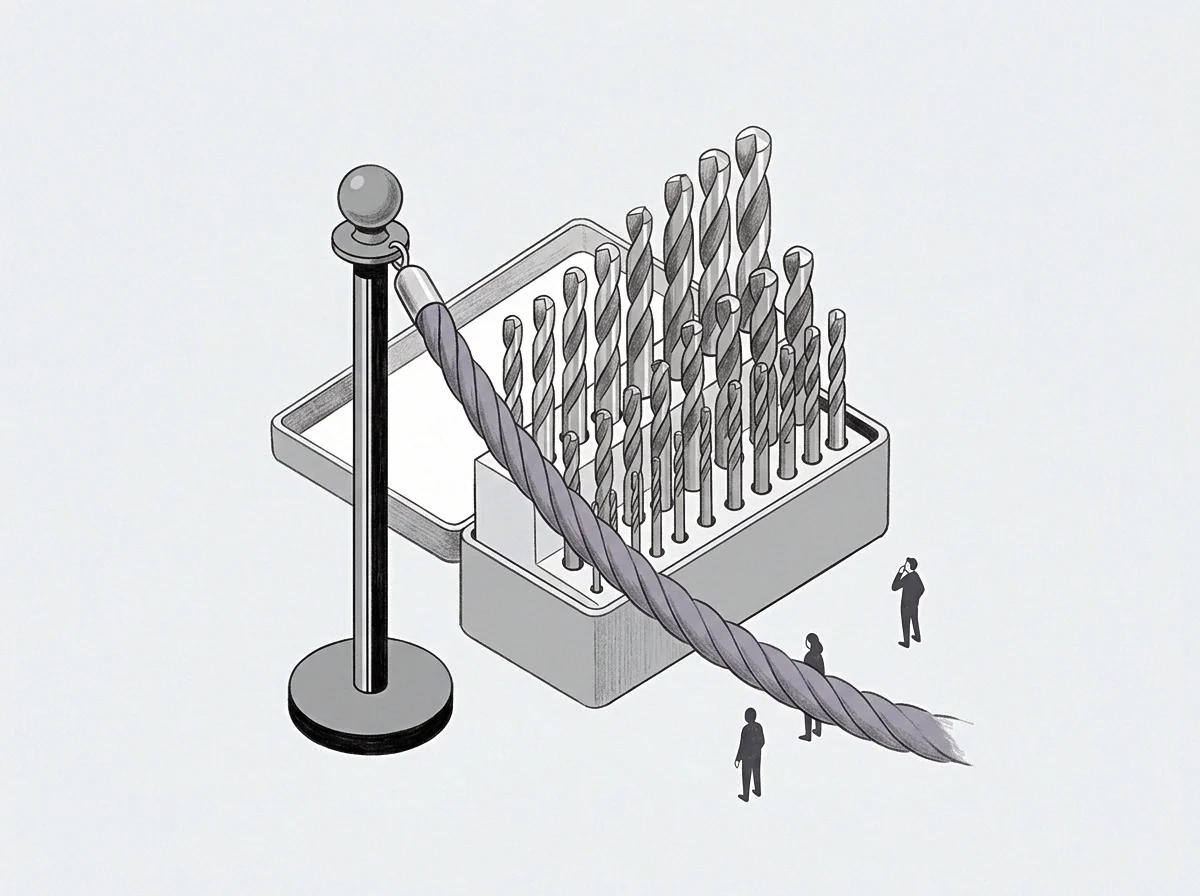
Structural Boundaries and Personal Will
A decision-gated boundary differs fundamentally from a state-gated one. Decision-gated actions demand constant appraisal and direct assertiveness whenever a new request arrives. The operator has to assess remaining capacity, absorb relational tension, and push back in real time.
Running boundaries on live discretion drains attention and inevitably breaks down as cumulative operational strain peaks.
State-gated boundaries maintain operational stability when system parameters trigger automated limits prior to individual capacity exhaustion.
State-gated rules trigger on explicit operational thresholds. Inputs convert directly into fixed outputs without intermediary debate. When runway drops below six months or concurrent active projects exceed three per operator, intake halts automatically.
Because these limits are set during periods of baseline stability, operators do not have to manage relational tension under heavy load.
Without concrete state gates, an organization defaults to treating human stamina as its primary shock absorber. Volatility gets absorbed through physical and mental strain until key operators burn out. Introducing boundaries only after capacity has broken turns every operational limit into an argument over loyalty and personal commitment.

Notch
Operational priorities move across a team through specific communication channels. When those channels produce constant notifications, the continuous interruptions force the receiving operator to evaluate urgency on every message. State-gated boundaries require adjusting how these channels function, making availability a clear systemic state instead of an open-ended expectation.
Stating an operational threshold explicitly converts ambiguous silence into a readable position on availability and priority.
Silence functions as an operational signal once clear boundaries are in place. In an un-gated setup, an unanswered ping usually reads as neglect, interpersonal friction, or a stall, prompting the sender to ping again to confirm someone is there. When terms are established beforehand, silence simply indicates that the operating conditions required for a response have not been met.

The Silence of Stated Position
Communication channels expose how an organization actually handles priority. Setting up gated channels requires defining concrete terms for message routing, expected response times, and escalation paths.
- Asynchronous default routing directs non-urgent operational inputs into persistent queues instead of triggering push notifications or expectations of an immediate reply.
- Emergency bypass criteria defines explicit operational events, like production outages or legal breaches, required to justify an immediate interruption.
- Batch processing windows concentrates message reviews into set intervals, leaving uninterrupted blocks of attention for engineering or governance work.
- Explicit capacity indicators shares current workload metrics with counterparties so availability is visible before someone submits a request.
When counterparties understand the rules governing response times, they determine availability directly from the current system state. Manual pushback becomes unnecessary because the communication architecture handles the restriction. Which operational indicators allow a counterparty to distinguish functional system throttling from relational withdrawal?

Anchor
Operational stress in coupled systems flows naturally toward whoever responds the fastest. In early ventures, one partner often becomes the default buffer, taking on stray tasks, interpersonal friction, and unresolved ambiguity. That dynamic accelerates exhaustion, eroding cognitive headroom and operational clarity as the load compounds.
Proximity to a steady partner lowers physiological regulation energy costs, as co-regulation models show. In a business partnership, however, borrowing that stability without defined structural gates creates an uneven dependency. The more resilient operator turns into a shock absorber for every organizational disruption, masking underlying operational deficits until their working capacity breaks without warning.

Allostatic Throttling Across Shared Seats
Avoiding operational collapse requires enforcing concurrency limits across shared roles. These limits restrict how many high-priority initiatives an operator can run at the same time. Once active tasks hit the ceiling, incoming projects stay queued regardless of outside urgency or founder preference.
| Boundary Variable | Decision-Dependent Regime | State-Dependent Regime |
|---|---|---|
| Primary Trigger Input | Subjective fatigue or relational tension | Objective load metrics and capacity thresholds |
| Load Transfer Mechanism | Absorbed by operator endurance | Redirected to queue or backlog |
| Operator Headroom Impact | Continuous depletion under load | Protected through static thresholds |
| Counterparty Derivation | Interpreted as personal willingness | Read as hard operational constraint |
| Systemic Degradation Rate | High risk of sudden collapse | Predictable linear throttling |
The difference between an operational structure that holds and one that breaks comes down to where the boundary is anchored. Decision-dependent setups force people into live negotiations right when stress is highest, whereas state-dependent setups rely on pre-set operational thresholds that trigger without subjective debate.
Operating limits hold when defined by objective system thresholds rather than live interpersonal negotiations under load.
An explicit term moves friction from the person to the policy. If a partner demands an immediate expansion of scope, the operator points directly to the concurrency limit already written into the operating agreement. That shifts the burden onto the operating rules, insulating the individual from interpersonal pressure while forcing the business to make clear trade-offs.

Door
Real operational pressure quickly exposes whether boundaries are functional state gates or mere ideals. Consider two software founders holding equal equity, where one runs infrastructure and the other leads commercial growth. A surge in customer onboarding begins threatening platform stability just as enterprise prospects start demanding custom terms.
Without state-gated limits, both partners try to handle every incoming fire through ad hoc decisions. The infrastructure lead logs sixteen-hour days to keep servers up, while the commercial lead promises custom engineering work to close pending deals. Unresolved commitments accumulate.
Fatigue degrades decision quality, sparking erratic compromises, missed delivery dates, and mutual frustration.
When Does a Decision Fail Against System State?
Once operational metrics push past safe thresholds, relying on live decisions only speeds up breakdown. The infrastructure engineer hits a hard ceiling, unable to take on further requests no matter the prospective commercial value.
- The system reaches predefined capacity metrics, automatically freezing intake on new enterprise features.
- Commercial requests route into a prioritized queue governed by platform stability thresholds.
- The commercial partner uses the public operational status to reset delivery dates with prospective clients.
- Engineering concentrates strictly on infrastructure stability until operational metrics normalize.
Relying on pre-established state gates prevents an interpersonal clash over commitment or stamina. Published system metrics establish actual capacity, offering a neutral foundation for commercial conversations.
Clear pre-committed operational conditions eliminate the requirement for interpersonal negotiation during operational crises.
The conflict eases because system state supersedes individual discretion during peak strain. The commercial partner states the constraint plainly to outside stakeholders as a standard operational rule: the operator cannot override the platform deployment freeze until server stability metrics clear the baseline threshold.

Yield
Sustaining operational balance in an early venture requires moving from reactive boundary defense to predictable, derived availability. Collaborators adapt their habits to structural responses over time. When a team consistently maintains state-gated boundaries, outside parties stop probing personal willingness and recalibrate their expectations around published operating conditions.
Direct alerts only convey true urgency when background traffic is filtered through gated channels. Limiting accessibility around explicit operating states creates uninterrupted focus blocks for complex engineering and governance work. The venture builds resilience by replacing perpetual individual effort with defined operating constraints.

Derived Availability and Systemic Equilibrium
Deriving availability from system status provides a reliable baseline for founder stamina. When operational terms are clear, partners gauge capacity on their own, cutting down on unnecessary messaging and eliminating friction around response times. That structural clarity protects cognitive energy for core decisions, preventing burnout while keeping execution steady across the venture’s lifecycle.