
Structural Capacity Allocation Mechanisms For Eliminating Unfunded Emotional Absorptions In Early Stage Leadership
Early stage leadership capacity is preserved by establishing formal structural conduits that eliminate unbudgeted organizational distress absorption.
Table
Four direct messages sat unanswered past midnight on a Tuesday in October. An engineering lead described panic regarding a delayed release, an investor requested an unscheduled briefing on customer churn, and a commercial partner expressed agitation over contract language. Each sender treated the founder as an infinite biological reservoir for organizational distress.
The day had already consumed fourteen hours of operational arbitration, product architecture disputes, and capital calculations. No formal mechanism existed to account for this regulatory labour. The business recorded engineering output, sales pipeline velocity, and cash burn, yet the biological stamina spent steadying the nervous systems of anxious peers appeared on no ledger.
Early stage leadership structures routinely operate on the silent assumption that the executive in the primary seat possesses limitless capacity to ingest organizational turbulence. When operational friction increases, the leadership desk converts volatile human distress into synthetic executive calm. That conversion has a measurable biological price.
The human autonomic nervous system responds to relational tension by elevating cortisol and activating sympathetic arousal. Left unbuffered by structured allocation, this informal absorption consumes the exact cognitive headroom needed for critical firm survival.
A regulator running without assigned hours absorbs the panic of every adjacent seat.
Physical exhaustion surfaces when executive capacity faces unregulated relational demands from every quadrant of the firm. Early leadership is characterized by thin institutional boundaries where distress transfers downward and upward directly into the central executive seat. Without architectural buffers, the founder becomes an allostatic sponge for the anxieties of the organization.
The Midnight Intake Queue
Communication software provides continuous, low-friction access to the executive desk, turning personal presence into an open public utility. A junior contributor facing routine technical roadblocks sends an immediate ping rather than executing independent troubleshooting. The ping transfers the psychological tension of the obstacle to the founder, who instantly mobilizes cognitive effort to alleviate the contributor anxiety.
Over weeks, this dynamic establishes an informal operating treaty where direct reports outsource personal distress regulation to executive presence.
The operational velocity of the firm slows under this dependency. When executive presence becomes the default solvent for internal panic, teams stop developing independent operational resilience. Executive attention fragments into micro-arbitrations across dozens of daily interruptions.
Each unbudgeted intervention drains finite executive glucose and autonomic reserves, leaving strategic priorities starved of sustained analytical attention.

Biological Depletion at the Operational Peak
Physiological systems respond to unceasing regulatory intake through cumulative wear on cardiovascular, endocrine, and neurological structures. Selye and subsequent researchers catalogued how continuous regulatory demand forces the sympathetic nervous system into prolonged hyperactivity. In early stage ventures, founders frequently misread this state as ordinary fatigue or personal failing rather than the predictable biological consequence of ungated emotional ingestion.
Strategic decision quality collapses under chronic allostatic load. The prefrontal cortex, deprived of uninterrupted cognitive recovery periods, struggles with multi-variable risk evaluation and long-range scenario planning. The executive retreats into reactive triage, handling immediate relational friction while neglecting structural vulnerabilities in the business model.
The guidance felt immediate, reliable, and completely open whenever pressure mounted during product releases.
Siphon
Informal distress transfer operates as an invisible drain on executive headroom, pulling focus away from primary governance. When companies launch, organizational structures lack formal middle-tier buffers, so raw emotional volatility travels straight to the founder. Investors vent macroeconomic anxieties, early employees offload personal uncertainties about compensation or equity, and key customers broadcast frustration directly into executive channels.
Because early stage ethos celebrates total accessibility, leadership desks rarely install filtering mechanisms until functional depletion occurs.
This dynamic functions through an asymmetrical relational contract. The counterparty receives immediate neurological and operational relief through founder co-regulation, while the founder receives uncompensated cognitive exhaustion. Because this labor produces no tangible artifact like a product specification or a closed sales deal, it remains unrecognized within typical venture governance models.
When incoming panic meets an unallocated calendar, the biological cost settles directly into allostatic wear.
When leadership treats personal stamina as an infinite asset, systemic vulnerabilities multiply across the leadership chain.
- Runaway regulatory reliance expands when direct reports substitute executive calm for their own operational composure.
- Suppressed operational signal occurs as unaddressed product friction remains hidden behind executive soothing.
- Asymmetrical stamina erosion degrades founder cognitive function while team members maintain steady individual output.

The Drift of Unpriced Stability Work
Stabilization efforts inside startups behave like unmetered electricity in an unmonitored facility. When emotional stabilization carries no explicit calendar reservation, team members consume it indiscriminately. A product lead who experiences anxiety during sprint reviews requests weekly one-on-one sessions that veer entirely into existential reassurance.
The founder justifies these conversations as culture building, ignoring the five hours of weekly strategic thinking lost in the trade.
Relational drift occurs incrementally. Initial fifteen-minute check-ins expand into sixty-minute therapeutic sessions. Because no explicit boundaries govern conversational scope, the executive becomes an ad-hoc counselor, therapist, and dispute arbiter.
The business absorbs the salary cost of the founder while receiving the operational output of a distressed mid-tier counselor.

Where Does Transferred Volatility Settle?
Organizational distress does not evaporate when processed by executive calm; it accumulates within leadership physiology. When direct reports discharge operational anxieties, the founder nervous system absorbs the neurochemical markers of high-stress vigilance. Catecholamines surge, heart rate variability narrows, and sleep architecture deteriorates.
Over eighteen months, this dynamic converts capable operators into exhausted administrators trapped in survival physiology.
Leadership teams rarely correlate founder operational paralysis with unbudgeted emotional absorption. When product milestones slip or strategic pivots falter, boards investigate technical competency or market fit. They rarely examine the hundreds of unbudgeted hours spent soothing team members, arbitrating co-founder resentments, and absorbing investor panic.
Prolonged exposure to unregulated organizational distress forces the executive nervous system into chronic allostatic overload, degrading strategic decision quality and driving acute cognitive exhaustion across the enterprise.
Wall
Physical and structural barriers separate functional organizational intake from unregulated emotional ingestion. To protect founder headroom, companies must construct explicit capacity allocation mechanisms that govern where, when, and how relational friction reaches senior leadership. Treating founder biological reserves as a scarce, auditable asset is the first operational defense against structural burn.
A structural allocation establishes explicit parameters around emotional absorption. Rather than allowing friction to leak through informal direct messaging channels, the firm institutes rigid conduits for operational distress. This intervention reframes availability from an ethical virtue into an operational expenditure that requires justification and limits.
| Evaluation Criteria | Open Absorption Model | Structural Allocation Model |
|---|---|---|
| Intake Routing | Direct personal channels, instantaneous messaging, spontaneous verbal downloads | Formal triage conduits, asynchronous issue trackers, scheduled check-ins |
| Biological Wear | High chronic allostatic accumulation, degraded prefrontal cognitive clarity | Bounded autonomic expenditure, sustained executive cognitive reserves |
| Problem Resolution | Superficial emotional soothing, repeated operational crises | Root-cause systemic remediation, autonomous team problem-solving |
| Organizational Resilience | Centralized founder dependency, fragile distributed decision capability | Decentralized regulatory capacity, robust independent team execution |
Constructing structural defenses requires rigorous delineation between functional operational obstacles and personal distress offloading. Leaders must categorize incoming communication into factual business data requiring decision logic and emotional turbulence requiring autonomous self-regulation by team leads.

Structured Capacities and Structural Allocation
Implementing concrete operational gates begins with auditing existing communication channels. Instant messaging software accounts for substantial unbudgeted absorption, as low friction encourages immediate emotional expression. Leadership desks must enforce asynchronous protocol rules: non-critical operational disputes travel through written documentation rather than emergency verbal huddles.
Written conduits force senders to structure their thinking, stripping volatile emotional charges from underlying operational facts.
Executive calendars require explicit defensive design. Rather than permitting open access, the founder schedules finite office hours specifically dedicated to team support, dispute settlement, and developmental alignment. Once these allocations expire, the intake closes.
Team members must wait for the next scheduled block or resolve issues collaboratively, ending direct reliance on executive neurological stabilization.

Contrasting Open Ingestion with Gated Reserves
Open ingestion models produce organizations that are fragile, volatile, and dependent on single points of failure. When an entire enterprise relies on one nervous system for stability, any disruption to founder stamina threatens corporate survival. In contrast, gated capacity mechanisms compel the entire organization to develop distributed coping mechanisms.
When the founder is structurally unavailable for emotional offloading, engineering managers and functional leaders must handle their own internal friction.
The transition produces initial organizational resistance. Direct reports accustomed to instant executive reassurance interpret structural walls as coldness or disengagement. Leaders must maintain structural allocations despite internal friction, recognizing that distributed competence grows only when centralized stabilization ceases.
A formal capacity covenant allocating twelve hours weekly to team stabilization shifts the operational burden from informal crisis absorption into an audited institutional asset.

Dial
Regulating capacity requires precise operational controls rather than crude binary shutdowns. Leaders need mechanisms to modulate intake based on prevailing business cycles, capital constraints, and personal biological reserves. Calibrating these dials allows the firm to absorb acute shocks during authentic emergencies while maintaining rigorous boundaries during standard operational periods.
Strategic capacity governance treats founder attention as a capital budget. Every hour allocated to unravelling interpersonal drama or calming team anxieties represents an hour subtracted from fundraising, product roadmaps, or commercial expansion. By tracking and adjusting intake volume, executive leadership safeguards the primary drivers of enterprise value.
A stated allocation of forty operational minutes per day preserves the baseline capacity of the executive chair.
Calibrating daily operational exposure protects executive focus from unexpected relational disruptions.
- Explicit calendar reservation assigns fixed sixty-minute blocks for team distress processing, preventing random interruptions during focused engineering sprints.
- Documented triage thresholds define exactly which operational crises warrant immediate executive intervention and which stay within functional team domains.
- Mandated escalation paths direct emotional friction through designated operational leads before reaching senior leadership desks.
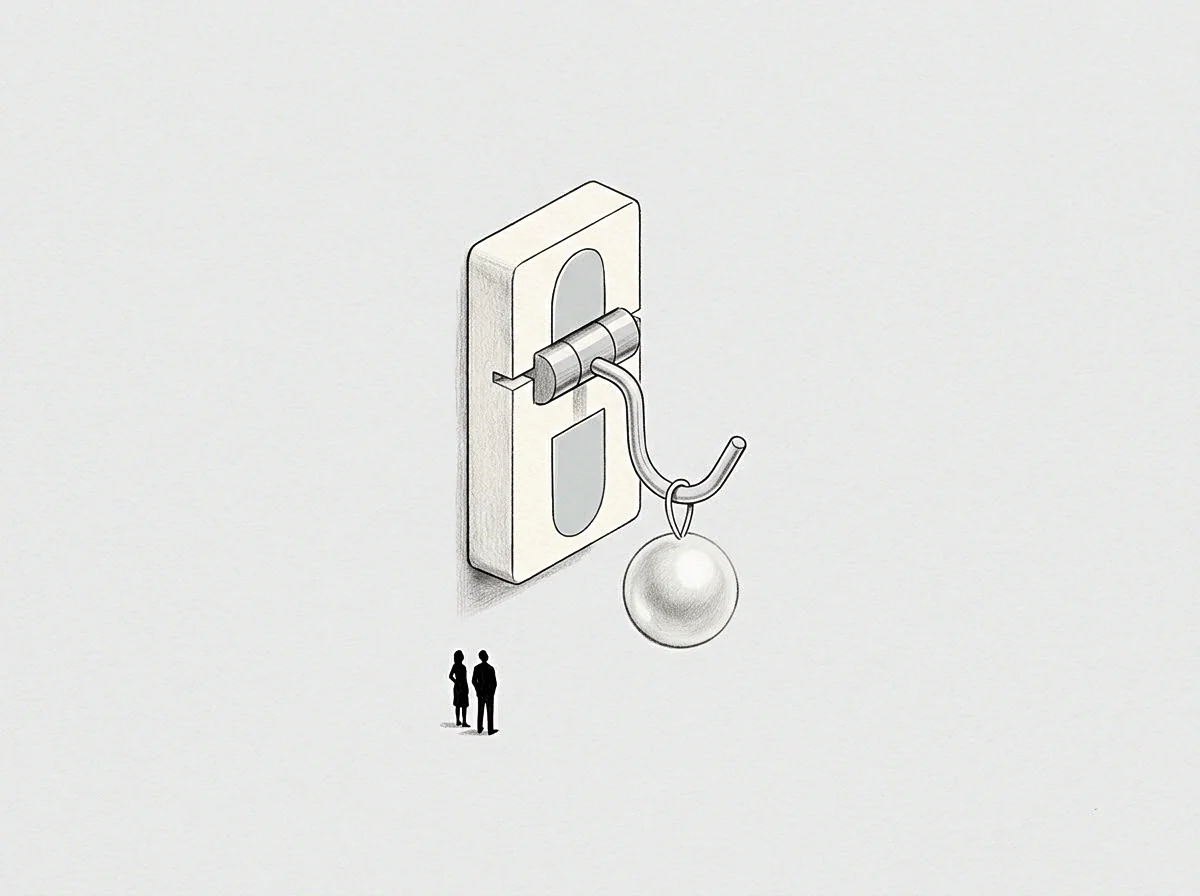
Calibrating Regulatory Quotas
Capacity quotas provide clear mathematical boundaries for executive availability. An executive allocates a maximum of four hours per week to unstructured personal check-ins. Once that quota is exhausted, additional requests rollover into the subsequent week.
This quota establishes a hard scarcity signal across the organization, prompting team leads to reserve executive escalations for authentic, high-impact operational roadblocks.
Quotas must respond to macroeconomic and firm conditions. During critical fundraising windows or technical architecture redesigns, leadership dials regulatory quotas down to zero. The organization receives advance notification that executive attention is fully dedicated to external capital or product survival, transferring internal stabilization duties to functional department heads.

Protocols for Intake Containment
Containing unbudgeted absorption demands strict procedural protocols. When a team member initiates a conversation centered on personal anxiety or operational frustration, the leader applies a three-part containment sequence: identifying the underlying objective problem, extracting the actionable operational component, and returning ownership of the emotional response to the initiator.
The leader avoids providing open-ended comfort. Instead, the leader asks: what concrete technical or operational decision needs to be executed right now? This question converts subjective emotional distress into objective decision trees.
If no operational decision exists, the conversation terminates. Unmeasured emotional intake expands until personal reserves deplete entirely.

Stop
Every structural system must incorporate a definitive circuit breaker when capacity thresholds are breached. When biological markers signal acute allostatic overload, the executive must possess predefined protocols to halt incoming relational transmission entirely. The absolute stop prevents long-term executive burnout and preserves firm continuity during sustained organizational strain.
Implementing a terminal stop requires separating personal identity from organizational survival. Founders frequently conflate personal availability with company commitment, believing that stepping back from constant emotional co-regulation signals leadership weakness. In reality, an executive operating in chronic exhaustion endangers the enterprise far more than a planned communication blackout.
Unscheduled regulatory absorption expands to consume whatever biological stamina remains unprotected.
When firm governance incorporates explicit operational halts, organizational stamina normalizes across the leadership structure.

The Execution of Terminal Settlement
Executing an operational stop involves severing non-essential communication conduits for a predetermined duration. The executive informs the board and direct reports of a complete intake closure, redirecting operational authority to interim functional deputies. During this window, no unstructured emotional escalations reach the founder desk, enabling the autonomic nervous system to downregulate from chronic fight-or-flight vigilance.
Emergency procedures govern genuine corporate crises. A crisis threshold is defined strictly: legal injunctions, major system security breaches, or unexpected cash-runway disruptions. Operational disputes, employee discontent, and investor nervousness fall entirely outside emergency designations.
The limit protects the operational core.

Longitudinal Stability Across Leadership Systems
Long-term leadership endurance depends on sustaining these capacity allocation mechanisms across the entire enterprise lifecycle. As companies expand, the nature of emotional friction shifts from early survival panic to mid-stage political tension and structural realignment. Without established capacity gates, founders find themselves perpetually trapped in emotional mediation, even with hundreds of employees and extensive executive suites.
Organizations that formalize capacity allocation mechanisms build self-reliant, durable management tiers. Managers trained under gated leadership cannot outsource emotional regulation upwards; they cultivate independent problem-solving capabilities, strategic composure, and team-level resilience. The firm transforms from a fragile apparatus sustained by a single exhausted founder into an institutional organism capable of weathering significant market volatility.
Whether an organization can mature beyond founder-dependent nervous systems without an explicit institutional buffer remains an active operational question across venture environments.