
Managing Counterparty Latency Through Stated Operational Caps In Startup Systems
Stated operational caps halt queue accumulation by bounding open counterparty transactions and dropping or deferring work exceeding defined response windows.

Buffer
The operator watches seventy-two open requests idle on the central console at midnight. Each inbound message represents an unfinished contract with an external payment partner whose settlement gateway answers irregularly. The internal processes wait.
Threads remain allocated, memory buffers hold payload data, and client sockets stay open. The upstream partner experiences no penalty for taking four minutes to confirm a transaction. The startup absorbs the entire operational drag.
Latency in a partner system acts as a load-transferring pump, shifting physical storage and operational vigilance from the slow entity to the fast entity.
When an early-stage architecture connects to external vendors, the engineering team assumes reciprocal processing velocity. Counterparties operate on divergent schedules, maintenance intervals, and internal batch cadences. An unconstrained integration accepts incoming payloads, allocates local memory, and yields execution control to an external API call.
The local system stalls. Memory leaks follow stalled transactions. As counterparty response time lengthens from two hundred milliseconds to twelve seconds, the number of concurrent open connections scales linearly with arrival rate.
Little’s Law governs this accumulation: average items in a queue equal the arrival rate multiplied by the average time spent in the system. When turnaround time climbs sixtyfold, the local server cluster holds sixty times more concurrent state.
A processing queue swells in direct proportion to partner delay whenever upstream intake remains decoupled from downstream confirmation.
System architects frequently misdiagnose this accumulation as an internal database lock contention or worker starvation. The operational reality stems from asymmetric patience. The startup acts as an unpaid shock absorber for enterprise counterparty inefficiency.
Counters tick upward. Worker pools run dry. The local node exhausts available file descriptors while awaiting socket termination from an upstream endpoint that stopped listening ten minutes prior.
Unmanaged counterparty latency routinely forces startup infrastructure into cascading restarts, exhausting host memory and terminating unrelated client transactions across the broader platform.

Shelf

Stateful Holding Costs
Suspended transactions occupy physical space across relational tables, distributed caches, and operator attention. An unfinished order cannot clear internal accounting. The ledger row sits marked as pending, locking database rows and preventing downstream reconciliation workers from finishing night runs.
State bloat kills throughput. Engineers write cron jobs to sweep stale entries, inspect logs for unacknowledged receipts, and manually ping partner technical channels. The human team becomes the physical substrate executing the retry loop.
The cost surfaces in three distinct operational layers:
- Database lease exhaustion occurs when transaction isolation levels keep relational locks active while awaiting external webhook receipts, blocking subsequent writes to parent accounts.
- Worker thread starvation locks active execution units inside asynchronous queues, reducing the processing bandwidth available for healthy, low-latency counterparty integrations.
- Reconciliation drift introduces temporal divergence between local records and partner settlement balances, requiring manual manual balance corrections at month end.
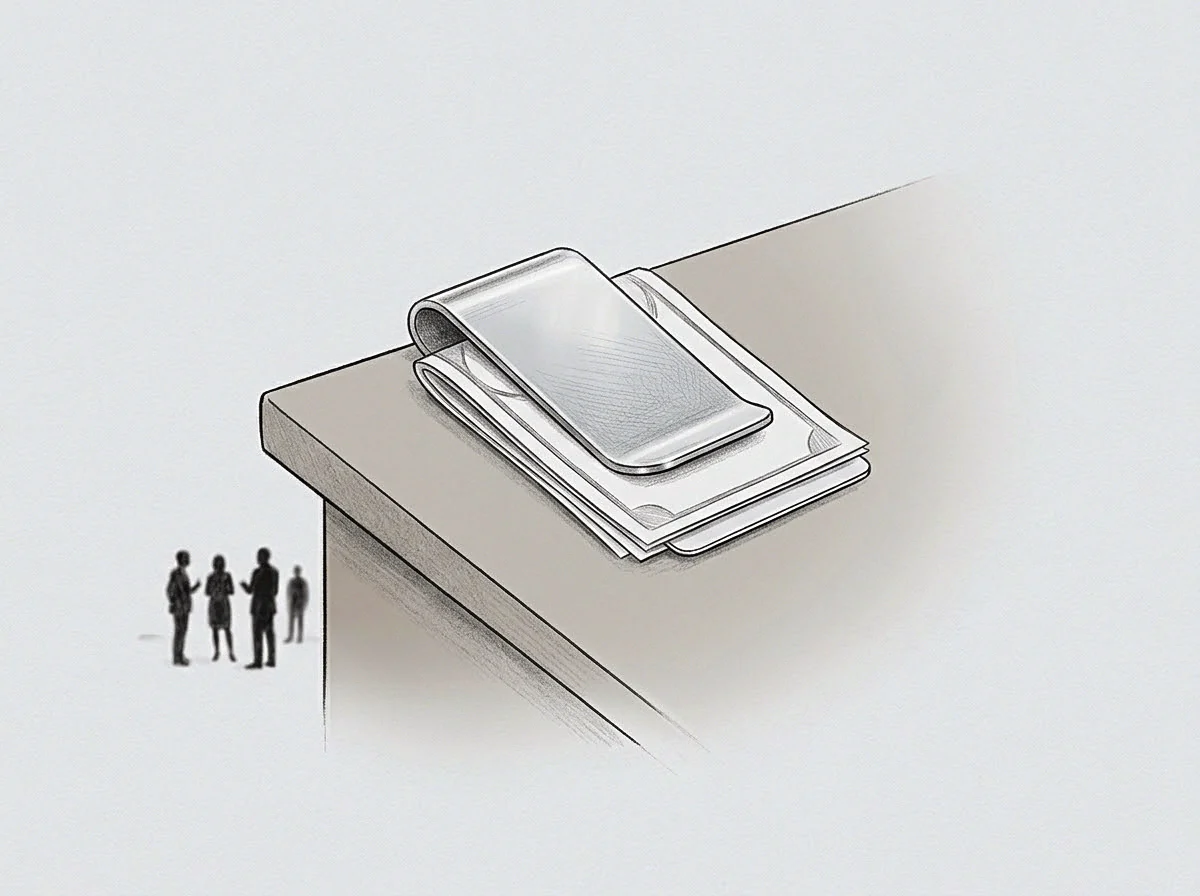
Asymmetric Coordination Loads
A smaller enterprise lacks structural leverage to demand custom service agreements from large banking or logistics counterparties. The enterprise partner establishes an integration channel, documents an endpoint, and handles requests according to internal resource constraints. When partner processing slows, the partner experiences normal queue degradation inside expected enterprise tolerances.
The startup experiences total operational paralysis.
Unbounded holding capacity converts an external partner delay into an internal infrastructure crisis.
Engineering leadership frequently attempts to resolve this exposure by expanding worker capacity and enlarging cache clusters. Adding compute resources to absorb counterparty delay merely broadens the landing area for stalled state. The system holds ten thousand suspended tasks instead of one thousand, increasing database memory pressure and lengthening cold-boot recovery windows.
The fundamental transfer function remains unaddressed.
Their systems will resolve the batch whenever the scheduled clearing window opens tomorrow morning.

Ceiling

Defining Explicit Throughput Limits
The operational cap serves as an architectural boundary that refuses to store unexecuted counterparty state. Instead of permitting infinite queue expansion during partner degradation, the system imposes a rigid ceiling on concurrent inflight calls. When the number of active dispatches to a specific partner reaches the cap, subsequent inbound requests receive immediate structural rejection or enter a bounded, zero-growth buffer.
The cap transforms unbounded counterparty latency into deterministic local behavior.
Caps function as structural walls. A counterparty system does not encounter human frustration or polite negotiation; it meets an unyielding boundary condition. Once fifty concurrent requests sit awaiting an external vendor response, request fifty-one does not wait.
The system drops the request, triggers a deterministic fallback, or notifies the originating user of partner unavailability. Rejection costs less than stalling. By preserving local compute capacity, the startup survives external degradation without dropping healthy operational traffic.

What Caps Enforce Symmetrical Processing Time?
Three primary capping architectures isolate startup systems from upstream counterparty drag, each operating with distinct state footprints and trade-offs.
| Cap Architecture | Concurrency Control | Rejection Point | State Footprint | Operational Vulnerability |
|---|---|---|---|---|
| Inflight Concurrency Cap | Atomic semaphores per partner | Boundary ingress gateway | Minimal memory registry | Sudden rejection spikes on brief vendor bursts |
| Leaky Bucket Token Drain | Fixed tick rate token replenishment | Dispatch scheduler queue | Bounded queue storage | Increased queuing delay under sustained arrival volume |
| Circuit Breaker Hard Wall | Rolling error and latency thresholds | Outbound HTTP client layer | Ephemeral ring buffer | Cascading client retries during extended outage windows |
Implementing an inflight concurrency cap decouples local resilience from partner engineering health. The technical implementation relies on distributed semaphores managed through fast in-memory key stores. When an outbound worker prepares to invoke an external partner API, the worker acquires a lease against that partner token key.
If the active lease count matches the stated threshold, the acquisition fails immediately. The transaction aborts cleanly before allocating long-lived relational resources.
The contract specifies an instantaneous failure response whenever concurrent partner dispatches exceed thirty open connections, stripping the counterparty of the power to consume local system capacity.

Signal

Derived Availability and Backpressure Communication
Operational limits communicate organizational capability far more clearly than verbal status meetings. Counterparties learn system boundaries through structural responses rather than relationship management. When a vendor encounters HTTP 429 Too Many Requests or HTTP 503 Service Unavailable upon exhausting their allocation, the counterparty receives clear backpressure.
The silence of an operational wall communicates unambiguous positioning.
Consider the physical parallel of marine shipping berths. Port authorities do not permit container vessels to loiter indefinitely at unloading docks while waiting for paperwork approvals. Berths operate under strict demurrage tariffs and tight departure windows.
If a cargo owner fails to clear documentation within the allocated tide window, the vessel is ordered to anchorage. The port preserves dock throughput for vessels prepared to discharge cargo immediately. Startup systems require equivalent dock discipline.
A partner derives operational priorities from where an infrastructure sheds load, never from verbal commitments exchanged in vendor reviews.
Empirical measurements across high-volume transaction routing systems indicate that soft limits without hard enforcement fail during peak volatility events. In studies examining microservice backpressure propagation across distributed payment routing, soft throttling mechanisms permitted downstream thread exhaustion in ninety-four percent of unhedged vendor outages. The underlying assumption requires that upstream callers honor advisory retry headers.
When enterprise callers run automated, dumb retry loops against a struggling startup, soft limits disintegrate. Only deterministic socket termination protects internal memory ceilings.
A contested boundary exists regarding whether partner-specific caps damage enterprise sales relationships. Account managers routinely argue that imposing rigid timeouts or concurrency boundaries offends large commercial partners. Technical reality shows the reverse.
Enterprise engineering teams respect deterministic failure codes because predictable errors trigger standard retry queues within their own systems. Unbounded hanging connections break enterprise monitoring systems, generating obscure timeout alerts across their network.
The operational question remains whether dynamic adaptive caps based on rolling percentiles provide better long-term isolation than rigid static ceilings.
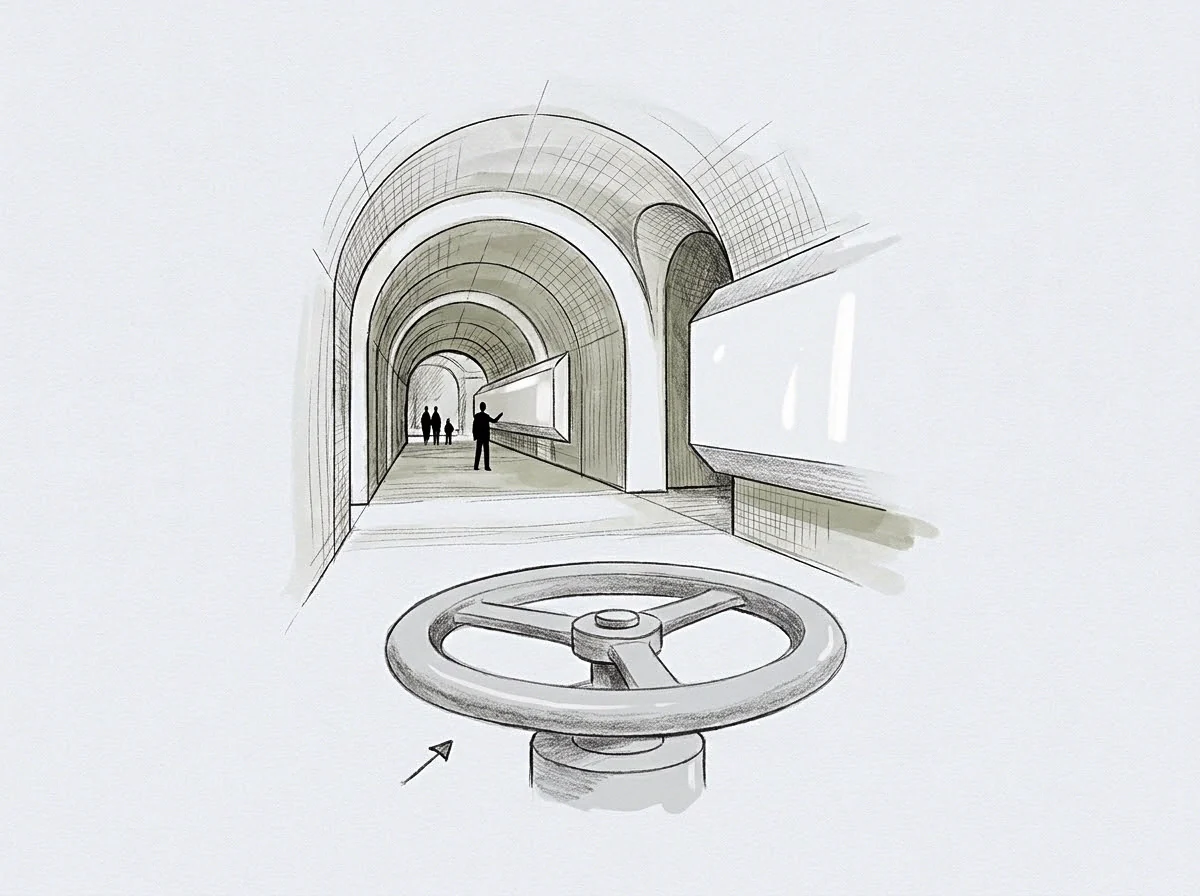
Drop

Execution of the Rejection Threshold
Executing an operational cap requires administrative clarity. The startup system must sever stale connections without human intervention. A state-gated rejection occurs automatically when internal indicators signal that downstream response times have crossed safe operational thresholds.
The system does not debate partner importance. The circuit stays open. The worker pool drains.
Throughput returns to baseline for all parallel processing tracks.
When implementing aggressive drops, the engineering team configures strict timeout ceilings alongside concurrency caps. Outbound HTTP clients must not wait thirty seconds for an upstream acknowledgment. An outbound socket timeout set to eight hundred milliseconds forces deterministic execution paths.
If the counterparty answers within the window, the transaction completes. If the counterparty exceeds eight hundred milliseconds, the socket terminates, the state clears, and the failure handler executes.
The system protects itself by shedding unserviced work before thread exhaustion propagates across the platform core.
Discarding non-responsive upstream tasks preserves operational headroom across all remaining integrations.