
Managing Residual Stress Spillover Across Isolated Operational Streams When Concurrency Caps Break
Residual stress spills across isolated streams when concurrency caps break because administrative silos share a single biological budget and nervous system.

Breach
Four screens stayed active until two in the morning while concurrent messages from distinct operational tracks converged on a single terminal. A client escalation arrived beside an emergency shareholder notice and an unresolved staff grievance. The operator remained outwardly calm, which observers read as surplus capacity.
Incoming volume escalated immediately. The system met bone.
Operational isolation functions as an administrative convenience rather than a biological barrier. An executive maintains separate workspaces, separate calendars, and distinct communication channels under the assumption that compartmentalization prevents cross-stream contamination. The biological organism beneath those tools possesses a single metabolic budget and one unified sympathetic nervous system.
When the stated limit of three concurrent high-stakes projects breaks under unforeseen friction, residual autonomic activation does not respect administrative silos. Neuroendocrine markers, specifically sustained elevations in salivary cortisol and circulating catecholamines, persist long after an acute operational crisis subsides. That chemical persistence alters cognitive appraisal for every incoming event across unrelated tracks.
A calm presentation under sustained load operates as an invitation for incoming volume.
Laboratory trials in occupational physiology demonstrate that task-switching under acute evaluative pressure degrades executive working memory for subsequent, unrelated tasks. This finding rests on controlled dual-task paradigms administered to working professionals under acute social stress evaluators. The conclusion would face revision if longitudinal field studies of naturalistic executive behavior showed rapid baseline cortisol clearance during multi-channel operational emergencies without planned recovery intervals.
In practice, that rapid clearance does not occur. The operator finishing a hostile equity negotiation brings an elevated heart rate and truncated cognitive bandwidth into an ordinary product review thirty minutes later. Irritation registers before the slide deck loads.

Administrative Walls Against Biological Channels
Administrative structures treat distinct projects as autonomous containers. An isolated stream contains its own budget, deliverables, personnel, and risk profile. The human sitting at the intersection of five such containers operates with a single prefrontal cortex.
When project four ruptures, attention fragments. The capacity to inhibit habitual reactivity deteriorates across projects one, two, and three simultaneously.
The founder mistakenly diagnoses the resulting cross-stream friction as a failure of professional discipline. An abrasive reply sent to an innocent supplier gets classified as poor emotional control, whereas the reaction reflects systemic saturation. The cap on concurrent streams broke four hours prior, and the residual autonomic arousal converted benign operational ambiguities into perceived threats.
Unaddressed spillover degrades the quality of every simultaneous negotiation, compounding error rates across unrelated business units.
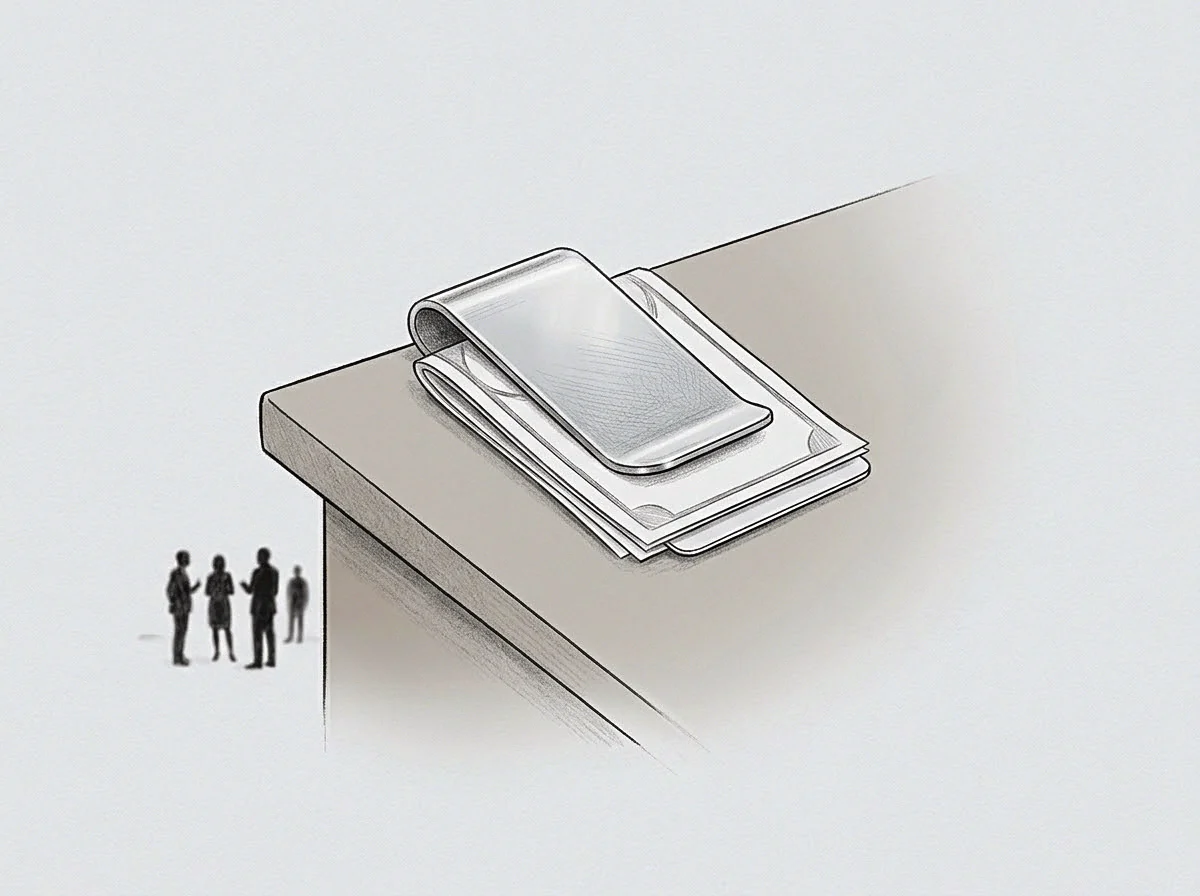
Siphon
Depleted somatic reserves redirect attentional focus toward the most emotionally volatile channel available. When concurrent demands exceed an operator’s stated limit, cognitive resources drain away from methodical strategic execution toward immediate crisis containment. The process resembles an unmetered line draining pressure from an entire hydraulic assembly.
Allostatic load accumulates through repeated, unbuffered operational surges. Each broken concurrency ceiling demands neuroendocrine adjustment, extracting a physiological toll that outlasts the initiating incident. Chronic elevation of circulating glucocorticoids alters synaptic plasticity within the hippocampus and prefrontal cortex, biasing decision pathways toward defensive risk aversion or reckless avoidance.
This bodily drain operates beneath conscious awareness. The individual believes they are evaluating a contract on its commercial merits while their physiology clamors for immediate closure to end metabolic exposure.
A physiological system running at maximum output treats routine operational ambiguity as an emergency.
Observing systemic drawdown across concurrent operations reveals recurring failure modes:
- Cognitive tunnel constriction forces attention onto immediate threat cues while blinding the operator to peripheral strategic risks across parallel projects.
- Affective misattribution directs somatic tension generated by an acute dispute onto unrelated colleagues presenting normal operational updates.
- Throttling paralysis prevents timely decisions on secondary tracks because executive bandwidth remains occupied with primary containment.
- Covert contract escalation creates unspoken expectations of reciprocal endurance from subordinates who never agreed to absorb systemic excess.
Sustained saturation alters the transfer function of the person in the seat. Input that once produced a structured memo now generates abrupt silence or impulsive approval. The channel fell quiet.
That silence carries consequences for dependent teams waiting on critical sign-offs.

Latent Carryover Across Unconnected Tracks
Emotional volatility carries momentum across separate functional divisions. A chief executive who absorbs a severe regulatory notification does not discharge that chemical activation simply by switching software applications. The next interaction, perhaps an interview with an executive candidate, occurs under the shadow of defensive physiology.
The interview candidate receives skeptical, truncated interrogation rather than balanced evaluation.
The cost lands directly on operational throughput. Team members sensing executive volatility alter their reporting behavior, withholding ambiguous problems to avoid explosive reactions. A stated term covering communication pacing limits incoming messages to specified hours, preventing midnight escalations from resetting the nervous system before sleep.

Floor
Structural limits establish the baseline capacity below which operational performance deteriorates irrevocably. A stated limit serves as a rigid physical barrier, halting systemic expansion before biological collapse occurs. When organizations rely on personal goodwill instead of structural stops, operational demands expand to fill all available physiological headroom.
Social baseline theory demonstrates that relational proximity and reliable structural interdependence reduce the metabolic cost of environmental load. When an individual operates without dependable institutional walls, the neural circuitry responsible for vigilance remains chronically active, burning glucose and elevating baseline cardiovascular output. In maritime shipping, bulkheads isolate flooded holds to keep the entire vessel buoyant during outer hull compromise.
Without rigid internal bulkheads, incoming water shifts freely across compartments, destabilizing the vessel through free surface effect until the entire structure capsizes. Human operators experience an identical dynamic when operational streams lack impenetrable structural floors.
| Operational Attribute | Compartmentalized Buffering | State-Gated Throttling |
|---|---|---|
| Structural Mechanism | Calendar blocking and administrative division | Mandatory queue rejections based on somatic headroom |
| Failure Point | Surges override soft administrative markers | Hard refusal trips when active stream count reaches ceiling |
| Spillover Risk | High residual autonomic leakage across streams | Isolated within breached stream while others freeze |
| Metabolic Overhead | Continuous low-grade allostatic strain | Acute, bounded containment cost followed by recovery |
Reserve capacity dropped to zero. The operator absorbed the delta. Attempting to manage five concurrent high-stakes initiatives through willpower alone guarantees systemic contamination.
True containment requires mechanical stops rather than aspirational intentions.
A limit stated without an enforceable refusal mechanism functions as wishful thinking.
The desk cannot fully defend whether individual physiological thresholds can be expanded through long-term habituation without incurring hidden neuroendocrine damage. Evidence regarding elite operational endurance remains clouded by survivorship bias and self-reporting anomalies. Facing this empirical ambiguity, a prudent operator implements structural stops well before reaching self-assessed psychological limits, preserving an uncommitted margin of biological capacity for unforeseen friction.
Enforceable limits protect both the operator and the venture. When concurrent commitments threaten to breach the structural floor, the operator sheds secondary lines through explicit handoffs or outright cancellations. Load travels along the path of least resistance until an immovable object blocks further transmission.

Valve
Regulating pressure requires dynamic mechanisms that drop non-critical load automatically when input volume exceeds throughput capacity. A functional operational system incorporates relief mechanisms that shed low-priority streams before high-priority commitments suffer catastrophic degradation. Relying on an exhausted human to manually decline incoming demands during a crisis ensures systemic failure.

Does Isolated Execution Withstand Sustained Capacity Saturation?
Parallel processing models break down once common infrastructure becomes overwhelmed. In computational architectures, thread contention on shared memory busses degrades throughput faster than adding more processors can resolve. In executive management, the single human brain serves as the shared memory bus.
When four operational emergencies compete for working memory, processing pauses across all channels. Adrenal output stayed elevated.
Implementing dynamic relief requires predefined operational priorities. The founder establishes deterministic routing rules long before crisis conditions emerge:
- Triage invocation triggers an immediate moratorium on speculative commercial discussions whenever two primary operational lines enter acute failure modes.
- Asynchronous isolation converts synchronous meetings into batched written logs, preserving three uninterrupted hours of cognitive focus for structural remediation.
- Delegation shedding reassigns operational approvals on secondary tracks to functional deputies without requiring executive review.
The wall stood. Fatigue altered the transfer function. When these valves function correctly, the operator remains insulated from secondary friction, preserving executive bandwidth for resolving the primary breach.
The counterparty on a paused secondary track observes the sudden silence and assumes their initiative has lost executive favor or organizational backing.
Debt
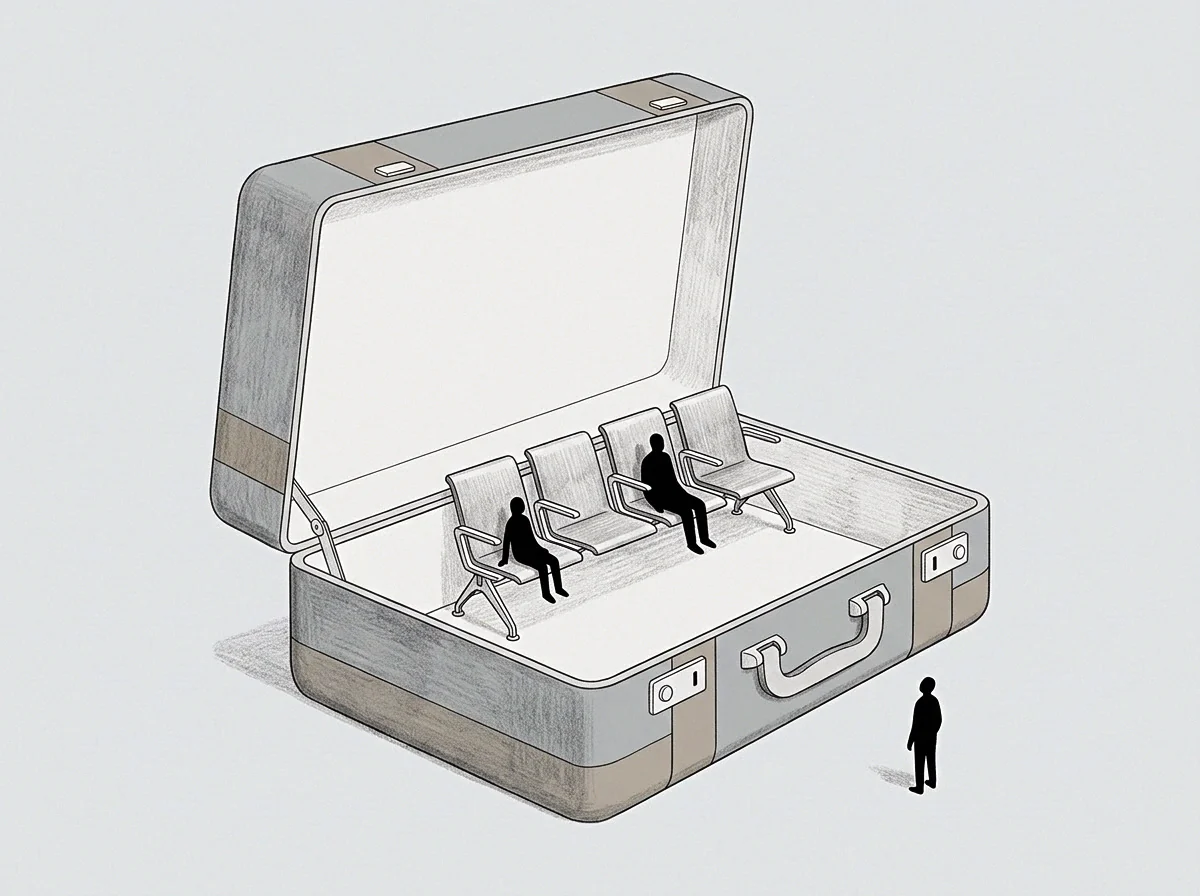
Uncontained residual strain creates compounding obligations against future cognitive capacity. When concurrency caps rupture, the immediate operational fire may be suppressed, but the physiological and relational damage lingers as an unliquidated liability. This biological deficit demands eventual settlement through mandatory physical shutdown, acute illness, or cognitive impairment.
The second contract cracked. A founder who forces their physiology through sustained multi-stream saturation draws down biological reserves that take weeks of rest to restore. The damage extends into relational systems.
Subordinates who absorbed spillover during prolonged operational emergencies develop defensive detachment, reducing their future willingness to exercise discretionary effort. Relational friction increases, raising the transaction costs of future collaboration.
Settling biological obligations remains non-negotiable regardless of commercial urgency.
A stated term holds. Silence communicated the true boundary. Managing residual spillover requires understanding that human capacity cannot be scaled through administrative categorization.
When concurrency caps break, true recovery begins by halting the intake of new commitments and letting active lines settle to their natural baseline.
Whether an organization can deliberately train its leadership layer to identify somatic saturation markers before cross-stream spillover impairs commercial outcomes remains an open question across operational management and occupational health.