
Setting Stated Intake Terms to Filter Operational Load
Stated intake terms filter operational load by enforcing objective submission standards before unrefined tasks enter executive processing channels.

Port
An operator sits before three incoming messages delivered across eighteen minutes on a Thursday evening. Each message asks for an immediate decision on scope, budget allocation, or vendor reassignment. The requests carry no documentation, no pre-cleared criteria, and no reference to the agreed weekly schedule.
The sender treats the operator as an unmetered processing unit. Because no intake conditions exist in writing, the sender assumes continuous reception.
The absence of an intake rule functions as an invitation to transfer operational friction upward. When an organisation runs without stated terms, every ambiguous task flows directly toward whoever absorbs tension with the least outward complaint. The recipient attempts to clear the queue through sheer exertion, working past midnight to maintain equilibrium.
This response reinforces the pattern. The sender registers rapid turnaround and logs the channel as an open conduit for raw, unprocessed demands.
Unstated processing standards convert individual availability into an unmetered organizational shock absorber.
Incoming volume expands to fill whatever silence it encounters. Without explicit entry specifications, work arrives in whatever state the sender abandoned it. The recipient receives fragmented notes, half-formed proposals, and urgent appeals that bypass evaluation.
Filtering this material requires more cognitive energy than executing the actual task. Fatigue sets in early in the cycle.
The physiological penalty surfaces rapidly under sustained conditions of unmanaged intake. Baseline cortisol levels remain elevated when an operator anticipates irregular interruptions at all hours. Research in occupational physiology demonstrates that unpredictable demand spikes degrade executive functioning faster than high, steady workloads with fixed parameters.
The operator loses the capacity for sustained synthesis. Every incoming notification triggers autonomic arousal, forcing the body to prepare for emergency intervention.
The unstated limit leaves the sender operating under false assumptions of infinite capacity. When the recipient collapses or responds with irritation, the sender registers the friction as personal hostility rather than structural exhaustion.
Current
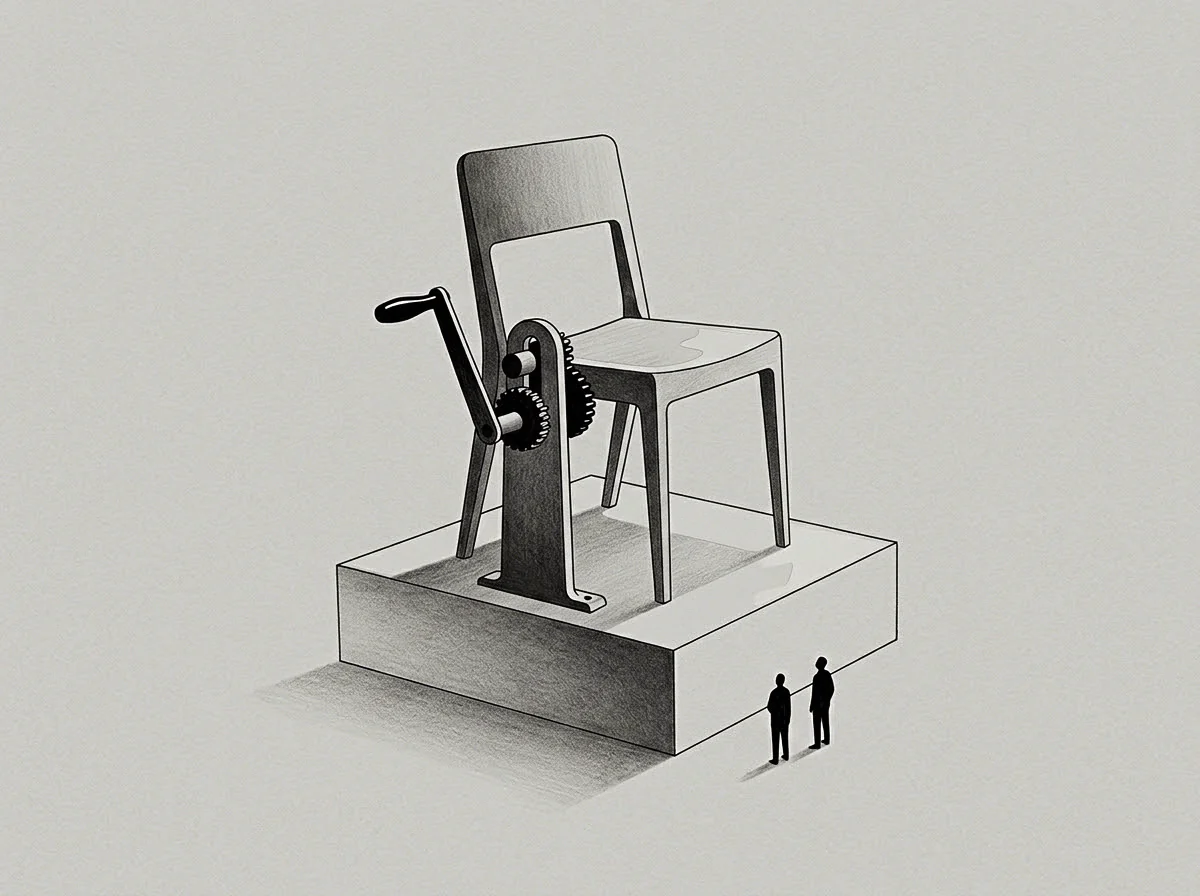
Operational load behaves like current in an electrical circuit, following the path of lowest resistance until an obstacle forces redistribution. In organisational systems, human regulators routinely act as variable resistors, absorbing spikes to protect surrounding components. This protective posture hides systemic failures from leadership.
The team assumes the workflow succeeds, yet one person absorbs the heat.
A control loop requires a clear setpoint and an error detector to govern system behavior. When an operator acts as the sole intake filter without fixed rules, the setpoint becomes unstable. The operator adjusts the threshold based on transient energy, patience, or guilt.
On Monday morning, a sloppy brief gets rejected. On Thursday night, the same brief gets accepted and rewritten by the exhausted operator. The system cannot learn under variable feedback.
A regulator that absorbs variance without recording an error signal guarantees the repetition of the breakdown.
Load-transferring systems test every surface they encounter. When team members realise that incomplete submissions pass through with minimal delay, submission quality deteriorates. The sender does not act out of malice.
The sender responds to systemic incentives. Why spend two hours structuring an operational brief when the founder or lead operator will complete the analysis for free?
The dynamic creates an asymmetrical relationship between the producer of the request and the processor. The producer offloads cognitive labor, externalising the effort of definition onto the intake desk. Over months, this creates an operational bottleneck centered entirely on the person attempting to manage the flow.
Resistance must reside in the structural channel rather than the emotional state of the processor.

Clause
Stated intake terms replace personal negotiation with fixed procedural architecture. When an intake policy exists as an explicit standard, incoming requests meet an inanimate rule rather than a person’s immediate willingness to comply. The operator points to the documented clause, removing personal discretion from the initial triage.
This structural buffer protects both working relationships and operational focus.
Intake terms define the minimum viable standard for any operational request seeking review, execution, or capital. These conditions must specify exact elements before a submission enters the active queue:
- Problem specification defining the exact business friction and quantitative operational impact without narrative padding.
- Resource declaration outlining the exact capital, personnel hours, and tooling required for completion.
- Deadlines with lead times establishing delivery dates based on standard turnaround windows rather than perceived sender urgency.
- Pre-submission verification confirming that lower-tier approvals, documentation checks, and data collection are fully complete.
The implementation of intake terms shifts the cognitive burden back to the sender. If a request arrives without the required attachments or financial models, the ticket rejects automatically or returns with a standard notice. The operator does not read incomplete materials.
The operator does not edit poorly structured paragraphs. The rule enforces compliance before human eyes touch the asset.
Intake rules return the burden of operational definition to the party originating the request.
Consider two operating environments processing forty weekly capital allocation requests. In the first arrangement, submissions arrive via direct messaging, email threads, and informal verbal requests without prerequisites. In the second arrangement, submissions require a standard three-page operational memo containing financial models, contingency paths, and departmental head sign-off, submitted seventy-two hours prior to weekly review.
| Operating Variable | Unstructured Intake Process | Standardised Intake Terms |
|---|---|---|
| Weekly triage hours spent by operator | 26.5 hours | 4.5 hours |
| Rate of incomplete submissions received | 68 percent | 8 percent |
| Turnaround predictability on approved tasks | High variance, 2 to 14 days | Stable, fixed at 5 business days |
| Interpersonal friction incidents per month | 14 reported conflicts | 1 reported conflict |
The contrast stems from where the gate sits. In the unstructured process, the operator evaluates the request while simultaneously deciphering missing details, negotiating timeline adjustments, and chasing documentation. In the structured process, incomplete requests never cross the perimeter into active operational memory.
The mandatory submission clause requires complete operational specifications seventy-two hours prior to review, converting chaotic inputs into scheduled, uniform batches.
Ping
Communication latency reveals the true operational boundaries of an enterprise. When an operator answers an electronic message within ninety seconds, the recipient derives a rule: this channel operates synchronously. The sender treats the operator as an interruptible asset.
If the operator subsequently takes four hours to answer, the sender experiences the delay as an anomaly or a personal slight.
Availability is an empirical deduction made by observers based on historical response times. It cannot be dictated through occasional declarations or away messages. If an operator claims to be focused on high-level operational execution but answers trivial status inquiries across twelve internal channels throughout the day, the organization concludes that interruptions are entirely acceptable.
The ping signals priority.
To establish functional filtering, an organisation separates intake channels by urgency, medium, and expected turnaround. Synchronous channels remain reserved for true operational emergencies, defined as events causing severe financial loss or system downtime. Asynchronous tools handle standard administrative and strategic requests under fixed service windows.
A silent channel provides the operational isolation required to resolve complicated technical debts. When an operator sets predictable windows for intake review, such as ninety minutes starting at ten in the morning and forty-five minutes at four in the afternoon, the surrounding organization adapts. Senders stop expecting real-time answers to non-critical inquiries.
They begin resolving minor operational ambiguities independently rather than routing them to the operator.
If that request had been truly critical, the channel would have lit up immediately, but the silence indicates it can wait until the morning review.

Tether
A relational contract binds team members through unspoken mutual expectations. When an operator has historically accepted every burden, altering intake terms disrupts this informal equilibrium. Colleagues who previously relied on unmetered support may perceive the sudden appearance of formal gates as a withdrawal of commitment.
This relational friction causes many operators to abandon stated limits shortly after announcing them.
Holding an intake boundary requires managing the discomfort of another person’s temporary inconvenience. When an incomplete brief is returned without execution, the sender often experiences frustration. The operator feels an impulse to intervene, rescue the project, and absorb the stress.
Yielding to this impulse destroys the credibility of the intake terms. The system recalibrates to the reality that the rule yields under pressure.
A stated term that yields under immediate interpersonal resistance ceases to function as a systemic boundary.
Intake terms protect institutional longevity over short-term comfort. By refusing to process unrefined operational load, the operator preserves cognitive headroom for systemic improvements, capital efficiency, and core organizational health. The sender gradually learns that clear definitions produce faster executions.
Mutual trust returns, anchored in predictable competence rather than continuous individual sacrifice.
Whether an organisation can maintain operational discipline when external economic volatility increases and every stakeholder claims their emergency supersedes the intake terms remains an unresolved tension for leadership teams.