
Stated Priority Limits Keep Operational Requests Outside Executive Headroom
Stated priority limits keep operational requests out of executive headroom by converting personal availability into explicit, system-enforced boundaries.

Ceiling
Four client escalation threads sit open alongside three operational approval queues on a Thursday afternoon. Messages arrive every six minutes, each asking for a minor decision, a momentary review, or a short clarification on budget allocations. The operator answers them as they land.
Total time spent per interaction remains under two minutes, but context switches across four hours reach forty-eight. Executive working memory fills with tactical state variables, clearing out the structural buffer needed for capital allocation and long-term positioning, halting strategic evaluation completely.
Executive headroom operates as a bounded processing window. When incoming tactical load consumes working memory, high-level reasoning capacity degrades in direct proportion to the volume of active open loops. Working memory holds roughly four distinct conceptual chunks concurrently during complex problem solving, and each unrouted operational request occupies one of these slots.
A leader carrying four unresolved operational inquiries possesses zero remaining capacity for structural risk assessment.
Unhedged tactical requests consume processing capacity long before they consume clock time.
Stress physiology demonstrates that continuous micro-interruptions elevate core cortisol levels and maintain high baseline autonomic arousal, triggering immediate cognitive narrowing. The brain prioritizes immediate threat resolution over abstract scenario planning. Operational inquiries, while individually trivial, trigger identical physiological orienting responses as major existential threats.
The biological system treats every incoming ping as a live task requiring immediate resolution.
When tactical inquiries enter executive headroom without filtering, executive function shifts from proactive governance to reactive sorting. Strategic tasks are deferred to evening hours when autonomic recovery ought to occur, accumulating allostatic load over extended quarters. Executive decision quality drops long before working hours decrease.
The organizational consequence of unhedged request streams is strategic drift punctuated by late-stage operational intervention.

Infiltration
Operational requests expand to fill every unmonitored communication channel. Without clear boundaries, teams default to pushing decisions upward. Escalation carries zero cost for the sender while transferring total analytical load to the receiver, creating a systemic incentive for continuous operational updates and permission-seeking behavior.
The absence of explicit priority limits generates a load-transferring dynamic within organizational hierarchies. Subordinates offload ambiguity to executive layers because executive processing is perceived as infinite and freely available. Lacking a stated wall, continuous pressure builds against executive headroom, allowing tactical requests to infiltrate executive attention through three distinct failure modes.
- Ambiguity Exploitation occurs when vague operational mandates allow managers to redirect routine choices to senior leaders under the guise of alignment.
- Priority Dilution happens when non-critical operational updates share communication channels with urgent strategic alerts, forcing executives to manually filter incoming signals.
- Implicit Contract Bilking develops when unspoken expectations permit continuous off-hours pinging, treating executive personal bandwidth as an unpriced insurance policy for team hesitation.
Psychological contract research indicates that unspoken boundaries invite perpetual testing by counterparties. Team members assume full availability until they encounter a firm barrier. When limits exist only as internal executive resentment rather than stated operational rules, team members continue escalating routine decisions without realizing they erode leadership capacity.
Silent availability creates an unpriced option that operational teams exercise continuously.
Consider a scaling software organization operating across three time zones without explicit communication parameters. Product managers tag the chief executive officer on routine bug triage threads at midnight, and the founder responds to maintain momentum. Within six weeks, the product team stops making independent feature trade-offs entirely, waiting instead for executive validation on minor user interface changes.
Operational throughput slows while executive fatigue reaches critical levels.
If the team is told that executive review is available for any issue, they will bring every issue to executive review to eliminate their own personal operational risk.

Bracing
A stated priority limit acts as a structural wall within organizational architecture. It converts executive bandwidth from a personal trait into an explicit, non-negotiable object. Establishing a wall requires declaring exactly which request types qualify for executive attention and which must remain within operational layers.

What Happens When an Urgent Operational Bypass Occurs?
Operational emergencies occasionally break standard request channels. A stated priority limit handles these bypasses by defining explicit financial, reputational, or security thresholds that trigger immediate executive escalation. Requests failing to meet these hard parameters bounce back to team leads automatically.
- Define explicit cardinal parameters for executive intervention, including financial impacts exceeding specific thresholds or critical compliance failures.
- Establish asynchronous intake channels dedicated exclusively to non-urgent operational updates, reviewed at fixed daily intervals.
- Mandate complete contextual analysis and options assessment from operational leads prior to any escalation request.
- Implement strict channel isolation, restricting real-time push notifications to verified existential operational threats.
A limit stated as an external rule protects capacity without requiring real-time emotional defense.
When boundaries are formalized through clear criteria, the friction of enforcement shifts from the person to the system. Control theory shows that setpoints function effectively only when feedback loops are deterministic. An executive who manually rejects operational inquiries based on current mood creates inconsistent feedback, encouraging further boundary pushing.
Conversely, a hard rule filtering incoming requests establishes a deterministic setpoint.
Research in affective neuroscience confirms that holding unstated boundaries creates constant decision fatigue. The individual must continually decide whether to respond, negotiate, or dismiss each incoming request. A stated priority limit automates this choice, allowing the explicit rule to perform the filtering work while leaving cognitive capacity intact for strategic processing.
The policy specifies that operational requests lacking a recommended decision path and financial impact calculation are returned unread immediately upon receipt.
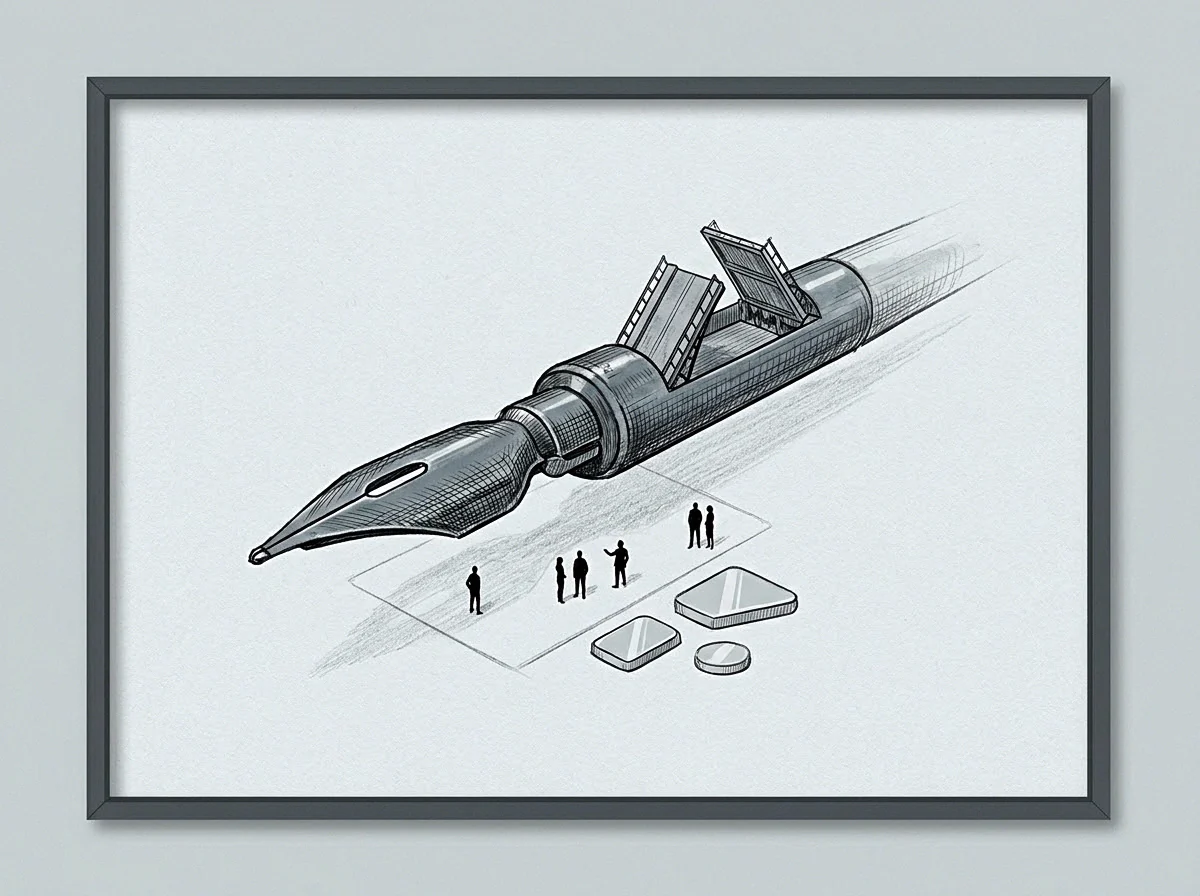
Relay
Routing structures ensure operational requests reach appropriate resolution layers without touching executive headroom. The architecture requires clear escalation paths, clear decision thresholds, and dedicated operational buffers. Effective delegation rests on formal structural gates rather than informal requests for restraint.
| Operational Criterion | Direct Executive Escrow | Tiered Priority Threshold | Asynchronous Batch Routing |
|---|---|---|---|
| Executive Context Switching | High (continuous micro-interruptions) | Low (filtered by threshold rules) | Zero (confined to scheduled windows) |
| Operational Escalation Latency | Low (immediate executive response) | Moderate (gated by tier validation) | High (queued until batch processing) |
| Subordinate Decision Autonomy | Atrophied (dependent on alignment) | High (forced operational ownership) | Moderate (bounded by batch guidelines) |
| Systemic Single-Point Risk | Critical (executive bottleneck) | Distributed (contained in tiers) | Low (buffered by operational queues) |
Structuring operational relays requires dividing tasks by decision gating rather than urgency cues. State-gated acts depend on current system capacity and risk tolerance, whereas decision-gated acts proceed automatically once defined criteria are satisfied. Executive headroom remains reserved exclusively for state-gated allocation decisions.
- Tiered Threshold Gating routes operational approvals through predefined financial and scope boundaries before reaching executive visibility.
- Asynchronous Batch Intake aggregates routine status updates into scheduled digest documents, eliminating real-time notification streams completely.
- Escalation Recourse Protocols return incomplete request submissions to operational owners without executive processing or commentary.
Organizational studies confirm that team performance improves when decision boundaries are clearly defined and enforced. Clear boundaries eliminate the ambiguity that drives continuous escalation. When operational teams understand exact operational limits, they develop independent problem-solving capacity rapidly.
Operational requests remaining below established financial or strategic thresholds belong exclusively within peer-level resolution circuits.

Clearance
Clearance represents the restoration of executive headroom through systematic enforcement of stated priority limits. It is an operational state characterized by low friction, low micro-interruption, and sustained strategic focus. Availability becomes a derived parameter calculated from system position rather than a constant public stance.
When operational requests stay outside executive space, strategic capacity expands naturally. The executive mind regains the working memory bandwidth required to evaluate market shifts, structural capital deployment, and long-term organizational architecture, allowing cognitive load to drop to sustainable baseline levels.
Executive headroom clears when availability is calculated from stated position rather than immediate responsiveness.
Social baseline theory demonstrates that humans conserve metabolic energy when environmental stability is high and cognitive demands are predictable. By establishing explicit priority walls, executives eliminate the continuous physiological strain of incoming tactical notifications. As autonomic stability returns, decision quality stabilizes across extended operational horizons.
A firm position regarding operational intake protects both executive wellbeing and team capability. Teams working under clear priority parameters develop stronger internal problem-solving mechanisms; they stop relying on executive oversight for routine execution, making organizational autonomy a functional reality.
The ultimate metric of effective priority limits is the complete silence of operational intake channels during strategic focus windows. When stated rules effectively filter routine requests, executive headroom remains open for complex analysis. System architecture holds the line, permitting sustainable leadership across long operational trajectories.