
Structural Capacity Partitioning for Founders Under Operational Load
Capacity partitioning protects executive reserves under high operational load by replacing personal tolerance with mechanical boundaries and throttles.

Grid
Four communication threads stay open past midnight while incoming requests build up in operational queues. The operator at the center absorbs every escalation directly. In high-friction operating environments, any unpartitioned asset turns into absorption material, as system strain naturally shifts toward whatever point yields under pressure.
Without clear partitions between administrative maintenance, technical direction, and strategic capital allocation, the entire system becomes permeable.
Partitioning divides finite physiological and cognitive capacity into distinct, non-fungible reserves. The human nervous system works within strict metabolic limits set by allostatic regulation models. When incoming demands exceed baseline restoration rates, operational efficiency drops along predictable lines.
Someone trying to serve as a universal routing node creates an operational bottleneck while draining the exact reserves needed for fundamental organizational choices.

Partitioning Against Total Exposure
Total exposure happens when every organizational disruption reaches the executive desk without filtering. Incoming signals force constant triage and shifting contexts, breaking focus. Research on task interference indicates that recovering cognitive focus after an interruption takes extended periods, often exceeding twenty minutes per incident.
Unregulated throughput keeps high-order reasoning perpetually on hold.
A structural limit functions when incoming pressure meets an explicit allocation boundary rather than human tolerance.
Dividing total bandwidth into distinct operational quotas isolates strategic execution from daily turbulence. An operator sets aside forty percent of active attention for system architecture, thirty percent for direct oversight, and thirty percent as inert capacity. This reserve segment stays entirely uncommitted during normal operations, absorbing system shocks without degrading core throughput when volatility hits.
The system relies on an inflexible distribution schedule.
Baseline Allostatic Budgets
Biological systems stay stable through active physiological adaptation. Under chronic operational overload, the continuous release of neuroendocrine mediators causes physical wear and neurovascular fatigue. This measurable depletion changes how executive leadership evaluates risk.
Overextended operators consistently trade structural solutions for immediate relief, building up compound operational liabilities across successive quarters.
Sustaining functional leadership under heavy volume requires an institutional buffer between external volatility and biological limits. Without structural partitioning, individual capacity deteriorates quickly, leaving the organization exposed to sudden operational failure.

Room
Physical environments shape cognitive boundaries with direct consistency. Working from a single desk through eighteen-hour cycles blurs strategic analysis together with administrative urgency. Establishing separate operational zones prevents working contexts from bleeding into one another.
Deep structural planning requires a workspace isolated from real-time monitoring tools.
Executive isolation preserves cognitive focus during acute operational crises. Removing communication hardware from deep-work environments creates a physical gap. Escalations collect in asynchronous queues outside the room, waiting for scheduled batch processing windows.
The physical boundary sets a firm operational limit.

Physical Enclosures for Strategic Effort
Spatial boundaries reinforce focus through environmental cues. At a tactical operations desk, immediate response drives every action. Moving to a dedicated planning area shifts focus toward high-level evaluation and capital allocation.
The table below outlines capacity allocation models observed in leadership under sustained operational load.
| Allocation Architecture | Direct Intervention Share | Reserved Inertia Quota | Failure Vector Under Sustained Load |
|---|---|---|---|
| Unpartitioned Reactive | Eighty-five percent | Zero percent | Executive collapse via severe cognitive exhaustion |
| Segmented Functional | Fifty percent | Fifteen percent | Queue latency across secondary administrative processes |
| Partitioned Structural | Thirty percent | Thirty-five percent | Localized operational friction requiring autonomous resolution |
The structural partitioning model intentionally accepts minor delays in peripheral tasks to protect core executive function. Secondary systems need localized pressure to build internal problem-solving capacity. Step-in intervention by leadership deprives those units of the chance to adapt.

The Ninety Day Inspection
Allocated capacities require regular audits to ensure boundaries hold. Every three months, leadership reviews operational logs to spot instances where tactical demands broke into protected time. When teams routinely bypass triage filters for direct founder decisions, the structural partition has failed.
The audit reveals where individual concession overruled system design.
A boundary left unmonitored decays into an informal concession within weeks.
In naval architecture, watertight bulkheads isolate flooded sections to keep a vessel afloat. Organizational partitioning works on the same principle. When a failure happens in client onboarding or infrastructure maintenance, damage stays contained within that compartment.
Executive reserves remain intact, letting leadership oversee recovery without disrupting overall operations.
Unpartitioned effort exhausts capacity before the work is finished.

Valve
Valves regulate fluid pressure by restricting flow. Information channels in growing organizations require similar controls to prevent executive overload. Allowing unrestricted inbound messaging turns the operator into an unbuffered intake point, where request volume quickly outpaces processing capacity and stalls decisions.
Communication controls throttle inbound traffic to manageable levels. Non-critical notifications run through scheduled digests delivered once per operating cycle, while real-time interruptions are limited to critical failures that meet explicit financial or security thresholds.
Throttling Operational Intake
Constant availability creates systemic dependency. When teams expect immediate executive answers for routine friction, internal problem-solving degrades. Operational weight drifts upward onto a single overloaded point.
Restricting direct access forces individual units to handle issues locally.
Demands stop against established protocol limits.
Enforcing structural throttles relies on specific administrative mechanisms to maintain operational focus:
- Asynchronous Escalation Latency introduces mandatory delays between identifying an incident and notifying executives, forcing teams to attempt local resolution first.
- Arbitration Thresholds limit direct executive intervention to issues involving over five thousand dollars in direct risk.
- Batch Processing Intervals group operational approvals into two designated forty-minute windows each day.
These limits direct operational tasks back into distributed workflows. Teams often resist reduced access at first, but that initial friction simply marks the shift of responsibility back to its proper level.
Which Reserves Survive Sustained Operational Pressure?
Only protected resources withstand sustained growth. Unassigned time blocks routinely disappear under day-to-day demands, as operational workload expands to consume whatever bandwidth is available. If an hour lacks a defined purpose, immediate tasks fill it.
High-leverage capacity requires declaring specific blocks off-limits to daily demands. These hours are dedicated entirely to long-term solvency, capitalization, and core product architecture, forcing the organization to function during those periods as if leadership were unavailable.
Direct access remains closed until the next scheduled window opens.
Clock
Structured schedules protect performance far better than willpower. Relying on sheer determination under high stress is a clear planning flaw, as fatigue quickly erodes focus. As exhaustion takes over, operators yield ground to immediate demands.
Systematized scheduling prevents this by replacing real-time decision-making with strict calendar rules.
State-gated scheduling matches task complexity to mental energy. High-order strategic work requires peak focus, placing core execution in the early morning. Midday works best for team coordination, while evening blocks absorb routine administrative tasks.
Matching tasks to focus levels reduces daily friction.

Temporal Settlement of Inquiries
Setting explicit response schedules turns random interruptions into managed queues. External partners and internal teams send constant messages when expectations are unclear. Publishing fixed review times shifts how others communicate; knowing inquiries are handled at three in the afternoon drops message volume significantly.
Silence outside scheduled windows reinforces boundary control. It demonstrates that leadership prioritizes execution over constant availability, leading partners to adapt their communication to the published schedule.
Operational availability derives from explicitly stated positions rather than private intentions.
On assembly lines, line speed controls output and prevents bottlenecks downstream. Time-blocked calendars serve the same function for knowledge work. By placing firm limits on administrative review times, the calendar keeps routine demands from encroaching on strategic focus.
Establishing reliable temporal controls relies on standardized scheduling constraints:
- Fixed Strategic Windows reserve four morning hours daily for focused structural work without active messaging tools.
- Constrained Interactive Assemblies limit internal sync meetings to twenty minutes maximum, requiring a pre-circulated agenda.
- Terminal Operational Curfews shut off corporate system access at nineteen hundred hours to protect recovery time.
Applying temporal limits brings predictability to chaotic operations. The schedule manages incoming demands, shielding leadership from constant tactical decision-making.
A rule prohibiting same-day calendar additions restores daily schedule control to the executive level.

Pact
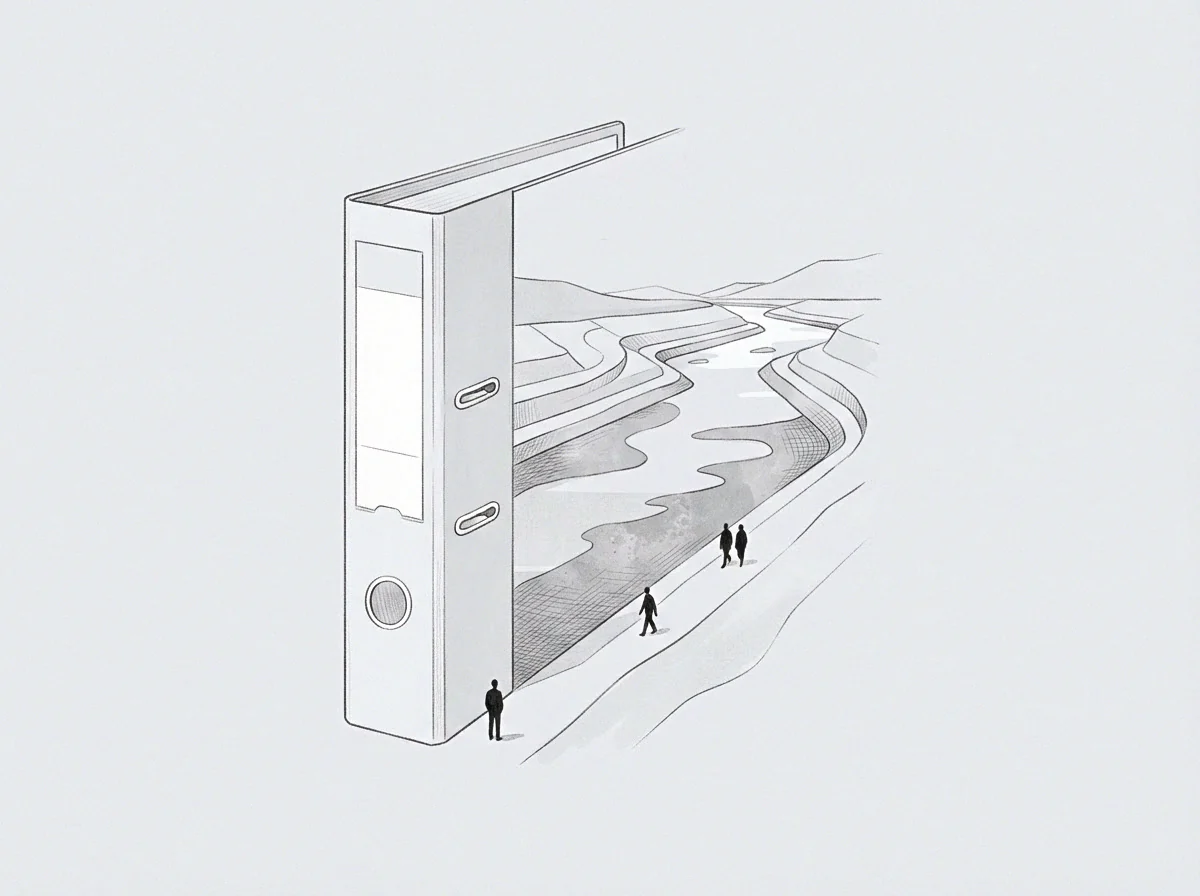
Explicit agreement stabilizes working relationships under heavy pressure, where informal understandings often fail. Operating partners tend to assume full mutual availability unless clear boundaries are set in writing. Defining capacity allocations explicitly within operating covenants protects all parties from unstated expectations.
Clear resource boundaries are established during formal organizational design. Explicit covenants spell out how attention is divided between governance, technical design, and team development. Codifying these terms eliminates ambiguity and prevents friction before operational load increases.
Stated Terms Displace Personal Intervention
Explicit covenants remove emotion from setting boundaries. When someone requests unscheduled intervention, leadership relies on structural agreements rather than personal preference. Declining becomes an institutional requirement rather than a personal refusal, maintaining necessary professional distance.
Teams respect clear system rules more consistently than individual refusals. A founder who repeatedly turns down requests without structural backing risks appearing capricious. Pointing to an established operating pact grounds the response in governance, allowing the written agreement to absorb pushback.
The boundary holds against immediate demands.
Bilateral Derivation of True Availability
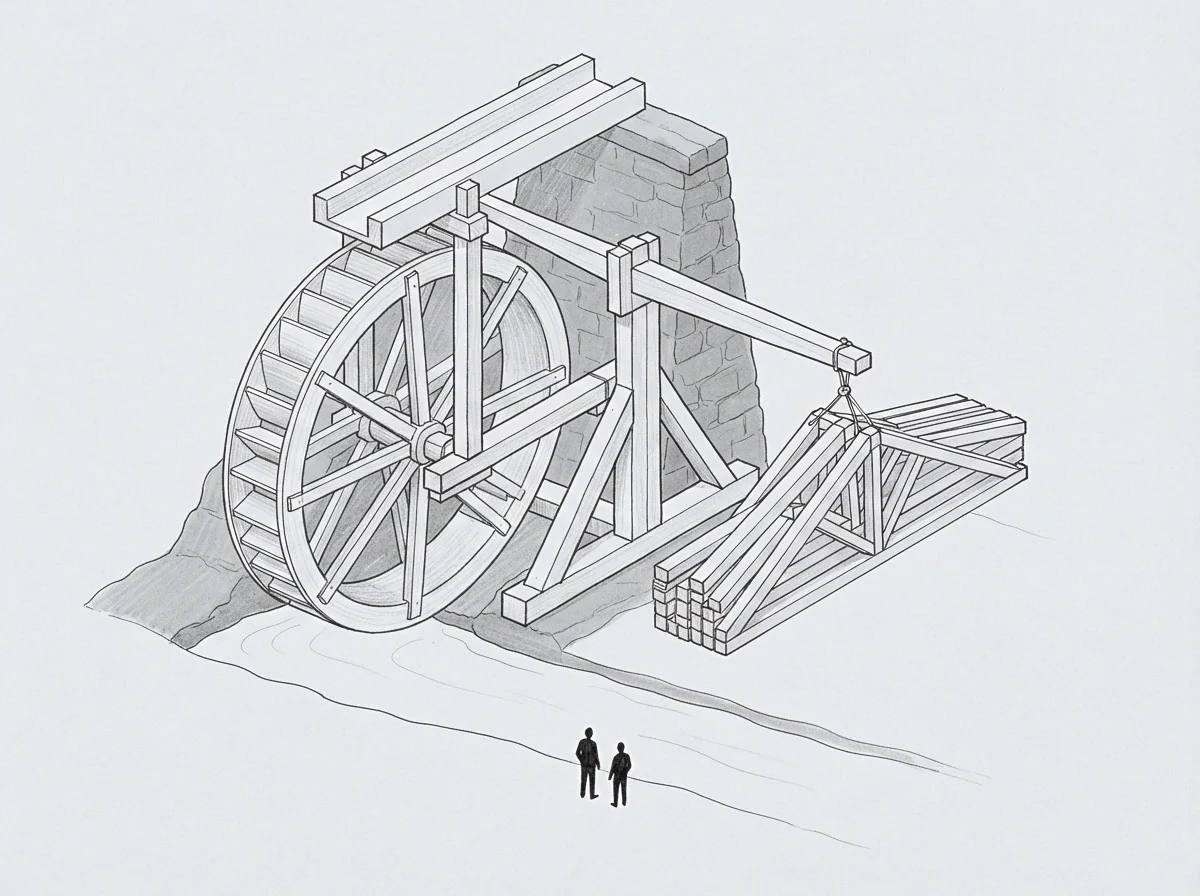
Operational availability is demonstrated through action rather than public statements. Counterparties gauge priorities by watching what compromises the calendar. If urgent requests repeatedly break into strategic reserves, observers recognize the boundary as soft and continue escalating routine issues directly to leadership.
When leadership holds structural partitions against external pressure, the organization adapts. Teams build alternative channels, develop independent criteria, and handle local disruptions internally. The enterprise matures because leadership declines to act as an all-absorbing buffer.
What structural modifications become necessary when enterprise growth fundamentally outpaces the partitioning models established during early development phases?