

Calibrating Dynamic Enterprise Autonomy Boundaries Under Rapid Headcount Expansion
Dynamic enterprise autonomy scales through explicit state-gated decision ceilings that substitute automated retrospective auditing for central pre-approval gates.
Dynamic enterprise autonomy scales through explicit state-gated decision ceilings that substitute automated retrospective auditing for central pre-approval gates.

Structural capacity under investor consent rights is preserved by replacing ad hoc approvals with explicit contractual thresholds and budget carve-outs.

When unthrottled client streams hit fixed capacity limits, system stability requires structural rate regulation rather than internal load absorption.

Stated position limits isolate execution channels to prevent one co-founder's allostatic overload from triggering reciprocal nervous system exhaustion.

Availability is derived from stated capacity limits rather than calendar declarations when founding allocations shift under operational load.

Unstated executive regulatory strain forces depleted leaders to deploy capital as an energetic shock absorber to bypass high-friction interpersonal decisions.

Decoupling immediate availability demands reduces sympathetic arousal, restores vagal tone, and stabilizes autonomic baselines during rapid product iteration.

Active intake parameter configuration establishes structural barriers that preserve executive cognitive bandwidth by rejecting unstructured operational noise.

Contractual derivation of executive capacity boundaries converts informal stakeholder demands into bounded, procedural covenants to preserve executive cognitive function.

Decoupling scaling leadership seats shifts execution from personal founder regulation to structural limit walls and state gated operational handovers.

Structural term partitioning converts founder coregulation into explicit domain boundaries, protecting cognitive capacity by routing load onto defined operational objects.

Unstated executive capacity breaches force silent attention rationing, distorting downstream resource allocation across dependent operational teams.

Early exploration decay in isolation resolves by enforcing physical boundaries and phased non-intervention checkpoints that bound conceptual drift.

Stated operational limits transfer cognitive load back to organizational processes by replacing continuous implicit availability with explicit parameters.

High-growth corporate systems collapse when individual operational capacity replaces explicit governance terms to absorb continuous transactional throughput.

Explicit operational governance terms set fixed capacity limits by converting subjective personal willingness into readable structural constraints.

An executive system under load transfers operational pressure by establishing explicit throttling boundaries rather than allowing downstream actors to derive availability from silence.
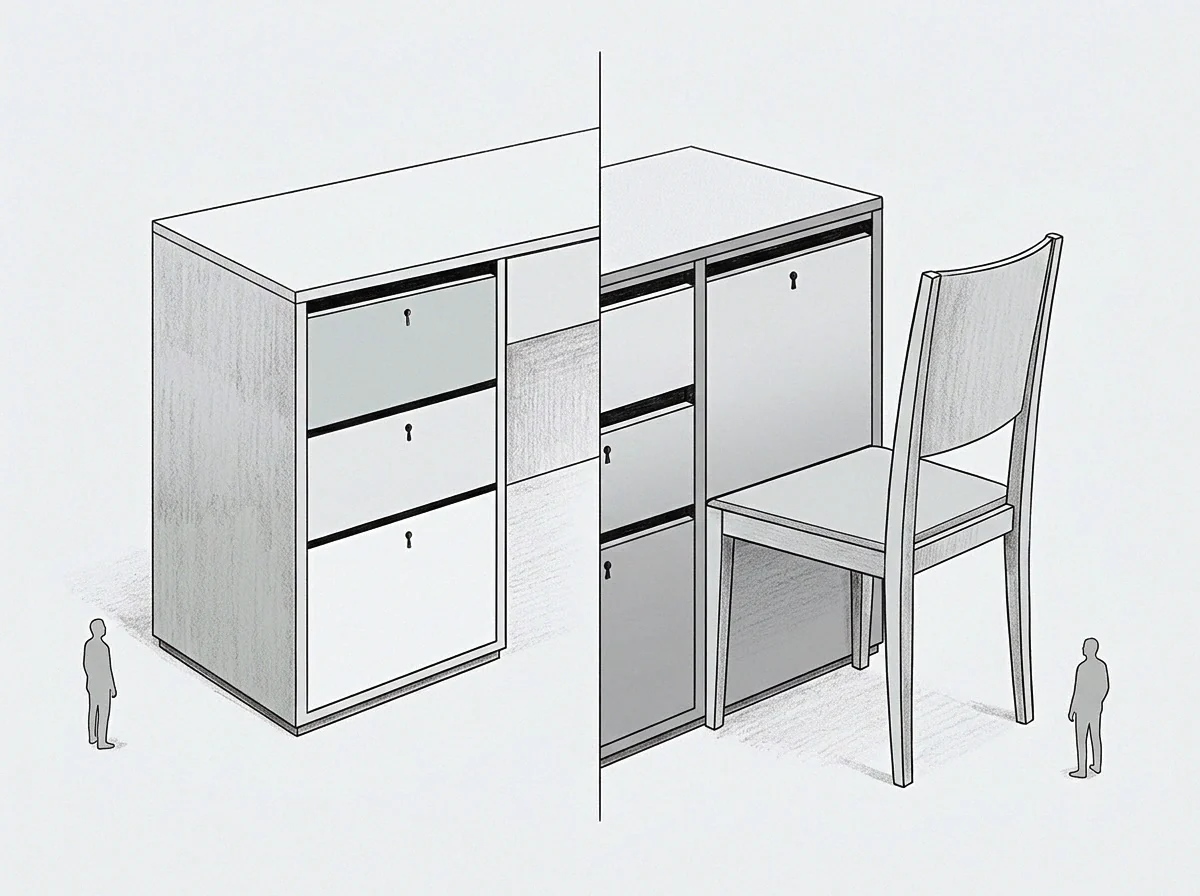
A stated structural limit transfers operational load to governance protocols, shielding executive capacity from continuous system pressure.

A stated limit functions as an immovable structural wall that redirects systemic strain back to its source rather than absorbing it through personal exhaustion.
The terms are written where they belong. Each field holds three desks, and every entry a desk writes raises the terms it uses, each term given a meaning, a mechanism and the places it appears. The record on these pages stays first person and hand made; the fields grow the nomenclature.