
Autonomic Regulation After Step Down From Executive Leadership
Executive step-down induces severe autonomic mismatch as persistent sympathetic hyperarousal outlasts external operational demands without structural pacing.
Signal
When operational pressure lifts abruptly, it reveals an altered nervous system instead of a rested executive. The role itself requires sustained sympathetic activation, high circulating glucocorticoids, and constant alertness to institutional threats. Once the calendar clears overnight, plasma catecholamines drop long before central neural architecture can recalibrate.
The biological machinery continues running at maximum gain, scanning empty hours for crises.
This mismatch produces measurable physical effects. Basal heart rate variability often stays suppressed for quarters after departure. Sleep fragmentation tends to worsen over the first months away from the desk, with nocturnal cortisol surges continuing despite the lack of daytime outlets.
Somatic restlessness, sensory irritability, and heavy exhaustion occur together. A system built around continuous exogenous load cannot shift into parasympathetic recovery simply because stimuli stopped arriving.
A biological system adapted to chronic high load continues producing defensive activation when incoming operational inputs drop to zero.
Clinical assessments regularly confuse this autonomic overshoot with an acute affective disorder. Practitioners unfamiliar with executive decompression mistake physiological hyperarousal for generalized anxiety, or diagnose post-exit apathy as unipolar depression. The distinction lies in the origin of the regulatory strain.
Allostatic load represents the systemic wear accumulated through years of adapting to continuous operational demand. When the executive steps down, that wear remains active while the external scaffolding disappears.
Running regulatory circuits without external targets consumes remaining glycogen and neurotransmitter reserves. Lacking structured demands to direct physiological output, the brain treats unallocated sympathetic charge as internal crisis. This somatic misinterpretation frequently leads to unnecessary medication or premature re-entry into high-friction environments.

Dial
Mechanisms of Neuroendocrine Reset
The hypothalamic-pituitary-adrenal axis functions as a homeostatic rheostat, not a simple switch. Years in executive roles alter central corticotropin-releasing factor sensitivity and blunt hippocampal negative feedback loops. The adrenal cortex remains hypertrophied, ready to flood circulation with cortisol at minor triggers.
Restoring baseline endocrine sensitivity requires calibrated physical output instead of passive rest.
Physical movement operates as a synthetic task that metabolizes circulating stress hormones. Aerobic work held below the lactate threshold aids parasympathetic recovery by establishing an unmistakable somatic finish line. The body registers that physiological arousal has run its course and finished.
Passive rest, by contrast, extends sympathetic activation by giving the motor system no clear completion signal.
The nervous system relies heavily on operational schedules to set internal clocks. Core body temperature nadirs, melatonin secretion curves, and autonomic tone decouple when external calendars disappear. The table below outlines autonomic indicators across stages of transition, based on resting physiological metrics.
| Decompression Stage | Parasympathetic Tone | Nocturnal Cortisol Slope | Resting Vagal Index |
|---|---|---|---|
| Acute Exit: Months 1 to 3 | Severely suppressed | Flattened and elevated | Under thirty milliseconds |
| Intermediate Recalibration: Months 4 to 8 | Intermittent rebound | Steepening morning peak | Thirty to forty-five milliseconds |
| Systemic Stabilization: Months 9 to 18 | Sustained baseline | Normalized diurnal curve | Above fifty milliseconds |
Vagus nerve function sets the speed of systemic recovery. Respiratory sinus arrhythmia reflects heart rate oscillation driven by vagal efferent traffic during breathing cycles. Strong vagal tone allows the heart to decelerate quickly after intense cognitive effort.
In post-executive physiology, this vagal brake is flattened, leaving the sympathetic system unopposed throughout the day.
Systemic recovery tracks the restoration of biological rhythm rather than the accumulation of passive hours.
Regulating social exposure affects vagal tone through the ventral vagal complex. Ambiguous social settings deplete limited regulatory capacity by forcing the nervous system to read unclear hierarchies. In contrast, predictable, structured contact offers low-effort nervous system pacing, drawing on social baseline mechanisms to support physical stability.
Recovery takes hold when the physical schedule matches the predictable cadence of a working biological clock.
Fault
Structural Drivers of Regulatory Collapse
Leaving a role removes the cognitive architecture that previously handled internal regulation. Executive positions offload autonomic management onto agendas, board calendars, and constant decisions. Without those external rails, an individual experiences autonomic dysregulation as an inability to pace daily energy output.
The internal governor no longer registers when effort ought to start or stop.
The loss of an institutional post adds physiological strain through sudden isolation. The drop in status shifts reward pathways, lowering dopaminergic tone while baseline noradrenaline remains high. The individual often seeks out administrative or personal crises to resolve internal tension, generating friction at home.
Unmanaged physiological arousal manufactures conflict to account for its own presence.
Three structural points accelerate instability after departure:
- Unstructured temporal spans create continuous decision fatigue over basic routines, depleting autonomic reserves on minor logistical choices.
- Abrupt sensory deprivation prompts compensatory hypervigilance, as central pathways interpret quiet environments as latent risk.
- Unresolved open loops tie up cognitive capacity indefinitely when there are no longer administrative systems to enforce delegation or closure.
Each condition accelerates allostatic wear by interrupting cellular repair cycles. The body stays in an anticipatory holding pattern, bracing for operational crises that do not occur. This sustained vigilance degrades immune function, changes gut permeability, and erodes working memory.
The brain enters a defensive state termed throttling, dialing down complex cognition to preserve basic visceral energy.
Cognitive capacity contracts when autonomic circuits redirect metabolic resources toward baseline systemic defense.
Throttling is often mislabeled as intellectual decline or permanent burnout, but it is a protective rationing of processing bandwidth by an overtaxed body. Pushing for high intellectual output during deep throttling exhausts central reserves and stretches the recovery timeline. The system requires firm boundaries to limit incoming operational load.
The former executive often appears quiet and detached even as internal physiology runs at peak output.

Draft
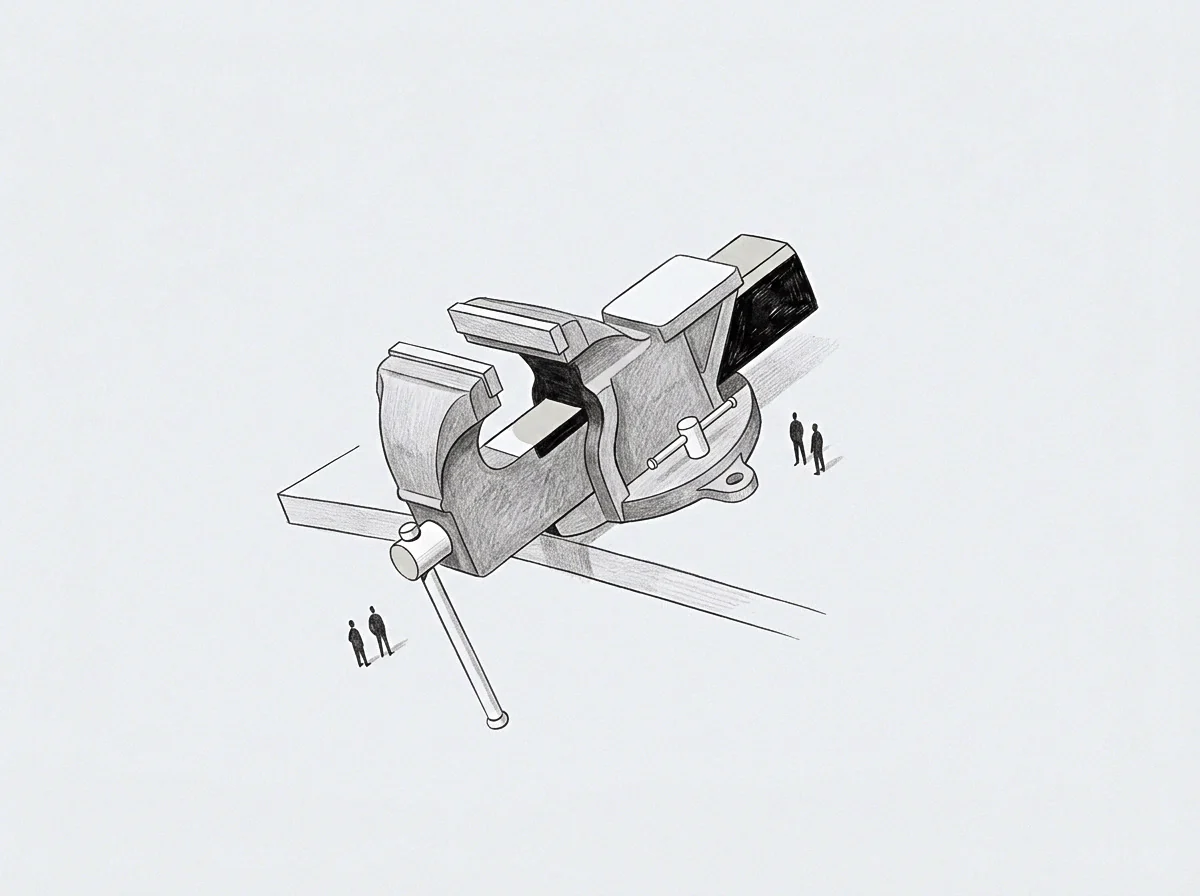
Constructing Transitional Constraints
Designing a deliberate structure for post-executive life protects limited regulatory capacity. The individual needs concrete routines to substitute for corporate schedules without carrying institutional stakes. Waking at a fixed hour, scheduling manual effort, and setting tight communication windows builds an external framework for the autonomic system.
These habits lower internal computational load so subcortical networks can downshift.
Filtering cognitive threads serves as the main lever for restoring regulation. An ungated thread is any open project, personal commitment, or advisory inquiry lacking clear limits, deadlines, or exit points. These open threads occupy active attention and keep sympathetic pathways engaged in passive monitoring.
Capping active commitments at a strict numerical limit frees autonomic energy for physical repair.
Managing incoming demands determines whether recovery holds. Every accepted commitment needs an explicit scope, a definitive end date, and concrete performance expectations before work starts. Requests that lack these parameters stay off the daily schedule.
Filtering business and social interactions through clear terms prevents the ambiguous personal expectations that trigger autonomic strain.
A commitment containing explicit termination terms costs negligible background regulatory energy compared to an unbounded obligation.
Physical routines ground this framework in daily life. Cold water exposure, breath pacing, and resistance training generate short sympathetic spikes followed by immediate parasympathetic recovery. These practices train the vagal brake to manage cardiac and endocrine responses under controlled conditions, restoring the body’s ability to move between exertion and rest.
Setting complete non-availability between dusk and morning turns loose interpersonal demands into manageable working periods.

Wake

Can Basal Sympathetic Tone Normalize Without External Pacing?
Durable adaptation requires moving past temporary constraints into self-directed internal pacing. A clear mark of recovery is the return of endogenous homeostatic regulation. The individual builds sharper interoceptive awareness, catching small drops in vagal tone before broad dysregulation sets in.
Early cues, including abdominal tension or changes in respiratory rhythm, guide daily energy use before exhaustion sets in.
Years of institutional leadership train a person to ignore internal strain to meet outward targets. This learned interoceptive blunting sustains performance during acute organizational pressure while obscuring physical strain. Stabilizing after executive life requires rebuilding awareness of visceral cues and treating somatic signals as working data rather than impediments.
The post-exit period leaves lasting changes in physiology. A recovered operator displays strong vagal efficiency, resilient heart rate variability, and controlled cognitive focus. They retain the capacity to handle heavy operational demands without accumulating chronic allostatic strain, provided structural limits remain active.
This stability allows clear strategic thought free from survival reflexes.
The open question is whether a physiology shaped by years of high-stakes corporate control can sustain metabolic and autonomic balance through decades of quiet routine, or whether complex nervous systems depend on demanding external structures to avoid internal decay.