
Calculating Cognitive Slot Exhaustion Rates In High Concurrency Leadership Settings
Cognitive slot exhaustion accelerates when unresolved leadership lines saturate working memory buffers, triggering biological throttling to halt neural wear.

Ceiling
Four browser windows sit open beside an unsigned partnership agreement at two in the morning. Incoming alerts from an engineering incident channel arrive while an investor requests a breakdown of monthly cash flow by noon. The person at the desk reads each dispatch, leaves the window open, and turns back to the agreement text without writing a single line.
This state is often labeled as procrastination or depressive paralysis. It is actually the hard boundary of working memory running four parallel state representations simultaneously.

Working Memory Boundaries In Concurrent Execution
Human central executive function operates on strict physical constraints. Nelson Cowan demonstrated that the capacity limit of focus in adult working memory spans three to four discrete items when grouping strategies are restricted. This baseline rests on controlled visual and verbal binding experiments in healthy adult cohorts; the finding would be overturned if high-velocity operators demonstrated sustained five-slot processing under parallel dual-task interference tests without compensatory error spikes.
When a leadership post imposes ten parallel streams, the central processor does not expand its volume. It divides available cycle time between active mental models, retaining each model through rapid rehearsal.
Every active stream demands continuous neurological overhead. An operational stream left without a firm deadline or an assigned owner requires persistent working memory allocation to prevent state decay. The leader retains the client grievance, the pending payroll variance, the key employee resignation warning, and the unresolved vendor dispute within active neural loops.
Each unresolved issue claims one discrete slot.
The rate of cognitive exhaustion accelerates as ungated projects convert into active mental retention loops.

The Mathematical Model Of Slot Depletion
Cognitive slot exhaustion rate measures the time required for incoming organizational tasks to consume all available operational buffers. The calculation relies on three distinct operational parameters: total available executive slots, the retention half-life of each unresolved issue, and the context-switching tax incurred during stream rotation. Let baseline executive capacity equal four units.
An incoming request that lacks bounded parameters occupies one unit until external dispatch or systematic postponement occurs.
Attentional switching draws continuous blood sugar. When an operator toggles between an urgent hiring impasse and a product architecture failure, the prefrontal cortex incurs an activation penalty known in experimental psychology as the task-switch residual cost. That interaction claimed the third slot.
If an operator shifts between four ungated issues eight times an hour, the biological substrate burns through local glycogen stores rapidly. The exhaustion rate is therefore not a linear function of total weekly working hours, but an exponential function of concurrent active state retentions per unit time.
A written stipulation defining an explicit reply window shifts the tracking burden back to the sender until the designated hour arrives.

Seat
The operational chair at an expanding firm collects ungated communication from every corporate vector. Board directors demand capital allocation updates, functional heads seek personnel arbitrations, and suppliers demand credit clarity. The occupant of this position routinely attempts to provide real-time accessibility across all fronts.
This posture turns the central executive into an open packet switchboard.

Live Concurrency In The Founder Role
Holding four operational problems simultaneously alters physiological posture. Respiration grows shallow, resting trapezius tension increases, and cognitive throughput slows to a crawl. The operator types a fragment of a message to an engineer, pauses to inspect a contract line, and answers an incoming call about banking access.
None of these three transactions completes. The second slot was already occupied.
No capacity remained for novel input. At this juncture, any new request, even a minor query regarding a software subscription, produces severe internal irritation. Observers view this irritation as an emotional governance failure.
It is actually an autonomic protection response triggered when the final cognitive buffer saturates. The biological system initiates emergency load shedding to prevent total executive collapse.
Executive irritability registers as an autonomic defense against systemic cognitive buffer saturation.

Open Loops Across Multiple Unresolved Exchanges
Unresolved exchanges degrade leadership output through predictable operational vectors. When an exchange lacks termination criteria, it remains loaded in executive processing:
- Ambient Vigilance Drainage occurs when a message thread remains active without a stated next action, consuming attentional baseline capacity continuously throughout the night.
- Attentional Fragment Scatter divides focal depth across disparate domains, causing strategic documents to take three times longer to review.
- Escalation Latency Compounding delays responses to legitimate organizational crises because active memory slots remain clogged with trivial unresolved queries.
- Covert Regulatory Deficits erode emotional modulation during executive sessions when persistent background tracking drains available inhibitory control.
When every channel stays permanently available, team members push unresolved friction upward instead of solving it locally. The operator assumes that fast responses demonstrate executive strength, but the habit trains the organization to treat the leader as external working memory.
The response seemed calm enough at midnight, so three additional requests went out before breakfast.

Wear
Biological wear represents the physical toll extracted by chronic regulatory demand. Bruce McEwen formulated allostatic load to describe this physiological price: when the neuroendocrine system sustains prolonged activation without recovery intervals, tissues experience progressive structural strain. The exhaustion of cognitive slots serves as the early cognitive indicator of elevated allostatic burden.

Quantifying Allostatic Exhaustion Kinetics
Calculating the true exhaustion rate requires tracking the transition from functional triage into biological throttling. Under controlled laboratory conditions, human operators maintain targeted attention across complex streams for roughly ninety to one hundred twenty minutes before requiring metabolic rest. In sustained leadership settings, this cycle operates without restorative pauses.
Sleep debt accelerates the depletion rate.
Consider the cumulative operational kinetics across a standard work cycle:
- Morning baseline calibration starts with four available functional slots and minimal systemic cortisol elevation.
- Unscreened communication intake fills three slots with open loops within ninety minutes of operational engagement.
- Parallel processing introduces severe context-switching overhead, raising core vascular resistance and serum epinephrine levels.
- The emergence of an unplanned crisis forces working memory past the four-item boundary, inducing acute operational throttling.
- Emergency load-shedding initiates involuntary shutdown of reflective forecasting while preserving only immediate reactive output.
Civil aviation authorities recognized this dynamic decades ago in air traffic control sector saturation protocols. Sector capacity in terminal airspace is not governed by aircraft count alone, but by intersecting flight vectors requiring manual conflict resolution. When intersecting lines exceed sector thresholds, controllers do not try harder; procedural flight holds engage instantly to protect operational integrity.
Chronic vigilance depletes baseline glycogen. As cognitive slots stay locked, the leader experiences brain fog, flattening affect, and diminished working memory span. These symptoms match the diagnostic presentation of depressive disorders, prompting misdirected clinical conclusions.
Depression represents an affective deficit characterized by anhedonia and pervasive hopelessness. Throttling represents a fully functional regulatory machine running at its safety boundary to protect neural architecture from permanent metabolic damage.
Allostatic throttling preserves underlying neurological architecture by suppressing high-cost strategic cognition during sustained overload.

Epistemic Grounding And Biological Measurement Limits
Allostatic load indices rely on secondary neuroendocrine and cardiovascular biomarkers, including 12-hour urinary cortisol, salivary dehydroepiandrosterone, and heart rate variability. These parameters rest on longitudinal cohort measurements derived from industrial shift workers and clinical populations. Should salivary alpha-amylase profiles fail to correlate with decision-latency degradation during sustained sleep disruption, the mechanistic bridge linking biochemical wear directly to cognitive slot depletion would require fundamental revision.
The field currently disputes whether cognitive slot degradation scales quadratically or exponentially once concurrent ungated streams exceed the four-item ceiling. The desk cannot fully defend an exponential function over an accelerated polynomial curve due to the absence of continuous intracranial telemetry during live business negotiations. Under this empirical uncertainty, a prudent operator assumes quadratic scaling and budgets conservative headroom accordingly.
The working memory limit remains four. Pushing past that threshold without structural relief degrades subsequent executive reasoning.
Treating biological depletion as an emotional deficit produces punitive schedule contraction while leaving the underlying rate of drain entirely intact.

Board
Controlling slot exhaustion demands structural boundaries rather than internal willpower. When an operator attempts to survive high concurrency through sheer grit, biological limits enforce sudden operational failure. The alternative lies in replacing open communication streams with structurally gated lines.
The table below delineates the concrete differences between these two operational architectures across identical input pressures.
| Operational Parameter | Unstructured Open Loop | Structurally Gated Channel |
|---|---|---|
| Active Slot Allocation | Continuous working memory retention | Zero active slots; state moved to external record |
| Context Switching Tax | Severe metabolic draw on every arrival | Batch-processed during planned inspection blocks |
| Latency to Decision | Rapid but prone to severe strategic error | Controlled latency with verified information inputs |
| Allostatic Load per Hour | Elevated continuous neuroendocrine strain | Low steady-state baseline physiological draw |
| Loop Reclamation Rule | Ad hoc mental resolution when memory clears | Deterministic completion criteria and calendar gating |
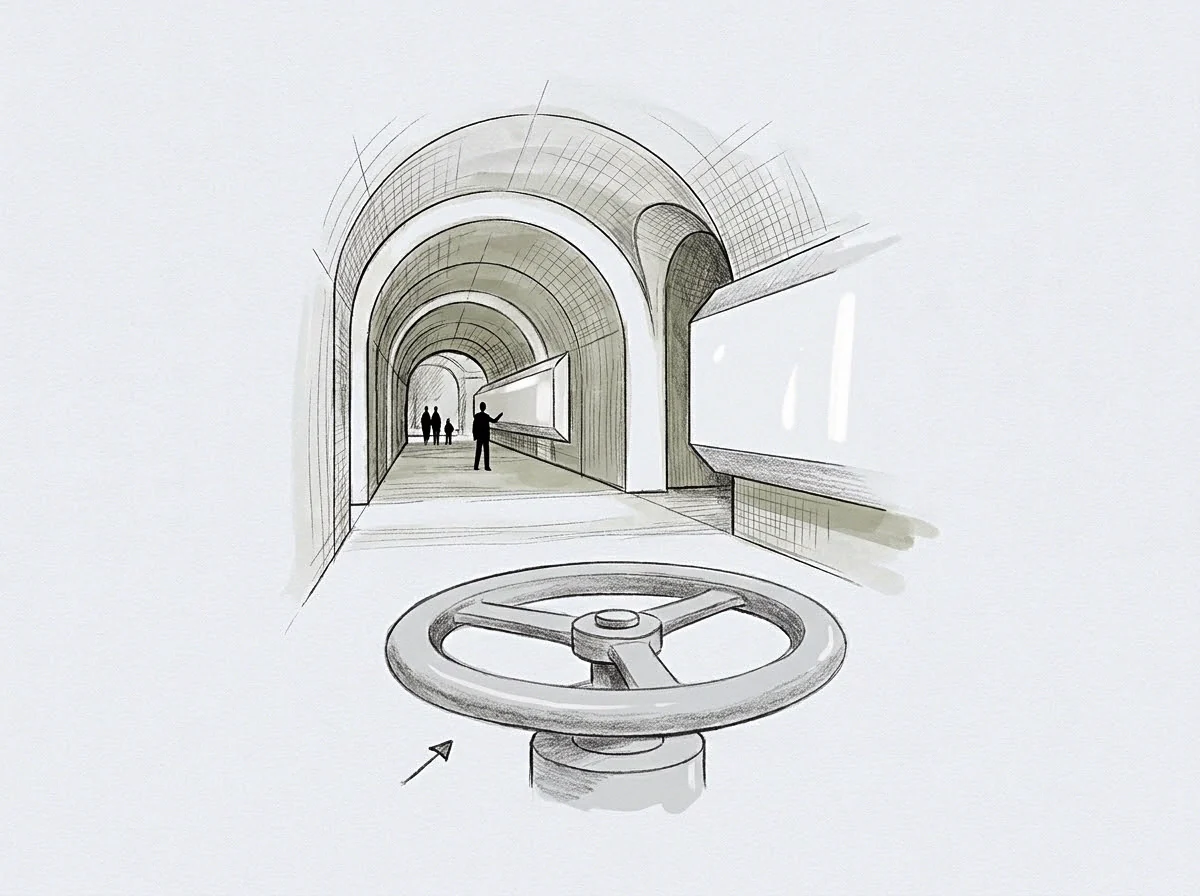
Structural Gating Across Active Organizational Channels
A gated channel prevents an incoming message from entering working memory until explicit preconditions are satisfied. The gate consists of three mandatory elements: an unambiguous operational scope, a fixed resolution date, and explicit handover criteria. If an incoming communication lacks these elements, it remains halted at the organizational boundary.
Every unstated boundary bills at night. When a colleague asks for general strategic advice via an instant message, an ungated executive immediately attempts to retain the query, instantly sacrificing an active cognitive slot. A gated operator instructs the colleague to schedule a fifteen-minute brief containing two written options and a specific financial threshold.
The mental slot remains entirely clear until the scheduled hour occurs. A parked track consumes zero attention.
A communication channel without clear termination criteria operates as an open drain on central executive capacity.

Comparative Overhead Of Structured Versus Unstructured Lines
The data confirms that organizations operating on unstructured loops suffer from chronic leadership fatigue. When an executive attempts to hold twenty concurrent projects in mind, the effective capacity allocated to each project approaches zero. Errors proliferate, execution slows, and operational churn accelerates across the enterprise.
Structured lines rely on systematic parking. When an unexpected operational obstacle arises, the leader writes down the obstacle, assigns an initial triage date, and removes the issue from active contemplation. The task transitions from working memory into an external queue.
Biological recovery demands sustained silence.
An unparked conversation consumes executive capacity until someone assigns it a calendar date.

Remainder
Restoring executive function after profound slot exhaustion requires rigorous, programmatic throttling. Once the neurological system enters protective throttling, standard rest routines such as brief vacations or passive entertainment fail to clear the accumulated allostatic debt. Recovery demands physical and structural resets.
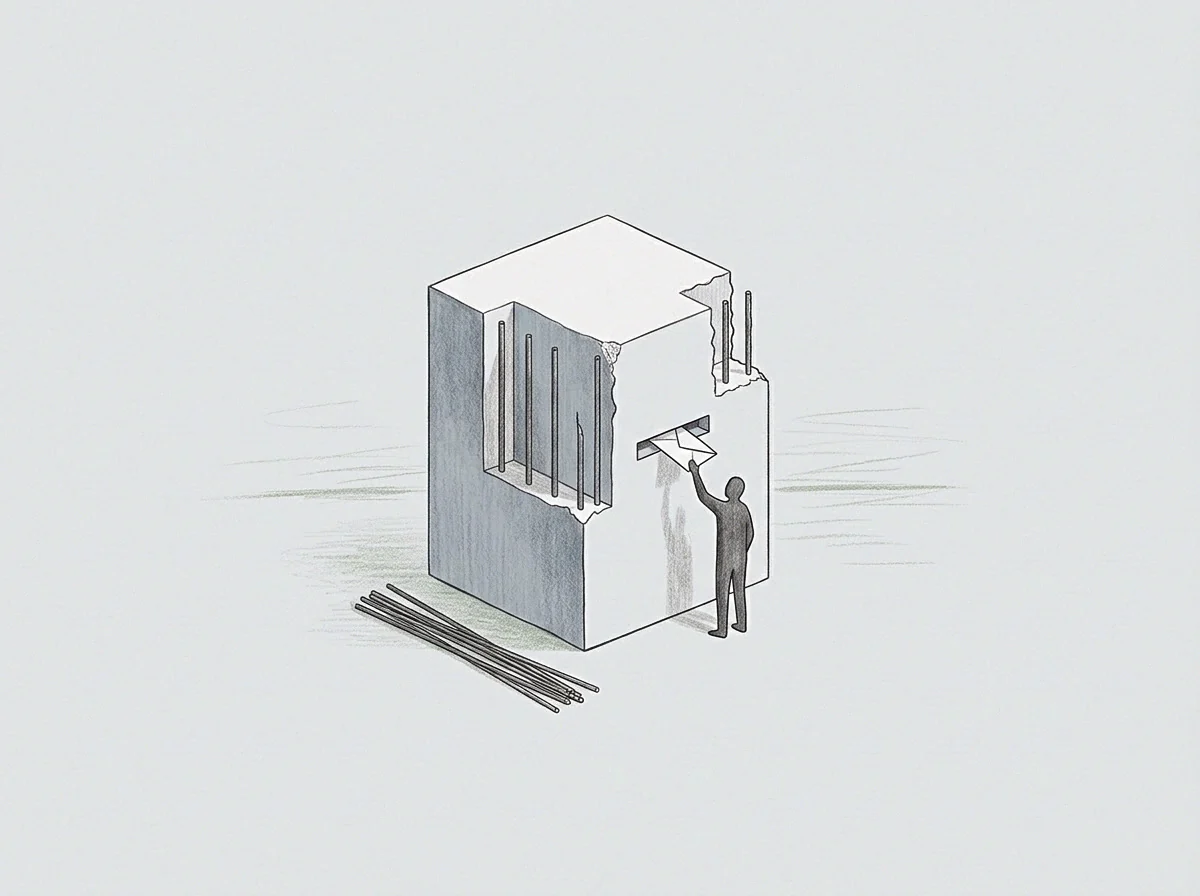
Reclaiming Executive Headroom Through Explicit Parking
Headroom represents the unallocated processing capacity available for novel strategic computation. A leader running with zero headroom cannot navigate unexpected economic volatility, board friction, or competitive threats. Reclaiming headroom requires an immediate audit of every open loop currently claiming a slot.
The operator documents every single uncompleted task, partnership discussion, and unresolved interpersonal friction onto a physical ledger. Each item receives one of two operational treatments: immediate terminal execution or programmatic parking. Programmatic parking requires assigning the item a future review date and informing all relevant parties that no attention will be given to the topic until that date arrives.
The mental representation releases immediately.

Operational Protocols For Throttled State Recovery
When an operator has run at the ceiling for consecutive quarters, the central nervous system requires extended silence to downregulate chronic autonomic arousal. The recovery process involves setting strict communication blackouts, eliminating mobile notifications, and delegating daily operational triage to functional deputies with explicit authority limits. The person in the seat ceases to act as the primary clearinghouse for corporate friction.
The rate of slot consumption drops immediately once external gating protocols take hold. As cognitive slots clear, biological allostatic load steadily subsides. Strategic foresight, complex pattern recognition, and stable emotional regulation return as natural metabolic consequences of unburdened working memory.
The room goes dark as the final communication terminal powers down.