
Differentiating Physiological Capacity Throttling From Major Depressive Disorder
Physiological capacity throttling is an active neurobiological preservation response that suppresses motor initiation while leaving core reward evaluation intact.

Valve

Divergent Etiologies of Systemic Immobility
Two physiological conditions present identical outward surfaces while operating on contradictory internal mechanics. One condition manifests as an active preservation sequence deployed by an overloaded nervous system. The second condition reflects a primary affective collapse characterized by persistent mood devaluation.
The human organism under prolonged operational saturation restricts metabolic expenditure through peripheral conservation. The governor protects the engine. When the central nervous system identifies sustained demand exceeding biological throughput, neural circuits suppress voluntary initiative to preserve autonomic homeostasis.
This regulatory brake restricts somatic and cognitive throughput before structural tissue failure occurs.
Major depressive disorder involves sustained changes in cortico-striatal circuits that govern hedonic evaluation and reward appraisal. Physiological capacity throttling operates through a protective down-regulation of motor and cognitive initiation despite intact peripheral hedonic processing. The person experiencing capacity throttling retains the ability to appreciate value and prospective outcomes.
They simply lack the somatic fuel required to bridge evaluation and execution. Medical practitioners frequently mistake this protective shutoff for vegetative depressive symptomatology because both presentations involve psychomotor retardation, reduced verbal output, and social withdrawal.
A biological governor suppresses voluntary output whenever cumulative operational exposure threatens somatic stability.
Operational environments that demand continuous vigilance trigger adaptive energy rationing. When sustained allostatic load outpaces restorative sleep, the ventral striatum faces acute glycogen depletion alongside inflammatory signaling cascades. The central nervous system responds by raising the activation threshold for novel tasks.
Execution stops cold. An observer watching from outside sees a person seated motionless in front of an open terminal, unresponsive to incoming requests, projecting total withdrawal. The internal experience consists of active processing units operating against hard somatic limits.
Treating this state as a primary affective disturbance introduces interventions that actively increase operational distress. Prescribing psychiatric activation protocols or psychological restructuring to a throttled nervous system forces supplemental demand onto circuits already suffering energetic depletion, accelerating total systemic exhaustion.
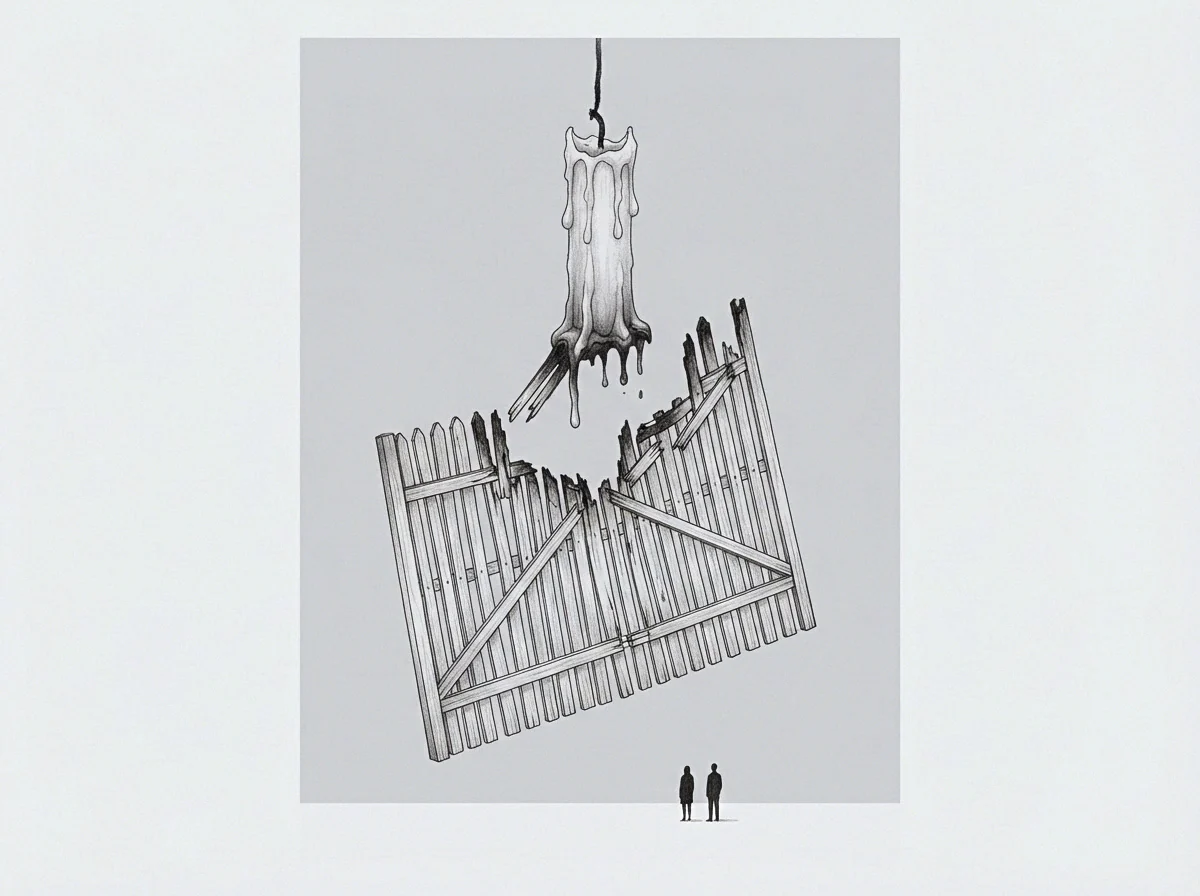
Signature

Distinct Neuroendocrine Profiles and Attentional Processing
Neurochemical patterns reveal unambiguous separations between structural depressive pathology and protective regulatory suppression. Major depressive disorder typically correlates with hypercortisolemia driven by impaired glucocorticoid receptor sensitivity within the hippocampus, accompanied by generalized neuroinflammation and blunted dopaminergic tone across the nucleus accumbens. Physiological throttling displays a profile of flattened diurnal cortisol curves or relative hypocortisolemia resulting from sustained hypothalamic exhaustion.
The adrenal output drops because the signaling loop attempts to shield target organs from excessive catabolic breakdown. Sleep fails to restore capacity.
Attentional architecture provides a definitive diagnostic separation between these states during clinical evaluation. A person trapped in deep depressive episodes suffers from intrusive rumination centered on personal worthlessness, existential despair, and generalized guilt. The throttled individual experiences cognitive narrowing strictly restricted to task triage and operational threat detection.
Desire remains intact. The internal dialogue does not question personal value. It tracks unresolved operational loops with frustrated clarity.
- Anhedonic dissociation registers as complete emotional numbness across all prospective environments, dissolving the baseline human capacity for joy regardless of rest or external relief.
- Appetitive preservation keeps prospective interest alive during total physical paralysis, leaving the operator wishing to execute while their motor apparatus refuses engagement.
- Hypothalamic exhaustion blunts morning cortisol spikes while leaving the systemic stress response trapped in low-voltage sympathetic dominance throughout the night.
- Executive fragmentation causes sudden task abandonment whenever incoming sensory data exceeds working memory bandwidth, without producing core self-reproach.
The cognitive consequence of holding multiple open loops manifests directly in working memory capacity. Cognitive speed drops immediately. When four ungated threads demand simultaneous computational monitoring, dorsal lateral prefrontal cortex activation spikes while processing speed plummets.
The person feels an acute inability to initiate work, yet their valuation of the work remains completely uncorrupted. This distinction separates regulatory protection from clinical melancholy. Biological evidence drawn from salivary biomarker analysis demonstrates that hypocortisolemic burnout states reverse rapidly upon environmental thread removal, whereas major depressive disorder requires protracted pharmacological or psychological stabilization.
Intact valuation coupled with motor inhibition indicates structural energetic conservation rather than mood pathology.
Whether prolonged protective throttling inevitably transitions into true structural melancholia if unaddressed remains an unresolved question in clinical neurobiology.

Grid
Taxonomic Separation of Exhaustion States
Differentiating these internal states requires observing how systemic variables shift under acute environmental changes. The human body enforces stillness. A clinician evaluating an incapacitated operator must analyze reaction parameters across several physical and operational axes.
| Operational Axis | Capacity Throttling | Major Depressive Disorder |
|---|---|---|
| Reward Processing | Consummatory pleasure intact; appetitive execution blocked by motor depletion | Consummatory and appetitive anhedonia present across all environments |
| Neuroendocrine Status | Blunted morning cortisol slope; elevated resting sympathetic tone | Impaired dexamethasone suppression; elevated baseline cortisol excretion |
| Response to Unburdening | Immediate subjective relief and gradual return of cognitive clarity | Persistent affective flattening and guilt unlinked to external commitments |
| Thought Topology | Operational frustration focused entirely on open loops and task logistics | Globalized worthlessness, pervasive helplessness, and existential guilt |
| Restorative Sleep | Slow-wave sleep suppression driven by continuous autonomic vigilance | Shortened REM latency with fragmented architecture and early waking |
The operational divergence becomes unmistakable when external demand suddenly drops. Unfinished tasks hold residency. If every incoming request is severed for seventy-two hours, the throttled system exhibits rapid drop-offs in systemic tension followed by deep somatic rebound sleep.
The individual gradually re-engages with hobbies, food, and strategic thoughts. The depressive state maintains its affective tone during equivalent isolation, as the pathology exists within central neurotransmission rather than allostatic balance.
Isolating the person from incoming operational load exposes the difference between active energy rationing and primary affective disorder.
A confirmed state of capacity throttling changes the clinical focus from mood stabilization to the immediate liquidation of open operational threads.

Echo

Relational Friction and Observer Misattribution
Operational partners inevitably misinterpret the outward silence produced by capacity throttling. Because human beings rely on social cues to infer emotional stability, sudden behavioral withdrawal reads as passive resistance or depressive defeat. When a founder or senior operator stops responding to status requests, peers assume an emotional crisis.
The partner assumes the work no longer matters to the person seated across the table. Demand outpaced throughput. The person in the throttled state sits in complete energetic deficit, conserving glucose for vegetative survival while listening to colleagues mischaracterize their silence as bad faith or clinical despondency.
The misdiagnosis creates disastrous downstream dynamics. Coworkers attempt to comfort the individual with motivational rhetoric or insist they seek intensive psychotherapy for mood stabilization. These interventions misdiagnose the physical reality.
Explaining one’s paralysis to an uncomprehending colleague consumes the exact energetic currency the brain is desperately attempting to conserve. The pipeline stays blocked. The throttled operator frequently responds with clipped sentences or flat expressions, reinforcing the external perception of affective withdrawal.
The operational environment begins treating the person as emotionally brittle, stripping them of agency precisely when they need mechanical thread removal. Rather than parsing the schedule, closing open negotiations, and gating incoming communications, the organization attempts emotional remediation. The operator experiences this misguided support as an intolerable escalation of relational demand.
Each well-meaning inquiry from a colleague lands as another open cognitive loop that demands processing, monitoring, and verbal resolution.
If you would just tell us what is wrong emotionally, we could help you fix the business.

Siphon

Thread Gating and Capacity Restoration
Restoring a throttled organism requires mechanical extraction rather than cognitive reassurance. Rest alone changes nothing. Merely lying motionless in a quiet room does not relieve the prefrontal cortex if four ungated operational crises remain active in working memory.
The central nervous system treats every unresolved outcome as an ongoing computation. True recovery demands the physical liquidation of ungated threads through decisive operational disposition.
- Hard thread closure eliminates background processor drain by terminating pending negotiations or permanently delegating critical deliverables without retaining supervisory check-ins.
- Scope boundary definition establishes rigid operational parameters that explicitly reject newly incoming responsibilities until baseline reserves return to functional thresholds.
- Asynchronous isolation windows sever real-time communication channels to break the cycle of continuous autonomic vigilance and restore natural dopaminergic sensitivity.
- Physical offloading protocols move logistical dependencies from active mental retention into external, trusted tracking systems that require zero daily cognitive maintenance.
The removal of background loops creates immediate neurobiological headroom. The circuit resets. When the central nervous system registers that operational exposure has dropped below the threshold of tissue damage, it disengages the metabolic brake.
Somatosensory signaling shifts from emergency conservation to repair. Capacity returns in steps. Motor initiation recovers, allowing the operator to execute straightforward tasks without the crushing weight of systemic paralysis.
Action becomes possible again. The recovery trajectory proves that the breakdown was never an internal deficit of will or an organic depressive collapse. It was the predictable consequence of running complex cognitive machinery without operational gates.
Headroom returns when the last open operational loop is either resolved or permanently discarded.
Close the pending loops and the body restores its own motion.