
Quantifying Shared Regulatory Capacity Deficits Across Restructured Operations Teams
Restructuring redistributes operational wear across teams, forcing throttled operators to drop secondary compliance checks to sustain primary output.

Load
Three senior leads sit before eight monitoring displays in a consolidated regional hub. Following a consolidation that merged four regional desks into two, total headcount dropped by forty percent while incoming ticket volume remained static. Each operator handles real-time incident resolution while simultaneously monitoring automated compliance alerts, client escalations, and cross-functional team updates.
The physical room is quiet, yet every screen reflects rapid context switching across five software interfaces. The team continues to hit primary throughput targets, but secondary administrative duties slip, documentation grows sparse, and response latency on non-urgent flags extends from minutes to hours.
When corporate consolidation reduces team headcount, the volume of incoming operational demand remains constant. The immediate result is a structural surge in individual regulatory demand, forcing remaining team members to process higher cognitive inputs per hour. In stress physiology, allostatic load represents the cumulative physiological and psychological wear incurred when a system continuously adapts to chronic environmental demand.
Applied to restructured operations teams, this load accumulates not from physical exertion, but from the continuous requirement to maintain internal emotional and cognitive stability under unmitigated input streams. The human nervous system operates with finite computational reserves; when incoming demands systematically exceed baseline processing capacity, the individual must actively regulate their attention, emotional response, and task execution to prevent operational breakdown.
Operational restructuring increases individual allostatic load by eliminating structural buffers without reducing total regulatory demand.
Operators navigating multiple merged software suites experience persistent context fragmentation. Every incoming alert, message, or ticket requires an immediate assessment of priority, risk, and response strategy. This perpetual evaluation consumes cognitive fuel even when no action is taken.
The cost of holding multiple open operational channels is not distributed evenly across the workday; it compounds during peak incident windows, driving individual processing capacity toward its structural limit. The baseline resets immediately.

Shelf
Operational teams rely on informal co-regulation to absorb high-stress surges during crisis periods. Inside functional dyads, individuals calibrate their emotional and cognitive states against their peers, using subtle verbal cues, shared situational awareness, and mutual task offloading to manage high input volumes. Under social baseline theory, human proximity to familiar, competent peers reduces the neural and metabolic cost of personal regulation.
The presence of a trusted co-worker signals to the nervous system that environmental demands are shared, effectively lowering the individual energy required to maintain focus and emotional control under pressure.

Shared Regulation in Operational Dyads
Two experienced leads working side-by-side quietly divide the cognitive burden of system monitoring. One monitors high-risk transaction anomalies while the other manages communication with executive leadership. This implicit arrangement relies on borrowed regulation, where one operator leverages the calm, stable presence of another to stabilize their own physiological state during acute system failures.
When a restructuring splits these established dyads, reallocating individuals across newly formed hybrid teams, this informal regulatory infrastructure collapses overnight. The new team members lack shared operational history, mutual trust, and predictive understanding of each other’s work rhythms.
The operational tally is zero. Without access to familiar regulatory partners, each operator must generate all required regulatory capacity independently. The metabolic cost of staying focused, calm, and accurate doubles because the individual can no longer offload emotional stabilization onto their environment.
The loss of shared regulatory capacity presents as sudden exhaustion, increased defensiveness during routine handovers, and a sharp reduction in willingness to assist teammates with adjacent operational duties.

How Operational Buffers Subsidize Restructured Workflows?
In un-restructured environments, surplus staffing acts as a shock absorber against unforeseen regulatory compliance events. When teams undergo lean restructuring, leadership often removes this informal buffer under the assumption that technology integrations will offset lost human monitoring capacity. The informal buffer disappears.
| Configuration | Regulatory Mechanism | Thread Concurrency | Escalation Latency | Failure Mode |
|---|---|---|---|---|
| Baseline Pre-Restructure Unit | Shared Dyadic Co-Regulation | 2 to 3 Gated Threads | Low (Under 5 Minutes) | Localized Task Backlog |
| Co-Regulated Restructured Unit | Borrowed Regulatory Subsidy | 4 to 5 Mixed Threads | Moderate (15 to 30 Minutes) | Dyadic Friction and Fatigue |
| Throttled Post-Restructure Unit | Isolated Personal Regulation | 6+ Ungated Threads | High (2 to 4 Hours) | Systemic Secondary Task Drop |
When an organization removes human redundancy, it shifts the burden of operational variance directly onto individual nervous systems. The secondary channel goes quiet. Operators who previously managed routine incidents with minimal stress now exhibit elevated physiological arousal during minor system deviations.
The loss of shared regulatory support transforms standard operational friction into chronic personal strain, accelerating the depletion of individual regulatory reserves across the entire restructured unit.
Removing dyadic regulatory partners forces individual operators to absorb operational variance through elevated personal effort.
The remaining operators manage escalation volume once priority tiers clear.
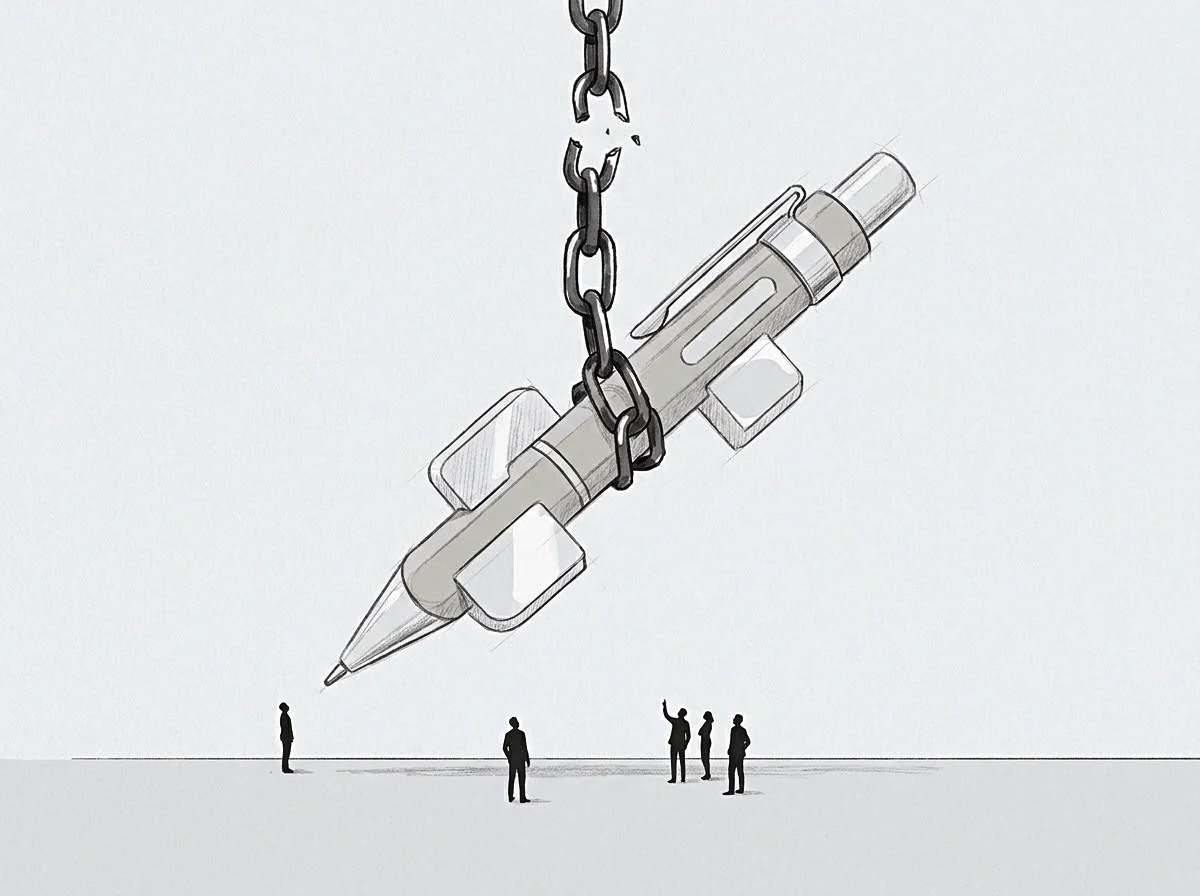
Ceiling
When systemic demand permanently exceeds available processing capacity, human operational units adjust their throughput to survive. This systemic adjustment is throttling, an adaptive mechanism where the human nervous system deliberately restricts attention, engagement, and operational scope to preserve core functioning. Clinical observers routinely mistake operational throttling for psychological burnout or depressive withdrawal.
In corporate settings, management frequently misreads a throttled team as disengaged, unmotivated, or resistant to change.
This state is not depression. Depression is a collapse of goal-directed motivation across all contexts; throttling is a targeted, functional rationing of regulatory capacity designed to protect primary operational outputs. A throttled operator continues to execute core critical functions with precision, such as settling high-value trades or responding to urgent system outages.
They intentionally abandon non-critical duties, including secondary compliance documentation, peer mentorship, optional team syncs, and proactive process improvements.

Indicators of Operational Throttling
A team operating at absolute limit alters its behavioral signature before operational outputs fail outright. Identifying these behavioral shifts allows leadership to quantify regulatory deficits prior to total operational disruption.
- Selective Latency Extension occurs when operators delay responses on non-urgent internal communications while maintaining rapid resolution times on critical customer escalations.
- Protocol Rigidity emerges as team members strictly adhere to minimum written guidelines, refusing to exercise discretionary judgment or handle edge-case exceptions.
- Dyadic Isolation manifests when operators disengage from informal peer communication, muting team chat channels and declining collaborative problem-solving opportunities.
- Secondary Task Elimination develops when non-monitored operational duties, such as updating knowledge bases or completing post-incident reviews, stop entirely.
Capacity drops under persistent strain. When leadership fails to recognize throttling, they often respond with performance management plans or demands for increased productivity. These interventions increase incoming regulatory demand on an already saturated system.
The intervention forces the throttled operator past their functional adaptation threshold into complete operational breakdown, characterized by severe cognitive fatigue, frequent critical errors, and sudden resignation.
System capacity running at its absolute ceiling preserves core execution by shedding secondary demands.
A system running at its ceiling reveals its true limit through non-responsiveness to secondary demands rather than through complete collapse.

Thread
Every open compliance issue, client inquiry, or operational monitoring task occupies a discrete slot in human working memory. In restructured operations environments, the primary driver of regulatory capacity exhaustion is not total work hours, but the volume of ungated threads held simultaneously. An ungated thread is an active operational loop lacking clear boundaries regarding scope, completion date, or final ownership terms.
Every open loop demands continuous passive monitoring, consuming cognitive headroom and reducing the capacity available for active problem solving.
The slot remains occupied. Managing open loops requires accurate slot arithmetic: calculating the maximum number of active operational threads a team member can track before cognitive performance degrades. Cognitive research establishes that human working memory comfortably manages between three and five active information clusters.
When restructuring merges operational roles, an operator may inherit responsibility for twelve distinct monitoring channels, fifteen ongoing vendor queries, and four recurring project streams. Even if no immediate action is required on these channels, the mental requirement to maintain awareness of their status consumes limited processing slots.

Worked Case of Open Loop Multiplication
Assume an operational lead manages a newly merged team responsible for both incident triage and daily compliance filing. Following a headcount reduction from eight to five personnel, individual thread ownership expands significantly. The lead holds four active high-severity incident tickets, eight pending compliance audits, and three unresolved cross-departmental escalations simultaneously.
Each open thread generates periodic notifications, status requests, and ambient anxiety regarding potential regulatory penalties.
Open loops demand attention. The lead spends forty percent of their active work time reviewing status across fifteen open loops rather than resolving specific issues. The cognitive cost of switching between unrelated contexts exhausts their regulatory capacity by mid-day, leaving zero headroom for complex decision-making during late-afternoon operational surges.

Sequencing the Gate Transition
Moving an operational unit out of chronic overload demands converting un-gated requests into bounded deliverables. The team must transition from open-ended monitoring to strict slot management.
- Quantify current open thread inventory across all communication platforms and ticketing systems.
- Assign explicit scope boundaries and resolution terms to every active operational request.
- Establish hard caps on the maximum number of concurrent open threads permitted per operator.
- Park low-priority operational loops in explicit queue structures that require zero active monitoring.
Gated threads protect capacity. By bounding operational requests with explicit terms, date expectations, and strict ownership rules, leadership frees occupied memory slots. The operator no longer tracks pending items in working memory, restoring cognitive headroom and returning personal regulatory demand to sustainable levels.
Active thread concurrency determines human processing speed more directly than total daily working hours.
A stated concurrency limit of three active operational threads per lead re-establishes predictable escalation latency across the restructured unit.

Rig
Structural stability inside restructured operational units demands hard mechanical limits on incoming demands. Relying on individual resilience or personal coping strategies to manage systemic regulatory capacity deficits guarantees high turnover and operational failure. Sustainable operations require explicit structural gates that regulate incoming work volume to match the verified regulatory capacity of the remaining team.

Implementing Stated Concurrency Limits
Defining exact operational capacity prevents secondary teams from transferring their administrative overhead unchecked. Leadership must establish a formal concurrency limit for every operational role, stipulating the exact number of active cases an operator may hold simultaneously. When an operator reaches their concurrency limit, incoming requests automatically divert to a managed queue or require executive sign-off to displace an existing active thread.
The monitoring window closes. Stated limits convert covert operational stress into visible queue metrics. If incoming demand consistently exceeds the unit’s stated concurrency threshold, the resulting queue growth provides undeniable quantitative evidence of a structural capacity deficit.
Executive leadership must then choose between expanding team headcount, reducing operational scope, or explicitly accepting higher processing latency. This shift transfers the responsibility of capacity management off the nervous systems of frontline operators and places it back onto organizational architecture.
Whether executive leadership accepts explicit throughput throttling as the trade-off for system stability remains the operational boundary of the enterprise.