
Social Baseline Buffer Depletion Under Acute Organisational Strain
Acute organizational strain exhausts social baseline buffers, converting partner proximity from an energy-saving co-regulator into a net metabolic load.

Dyad
Two founders sit in an open video call at eleven at night, each holding three operational escalations while attempting to baseline the partner posture. Incoming metrics from the last quarter indicate a shrinking cash runway, while two core engineers have just tendered resignations. The immediate instinct of both leaders is to look across the screen for emotional anchoring.
Neither finds it. The brain of each actor registers the exhausted facial expression and flat tone of the other not as a stabilizing presence, but as an extra item of incoming environmental strain.
Social Baseline Theory demonstrates that human neurobiology treats proximity to familiar, dependable conspecifics as a primary energy-saving mechanism. Under normal baseline conditions, the brain predicts shared effort and automatically downregulates its own metabolic investment in threat vigilance and autonomic self-regulation. The presence of a trusted partner effectively offloads the neural cost of environmental monitoring.
In early organizational building, this co-regulation functions as unbooked capital. The physical presence of a co-founder reduces the individual neural energy spent making high-stakes decisions under uncertainty.
Acute organizational strain disrupts this baseline economy. When severe operational shocks hit an enterprise, the individual regulatory load carried by each leader spikes instantly. If both members of the dyad reach ceiling simultaneously, proximity ceases to reduce effort.
The nervous system of each actor detects the distress of the partner, interpreting that distress as an unmitigated threat in the immediate environment. Borrowed regulation breaks down when neither party retains surplus metabolic capacity to lend.
The physical presence of an equally depleted partner increases vigilance costs rather than reducing them.
The room grew quiet.
When co-regulation fails, the dyad enters a state of mutual load transfer. Every visual cue, tone shift, and delayed response from one partner becomes an ungated ping that the other must parse for hidden operational risk. The metabolic cost of remaining in close contact exceeds the cost of solitary problem solving.
The load remained.
A partner expecting regulation from an empty vessel concludes that silence is intentional withholding.

Drain
Organizational shock alters the neural economy of shared work. When runway shortens or critical systems crash, incoming operational demand outpaces internal processing headroom. In healthy conditions, social baseline buffering offloads neural computation to the surrounding team.
Under acute strain, two specific mechanisms destroy this buffer: physiological strain contagion and hyper-vigilant mutual monitoring.

Physiological Strain Contagion in Leadership Structures
Nervous systems in close proximity exchange regulatory data continuously. When an operator exhibits signs of chronic autonomic arousal, nearby team members mirror that physiological state through passive perception. In high-demand environments, this mirroring escalates baseline systemic stress.
Instead of one calm actor anchoring an anxious team, two hyper-aroused actors amplify the autonomic strain of the room.
The capacity dropped.
This contagion transforms the social environment from a regulatory asset into a primary source of allostatic wear. Allostatic load represents the physiological strain accumulated through chronic exposure to fluctuating or heightened neuroendocrine responses. When team members can no longer rely on each other for baseline stabilization, their individual neural architecture remains in continuous hyper-vigilance.
The failure of social baseline buffering manifests through predictable operational breakdowns.
- Compounded Vigilance: Both partners scan for external threats while monitoring each other for signs of collapse, doubling the total metabolic spend.
- Regulation Defaulting: One actor attempts to draw emotional stabilization from a partner whose capacity is fully committed to operational firefighting.
- Gated Withdrawal: An individual silences communication channels to protect remaining cognitive headroom, which the partner interprets as deliberate abandonment.
The ping went unanswered.
Allostatic wear escalates rapidly when social signals transition from regulatory cues into incoming operational tasks.
The thread stayed open.
Misinterpreting physiological depletion as relational disinterest destroys the executive pair before the operational shock resolves.

Threshold
The transition from low-cost baseline sharing to high-cost load transfer occurs at a measurable point of capacity overload. Every human operator possesses a hard ceiling on concurrent cognitive threads. A thread carrying clear scope, fixed delivery dates, and explicit terms consumes minimal working memory.
An open, ambiguous thread regarding partner alignment or operational survival consumes an active processing slot continuously.
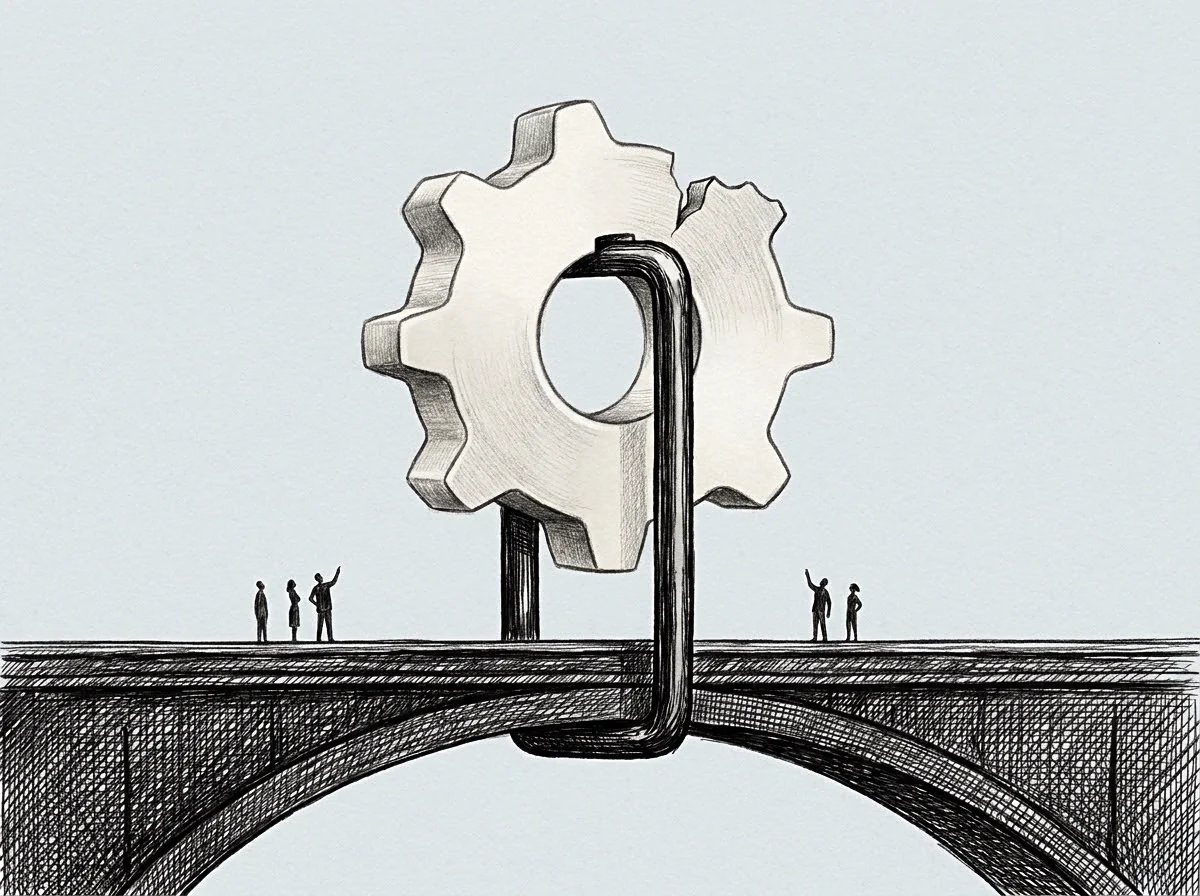
Where Does Borrowed Regulation Turn Into Shared Load?
Borrowed regulation relies on the presence of asymmetric capacity. One partner absorbs environmental noise because their internal regulatory headroom remains uncompromised. When organizational crisis forces both actors past their individual processing limits, this asymmetry vanishes.
At this threshold, any attempt to lean on the partner transfers raw strain directly into an already overloaded system.
The ceiling held.
The progression from baseline buffer depletion to complete dyadic shutdown follows a sequential degradation path across four distinct phases.
- Operational shock hits the team, raising baseline cortisol and autonomic arousal across all leadership roles.
- Individual regulatory capacity reaches maximum ceiling as open loops multiply without immediate resolution.
- The social baseline buffer collapses, converting incoming interpersonal signals into net metabolic load.
- Systemic throttling begins, forcing actors to shed complex strategic tasks in favor of basic survival execution.
The dyad broke.
A dyad at ceiling transfers load with every un-gated message sent after midnight.
The baseline dissolved.
Whether an executive pair can rebuild a shattered social baseline without restructuring physical working distance remains undetermined in active crisis environments.

Metrics
Evaluating dyadic health relies on precise observational indices rather than subjective internal reports. When leaders report feeling disconnected or unaligned, they are describing the downstream psychological subjective reading of an upstream physiological resource deficit. Measuring the state of the social baseline buffer requires tracking operational observables: response latency on non-urgent messages, the ratio of tactical execution to strategic planning, and the frequency of defensive communication maneuvers.

Distinguishing Throttling From Systemic Failure
Throttling is an adaptive physiological defense. When cognitive load exceeds safe thresholds, the brain downregulates peripheral processing to protect core operational routines. A throttled operator continues executing basic tactical assignments while shedding high-order relational processing, creative generation, and complex empathy.
Clinical frameworks routinely misdiagnose this state as depressive apathy or motivational loss. Throttling is a resource conservation mode triggered by unmitigated allostatic strain.
The allocation shifted.
The table below details the observational and physiological differences across dyadic operational states during sustained strain.
| State | Physiological Signature | Social Baseline Function | Operational Output |
|---|---|---|---|
| Buffered Dyad | Low autonomic tone, steady heart rate variability | Co-regulation reduces individual baseline load | High strategic execution and open creative capacity |
| Throttled Dyad | Elevated cortisol, restricted vagal tone | Zero buffer; social pings read as incoming tasks | Tactical survival execution only; strategic stop |
| Depleted Dyad | Chronic allostatic overload, somatic exhaustion | Negative buffer; proximity triggers threat response | Cascading execution errors and reactive withdrawal |
The slot closed.
Throttling preserves basic execution by shutting down complex relational processing until incoming load recedes.
The count reached zero.
Enforcing an explicit forty-eight-hour asynchronous protocol changes incoming message volume from an ungated flood into a scheduled batch, restoring cognitive headroom.
Gate
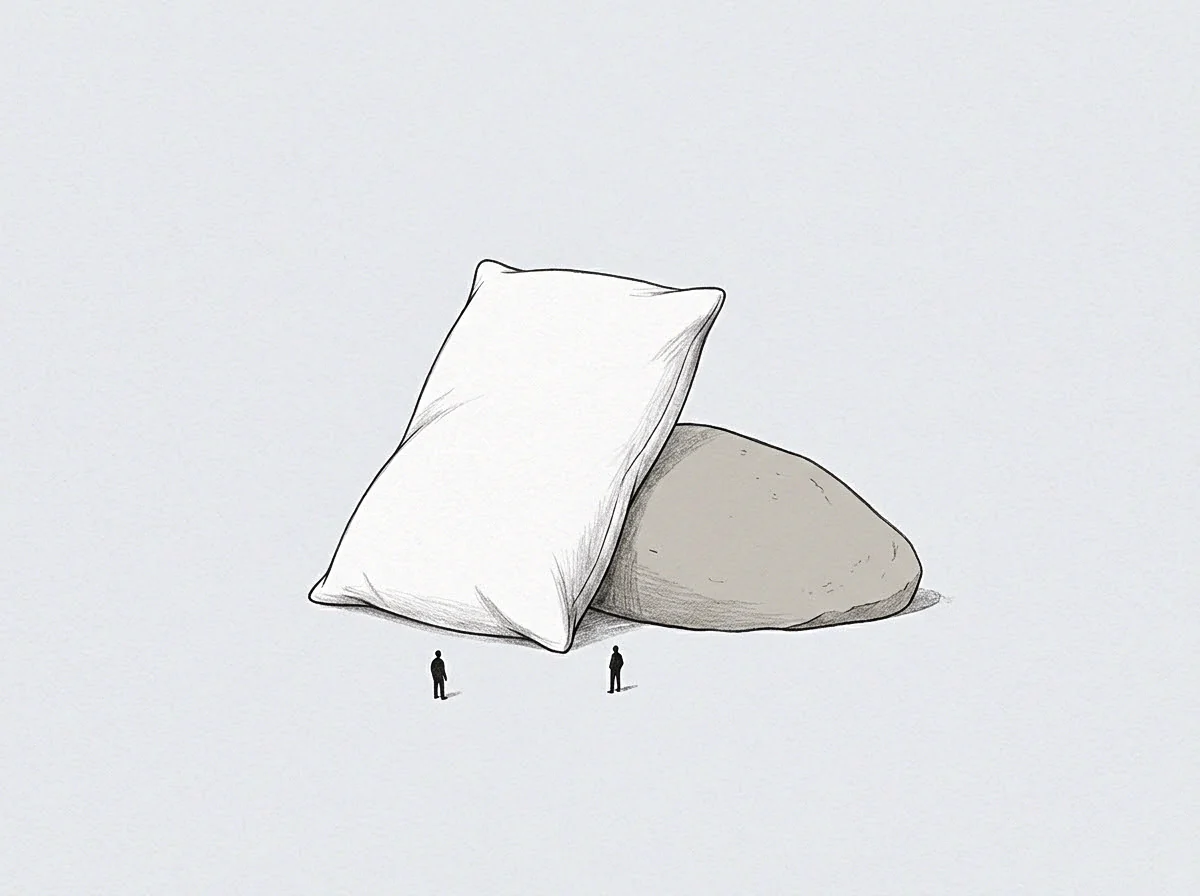
Structural barriers protect remaining baseline capacity when internal regulation fails. Relying on personal goodwill or shared commitment during acute organizational strain invites continuous buffer erosion. When dyadic co-regulation breaks, operators replace informal relational reliance with rigid, explicit operating gates.

Structuring Scope Date and Terms
An ungated communication channel creates an infinite concurrency limit. When co-founders allow uninterrupted access across all hours, every message functions as an unannounced demand on depleted regulatory reserves. Structuring interactions around scope, date, and terms converts open relational threads into bounded operational units.
The term was absent.
Scope defines the exact boundary of the required decision, excluding adjacent strategic anxieties. Date sets the explicit temporal window for review, removing the expectation of instant acknowledgment. Terms specify the required output, preventing open-ended emotional processing.
Parking an unresolved line of inquiry with clear review terms frees an active processing slot immediately, lowering individual allostatic load without requiring relational resolution.
The line was parked.
Clear operational terms protect dyadic capacity long before personal goodwill runs out.