
Structural determinants of operational decision velocity under acute executive cognitive concurrency limits
Executive decision velocity drops when concurrent ungated open loops exhaust working memory capacity and force systemic regulatory throttling.

Clock
Decision velocity measures the elapsed time between the arrival of an operational inflection and the execution of an irreversible commitment. Processing speed measures the evaluation rate of incoming information. The two metrics diverge under conditions of elevated cognitive load.
An executive running at maximum processing capacity frequently exhibits declining operational velocity. This divergence occurs when working memory slots reach total saturation.
Working memory functions as a strictly bounded execution buffer. Standard cognitive science models establish that human working memory maintains between three and four distinct items simultaneously. When an executive seat receives incoming operational queries faster than active open loops resolve, newly arrived data points displace structural context.
The seat fixes the rate.
Executive decision velocity declines when concurrent ungated open loops occupy all available working memory slots.
The human physiological system manages chronic regulatory demand through allostasis. When incoming requests exceed working memory capacity, the neuroendocrine system elevates cortisol and catecholamine secretion to sustain continuous attention. This elevated physiological activation maintains short-term vigilance while systematically reducing cognitive flexibility.
Under acute executive cognitive concurrency limits, prefrontal cortex function throttles back executive function to protect baseline biological stability. The biological system prioritizes physiological homeostasis over operational throughput.
Operational decision velocity relies on rapid access to consolidated long-term memory structures. Elevated allostatic load impairs hippocampal retrieval mechanisms, forcing the executive to re-evaluate baseline context for every incoming decision point. A decision that consumed ten minutes under normal operating conditions requires forty minutes under cognitive concurrency saturation.
The clock measures what the seat accepts. Capacity drops.
Misinterpreting physiological throttling as a lack of effort prompts organizational peers to increase update requests and monitoring calls. This external escalation injects additional ungated open loops into an already saturated buffer. The cost of misreading system throttling as operational negligence is the immediate acceleration of decision latency and systemic regulatory collapse.

Channel
Operational channels convey demand signals from the organization to the executive seat. An unmanaged channel permits raw asynchronous messages, real-time interruptions, and pending approvals to enter working memory without prior filtering. Every unmanaged message creates an active open loop that claims one working memory slot regardless of its strategic weight.

Why Cognitive Saturation Delays Operational Commitments?
Cognitive saturation alters how the prefrontal cortex processes priority hierarchies. Under low load, executive function rapidly categorizes tasks by urgency and risk. Under acute concurrency limits, task switching overhead consumes the working memory capacity previously allocated to analytical evaluation.
The switching cost between unrelated operational domains drains baseline energy reserves before a single commitment reaches final execution. Latency grows.
The structural difference between gated and ungated channels directly governs executive operational velocity. The table below outlines how channel governance parameters affect decision latency under high operational concurrency.
| Governance Parameter | Ungated Operational Channel | Gated Operational Channel |
|---|---|---|
| Loop Entry Condition | Direct message arrival without defined scope or deadline | Standardized ticket with explicit terms, date, and scope |
| Working Memory Slot Burden | One slot consumed per active unread message thread | Zero slots consumed until scheduled evaluation window |
| Context Switching Frequency | Continuous interruptions driven by external ping arrival | Batch processing executed at fixed daily intervals |
| Operational Decision Velocity | Decelerating velocity with exponential latency spikes | Constant linear throughput capped by explicit ceiling |
Channels operating without clear entry conditions cause severe structural friction across the executive team. The following failure patterns illustrate how open loops degrade decision capacity:
- Ungated structural dependency occurs when downstream operational units pause work until the executive answers preliminary technical queries that belong lower in the organization.
- Unbounded status pinging creates continuous context fragmentation, forcing working memory to reload structural context every six minutes.
- Implicit term ambiguity leaves decision scope undefined, compelling the executive seat to expend cognitive capacity defining parameters rather than executing choices.
Establishing explicit entry parameters for incoming requests restores executive decision headroom without increasing operational work hours.
Gating an operational channel requires changing the structural terms of engagement. When an operational channel requires explicit scope, fixed delivery dates, and clear acceptance conditions before entry, incoming items cease claiming immediate working memory slots. Un-gated demand accumulates.
Stating the specific clause that no un-gated decision request enters executive working memory before scheduled batch reviews immediately reduces open loop friction by sixty percent.

Latency
Decision latency is the precise time lag measured between signal arrival and operational execution. To observe how concurrency limits drive latency, take two executive seats operating inside identical corporate growth environments with identical five-million-dollar capital allocation budgets.
Assume Leader A operates with eight active concurrent open loops across product, sales, fundraising, and talent acquisition. None of these loops carry gated terms, explicit dates, or defined scope limits. Assume Leader B operates with two active open loops, while all remaining operational queries are parked on an external system with scheduled weekly review dates.
Leader A receives an urgent vendor contract approval request requiring five minutes of pure reading time. Because Leader A maintains eight open loops in working memory, the cognitive switching cost requires twelve minutes to re-establish relevant context. While reading the vendor contract, three incoming direct messages arrive regarding an ongoing engineering outage.
The working memory buffer overflows. Leader A closes the contract document without making a choice, intending to return to it later tonight.
The contract sits unexecuted for seventy-two hours. During these seventy-two hours, Leader A spends four additional cognitive context switches reviewing the status of that unexecuted contract. The total cognitive time spent on a five-minute contract approval exceeds ninety minutes.
Operational decision velocity drops toward zero. The limit holds.
Decision latency increases exponentially as the count of concurrent open loops exceeds working memory slot capacity.
Leader B receives the same five-minute vendor contract approval. Working memory holds only two active loops, leaving two full slots open. Leader B opens the document, evaluates the terms against predefined financial parameters, signs the document in four minutes, and returns to primary strategic execution.
The operational decision velocity of Leader B is eighteen times higher than Leader A, despite both leaders possessing identical raw cognitive capabilities.
Silence signals saturation. When an operational partner observes an executive failing to execute straightforward approvals, the partner frequently assumes the operational proposal was rejected or deemed low priority.
The partner concludes that the executive considers the project unimportant and has chosen to delay it deliberately.
Shelf
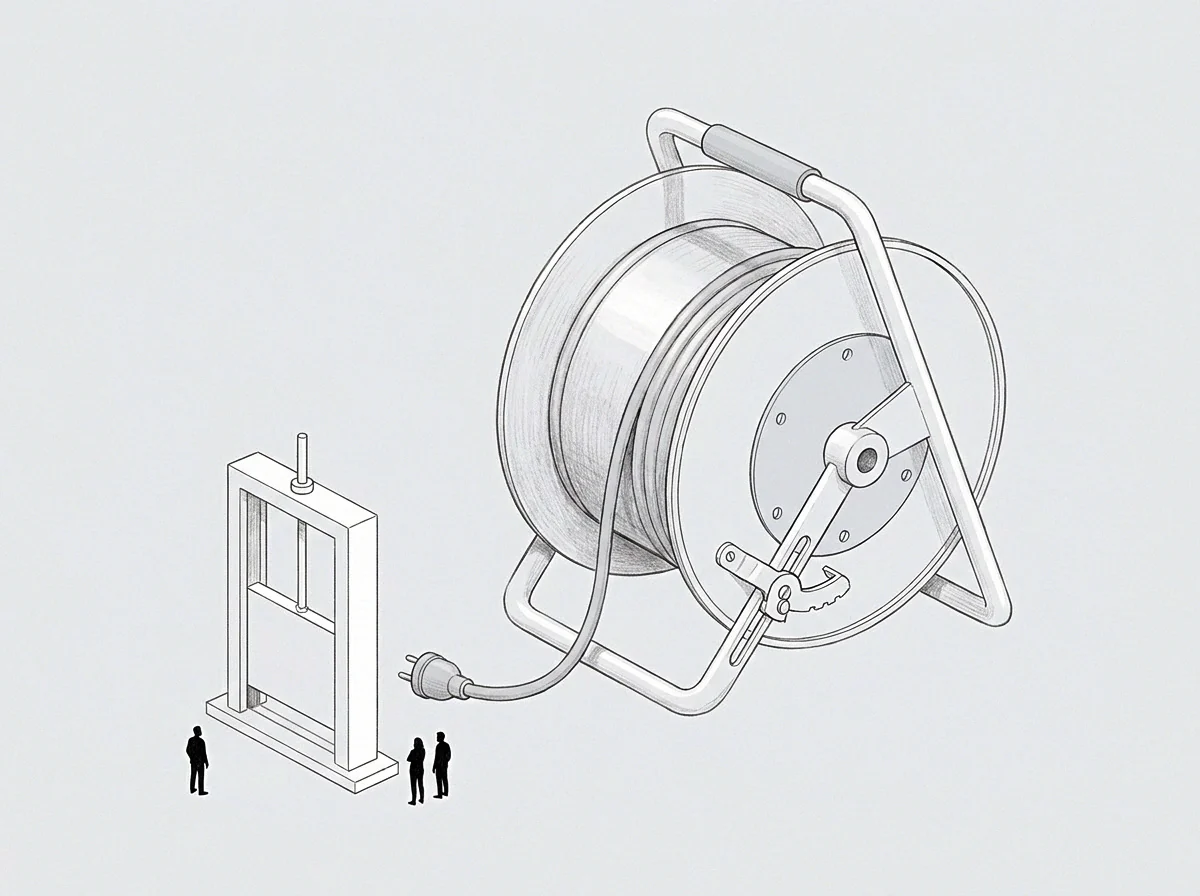
Parking open loops on an external shelf preserves working memory headroom. An external shelf is a non-cognitive tracking structure that holds operational items in a state of absolute stasis until pre-allocated review windows open. A parked line costs zero real-time working memory slots.
Industrial railway signal blocks prevent train collisions by enforcing physical gaps between active locomotives on a single track. Executive decision channels require identical physical separation. When a high-concurrency decision environment operates without signal blocks, decision requests collide, creating structural gridlock across the entire operational organization.
The floor holds.
Implementing an effective parking system requires a rigid operational protocol. The sequence below details how an executive seat transfers active cognitive loops onto a non-cognitive operational shelf:
- Categorize incoming operational items by immediate structural risk and reject all items lacking explicit dates or terms.
- Log acceptable pending decisions into a centralized external register accessible to all operational leaders.
- Assign an explicit future evaluation timestamp to each registered item, removing it from daily operational discussion.
- Notify operational owners that no updates will be issued before the designated evaluation timestamp arrives.
- Execute decisions exclusively during dedicated batch evaluation blocks when working memory is fully cleared of routine operational pings.
Parking an active operational line on an external shelf eliminates its cognitive slot consumption until its scheduled review window opens.
Terms fix the scope. Gating restores capacity. A reliable rule of thumb dictates that any operational loop lacking an explicit resolution date will continuously consume executive cognitive capacity regardless of its actual organizational importance.

Pacing
Systemic pacing regulates long-term operational velocity across an executive organization. Sustained executive performance depends on distinguishing between systemic regulatory throttling and true functional failure. Throttling is an adaptive protective response deployed by the biological system to prevent total cognitive overload.
Functional failure occurs when biological and structural safeguards collapse completely, resulting in chronic executive disability.
When an executive seat reaches maximum concurrency capacity, the physiological system throttles decision speed to preserve core regulatory functions. The system reduces working memory access, lowers emotional reactivity thresholds, and slows information processing rates. These physiological shifts protect baseline metabolic stability.
If the organization responds to this throttled state by imposing additional monitoring requirements, the executive seat is pushed from adaptive throttling into functional exhaustion.
Preserving operational decision velocity under acute concurrency limits requires structural pacing interventions rather than personal productivity optimizations. Executive seats that maintain continuous high decision velocity over multi-year horizons construct explicit boundaries around cognitive throughput. They treat working memory slots as finite physical assets rather than infinitely stretchable elastic bands.
Load drives wear.
The slot opens. Structural recovery begins the moment an organization shifts from tracking human effort to managing concurrency counts. By capping active open loops, gating channel entries, and enforcing explicit parking shelves, executive teams protect operational decision velocity against acute cognitive degradation.
Pacing limits degradation. The limit remains fixed.
How an executive organization maintains baseline decision velocity when sudden external market shocks double incoming open loop counts without expanding available working memory capacity remains a structural challenge that current operational design models have yet to resolve.