
Structural Intake Gate Calibration Against Chronic Executive Allostatic Load
Structural intake gates filter external operational demands through formal protocols to prevent biological allostatic accumulation in executive nervous systems.

Sieve
Four communication channels run simultaneously on a Tuesday evening while an executive sits before an approval request for an office lease extension. The document carries three unresolved liability clauses, two financial models with divergent headcount projections, and a deadline expiring in six hours. On a secondary screen, five incoming direct queries flash about a vendor disagreement.
The physiological response to this overlap goes deeper than temporary mental fatigue. Regulatory systems maintain stability through active neuroendocrine and autonomic adjustment, a process stress physiology terms allostasis. When demands stay continuous, the metabolic and neural toll accumulates as allostatic load.
That cost shows up as elevated evening cortisol, higher sympathetic vascular tone, and impaired prefrontal executive inhibition.
Intake volume behaves like an unmanaged flood when an organization defaults to total accessibility. Uncalibrated entry points invite cognitive capture, drawing working memory off long-horizon evaluation and into immediate transactional responses. Without an intake filter, the neural architecture must process raw, unsorted organizational signals directly at executive reception.
A biological regulatory system facing continuous uncalibrated input operates in permanent metabolic debt.
Intake failure produces a distinct operational paralysis. Minor logistical inquiries demand the same neuroendocrine expenditure as balance-sheet solvency decisions. Executive capacity degrades through sheer volume, leaving zero reserve capacity for volatile systemic shocks.
Cognitive Prefrontal Saturation Dynamics
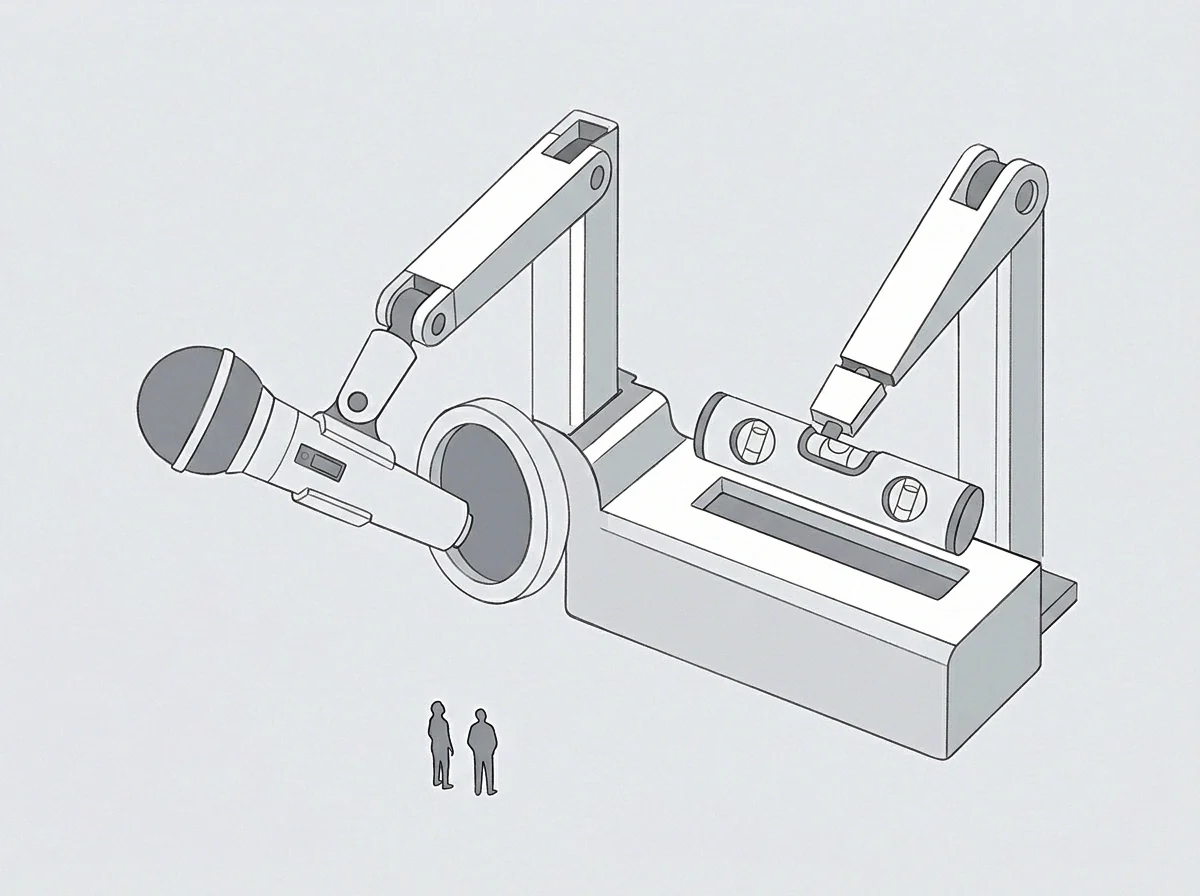
Prefrontal cortical circuits maintain goal-directed focus against immediate distractions through steady dopaminergic and noradrenergic modulation. When incoming transactions arrive without structural attenuation, these circuits drain their local glycogen reserves and downregulate receptor sensitivity. Attention splits across competing inputs.
Working memory holds an active capacity of roughly four distinct conceptual clusters. Exceeding that baseline triggers rapid forgetting, forcing an executive to rebuild task context repeatedly throughout the day.
The cost of rebuilding lost context compounds over successive working blocks. A single message about travel logistics knocks an active financial liquidation analysis out of prefrontal focus, and working back into that analysis takes twelve to twenty minutes. When six unvetted messages break through the executive perimeter every hour, sustained focus on core strategic risks becomes mathematically impossible.
The fifth slot held the lease liability review until an unvetted vendor ping cleared it.
Uncalibrated intake turns executive capacity into a slow dispatch switchboard, undercutting analytical work while driving up administrative errors.

Spool
Open commitments behave like tangled wire across a workshop bench. Every unfinalized transaction, ambiguous deliverable, or deferred personnel decision takes up a real reservation in the nervous system. The Zeigarnik phenomenon shows how unfinished tasks remain active inside cognitive architecture, intruding until closed or formally written down.
An executive carrying forty uncontained operational threads stays under continuous background sympathetic activation, whether those projects require physical effort right now or not.
Ungated intake expands this cognitive load without limit. Without clear entry boundaries, every meeting, hallway chat, or digital ping drops an unresolved commitment straight into executive storage, where the mind treats every open promise as an active metabolic demand.
The metabolic drain of an obligation tracks with its ambiguity rather than its physical difficulty.
The nervous system tries to handle these accumulated threads through functional throttling, an adaptive suppression of executive drive that protects against physical exhaustion. This differs from clinical depression, which involves generalized anhedonia and lost motivation across every domain of life. Throttling selectively dampens discretionary exploration to preserve basic survival functions, keeping only the capacity to run familiar, routine procedures.

The Concurrency Boundary Mechanism
Working capacity has a hard structural limit that effort alone cannot expand. Human cognitive architecture handles ambiguous operational streams through serial processing rather than parallel calculation.
- Ungated thread density forces constant context switching across operational domains, burning through regulatory glycogen before noon.
- Latency ambiguity creates persistent anticipatory neuroendocrine tension during open professional interactions.
- Scope fluidity prevents prefrontal executive circuits from assigning clear completion criteria to active work.
Occupational health research shows that people carrying many open loops exhibit altered diurnal cortisol profiles, with flattened waking slopes and elevated evening readings. These measurements draw from multi-day salivary assays across corporate and clinical populations. The effect holds across diverse demographics, though extreme economic precarity introduces confounding baseline variables that laboratory models struggle to isolate.
If prospective longitudinal studies in larger non-Western executive cohorts showed normal diurnal cortisol curves despite thirty open operational loops, the link between open-loop density and autonomic dysregulation would need fundamental revision.
One third-party contract dispute sat untracked in working memory, taking up the second functional slot.
Operational threads without explicit completion milestones drain metabolic reserves indefinitely.
Sluice
Physical water management uses sluice gates to control flow volume, dissipate kinetic energy, and filter debris before turbines suffer damage. An executive intake structure serves the same engineering purpose for workplace communication. Operating as an external filter, the gate intercepts incoming demands, tests them against explicit criteria, and enforces standard packaging requirements before granting cognitive access.
Unstructured input arrives as emotional narrative, fragmented data, or hidden requests for reassurance. A calibrated sluice forces senders to format their request before transmitting it, pushing the effort of synthesis back to the source. That barrier protects prefrontal capacity for decisions and structural work.

Which Intake Structural Layer Fails Earliest?
Organizational pressure breaks the outer perimeter filter before it touches internal triage. During operational emergencies, internal and external counterparties try to bypass formal channels for quick executive access through informal routes. Giving in to those backchannels collapses the entire intake architecture within a few operational cycles.
| Gate Design | Metabolic Cost to Operator | Input Quality Level | Latency Variance | Relational Friction Level |
|---|---|---|---|---|
| Porous Direct Access | Severe continuous depletion | Raw, fragmented, highly ambiguous | Unpredictable instantaneous response | Negligible initial friction |
| Human Intermediary Buffer | Moderate periodic expenditure | Moderately synthesized and verified | Structured half-day aggregation | Localized relational pushback |
| Protocol Synchronous Batching | Low concentrated expenditure | Standardized, fully completed artifacts | Fixed weekly evaluation windows | Pronounced systemic institutional pushback |
Protocol-driven batching systems offer the strongest protection against allostatic accumulation. Direct unstructured access stops. Inquiries must go through standardized forms that require clear context, specific requested decisions, measurable resource stakes, and proposed contingency options.
A communication protocol that does not specify acceptable submission formatting defaults to executive exhaustion.
Adopting asynchronous triage reduces neuroendocrine spikes by eliminating continuous alerts. The executive reviews incoming material within set evaluation blocks, turning reactive response into structured adjudication.
The morning evaluation block absorbed three personnel requisitions, keeping the primary strategic slot intact.
The contract requires formal written documentation submitted forty-eight hours before scheduled executive deliberation, ruling out informal appeals.
Wedge
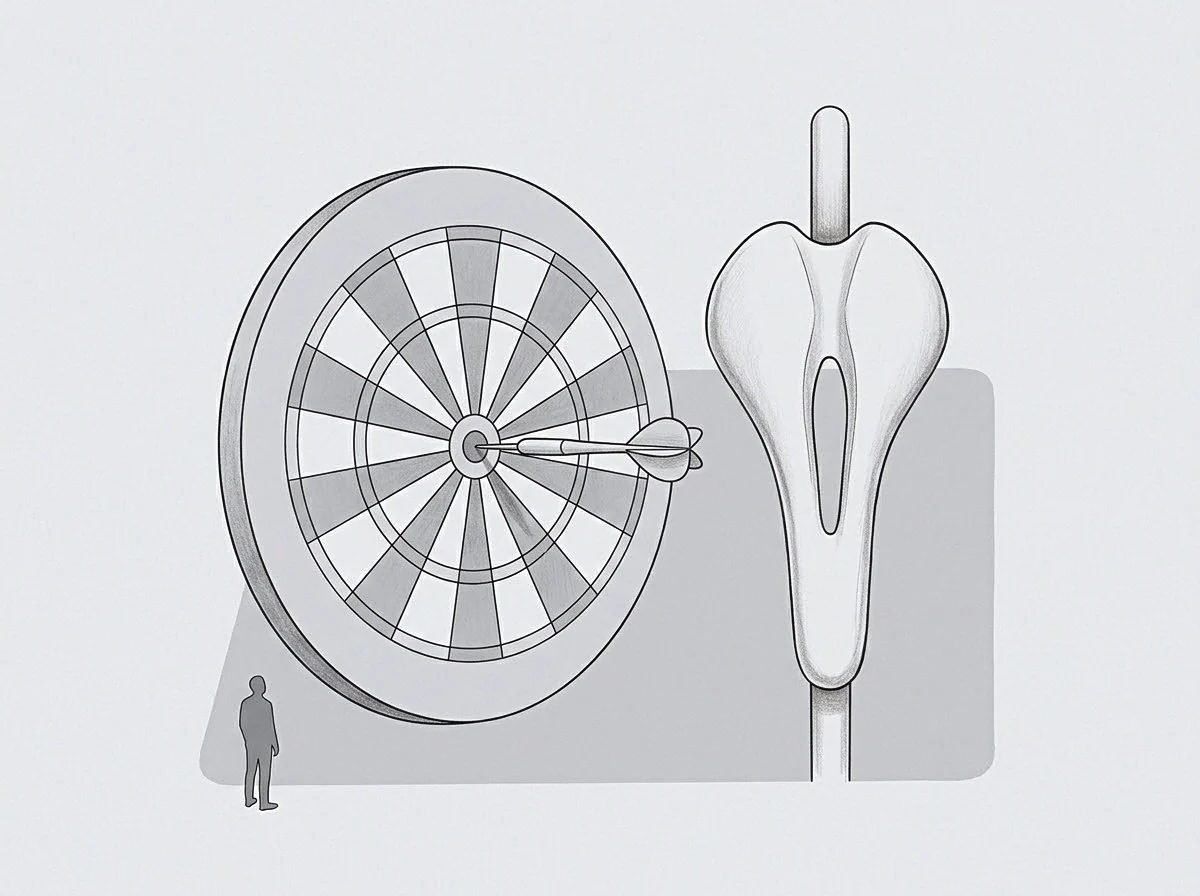
Inserting an intake gate into an established organization acts as a wedge against existing relational norms. People who previously had open access often see formal filtering as personal rejection, elitism, or evasion. Bounding access forces counterparties to resolve their own operational ambiguity instead of passing it straight to the executive.
Social baseline theory shows that the human brain saves energy by offloading risk assessment and problem-solving onto nearby peers. When an executive serves as an open backstop, team members draw on that capacity as shared energy. Setting up intake gates returns that cognitive effort to the individual operators, generating predictable friction.
Driving a steel wedge into seasoned timber creates intense heat and pressure before the grain splits. Organizations follow a similar pattern. When an executive turns down unformatted verbal escalations, the counterparty faces immediate friction: they have to organize the information, evaluate risk parameters, and outline solutions on their own.
Unspoken trade-offs thrive when access is unrestricted. Subordinates offer loyalty and deference in an unstated exchange for quick executive availability and cognitive offloading. Interrupting that pattern breaks the implicit agreement, prompting defensive political moves across leadership ranks.
The board representative expected immediate alignment on the strategic acquisition memorandum without writing a formal briefing document.
Relational dynamics predictably strain when an executive refuses to deliberate on unscheduled items without complete pre-read documentation.
Bolt
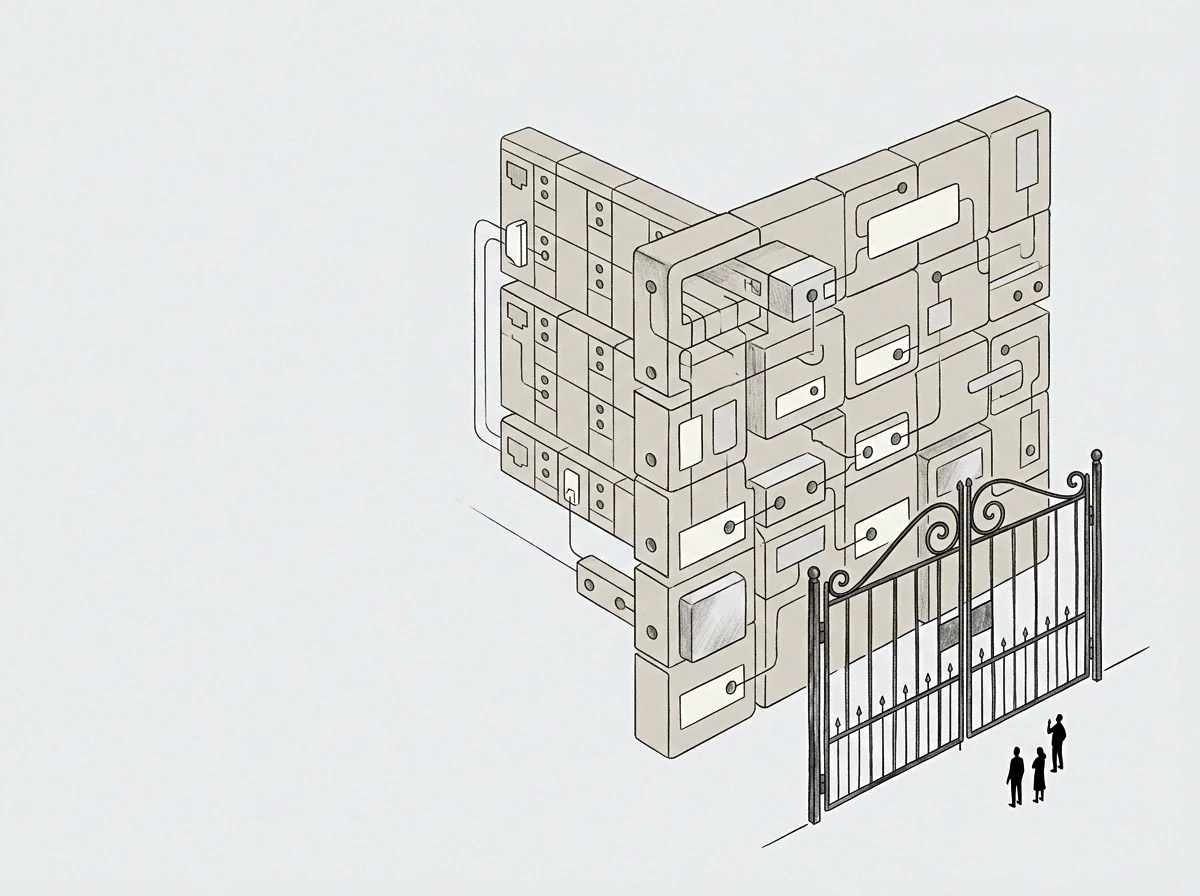
Protecting an organization against allostatic exhaustion requires anchor points like heavy bolts set into concrete. Willpower, enthusiasm, and good intentions break down under operational pressure. Lasting protection comes from firm boundaries built into calendars, reporting rules, and governance documents.
The main anchor is a firm concurrency ceiling. The executive sets a clear limit on active strategic priorities and takes on no new initiatives until a current project is formally handed off or cancelled. If that ceiling is four concurrent programs, a fifth remains on hold regardless of commercial temptation.
Capacity stays protected by non-negotiable operational ceilings rather than subjective energetic assessments.
Stated latency agreements provide temporal insulation. By establishing clear turnaround standards, such as twenty-four hours for operational clearances and seventy-two hours for analytical evaluations, an executive removes the expectation of instant response. Team members pace their work differently, resolving smaller roadblocks on their own instead of sending every transient issue straight to the executive.
Cognitive science research has not settled whether sustained high-demand work causes permanent prefrontal structural changes or functional adaptations that reverse with rest. Rodent models show dendritic atrophy in prefrontal networks and hypertrophy in amygdalar complexes under chronic stress, but human neuroimaging during prolonged overload remains mostly correlational. Given that uncertainty, prefrontal metabolic headroom is best treated as a finite resource that needs firm institutional protection.
The final operational slot stayed open through Friday afternoon, reserving analytical capacity for contingency planning.
The open question is whether an organization accustomed to instant executive responses can stay competitive while its principal decision-maker operates behind structural gates.