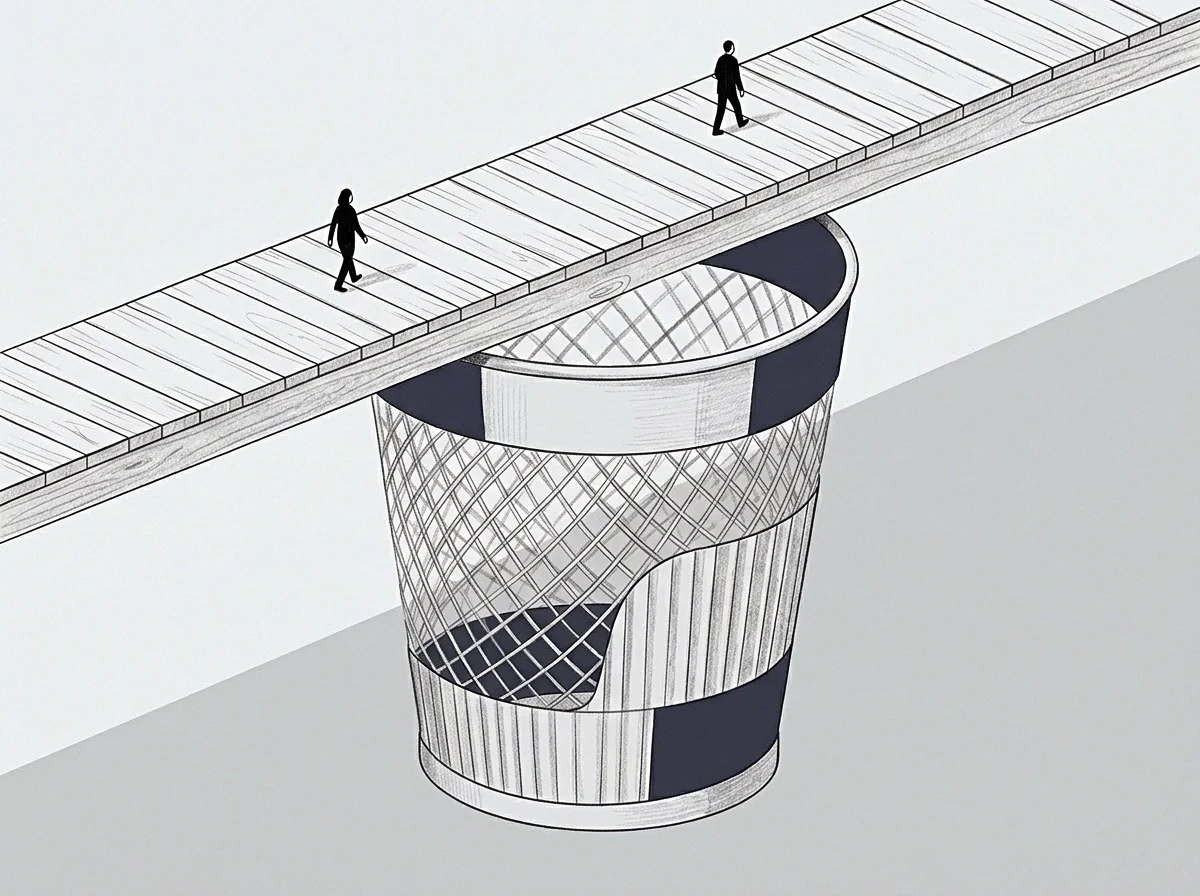
Meaning
Structural imbalance where one party holds unilateral power over systemic outcomes while another bears the operational load. The presence of asymmetric authority describes the condition where a founder retains final approval over actions executed by a team. This arrangement prevents the team from closing cycles without external validation.
It shifts the burden of continuous attention back to the individual who ostensibly offloaded the work.
Executive Weight
Residual power functions as a constant pull on executive capacity. Within a system of asymmetric authority, a practitioner must remain reachable at all hours to clear blockers. When every notable move requires a single signature, the speed of the organization matches the reaction time of that one person.
This creates a state of perpetual readiness that depletes metabolic reserves.
Operational Delay
Friction emerges when the person with authority is absent from the immediate context of the task. Because asymmetric authority decouples the ability to act from the information required for the action, teams often stall. They wait for decisions that would take seconds if the power sat at the point of execution.
The delay accumulates as a cost in both momentum and capital.
Capacity Limit
High levels of central control effectively cap the growth of a system. Reliance on asymmetric authority ensures that no process can scale beyond the monitoring capability of the lead officer. This limit stays fixed until the distribution of power changes.