Meaning
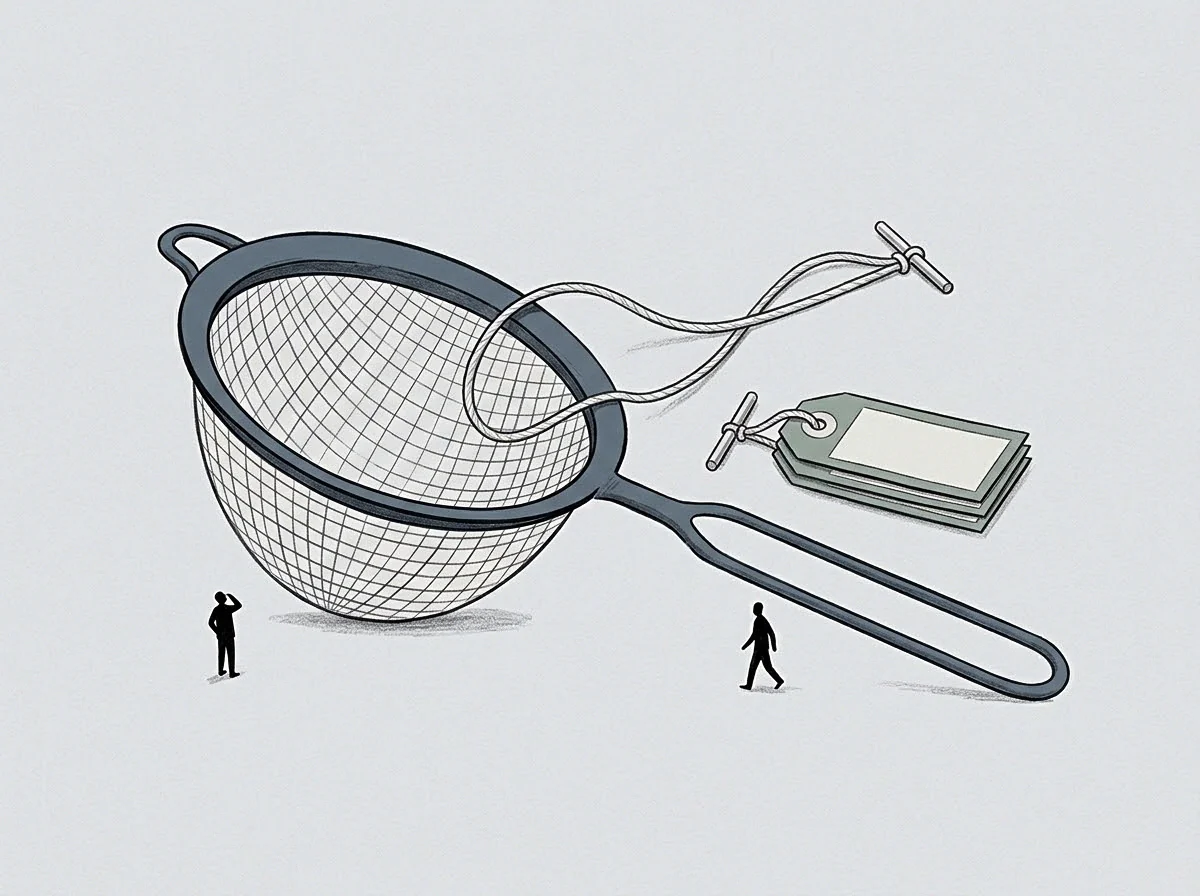
Isolation of internal signaling from immediate external response permits an asynchronous filter to protect cognitive capacity in solitary roles. An asynchronous filter operates as a regulatory valve between incoming operational demands and the attention span of a sole director. Input streams accumulate in a designated queue until the operator initiates retrieval, decoupling receipt from processing.
Attention shifts from continuous interruption handling to periodic batch review, lowering the allostatic load produced by constant context switching. This buffering mechanism governs operational cadence in environments lacking managerial layers to absorb noise. The boundary of application ends where statutory reporting deadlines demand instantaneous acknowledgment or synchronous human intervention.
Delay Threshold
Latency intervals dictate how long external signals wait before forcing a response from the operator. Maximum tolerable delay depends on the operational domain and the consequence of silence. Exceeding this limit converts a deferred decision into an operational failure.
System capacity determines whether the queue length scales linearly with volume or saturates under load.
Attention Cost
Processing interruptions consume cognitive bandwidth even when the signal proves trivial. Each context shift extracts a metabolic toll measured in hours of lost focus and diminished strategic capacity. Batching inputs through a scheduled review window minimizes the total volume of daily attention expenditure.
Self regulation replaces reactive compliance with a predictable expenditure of hours.
System Boundary
Separation between available communication channels and actual attention allocation prevents operational collapse. Unfiltered access exhausts the physical stamina of the individual running the enterprise. Regulation succeeds only when counterparties accept the imposed latency without penalty.
The filter establishes the structural limit of organizational absorption.