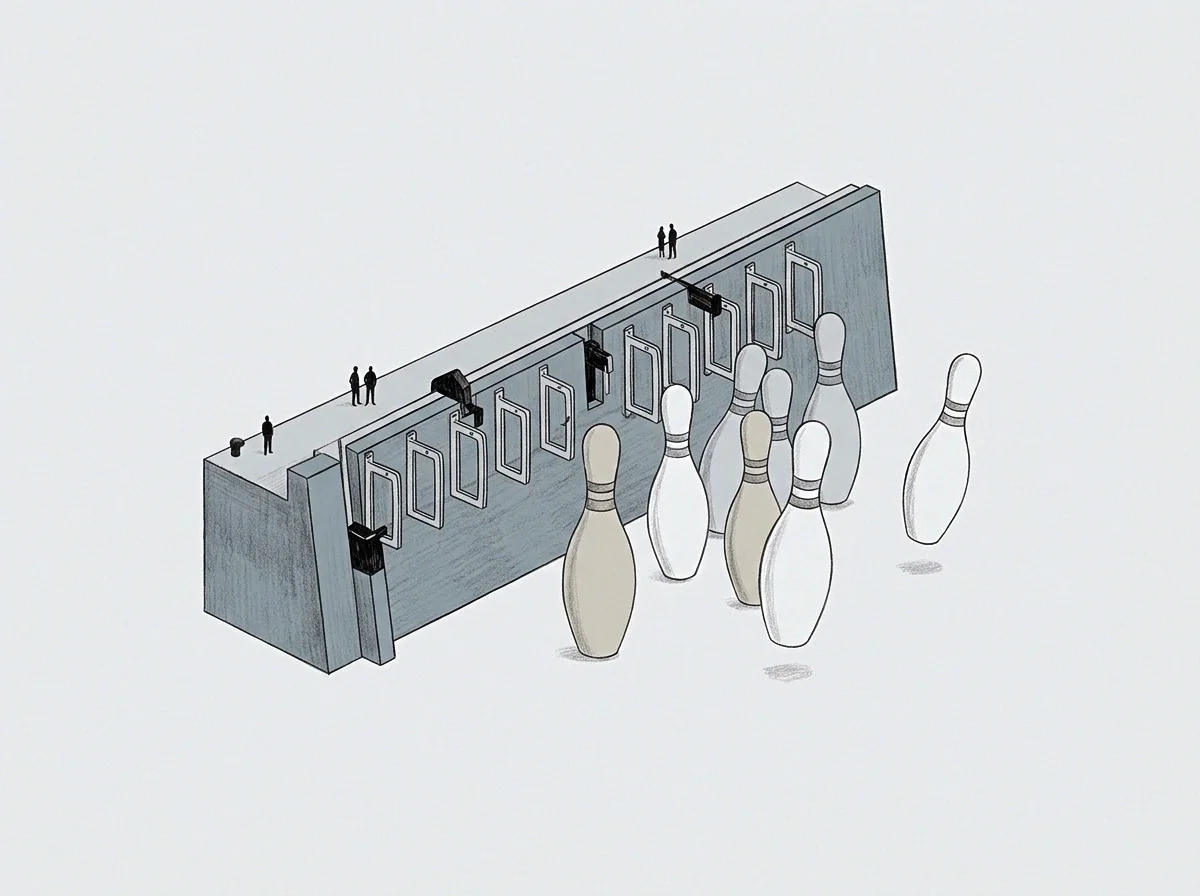
Meaning
Redirection of executive attention between different tasks or mental schemas requires a quantifiable expenditure of metabolic energy and time. This cognitive switching occurs when a founder moves from high-level strategic planning to granular operational troubleshooting. The process incurs a transition cost known as a switch cost where performance drops momentarily during the adjustment.
It stops being effective when the frequency of shifts exceeds the brain’s ability to maintain a coherent mental model of any single task.
Resource Depletion
Attention functions as a finite resource within the prefrontal cortex. Frequent cognitive switching reduces the depth of analysis available for complex problems. Each shift requires the brain to inhibit the previous rule set and activate a new one (a process that consumes glucose and increases mental fatigue).
Attention Limit
Sequential processing remains the standard for high-accuracy output. When a founder attempts to handle multiple streams of data simultaneously (the resulting cognitive switching creates a fragmented internal state). This fragmentation prevents the formation of the long-term memory structures needed for strategic foresight.
Switch Cost
Every transition between different types of work carries a hidden penalty in time and quality. The brain requires a recovery period to reach full efficiency in a new context after cognitive switching has occurred. Because this penalty is cumulative (a day filled with short tasks produces less value than a day spent on a single complex objective).
Constant interruption makes the maintenance of a high-level perspective impossible.