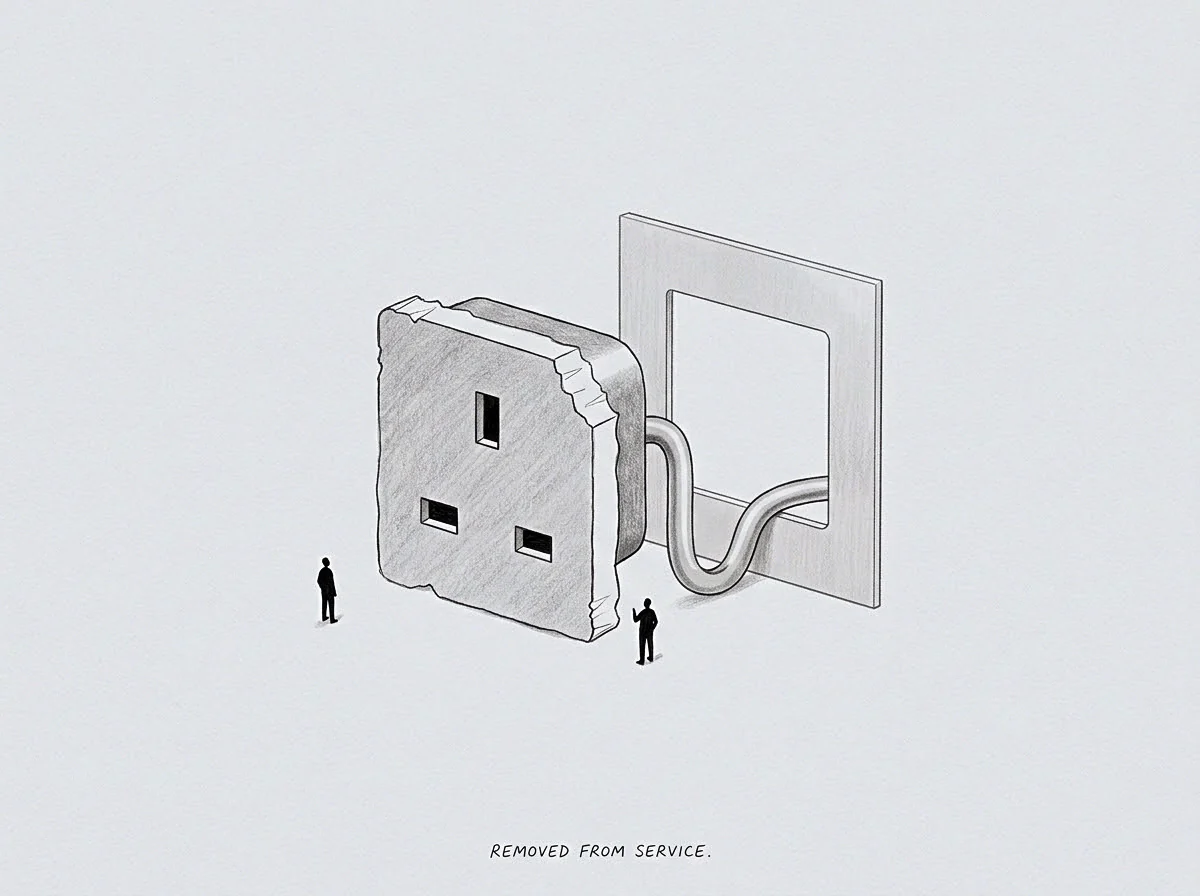
Meaning
Information processing bounds restrict the number of active mental tasks an individual can maintain simultaneously before output quality degrades. In executive roles, cognitive thread saturation occurs when open operational decisions and unresolved personnel issues exceed working memory limits. Working memory drops peripheral details to retain focus on immediate priorities.
This threshold marks the boundary where deliberate analytical processing degrades into reactive task triage.
Processing Bottleneck
Concurrent mental operations compete for finite neurological resources within the prefrontal cortex. As cognitive thread saturation takes hold, decision latency increases while error rates in complex evaluations climb sharply. An executive managing multiple parallel restructuring efforts loses the capacity to synthesize nuanced feedback from secondary units.
Context switching overhead consumes available working memory capacity, leaving negligible space for novel problem solving.
Attentional Drain
Sustained multi-tasking demands drain cognitive capacity and elevate continuous mental exertion. Under prolonged cognitive thread saturation, working memory failure manifests as missed operational signals, dropped follow-up actions and superficial analysis of strategic trade offs. The cost to the individual appears as severe mental fatigue and reduced focus span during critical discussions.
Continuous overload degrades long-term strategic vision into fragmented short-term reactions.
Structural Boundary
Neurological processing capacity cannot expand through conscious effort alone. Resolving cognitive thread saturation requires deliberate reduction of concurrent mental tracks through delegation or task termination.