Meaning
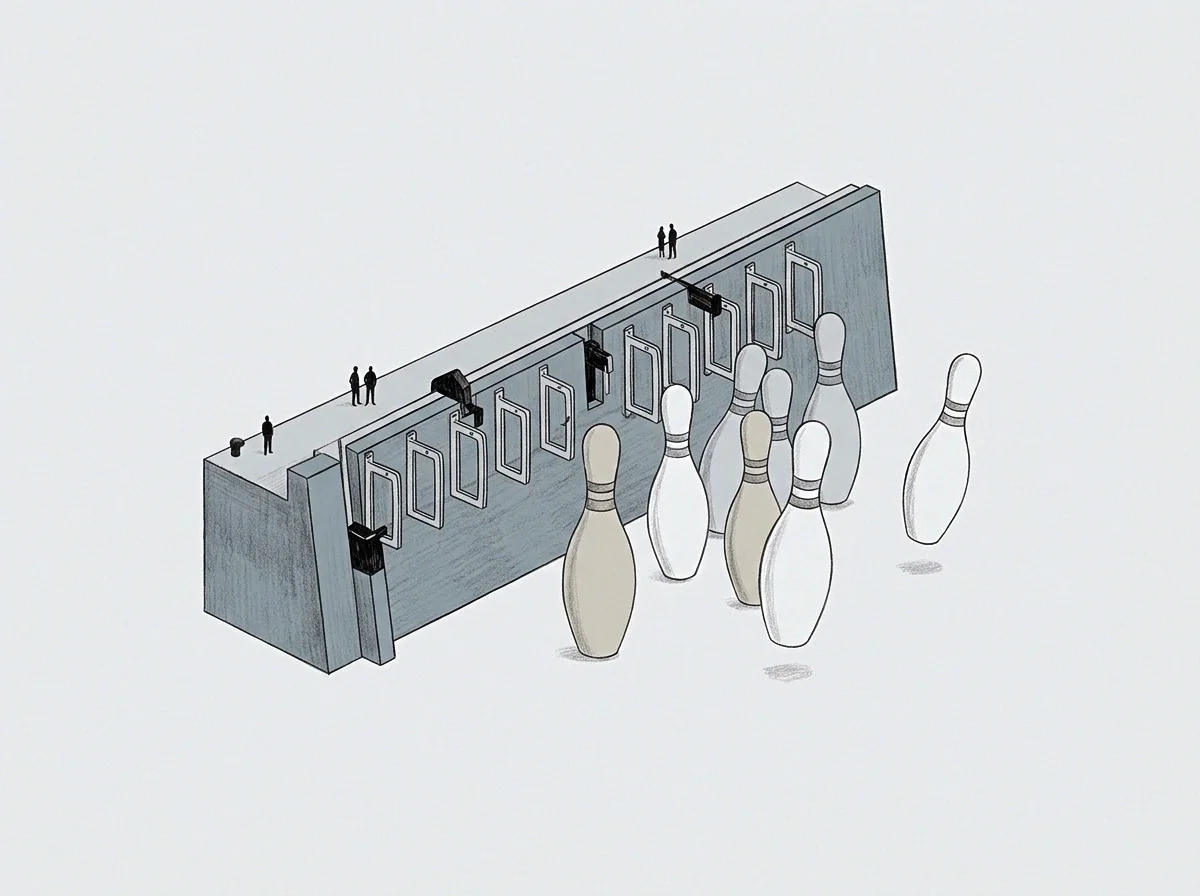
An alignment degradation process occurs within expanding organizations when post-founding leadership layers introduce misaligned operational interpretations across separate departments. Experiencing coordination decay manifests as increasing delay in execution, duplicated effort, and contradictory project directives. This erosion stems from the loss of centralized, informal command structures that previously kept small teams synchronized without explicit written protocols.
The process worsens as headcount grows, requiring formal governance mechanisms to restore operational coherence.
Alignment Drift
Information loss increases exponentially as messages pass through successive management tiers. With coordination decay, department heads interpret high-level strategy through localized priorities, creating divergent team goals. This divergence forces frequent cross-functional realignments, consuming executive attention that would otherwise support product development.
Capacity Burden
Managing structural misalignment imposes continuous attention costs on senior leadership. The operational friction of coordination decay requires managers to devote extensive hours to resolving inter-departmental conflicts and rewriting ambiguous guidelines. Teams spend substantial energy negotiating boundaries rather than delivering core work, reducing overall output efficiency.
Executive leaders must implement explicit reporting standards to stabilize communication channels.
Governance Limit
Formal controls stabilize alignment only up to specific complexity thresholds. Beyond these boundaries, coordination decay cannot be halted by additional documentation or status meetings alone. When administrative overhead consumes more capacity than product delivery, structural reorganization or decentralization becomes mandatory to restore functional speed.