Meaning
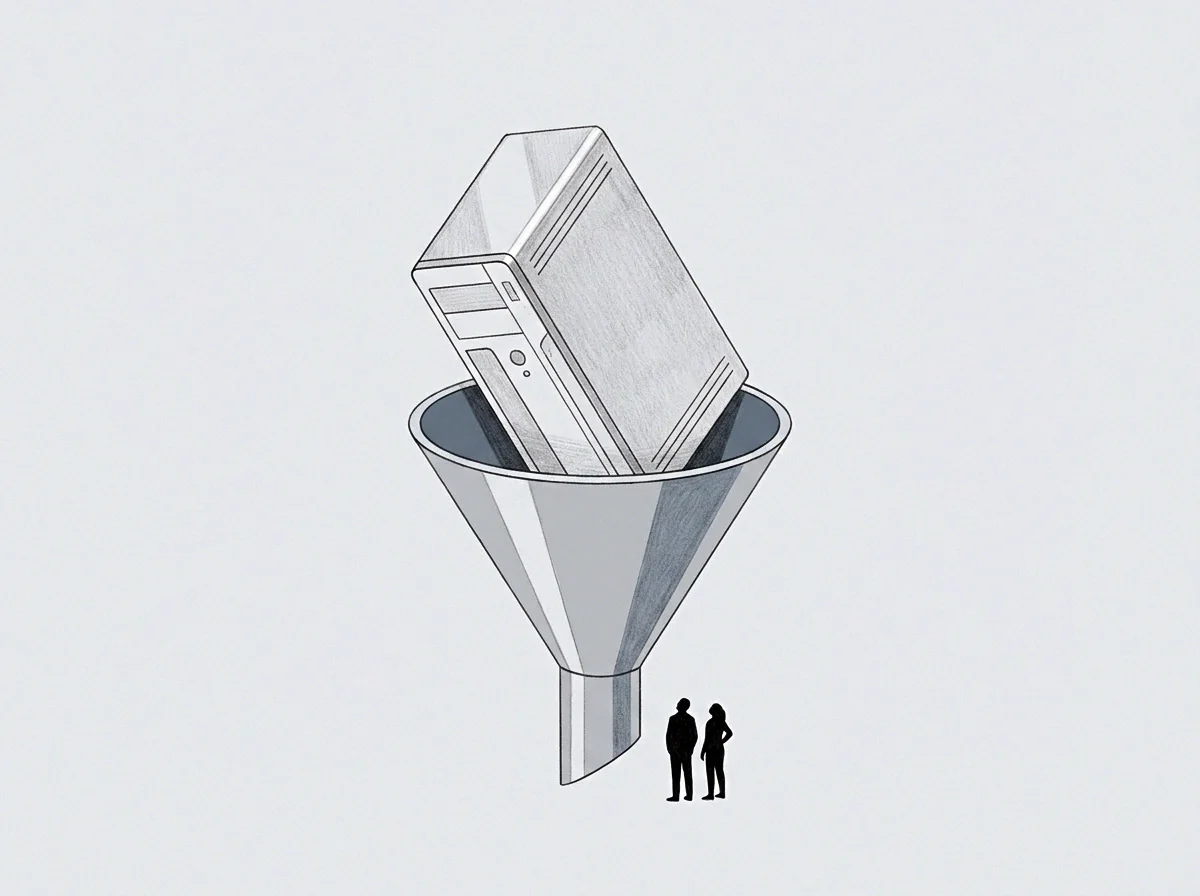
Physical or digital impedance placed at an executive entrance point moderates the volume and speed of incoming demands. Deploying an intake baffle converts real-time operational requests into batched asynchronous submissions, preventing cognitive overload. The scope of this mechanism excludes mandatory regulatory filings and verified critical incidents.
Flow Moderation
Incoming communications are subjected to structural delays, preliminary qualification questionnaires, and routing gates before reaching core decision-makers. Utilizing an intake baffle ensures that only vetted, fully articulated operational problems consume leadership attention, while low-priority requests are resolved by automated systems or delegated deputies. This moderation mechanism dampens inbound velocity spikes, creating a steady and predictable processing rhythm.
By smoothing the inflow of complex decisions, organizational units avoid chaotic task-switching cycles.
Attentional Conservation
Unfiltered direct access forces perpetual context-switching, which fragments executive focus and increases error rates on complex analyses. Introducing an intake baffle protects deep work blocks, allowing leaders to preserve long-duration cognitive focus for structural architecture and resource allocation. The friction introduced by the baffle also incentivizes teams to develop internal problem-solving capacity before attempting escalation.
Velocity Limit
Extremely time-sensitive commercial opportunities can decay rapidly if caught in rigid impedance structures. An intake baffle becomes an operational liability when market dynamics demand immediate, unbuffered founder intervention to capture transient value. In such high-velocity environments, the filtering mechanism must be temporarily relaxed to avoid commercial obsolescence.