Meaning
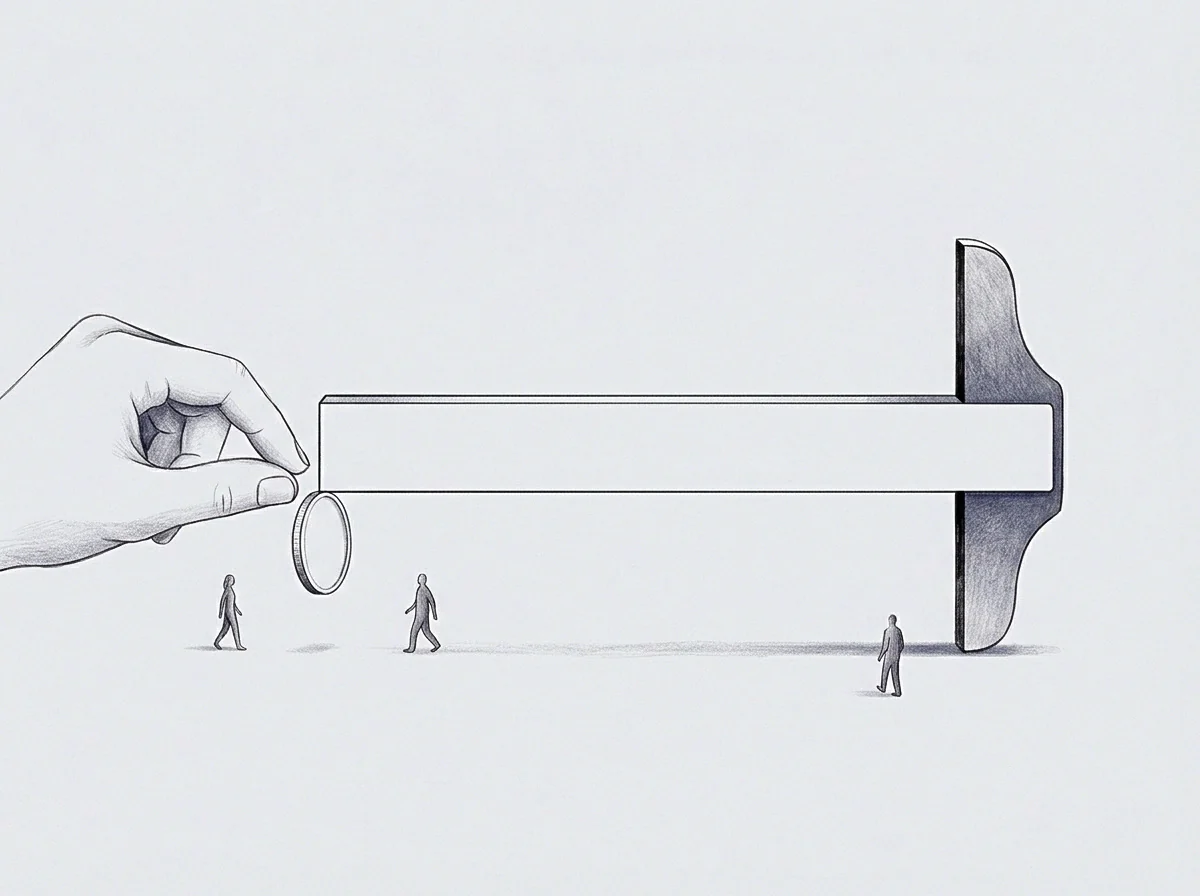
Operational tolerance defines the range of inputs or environmental conditions a system accepts before triggering a corrective response. The parameter boundary governs where a function switches from nominal performance to a recovery state. Once values exceed this threshold, the system restricts resource access to preserve core stability.
Regulatory Load
Internal mechanisms track resource consumption against pre-set caps to prevent total depletion. A parameter boundary manages this capacity by dictating how much attention a process extracts before the system forces a pause. High thresholds allow for deeper focus but increase the cost of recovery if the load induces a collapse.
Low thresholds provide rapid cooling but force frequent context switching that interrupts work continuity.
Control Drift
Fixed limits shift over time as a founder gains competence or fatigue alters baseline performance. The parameter boundary requires periodic recalibration to match current output abilities rather than historical ones. Stagnant settings lead to systematic underuse of available attention or persistent exhaustion from excessive demand.
Accurate alignment keeps the system operating within its viable range.
Stability Constraint
Every autonomous process eventually hits a hard limit where additional input produces diminishing returns or system failure. The parameter boundary ensures that physical and mental output stays within a sustainable intensity. Preventing overflow protects the operator from irreversible exhaustion while maintaining throughput.
Rigid enforcement of these limits produces predictable results across variable daily conditions.