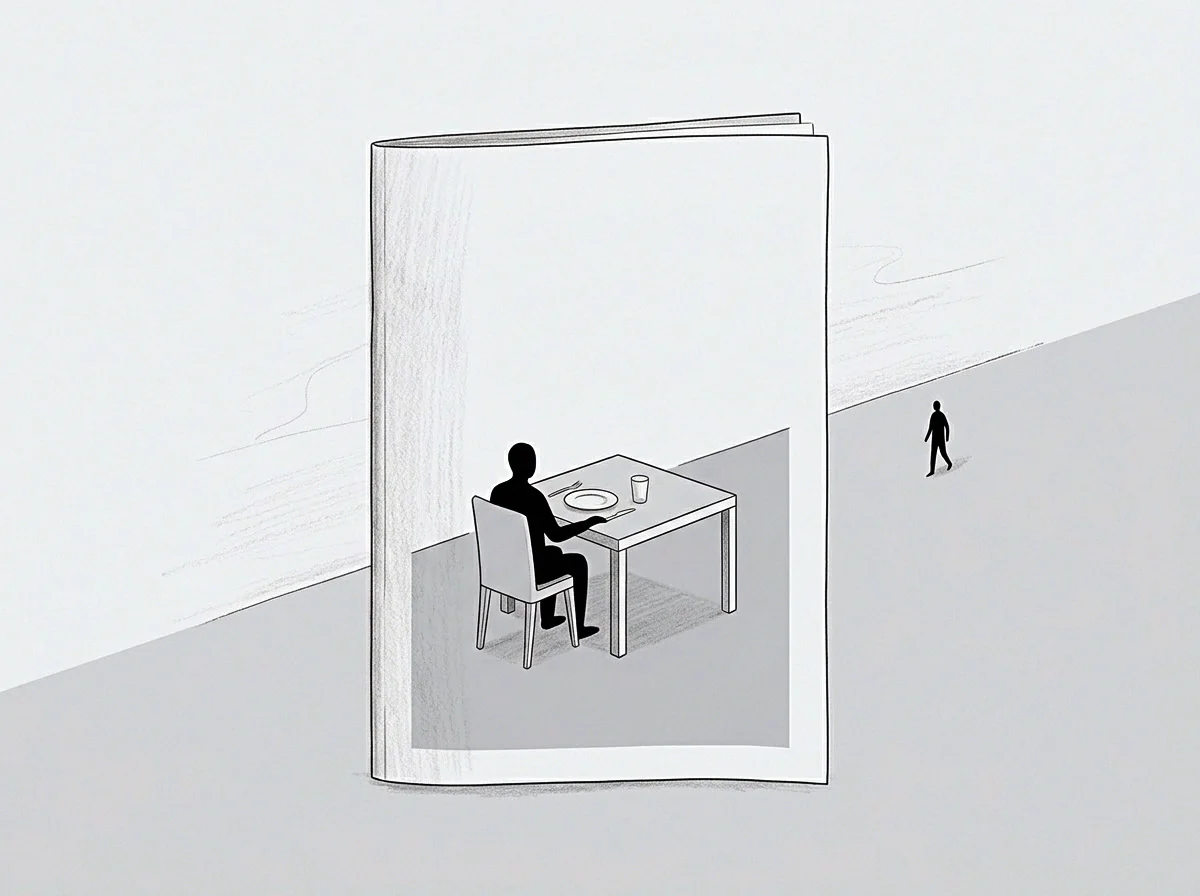
Meaning
Risk assessment processes are conducted individually when external validation is absent. In solitary threat calculation, a person must evaluate the probability and impact of negative outcomes using only their internal resources. This isolation often leads to an overestimation of danger and a higher cognitive load because the brain must work harder to identify which signals are truly dangerous.
The absence of a trusted second opinion forces the individual to stay in a state of high vigilance.
Cognitive Processing
Weighing risks without a social baseline requires more mental energy than collaborative evaluation. The solitary threat calculation involves a constant loop of checking and rechecking assumptions, as there is no external partner to provide a reality check. This internal process can become a significant drain on executive function.
Margin Analysis
Safety is often found in the presence of others who can share the burden of monitoring. Without this shared regulation, the person performing solitary threat calculation must maintain a wider margin of safety, which often limits their ability to take necessary risks. The lack of a social safety net forces a more conservative approach to decision making.
Social Baseline
Human brains are wired to expect the presence of others to help manage environmental threats. When this support is absent, the solitary threat calculation remains active for longer periods, leading to higher levels of stress and fatigue. Reconnecting with a peer group is the most effective way to lower this burden.