Meaning
Congruence between an organization’s formal reporting hierarchy, incentive programs, operating workflows and strategic priorities determines institutional execution efficiency. Within enterprise design, structural alignment ensures that departmental boundaries and compensation packages pull personnel directly toward verified corporate objectives. The configuration functions by removing institutional friction, ensuring that authority to allocate assets matches accountability for commercial results.
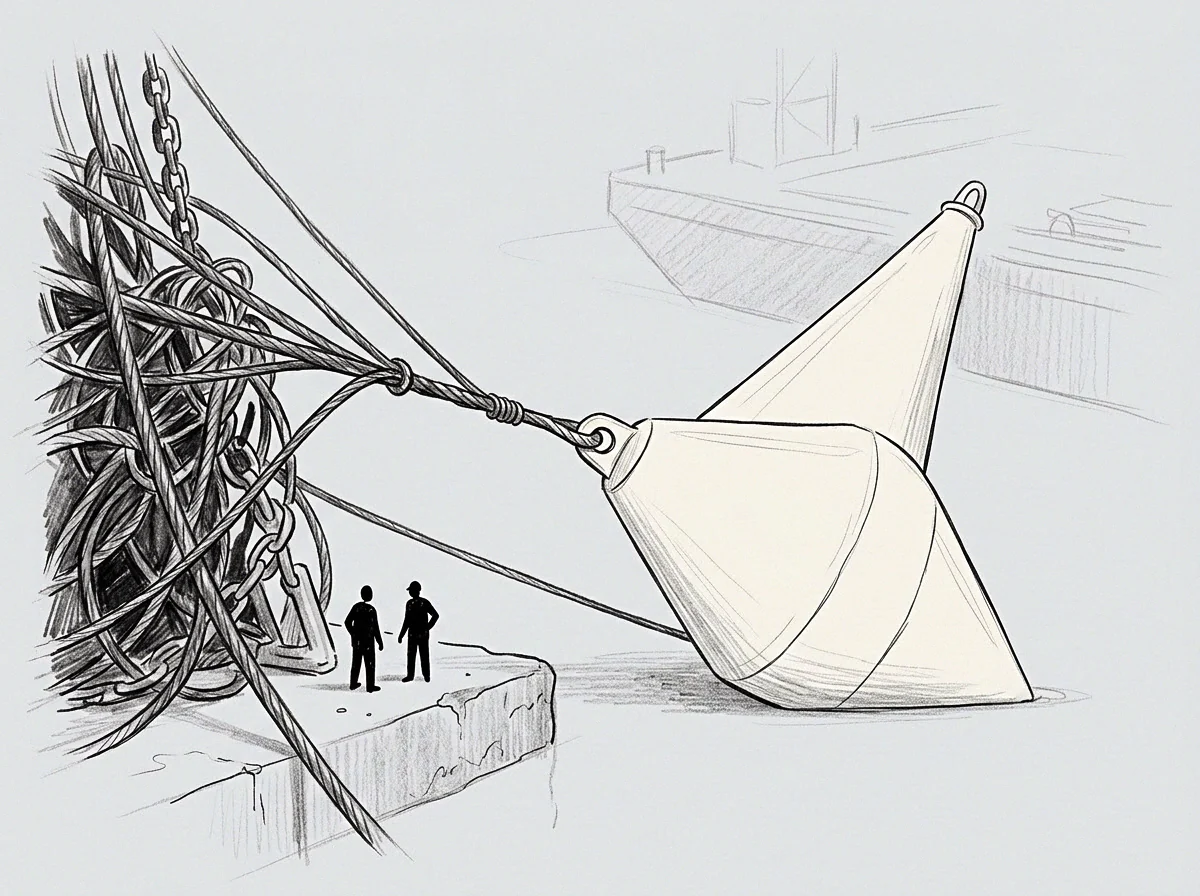
This coherence dissolves when internal expansion creates competing power centers, contradictory compensation schemes or redundant operational layers that operate at cross-purposes.
Architectural Symmetry
Organizational wiring diagrams must mirror customer delivery demands to prevent execution drag. Where structural alignment prevails, cross-functional dependencies resolve quickly because reporting lines reflect the natural velocity of product deployment. Engineering, sales and legal teams work within shared accountability boundaries.
In contrast, misaligned enterprises pit customer success teams against product roadmaps, producing chronic interdepartmental gridlock that exhausts executive arbitration capacity and stalls critical product releases.
Incentive Coherence
Compensatory structures establish the true operational vector of any enterprise regardless of stated mission statements. Effective structural alignment demands that variable bonuses, equity grants and advancement criteria reward behavior that optimizes total enterprise health rather than siloed territory hoarding. When sales commissions reward uncollectible contracts or engineering bonuses incentivize untested feature volume, the organization tears itself apart from within.
Aligning reward systems with long-term cash flow generation cures operational perversity at the source.
Frictional Drag
Disconnected organizational architecture imposes immense allostatic drag on executive leadership. When structural alignment degrades, founders waste valuable cognitive capacity adjudicating petty jurisdictional squabbles between middle managers whose duties overlap. This administrative friction diverts attention from competitor monitoring and customer discovery.
Rebuilding organizational symmetry by flattening reporting structures and clarifying ownership boundaries restores executive bandwidth to external market conquest.