Meaning
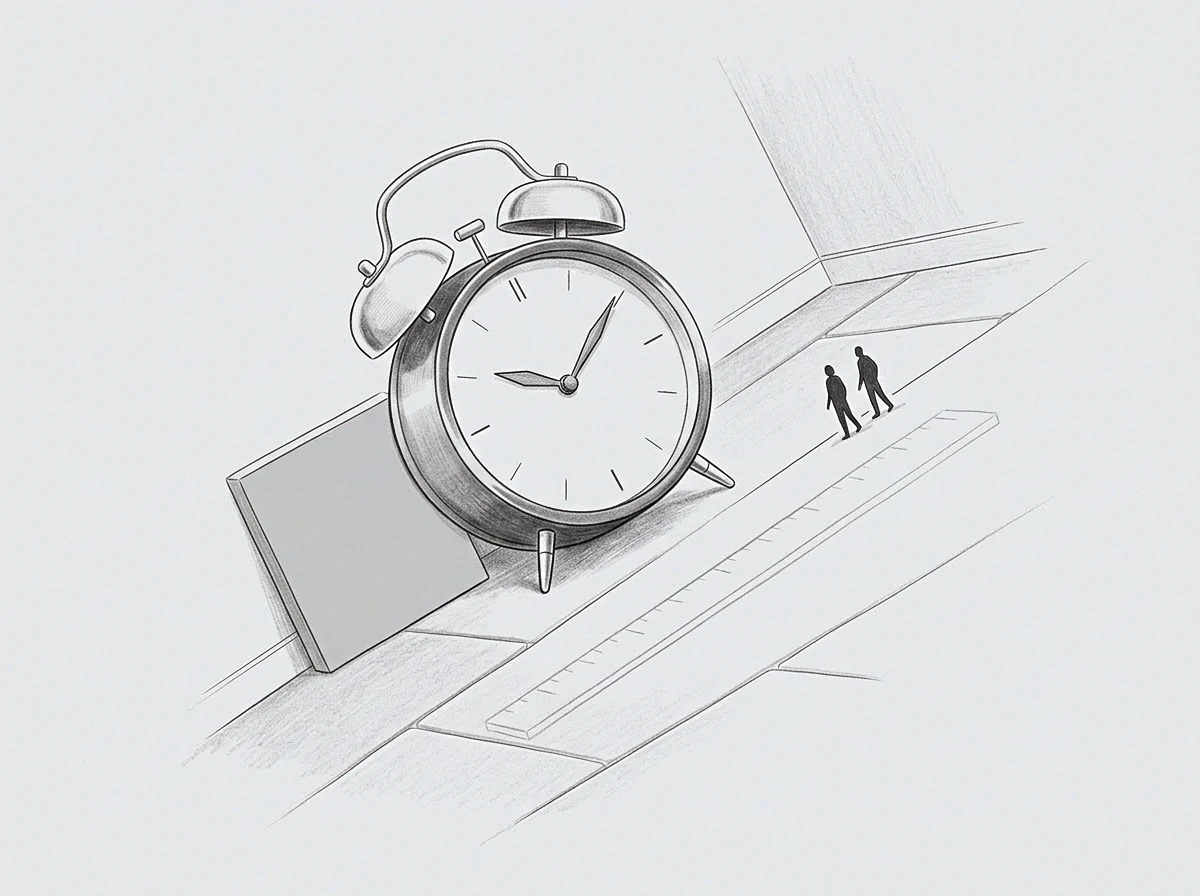
Cognitive friction represents the temporal deficit incurred when a person reorients focus between distinct operational contexts. Task switching overhead occurs when the neural machinery transitions from one activity to another, requiring a measurable period to clear working memory and reload the new parameters. This interval varies depending on the complexity of the abandoned work and the novelty of the target domain.
Efficiency gains vanish when the frequency of these transitions exceeds the capacity of the individual to stabilize their mental state.
Executive Drain
The biological cost of frequent context shifts manifests as a decline in sustained problem solving quality. Founders experience this as a reduction in available attention for high-level decision making because the brain reserves substantial energy for administrative maintenance during every shift. Constant interruption forces the system to reallocate neurons that would otherwise support complex synthesis, leaving the operator prone to errors in judgment.
Performance Limit
Operational capacity drops as the density of unrelated requests increases within a single work cycle. Each transition forces a temporary state of suspended function where the person loses access to the momentum built during the previous period of deep work. Productivity models demonstrate that rapid movement between disparate demands fragments the output, preventing the realization of any single goal.
Adjustment Buffer
Recovery periods allow the mental system to return to a baseline state of clarity after a period of intense fragmentation. Regularity in the schedule minimizes the frequency of forced transitions, reducing the total amount of energy diverted to maintenance. Dedicated blocks of time protect the integrity of the attention span by preventing the recursive accumulation of these losses.