Meaning
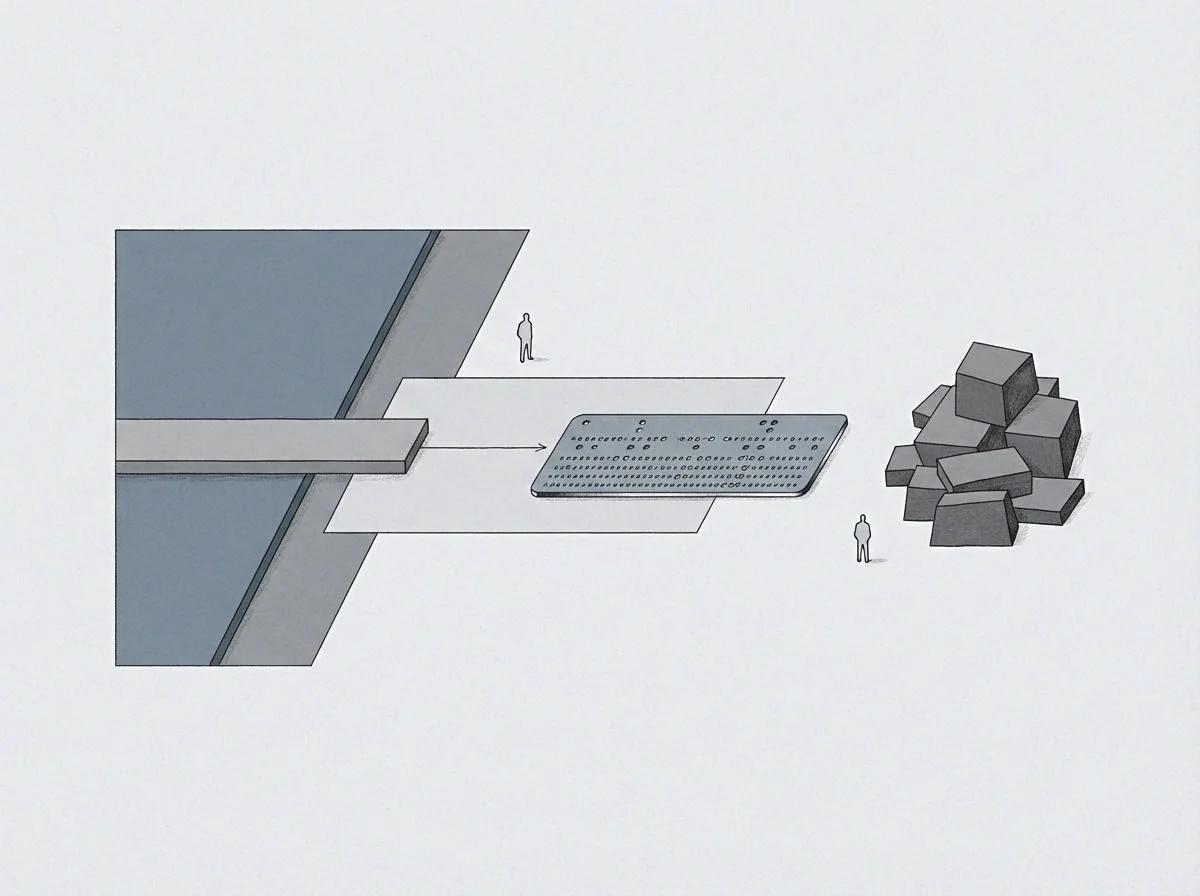
Unidirectional regulation is the structural mechanism by which a founder exerts control downward through a hierarchy while blocking feedback loops from returning upward. This operational constraint operates within the domain of organizational governance after founding, where founders must preserve execution speed by silencing dissenting operational signals. Unidirectional regulation establishes a permanent asymmetry between the center and the periphery of a firm, ensuring that commands travel without obstruction while peripheral resistance fails to register at the executive desk.
Such insulation protects decision capacity from the exhausting friction of constant negotiation, yet it drains the attention reserves of lower tiers by forcing compliance without consultation. The boundary of unidirectional regulation lies precisely where external statutory oversight demands bilateral reporting, because internal isolation cannot survive an external audit.
Systemic Cost
Executive isolation requires a continuous expenditure of cognitive energy to intercept and discard incoming operational friction before it reaches the core. Founders pay for this architectural silence with hours spent filtering communication channels rather than managing strategy. Lower tiers absorb the displaced regulatory burden by translating unacknowledged operational constraints into silent workarounds, increasing the cumulative allostatic load across the staff.
Peripheral actors exhaust their capacity attempting to influence decisions through blocked channels, leading to rapid burnout among senior engineers and early operators. This structural cost remains hidden on standard financial ledgers, appearing only as elevated turnover rates and sudden collapses in operational resilience.
Control Boundary
Regulatory flow operates strictly from the founding seat outward, permitting zero operational data to return past the executive gate. Peripheral feedback loops are intercepted at the middle management layer, preventing frontline anomalies from diluting the original directive. Founders maintain this boundary through strict communication protocols that penalize upward appeals regarding procedural design.
Operations continue beneath this ceiling without the benefit of localized corrections, running strictly according to the initial parameters set during the founding phase. External market shocks penetrate this boundary only after the damage reaches a scale that forces the executive tier to suspend the regulatory filter entirely.
Executive Drift
Command structures governed by unidirectional regulation steadily diverge from operational reality because no corrective data enters the decision loop. Founders operating inside this insulated condition rely on outdated assumptions about product capability and market friction, mistaking the absence of complaints for absolute stability. Subordinate teams compensate for missing executive oversight by constructing informal co-regulation networks among themselves, bypassing the official hierarchy to keep production functional.
These shadow networks consume valuable working hours and attention, operating entirely outside the formal governance framework established at founding. Complete detachment from operational truth eventually paralyzes the executive tier when accumulated discrepancies overwhelm the filtration capacity of the system.