
How High Allostatic Demand Inhibits Dorsal Vagal Receptive Capacity Updates
High allostatic load prioritizes immediate survival metabolism, shutting down the dorsal vagal receptive state necessary to update safety templates.

Lock
Midnight Messages and the Closed Gate
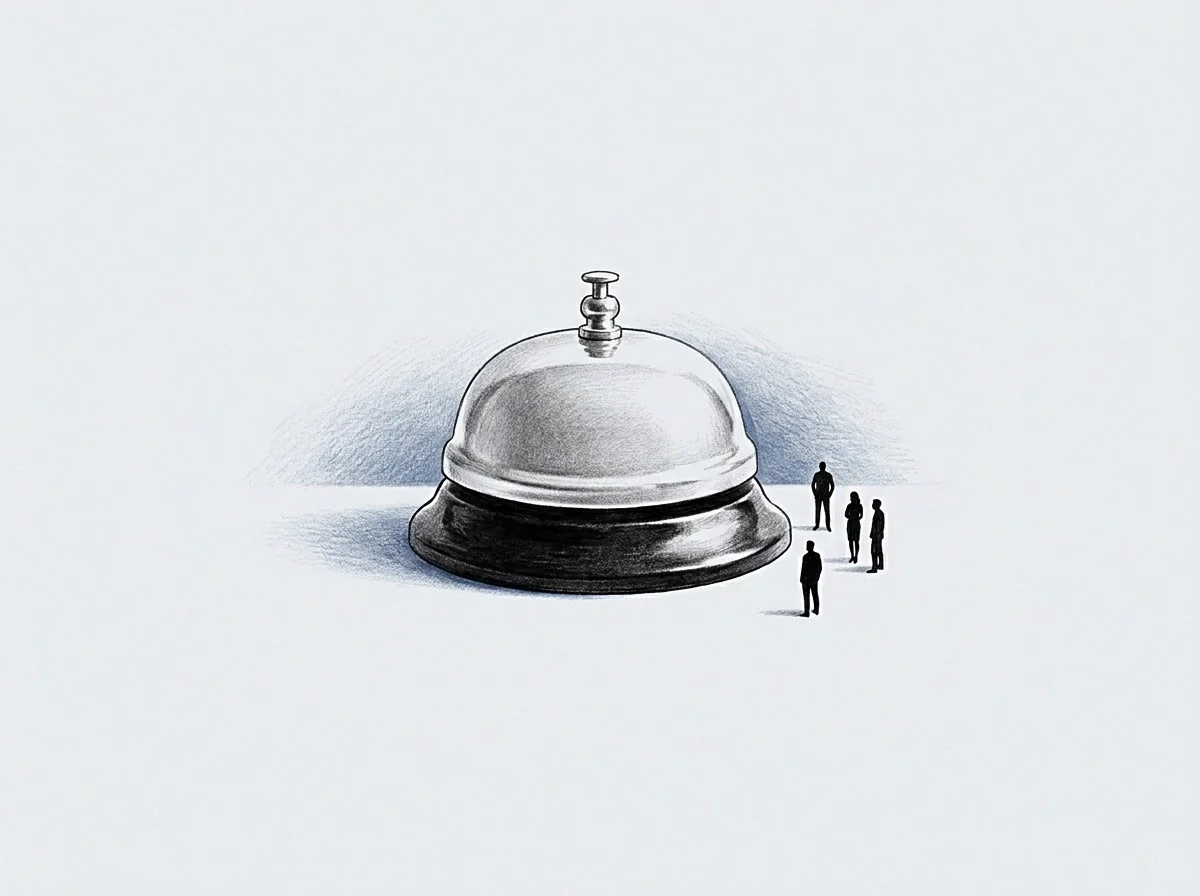
Three notification badges remain lit on an illuminated terminal screen past midnight while the operator maintains an outward posture of absolute stillness. Four colleagues across two operating divisions have already offloaded their acute anxiety into shared project threads during the preceding six hours. The operator responded to each inquiry with measured, steady assessments that absorbed the collective agitation of the executive group.
The heart rate of the person occupying that central chair sits at ninety-four beats per minute without physical movement. The founder pays for silence.
Every incoming operational demand forces an immediate reallocation of internal biological resources toward executive vigilance and motor readiness. Social baseline theory establishes that the human central nervous system calculates personal threat levels based on the immediate availability of reliable relational partners. When an operator occupies the position of the sole stabilizing figure across an entire enterprise, the brain budgets environmental load as if the individual stands entirely alone in a hostile physical territory.
Self-regulation without external buffering functions as the most metabolically expensive mode of mammalian existence. The biological baseline operates under strict thermodynamic limits. Unbuffered vigilance consumes massive quantities of systemic fuel.
A nervous system carrying peak allostatic load allocates fuel exclusively to immediate defense and operational preservation.
The prolonged elevation of circulating glucocorticoids and ongoing sympathetic tone fixes the autonomic baseline in an active defensive configuration. Visceral signals indicating exhaustion or tissue strain are suppressed by high levels of circulating catecholamines to maintain external performance. The capacity of the deep dorsal vagal complex to facilitate restorative digestion, visceral recovery, and tissue restoration remains suppressed.
Receptive capacity refers to the physiological openness of autonomic tissue to accept down-regulation and update baseline safety expectations based on supportive relational signals. The operator absorbs external panic while maintaining a rigid operational surface. Visceral circuits demand metabolic surplus.
Metabolic Ceilings on Visceral Learning
The human brain requires uncommitted energy reserves to alter established neurovisceral response patterns. When allostatic demand stays persistently elevated, systemic resources remain locked in sympathetic mobilization and hyper-vigilant cognitive processing. Cellular energy reserves funnel toward immediate survival requirements.
The subdiaphragmatic visceral structures controlled by the dorsal vagus remain in a state of chronic hypoperfusion or emergency containment. Biological systems do not initiate structural tissue remodeling during active crisis management. Threat signals suspend visceral updates.
Neural plasticity within autonomic regulatory centers relies on the accurate registration of safety prediction errors. An update occurs when an organism prepares for catastrophe, encounters presence, and registers the discrepancy between anticipated threat and actual physical security. Chronic high demand prevents the registration of this difference by keeping internal arousal elevated regardless of context.
An offer of support from a partner or colleague arrives at the sensory boundary, yet the internal physiological baseline refuses to disarm. The organism categorizes the relational overture as an additional external demand that requires active attention, social coordination, and conversational energy. The protective posture remains fixed.
When an operating system sustains excessive allostatic strain while holding the baseline for others, the internal physiology cements a permanent expectation of chronic isolation and structural collapse.
Wire
Which Physiological Signal Opens the Window?
Cardiorespiratory deceleration accompanied by transient increases in high-frequency heart rate variability indicates the immediate disengagement of the sympathetic accelerator. This transient shift marks the recruitment of the myelinated ventral vagal brake, which slows sinoatrial nodal firing without plunging the viscera into metabolic collapse. The autonomic branch that supports social communication operates as an expensive biological overlay built upon older visceral defenses.
The ventral vagus requires substantial energetic stability to remain engaged. Metabolic budgets dictate autonomic states.
The presence of uncommitted systemic glucose allows the central nervous system to turn down defensive vigilance in the presence of a steady companion. Laboratory investigations using continuous vagal tone monitoring demonstrate that baseline vagal efficiency drops sharply when individuals are subjected to sustained cognitive load alongside social evaluation. The dorsal vagus operates in two distinct operational regimes: vegetative metabolic restoration during secure social proximity, or metabolic shutdown during inescapable threat.
High allostatic demand pushes the autonomic baseline toward the defensive pole of this axis. The body interprets high load as structural vulnerability. Rest registers as active exposure.
- Allostatic throttling restricts cerebral blood flow to prefrontal areas and channels metabolic reserves into subcortical threat detection centers.
- Receptive gating prevents incoming vocal prosody from down-regulating subdiaphragmatic defensive tone when environmental demands exceed systemic reserves.
- Sympathetic intrusion disrupts the rhythmic oscillation of the vagal brake during resting intervals, maintaining a continuous low-grade alarm state.
- Metabolic diversion reallocates amino acids and glycogen from restorative cellular maintenance to active musculoskeletal preparedness.
Energy Scarcity and Prediction Errors
Updating internal working models requires physiological slack that chronic enterprise maintenance systematically eliminates. Internal working models are somatic expectations encoded within autonomic set points and neural connectivity across the insula, amygdala, and nucleus of the solitary tract. An operator whose early developmental environment required proactive hyper-attunement develops an internal model wherein personal safety depends on anticipating and absorbing the distress of everyone in the immediate environment.
Regulating the self and regulating others merge into a single operational subroutine. The receptor slot for receiving care stays dormant. Borrowed calm depresses the donor.
A stated limit on operational accessibility marks the exact threshold where systemic load stops draining the organism.
When an outside party steps forward to offer genuine regulatory assistance, the tired operator experiences cognitive gratitude alongside acute visceral friction. The internal model holds no receptive architecture for shared support. Accepting an offer of regulation requires the operator to surrender executive control and permit their autonomic system to synchronize with another human body.
Under high allostatic load, this surrender registers as lethal negligence. The brain calculates that dropping vigilance will lead directly to operational failure. The organism preserves the known cost of chronic strain over the unpredictable risk of physical reliance.
The channel stays shut.
A formal commitment to restrict real-time communications between eight in the evening and eight in the morning directly alters the rate of nightly allostatic recovery by removing predictive vigilance from the prefrontal cortex.

Frame

Autonomic Accounting Across Two Operating Modes
The baseline economy of an individual operating within an intact social buffer diverges entirely from the economy of an isolated operator bearing systemic demands. Relational proximity provides direct metabolic subsidies by outsourcing threat vigilance to trusted allies. When an individual operates without this subsidy while simultaneously acting as the primary buffer for subordinates and investors, the energetic deficit accumulates directly in visceral tissue.
The body draws down systemic reserves to fuel daily operations. The table below outlines how autonomic capacity updates operate across these two opposing configurations.
| Operational Criterion | Buffered Baseline Operation | High Allostatic Demand Operation |
|---|---|---|
| Autonomic State Allocation | Flexible ventral vagal engagement with rapid restorative dorsal vagal recovery | Continuous sympathetic arousal alternating with dorsal vagal metabolic freeze |
| Visceral Receptivity | Sensory inputs of relational safety down-regulate systemic vigilance immediately | Relational overtures are experienced as additional tasks requiring cognitive management |
| Prediction Error Processing | Discrepancies between expected threat and actual safety update visceral set points | Persistent metabolic alarm overwrites safety signals, preserving protective templates |
| Metabolic Surcharge | Vigilance costs are divided across the immediate relational group | Individual bears total vigilance cost while absorbing the operational fallout of others |
| Internal Working Model State | Receptor slot remains functional, allowing integration of earned security | Receptor slot remains locked, reinforcing the backward self-reliance template |
A persistent misinterpretation within corporate leadership literature equates structural endurance with biological capacity. An operator who absorbs significant team panic without displaying overt behavioral volatility is frequently praised for exceptional resilience. This external steadiness typically reflects severe sympathetic overdrive masking an immobilized dorsal vagal core.
The individual functions as an autonomic sink for the surrounding organization, absorbing instability and returning manufactured tranquility. The surrounding team stabilizes their own nervous systems against the operator’s steady voice and consistent physical posture. The price arrives later.
The nervous system that acts as the sole baseline for an entire organization burns its own visceral tissue to manufacture group stability.
Repeated exposure to this dynamic creates a self-reinforcing trap. Subordinates, co-founders, and board members observe that the operator remains calm under intense operational pressure, which encourages them to transfer additional unresolved emergencies onto that desk. The operator receives no reciprocal regulation from the system they stabilize.
The internal working model of the operator confirms its foundational premise: the world contains participants who require care, and an isolated provider who must supply it without disruption. The physiological capacity to experience resting baseline conditions degrades as the allostatic total climbs toward systemic failure. The nervous system tallies.
Strength displayed during prolonged structural crises reliably attracts unmanaged load from less stable observers.
Room
The Physical Cadence of Earned Security
Modifying a backward regulatory template demands actual physiological experiences repeated across calendar quarters rather than sudden cognitive realizations. Intellectual comprehension of an internal working model changes almost nothing within subcortical survival structures. The insular cortex and autonomic nuclei update their set points through bodily experiences of safety under conditions of real vulnerability.
An operator cannot think their way into autonomic receptivity while running seventy-hour work weeks under relentless capital constraints. Headroom permits autonomic revision.
The establishment of earned security requires the deliberate introduction of small, bounded relational interactions where the operator does not manage the state of the other person. The setting must be physically quiet and separate from the enterprise environment. In these moments, the other party remains stable, demanding no coordination, no explanation, and no emotional performance from the tired operator.
The initial biological response to this stillness is rarely relief. The organism encounters the absence of responsibility as severe discomfort because vigilance circuits are denied their customary operational targets. The operator feels an urgent impulse to invent problems or check communication channels.
Quiet rooms cost capital.
Earned security forms only when the body experiences sustained relational stability without paying for it in operational vigilance.
Repeated exposure to non-demanding proximity gradually allows the ventral vagal brake to reassert control over visceral tone. The dorsal vagus begins to shift out of emergency immobilization into its restorative state. The digestive tract resumes normal perfusion, resting cardiac frequency declines, and systemic inflammation markers recede over extended intervals.
The receptor slot for receiving presence begins to emerge organically from biological recovery. The individual discovers that physical presence can be received without an immediate requirement to perform stabilization for the room. Security follows physical repetition.

Building Headroom Before Contact
A founder cannot establish new visceral receptivity while simultaneously carrying peak operating commitments. Structural load must be mechanically shed before autonomic capacity can expand. Delegating operational oversight, exiting non-viable business units, and establishing non-negotiable boundaries around communications represent mandatory physiological interventions rather than lifestyle preferences.
Unallocated glucose enables structural updates. Metabolic resources must exist in abundance before the central nervous system will permit the dissolution of ancient defensive protocols.
The delta over time between an operator trapped in chronic allostatic strain and an operator developing earned security appears in how each person processes an offer of assistance. The tired operator evaluates the offer through an operational lens, calculating the coordination cost, the communication friction, and the probability of having to repair mistakes later. The recovering operator pauses, allows the autonomic nervous system to register the intention of the other party, and permits their internal baseline to accept the offered relief.
The transition from managing every room to permitting oneself to be held by an arrangement takes hundreds of hours of unpressured contact. Isolation inflates the metabolic penalty.
What remains undetermined across current stress physiology literature is the exact volume of uncommitted biological headroom an overloaded operator must accumulate before the dorsal vagal complex will risk lowering its defensive threshold in the presence of an unfamiliar ally.