
Metabolic Costs Of Solo Regulation In Executive Leadership Structures
Solo regulation in executive seats raises neural threat monitoring costs, consuming prefrontal energy reserves that co-regulated structures preserve.
Metabolism
At midnight, four operational queries wait in an executive inbox. The chief officer reads each message, weighs the risk, and drafts directives for department heads. No external advisor is present, no peer shares the fiduciary responsibility, and no partner absorbs the cognitive weight of the pending choices.
On paper, this is ordinary executive labor; physiologically, it is a high-cost operation.
The Baseline Economy of Nervous System Allocation
Human neural architecture evaluates threat against assumptions of social proximity. Social baseline theory indicates that the mammalian brain budgets metabolic effort around the presence of predictable partners. Operating alone forces the brain into an individual baseline where threat monitoring, autonomic regulation, and emotional dampening draw continuously on internal glycogen stores.
Without a surrounding social unit to share regulatory effort, the nervous system burns glucose and oxygen at elevated rates.
Relational proximity directly buffers executive cognitive functions. When a trusted peer shares the room or holds shared fiduciary accountability, prefrontal cortex activity decreases without sacrificing cognitive output. Neural circuits in the anterior cingulate cortex and hypothalamus lower baseline vigilance upon detecting relational safety cues.
Lacking those signals, an isolated executive seat consumes metabolic energy continuously.

Allostatic Escalation in Unaccompanied Leadership Seats
Extended solo work in high-stakes environments accelerates internal physiological strain. The hypothalamic-pituitary-adrenal axis releases cortisol to sustain decision-making under ongoing exposure. Over prolonged cycles, this constant activation increases overall allostatic load: cortisol receptors downregulate, systemic inflammatory markers increase, and sleep architecture breaks down.
When an individual processes environmental threat without relational proximity, neural energy expenditure rises to maintain baseline executive attention.
Elevated allostatic load progressively narrows executive capacity. Prefrontal networks controlling long-range planning, abstract reasoning, and impulse regulation require steady glucose delivery. As self-regulation depletes available energy, the nervous system prioritizes immediate threat avoidance over long-term strategic synthesis.
The executive retains formal authority while operational headroom shrinks under the burden of solo autonomic maintenance.
Unbuffered self-regulation under persistent pressure drains executive capacity until strategic decisions default to reactive risk avoidance.
Clock
Time feels stretched when hypervigilance prevents autonomic recovery between heavy decisions. An executive bearing full regulatory accountability discovers that off-hours no longer restore neural energy reserves. While the calendar tracks operational quarters, the autonomic nervous system measures time in recovery cycles between threat responses.
Temporal Compression and Continuous Hypervigilance
Without relational dampening, an executive registers every incoming operational request as an immediate metabolic load. Autonomic regulation requires periodic ventral vagal activation to downregulate sympathetic arousal once a threat passes. When leadership lacks shared regulatory presence, the primary officer stays locked in sympathetic mobilization, treating routine emails, board queries, and market shifts as immediate threats.
Sustained sympathetic activation changes time perception and restricts cognitive flexibility. Prolonged high arousal forces the brain toward rapid heuristics rather than deliberate evaluation, shrinking strategic horizons into short-term survival tasks. High-grade cognitive reserves are burned on routine organizational noise, obscuring the boundary between minor friction and actual risk.

The Biological Expense of Continuous Self-Soothing
Energy reserves deplete quickly when autonomic balance relies entirely on personal cognitive tactics. Lacking co-regulation from a surrounding team, a solo operator expends conscious effort to project composure, incurring a measurable biological cost.
- Ventral Vagal Withdrawal occurs when relational safety cues are missing, forcing the autonomic system to remain in high arousal during routine work.
- Sympathetic Dominance keeps heart rates and vascular resistance elevated, accelerating physical strain over long shifts.
- Cortisol Clearance Latency lengthens after high-stakes negotiations, maintaining inflammatory signals through rest periods.
- Prefrontal Glycogen Depletion degrades impulse control and mental flexibility, forcing reliance on rigid habits under sudden stress.
Continuous internal stabilization without structural dampening converts acute operational friction into chronic physiological strain.
Expending glycogen constantly to stay calm eventually starves higher cognitive functions. An executive may look steady in board meetings, but neuroendocrine measures reveal heavy strain. The capacity to process novelty, tolerate ambiguity, and show empathy toward teams declines sharply under relentless pressure.
Appearing completely composed during the restructuring resulted in more complex initiatives being assigned to the chief office.

Transfer
Subordinates and board members lean toward an executive who appears calm, driven by a simple biological principle: organisms stay near low-stress individuals to save their own regulatory energy. In executive hierarchies, this creates a one-way transfer of physiological stress toward the leader.
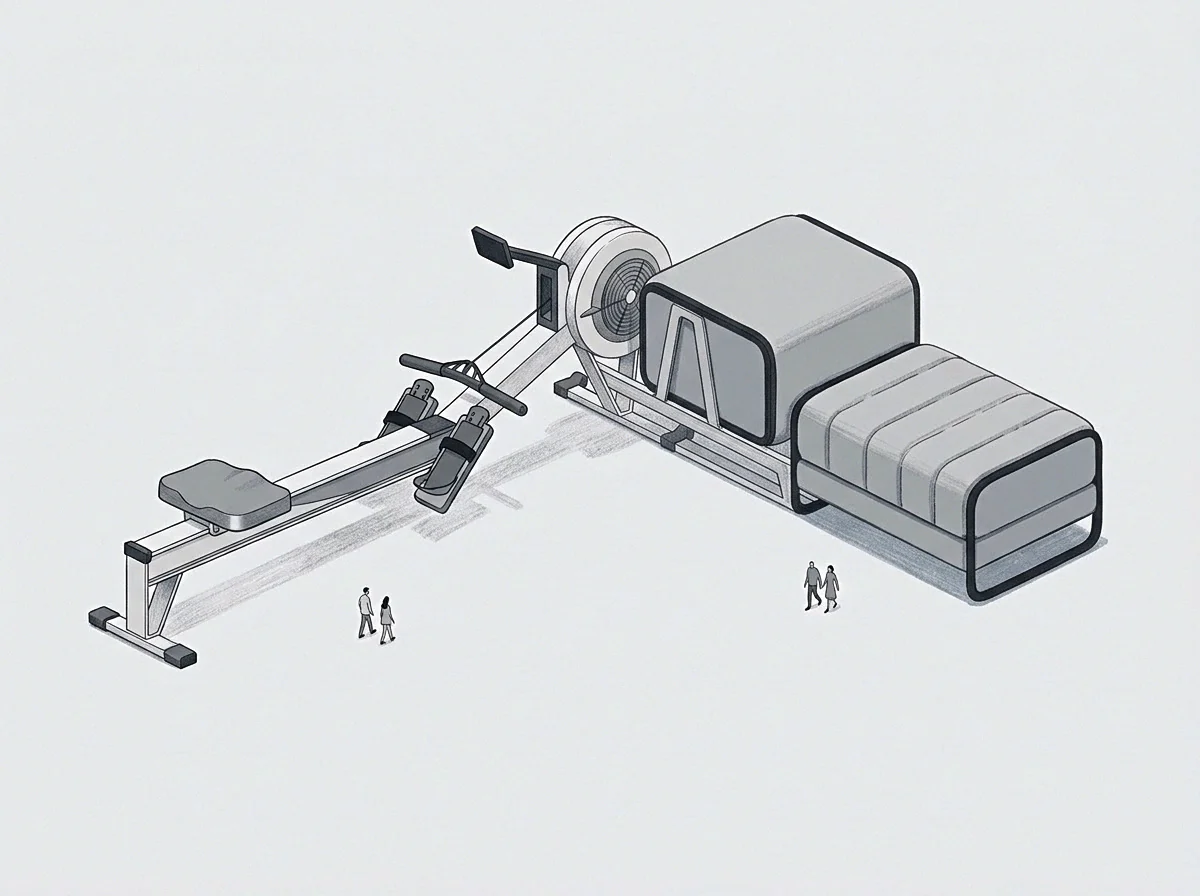
Where Does Borrowed Regulation Register as Individual Stability?
Subordinates stabilize their own autonomic state by reading the composure of the senior officer, unaware of the metabolic cost to that officer. During organizational crises, team members absorb reassurance through voice tone, posture, and clear directives, lowering their stress by anchoring to the leader.
This borrowed stability carries an unstated cost. Team members leave the office reassured and refocused, but the executive absorbs the emotional variance of the group, expending neural energy to settle others without receiving any calming signals in return.

The Structural Asymmetry of the Regulator Slot
Organizational structures rarely offer a calming feedback channel for the primary decision-maker. Hierarchies push problems upward and emotional stability downward, locking the chief officer into a position where they stabilize the organization while having no structure to support them in return.
| Operational Variable | Solo Self-Regulation Mode | Co-Regulated Baseline Mode |
|---|---|---|
| Glucose Utilization | Continuous high expenditure across prefrontal networks | Intermittent moderate expenditure with rapid baseline return |
| Heart Rate Variability | Suppressed low-frequency dominance with low amplitude | High-amplitude vagal tone with flexible autonomic responsiveness |
| Threat Threshold | Hypersensitive detection of minor organizational ambiguity | Calibrated response tuned to genuine operational hazards |
| Recovery Latency | Extended multi-day lags in neuroendocrine normalization | Rapid post-crisis physiological baseline restoration |
The structural absence of a receptive regulator slot forces the executive seat to absorb external emotional variance as internal work.
When an executive acts as an unbuffered baseline, teams become dependent on their presence. Subordinates rely on the leader to absorb anxiety rather than solving problems locally, turning the executive seat into a operational bottleneck that consumes energy to maintain surface alignment.
A leadership structure relying on a single unbuffered officer for stability exhausts its central capacity to buy temporary composure.

Desk
Physical boundaries and explicit operational protocols externalize neural load. Protecting central regulatory capacity requires shifting from internal psychological coping to structural rules that enforce limits willpower alone cannot maintain.
The Mechanics of Explicit Limit Setting
Setting firm operational limits defines clear terms for availability and decision authority. When an executive sets explicit boundaries around communication hours, escalation thresholds, and reporting lines, the surrounding organization adapts, swapping constant internal vigilance for clear operational rules.
Clear limits contain organizational anxiety. Without them, the chief seat defaults to constant availability, drawing continuous stress from other departments. Explicit terms require lower tiers to manage friction locally instead of escalating routine tension upward.
Internal Working Model Updates Through Structural Enactment
Intellectual understanding alone will not dismantle an ingrained habit of equating personal worth with complete availability. Executives often carry early habits of managing others’ emotions to maintain stability, showing up in leadership roles as an inability to decline extra workload. Changing this pattern requires enforced structural limits rather than mental effort.
- Audit recurring communication channels to identify where teams routinely pull informal emotional reassurance.
- Establish mandatory offline hours with explicit delegation rules that limit escalations to defined critical events.
- Build peer-level debriefing routines that offer mutual support outside reporting hierarchies.
- Enforce boundaries consistently across consecutive quarters so surrounding staff develop self-management routines.
An executive limit operates as a physical boundary that forces surrounding operational dependencies to build local capacity.
When an executive enforces a limit and sees the organization function without immediate intervention, neural expectations adjust. Space for peer co-regulation opens only after structural boundaries are drawn. Security in leadership develops through the practical experience of shared accountability.
Under a strictly enforced service-level agreement for availability, operational teams build local decision-making habits that safeguard central cognitive reserves.
Restoration
Rebuilding executive metabolic capacity requires structural changes in organizational co-regulation. Restoring an exhausted leader takes more than time off or wellness programs; recovery requires shifting the autonomic baseline through shared accountability and real relational support.

Earned Security and the Reconstruction of Regulation Relays
Adult nervous systems adapt to new relational patterns through repeated experiences of shared regulation. Leaders who previously carried stress alone build security by forming structured partnerships with genuine peers. Co-founder roles, executive office partnerships, and peer advisory boards offer the relational grounding needed to reduce autonomic vigilance.
In co-regulated leadership models, threat evaluation is distributed among multiple officers. During operational crises, the metabolic cost of assessing choices is shared, with one leader’s composure helping quiet another’s arousal to prevent widespread hypervigilance. Effective recovery requires direct access to a shared baseline.
Capacity Preservation Across Extended Operational Horizons
Long-term executive effectiveness requires transitioning from individual self-regulation to distributed support structures. Designing executive roles around social baseline principles protects chief decision-makers from early exhaustion and strategic paralysis, ensuring operational momentum does not rely on the biological strain of a single person.
Moving an organization from a solo regulator model to a co-regulated executive framework takes deliberate investment in leadership infrastructure. Boards and investors must recognize that unbuffered solo regulation creates unmeasured operational costs, resulting in degraded judgment and sudden leader burnout. Sustained performance relies directly on shared regulatory density.
Whether executive compensation and board governance will eventually account for the unmeasured biological costs borne by solo leaders remains an open question in institutional design.