
Metabolic Limits Of Relational Regulation In Strained Leadership Teams
Shared social proximity lowers biological threat monitoring expenditure, while solitary leadership regulation transfers the metabolic tax entirely to the central anchor.

Load
Four encrypted messages sit open on a desktop monitor at two in the morning, each detailing a separate operational emergency from four different department leads. The executive in the seat reads the screens without moving, maintaining an even pulse while synthesizing cash runaway figures and engineering release delays. To the department heads who sent the pings, the prompt, composed response received six minutes later signals unflappable clarity.
Inside the nervous system of the sender, biological expenditure is compounding.
Social baseline theory demonstrates that the human brain treats solitary threat management as an exceptional, high-expenditure operational state. When an individual operates under the assumption of social isolation, the autonomic nervous system defaults to full threat appraisal, elevating metabolic output, baseline cortisol production, and cardiovascular arousal. Proximity to a predictable, trusted human partner shifts this baseline.
Under social proximity, the brain delegates a portion of its threat monitoring to the environment, conserving glucose and neural energy.
Predictable proximity to a calm partner reduces peripheral metabolic expenditure during acute organizational stress.
In strained executive environments, this metabolic baseline flips. When market pressures or operational crises compress team stability, the senior executive often becomes the central reference point against which every adjacent lead regulates their own autonomic state. The team borrows calm from the seat.
This borrowed calm registers as quiet execution across the top table, yet the metabolic expenditure transfers entirely to the person serving as the regulatory anchor.
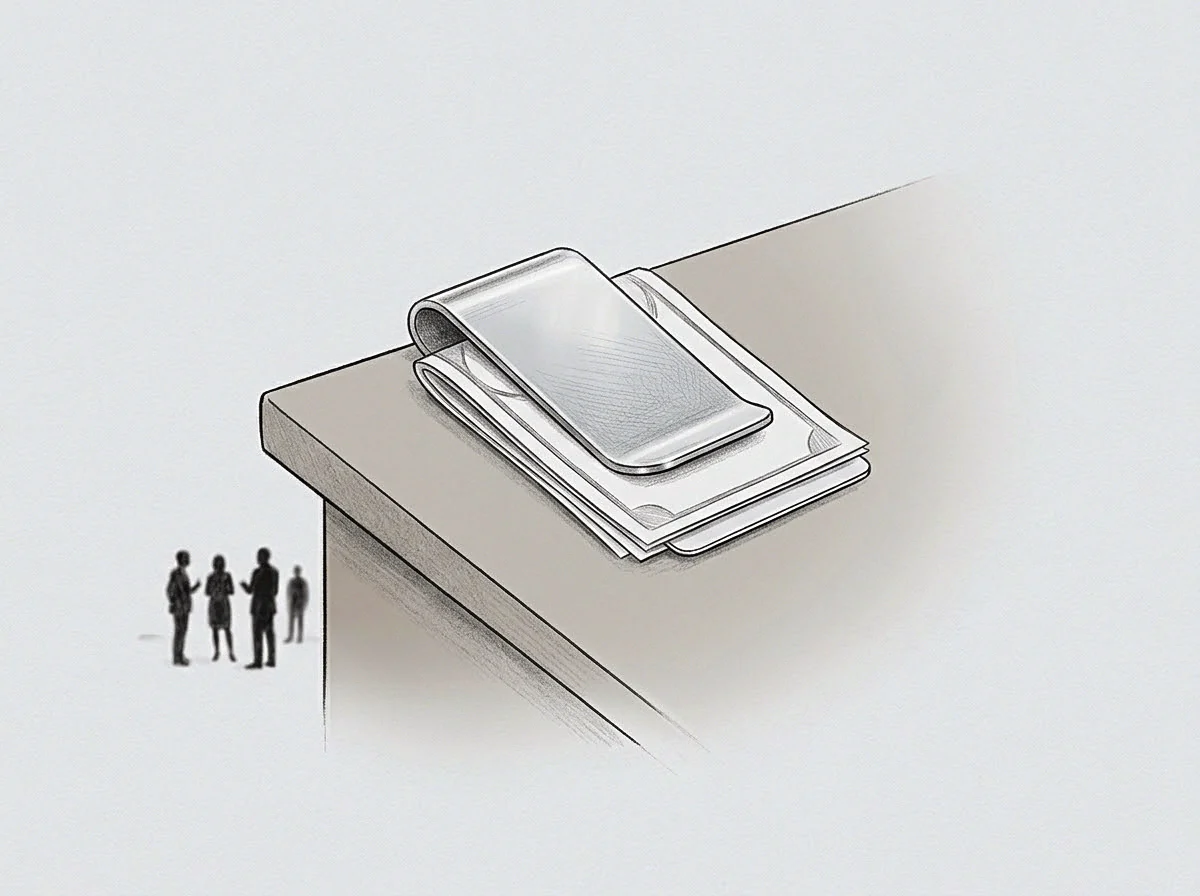
Autonomic Expenditure Under Chronic Uncertainty
Prolonged demands on human physiology trigger baseline adaptations. The prefrontal cortex consumes substantial metabolic reserves to maintain executive control, suppress panic responses, and project stability during systemic turbulence. When this cognitive control occurs without shared relational buffering, the baseline glucose consumption of the brain rises sharply.
Allostatic accumulation measures the aggregate wear on biological systems subjected to ongoing environmental demands. In executive teams experiencing prolonged structural strain, team members continuously emit physiological signals of distress, including micro-expressions, speech cadence alterations, and hyper-vigilance. The central regulator absorbs these inputs, continually modulating their own physiological state to damp down panic across the organization.
Physiological strain registers in the autonomic system well before it appears in overt performance.
Managing sustained organizational stress without relational support multiplies the metabolic energy required to maintain baseline stability.
When an organization relies on a single executive to continuously absorb team distress without supplying reciprocal regulatory inputs, the central regulator experiences severe systemic exhaustion, leading to executive cognitive collapse, involuntary emotional withdrawal, and complete structural breakdown across the leadership tier.

Presence
Physical proximity and vocal synchrony function as low-level biological signals of safety. Human neural circuits track non-verbal markers from executive peers, interpreting vocal modulation, breathing rhythms, and eye contact as indicators of environmental stability. In distributed or highly pressured leadership groups, these physiological signals are frequently diluted across digital communication channels.
When team members lack real-time physiological feedback from a steady peer, their internal threat detection software remains active. Self-regulation alone demands high glucose consumption and continuous prefrontal inhibition. A team member forced to self-regulate against isolation spends substantial cognitive capacity simply managing baseline anxiety, reducing the working memory available for strategic decision making.

The Metabolic Tax of Distributed Co-Regulation
Asynchronous text channels and scheduled video calls transmit structural directives but fail to convey subtle autonomic alignment cues. The receptor circuits in the brain require rich, multi-modal feedback to down-regulate autonomic threat states. In the absence of direct physical or synchronous contact, executives rely on hyper-vigilance, reading tone into brief text messages and searching for hidden intent in calendar changes.
Physical distance increases the neural energy required to interpret ambiguous communication.
Unresolved operational threats continuously consume biological reserves during isolated problem solving.
- The acute surge phase creates immediate adrenaline spikes across department heads, driving urgent asynchronous pings toward the central operator.
- The covert stabilization tax forces the anchor executive to process incoming distress calls without expressing personal fatigue.
- The chronic depletion state occurs when peripheral leads rely permanently on the anchor for emotional stability while offering no reciprocal buffering.
- The functional paralysis threshold marks the point where the central regulator loses cognitive flexibility and defaults to rigid control decisions.
Unbuffered asynchronous communications increase threat appraisal and force peripheral leaders into continuous self-monitoring.
The executive team operates under the assumption that if the central leader remains composed during video conferences and responds promptly to overnight pings, the current operational pacing remains sustainable for everyone involved.
Board
Top table meetings display the exact balance of relational regulation inside a company. In a high-pressure commercial environment, take two executives who have operated a venture for three years without formal role boundaries, assuming the chief executive holds sixty percent of equity while the operating partner holds forty percent. During executive sessions, the operating partner consistently presents raw operational threats, relying on the chief executive to convert panic into actionable priority.
Articulating complex operational constraints under pressure draws directly on executive metabolic reserves.
Maintaining composure without a shared regulatory reference point requires sustained prefrontal effort.

Why Does Presence Lower Biological Regulation Expenditure?
Co-location provides immediate autonomic feedback through vocal pitch, facial micro-expressions, and respiratory rhythm. When two leaders sit in the same physical space, biological threat detection circuits register reciprocal cues of stability without conscious attention. The brain budgets threat responses down, reallocating glucose and neural activity from survival monitoring to complex problem solving.
| Leadership Seat | Primary Regulation Source | Metabolic Cost Profile | Structural Consequence Under Load |
|---|---|---|---|
| Chief Executive | Self-contained internal models | High peripheral metabolic consumption | Executive cognitive saturation and isolation |
| Operating Partner | Borrowed regulation from chief executive | Moderate self-regulation expenditure | Systemic reliance on external anchoring |
| Department Lead | Direct proximity to operating partner | Variable based on meeting cadence | Escalation of pings when anchor absent |
A leader who regulates another without receiving reciprocal composure inevitably exhausts their physiological headroom.
An executive who absorbs operational anxiety without setting explicit availability limits will always attract escalating volumes of external distress until their capacity breaks.

Pattern
Internal working models formed during early high-stress environments dictate how leaders handle relational regulation under pressure. A founder who developed an early internal model of self-reliance views asking for support as a direct vulnerability. When operational pressure rises, this executive defaults to a backward regulatory cycle, managing their own state by managing the states of everyone around them.
The central operator acts as the responsive partner for the entire company while possessing no internal receptor slot to receive regulation from others. Every incoming distress signal from a department head is absorbed, interpreted, and neutralized. The operator treats external emotional stability as their personal responsibility, confusing personal composure with operational safety.

The Concurrency Limit of Relational Anchoring
Human physiology maintains explicit bounds on the number of active relational threads it can simultaneously process. Just as a physical processor experiences latency when context-switching across multiple demanding tasks, the human autonomic system suffers severe degradation when forced to anchor multiple dysregulated individuals at once.
Receptive capacity remains closed when an executive treats all incoming distress as unilateral responsibility.
Habitual patterns of solitary regulation persist even as operational complexity escalates.
Available cognitive bandwidth declines sharply as simultaneous regulatory demands accumulate.
- The founder absorbs peripheral operational panic without expressing personal distress or boundary constraints.
- Adjacent executives interpret this continuous stability as infinite bandwidth and increase their frequency of unscheduled pings.
- The central regulator throttles internal physiological awareness to maintain external composure under overwhelming volume.
- Systemic isolation sets in as the regulator loses the capacity to signal authentic load limits to peers.
Absorbing distress while suppressing personal strain creates an unsustainable biological deficit across executive teams.
Establishing a formal stated limit on real-time availability transforms relational regulation from an implicit metabolic tax into an explicit operational boundary.
Margin
Updating an ingrained regulatory template demands repeated actual experience rather than intellectual understanding. Knowing that one carries excessive load does not alter autonomic threat responses. Physiological re-patterning occurs when an executive explicitly communicates an operational boundary, stays in the room during the resulting friction, and experiences that the relationship survives the boundary.
Earned security develops through these structured, real-time feedback loops. When an executive refrains from automatically rescuing a struggling department lead and instead offers calm co-presence while the lead resolves the crisis, both individuals build new neural pathways. The peripheral leader learns self-regulation, and the central regulator discovers that safety does not demand total operational containment.

Building Reciprocal Buffers in High-Stakes Environments
Structural changes in team communication protect executive metabolic headroom. Replacing continuous, asynchronous pinging with structured, time-boxed operational updates reduces perpetual threat monitoring. Leaders who establish predictable sync schedules allow their autonomic systems to drop out of continuous hyper-vigilance, recovering biological reserves.
Direct relational experience rewires automatic threat responses where analytical insight cannot.
Predictable physiological stability signals safety more effectively than verbal reassurances.
Operational pressure distributes evenly once reciprocal regulatory structures are established.
Executive accountability carries unavoidable physiological demands even within well-buffered teams.
Over a twelve-month operational cycle, teams that shift from implicit borrowed calm to explicit reciprocal regulation show measurable drops in executive turnover, reduced decision latency during market shifts, and sustained cognitive capacity across the entire leadership group.